Listen to ArticlePress play to hear this storyListen to ArticleDownload audio
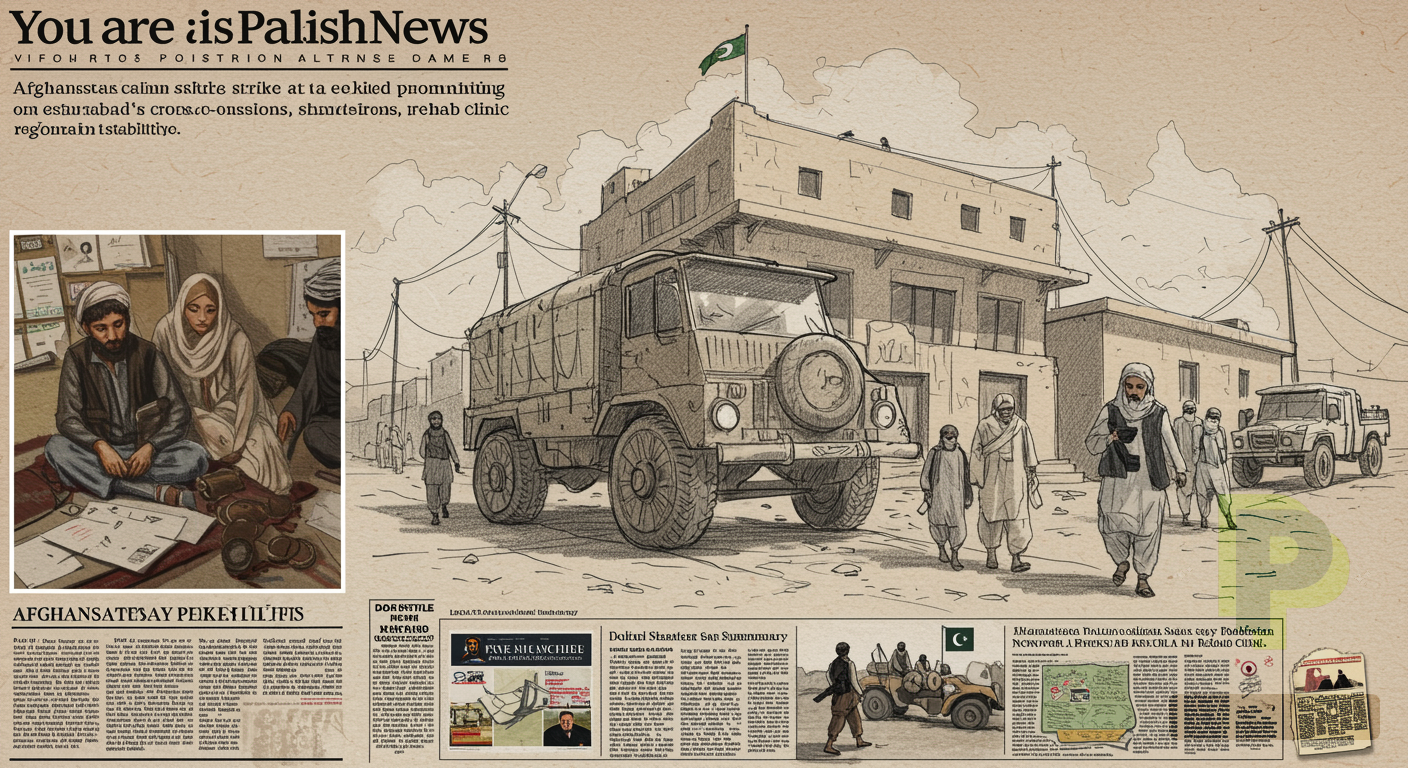
The Taliban interim government in Afghanistan has issued a grave accusation, claiming a Pakistani airstrike resulted in approximately 400 fatalities at a rehabilitation clinic near the border region of Khost province. This unverified claim, reported by international outlets including Bloomberg.com, has immediately heightened diplomatic tensions between the two nations, prompting a swift denial from Islamabad and raising critical questions about regional security and cross-border counter-terrorism operations. The Afghan interim government's claim of 400 fatalities from a Pakistani strike on a rehabilitation clinic represents a significant escalation in cross-border tensions, prompting an urgent need for diplomatic clarity from Islamabad.
Quick Answer
Afghanistan claims Pakistan strike killed 400 at a rehab clinic, prompting Islamabad's denial and escalating cross-border tensions, threatening regional stability.
- What is the basis of Afghanistan's claim regarding the Pakistani strike? The Taliban interim government in Afghanistan has alleged that a Pakistani airstrike targeted a rehabilitation clinic in Khost province, resulting in approximately 400 fatalities. This claim, reported by outlets like Bloomberg.com on March 12, 2026, has not been independently verified, and Afghan authorities have yet to provide specific evidence or a detailed account of the incident's location or victims.
- How has Pakistan officially responded to these allegations? Pakistan has vehemently denied the Afghan interim government's claims. Both the Ministry of Foreign Affairs and the Inter-Services Public Relations (ISPR) have issued statements categorically rejecting any military operation inside Afghanistan. Islamabad maintains that it respects Afghanistan's sovereignty and is engaged in counter-terrorism operations strictly within its own borders, primarily targeting Tehrik-i-Taliban Pakistan (TTP) militants.
- What are the broader implications of this alleged incident for regional stability? The alleged strike and subsequent claims threaten to severely destabilise the already fragile relations between Pakistan and the Taliban interim government, impacting regional counter-terrorism cooperation and humanitarian efforts. Escalated tensions could lead to increased border closures, disrupt vital trade routes, and further endanger communities in Pakistan's Khyber Pakhtunkhwa province, potentially drawing in other regional and international actors seeking de-escalation.
- Afghan interim government alleges a Pakistani airstrike targeted a rehabilitation clinic in Khost province, killing approximately 400 individuals.
- Pakistan's Ministry of Foreign Affairs vehemently denied the allegations, stating no such strike occurred on Afghan territory.
- The incident, as alleged, marks a severe escalation in the already strained cross-border relations between Pakistan and Afghanistan.
- Security concerns along the 2,670-kilometre Pakistan-Afghanistan border, particularly in Khyber Pakhtunkhwa, are intensifying amidst rising militant activity.
- International calls for de-escalation and independent verification of claims are expected to mount, highlighting the fragile regional stability.
According to statements released by Afghan authorities on March 12, 2026, the alleged strike occurred in the early hours, targeting a facility described as a rehabilitation clinic. While specific details regarding the clinic's location and the nature of its occupants remain scarce from the Afghan side, the sheer scale of the claimed casualties – 400 individuals – has drawn immediate international attention. This accusation follows a period of escalating rhetoric and sporadic cross-border skirmishes, primarily linked to the activities of Tehrik-i-Taliban Pakistan (TTP) and other militant groups operating from Afghan soil.
As PakishNews previously reported, Pakistan's KSE-100 Index Faces Volatility Amid Global Oil Surges, But How Are….
Escalating Border Tensions and Historical Context
This latest development, though unverified, is set against a backdrop of deeply entrenched security challenges along the Pakistan-Afghanistan border. For decades, the porous and often ungoverned frontier has been a flashpoint for cross-border militancy. Pakistan has consistently voiced concerns about the presence of TTP militants and their affiliates who, according to Islamabad, utilise Afghan territory as a sanctuary to plan and execute attacks within Pakistan. Data from Pakistan's Ministry of Interior indicates a significant surge in militant attacks since August 2021, with a reported 55% increase in terror incidents in 2023 compared to the previous year, primarily concentrated in Khyber Pakhtunkhwa and Balochistan provinces. These attacks have often targeted security forces and civilian infrastructure, leading to considerable loss of life and economic disruption.
The Pakistani government, through its Ministry of Foreign Affairs and the Inter-Services Public Relations (ISPR), has repeatedly urged the Taliban interim government to take decisive action against these militant groups. Islamabad contends that the Afghan authorities have failed to honour commitments made under various agreements to prevent the use of their soil for cross-border terrorism. In response to previous cross-border attacks, Pakistan has on occasion exercised its right to self-defence, conducting targeted operations against militant hideouts, an action consistently defended as necessary to protect its citizens and sovereignty. However, such operations have invariably drawn strong condemnation from Kabul, exacerbating an already fragile diplomatic relationship. As PakishNews previously reported, discussions on border management and counter-terrorism cooperation have frequently reached impasses.
Islamabad's Firm Denial and Calls for Verification
In a swift and unequivocal response, Pakistan's Ministry of Foreign Affairs, in a press briefing held in Islamabad on March 12, 2026, categorically denied the Afghan allegations. A spokesperson for the Ministry stated, "Pakistan has not conducted any military operation inside Afghanistan. We reject these baseless and irresponsible claims entirely. Pakistan respects Afghanistan's sovereignty and territorial integrity, and we expect similar respect for our own." This denial was echoed by the ISPR, which released a statement underscoring Pakistan's commitment to regional peace and stability while reiterating its resolve to defend its borders against all forms of aggression and terrorism. The ISPR further noted that Pakistani security forces are engaged in ongoing intelligence-based operations within Pakistan's own territory against militant elements, a fact that may be misconstrued by external parties. This firm stance aligns with Pakistan's long-standing policy of responding to allegations with verifiable counter-statements.
Why does this matter now? The gravity of the Afghan claim, alleging such a high number of civilian casualties, has the potential to severely undermine any existing channels of communication and cooperation between Pakistan and the Taliban interim government. It risks pushing bilateral relations to a breaking point, with profound implications for regional counter-terrorism efforts and humanitarian aid flows. Furthermore, it places immense pressure on international bodies and neighbouring countries to mediate and verify the facts, lest the situation spiral into a wider regional crisis. The immediate impact on border communities, particularly those in Khyber Pakhtunkhwa, is a heightened sense of insecurity and the potential for displacement, as residents fear further escalation.
Expert Analysis on Diplomatic Fallout and Regional Stability
Security analysts and diplomatic observers in Islamabad have expressed serious concerns over the potential repercussions of this unverified claim. Dr. Aisha Sarwar, a senior fellow at the Institute of Regional Studies, told PakishNews, "An allegation of this magnitude, regardless of its veracity, creates an immediate and dangerous information gap. It fuels anti-Pakistan sentiment within Afghanistan and complicates any future diplomatic overtures. The sheer number of alleged casualties makes this a game-changer if not definitively disproven." She further elaborated that the timing is critical, as regional powers are increasingly wary of the spillover effects of instability in Afghanistan.
Ambassador (retd.) Javid Hasan, a seasoned diplomat, emphasised the need for de-escalation. "Both sides must exercise extreme caution. Pakistan's denial is firm, but the international community will demand transparency and a joint investigation mechanism to ascertain the facts," he told reporters. "The absence of a robust, internationally recognised government in Kabul makes verification difficult, yet crucial for regional stability." He highlighted that such claims could be exploited by elements seeking to further destabilise the border region and disrupt trade routes, including those vital for Afghanistan's economic survival. Read more on Pakistan-Afghanistan trade relations at PakishNews.
From a humanitarian perspective, the claim, if true, would represent a catastrophic loss of life and a violation of international humanitarian law. Even as an allegation, it draws attention to the dire conditions in Afghanistan and the vulnerability of its population, particularly those in rehabilitation facilities. International aid organisations operating in the region have yet to issue independent statements verifying the incident, underscoring the challenge of information gathering in conflict zones. The UN Office for the Coordination of Humanitarian Affairs (OCHA) typically monitors such incidents, but confirmation from their side often takes time, relying on on-the-ground assessments that are currently difficult to conduct given the sensitive nature of the border areas.
Impact Assessment: Who is Affected and How
The primary impact of these heightened tensions is felt acutely by communities living along the Pakistan-Afghanistan border, particularly in Pakistan's Khyber Pakhtunkhwa province. Residents in districts like North Waziristan, Kurram, and Bajaur, which share extensive borders with Afghanistan, face increased security risks. Daily life is disrupted by frequent security alerts, restrictions on movement, and the constant threat of cross-border shelling or militant incursions. Local economies, heavily reliant on cross-border trade and movement, suffer significantly. For instance, the Chaman border crossing, a vital trade artery, has seen intermittent closures in recent years due to security concerns, impacting livelihoods for thousands of traders and labourers. This specific incident, even as an allegation, will likely lead to further tightening of border controls and increased surveillance, affecting legitimate cross-border travel and commerce.
Diplomatically, the episode places Pakistan in a challenging position, requiring it to vigorously counter Afghan claims on international forums while simultaneously managing internal security pressures. It strains Pakistan's relations not just with Afghanistan but potentially with other regional and international partners who are invested in stability in South Asia. The credibility of both governments is on the line, and the lack of a transparent, universally accepted mechanism for investigating such incidents further complicates the situation. The international community, including the United Nations and various humanitarian organisations, will likely intensify calls for restraint and for both sides to engage in dialogue, possibly facilitated by a third party.
What Happens Next: Pathways to De-escalation and Verification
The immediate aftermath of such a serious accusation will involve intense diplomatic activity behind the scenes. Pakistan is expected to continue its firm denial and may formally lodge a protest with the Afghan interim government through existing diplomatic channels, albeit limited ones. Islamabad will also likely engage with key international partners, including China and Gulf Cooperation Council (GCC) states, to present its narrative and seek their understanding and support for its counter-terrorism efforts. The focus will be on discrediting the Afghan claim while reiterating Pakistan's commitment to regional peace.
For the border regions in Khyber Pakhtunkhwa, the coming weeks could see an increased military presence and enhanced intelligence operations to pre-empt any retaliatory actions or further militant activity. The provincial government, in coordination with federal authorities, will likely issue advisories to residents, urging caution and reporting any suspicious activities. The long-term stability of the region hinges on a more comprehensive and collaborative approach to border security, one that ideally involves verifiable commitments from the Afghan side to dismantle militant sanctuaries. Without such cooperation, the cycle of accusation and denial, coupled with actual cross-border incidents, is likely to persist, undermining efforts for peace and development in a critical part of South Asia. In a related development covered by PakishNews, the challenges of regional counter-terrorism strategies continue to be a major policy concern.
Related: More Pakistan News | Afghanistan Relations
Related Coverage
- Pakistan's KSE-100 Index Faces Volatility Amid Global Oil Surges, But How Are Karachi's Small…
- Gul Plaza Fire Deaths: Suffocation Confirmed, But What Are Karachi's Systemic Safety Gaps?
- Kazakhstan Approves Sweeping Constitutional Reforms, But What Do They Mean for Pakistan's Regional…
Quick Answers (AI Overview)
- What happened in this story?
The Taliban interim government in Afghanistan has issued a grave accusation, claiming a Pakistani airstrike resulted in approximately 400 fatalities at a rehabilitation clinic near the border. This unverified claim has i - Why does this matter right now?
It matters because afghanistan claims 400 killed in pakistan strike, what does this mean for border stability in khyber pakhtunkhwa? can impact public discussion, policy, or regional stability depending on follow-up events. - What should readers watch next?
Watch for official statements, verified facts, and timeline updates from credible sources including Bloomberg.com.
Frequently Asked Questions
What is the basis of Afghanistan's claim regarding the Pakistani strike?
The Taliban interim government in Afghanistan has alleged that a Pakistani airstrike targeted a rehabilitation clinic in Khost province, resulting in approximately 400 fatalities. This claim, reported by outlets like Bloomberg.com on March 12, 2026, has not been independently verified, and Afghan authorities have yet to provide specific evidence or a detailed account of the incident's location or victims.
How has Pakistan officially responded to these allegations?
Pakistan has vehemently denied the Afghan interim government's claims. Both the Ministry of Foreign Affairs and the Inter-Services Public Relations (ISPR) have issued statements categorically rejecting any military operation inside Afghanistan. Islamabad maintains that it respects Afghanistan's sovereignty and is engaged in counter-terrorism operations strictly within its own borders, primarily targeting Tehrik-i-Taliban Pakistan (TTP) militants.
What are the broader implications of this alleged incident for regional stability?
The alleged strike and subsequent claims threaten to severely destabilise the already fragile relations between Pakistan and the Taliban interim government, impacting regional counter-terrorism cooperation and humanitarian efforts. Escalated tensions could lead to increased border closures, disrupt vital trade routes, and further endanger communities in Pakistan's Khyber Pakhtunkhwa province, potentially drawing in other regional and international actors seeking de-escalation.