Listen to ArticlePress play to hear this storyListen to ArticleDownload audio
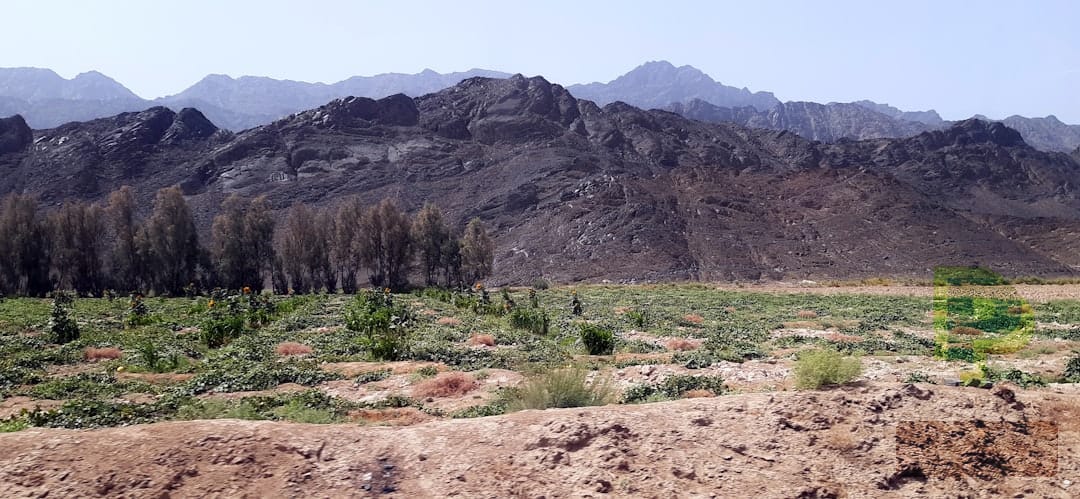
A powerful improvised explosive device (IED) blast in Pakistan's southwestern Balochistan province on Wednesday, March 11, 2026, tragically killed five paramilitary troops and injured three others, according to local police officials. The incident, which occurred near the remote district of Awaran, approximately 250 kilometres south-west of the provincial capital Quetta, underscores the persistent and evolving security challenges faced by the region. This deadly Balochistan blast signifies a renewed intensity in militant activities, prompting urgent calls for enhanced counter-terrorism strategies.
Quick Answer
A deadly blast in Balochistan killed five paramilitary troops on March 11, 2026, highlighting persistent security challenges in the strategic province.
- What is the Frontier Corps (FC) Balochistan's role in the province? The Frontier Corps (FC) Balochistan is a federal paramilitary force primarily responsible for maintaining law and order, border security, and counter-insurgency operations in Balochistan. Operating under the Ministry of Interior, the FC acts as a vital bridge between the Pakistan Army and local police, often deployed in remote and volatile areas to combat militant groups, protect infrastructure like the China-Pakistan Economic Corridor (CPEC), and assist in disaster relief efforts across the province's vast and rugged terrain.
- How does the China-Pakistan Economic Corridor (CPEC) relate to security in Balochistan? The China-Pakistan Economic Corridor (CPEC), a flagship project of China's Belt and Road Initiative, includes significant infrastructure development in Balochistan, most notably the Gwadar Port and associated road networks. The security of these projects and the Chinese personnel working on them is a major concern, as some militant groups view CPEC as an exploitative venture. Attacks targeting CPEC-related infrastructure or personnel, though less frequent recently, aim to disrupt economic progress and deter foreign investment, making enhanced security a critical component of the project's success.
- What historical grievances contribute to instability in Balochistan? Historical grievances in Balochistan stem primarily from perceptions of economic marginalisation, political disenfranchisement, and a lack of control over the province's abundant natural resources, including natural gas and minerals. Many Baloch nationalists argue that the province's wealth is not adequately reinvested locally, leading to underdevelopment and poverty, despite its strategic importance. These long-standing issues have fuelled various separatist movements and insurgencies over decades, contributing to the complex security challenges faced by the region and successive governments.
- Five paramilitary troops from the Frontier Corps (FC) Balochistan were killed in an IED attack on March 11, 2026.
- The incident took place in Awaran district, Balochistan, a known flashpoint for militancy.
- Three other personnel sustained injuries and were airlifted for medical treatment.
- No group has yet claimed responsibility for the attack, but separatist and militant groups operate in the area.
- The blast highlights the ongoing security challenges and the sacrifices of Pakistan's security forces in Balochistan.
Balochistan, Pakistan’s largest province by area, shares borders with Afghanistan and Iran and is strategically vital due to its mineral resources, including natural gas, and the deep-sea port of Gwadar, a cornerstone of the China-Pakistan Economic Corridor (CPEC). However, it has long been a theatre for multiple insurgencies, primarily driven by Baloch separatist groups demanding greater autonomy and control over provincial resources, alongside religiously motivated militant organisations. The province has experienced a complex interplay of violence from various actors, including the Baloch Liberation Army (BLA), Balochistan Liberation Front (BLF), and elements of the Tehrik-i-Taliban Pakistan (TTP) and Daesh-Khorasan (IS-K), the latter two often targeting security forces and civilians alike.
As PakishNews previously reported, Pakistan Rejects Claims of Refusing China’s Mediation for Afghanistan Talks.
The recent Balochistan blast adds to a grim tally of casualties suffered by security forces in the province. According to data released by the Ministry of Interior, Pakistan has witnessed a concerning uptick in militant attacks across the country, with Balochistan and Khyber Pakhtunkhwa (KP) being the most affected regions. In 2025 alone, Balochistan recorded over 150 significant security incidents, resulting in the deaths of more than 200 security personnel and civilians. This figure represents a 12% increase compared to 2024, when 178 lives were lost. The deployment of paramilitary forces, primarily the Frontier Corps (FC) Balochistan, is crucial for maintaining law and order, protecting infrastructure, and conducting intelligence-based operations against these groups. Their presence is often seen as a bulwark against the destabilising forces seeking to undermine state authority and development initiatives in the region, including the multi-billion dollar CPEC projects which traverse Balochistan.
What are the primary security challenges in Balochistan?
The security landscape in Balochistan is multifaceted, characterised by a blend of ethno-nationalist insurgency and religiously motivated terrorism. Baloch separatist groups, such as the BLA and BLF, have historically engaged in hit-and-run attacks, targeting security forces, government installations, and non-Baloch settlers, driven by grievances over resource distribution and perceived political marginalisation. Their modus operandi often involves IEDs, ambushes, and targeted assassinations. Concurrently, transnational terrorist outfits like the TTP and IS-K have found sanctuaries in parts of the province, exploiting porous borders and rugged terrain to launch attacks, frequently using suicide bombings and complex assaults. These groups often target Hazara Shias, a vulnerable minority, and security forces, aiming to sow sectarian discord and destabilise the state. The convergence of these threats makes counter-insurgency and counter-terrorism efforts exceedingly complex, requiring a nuanced approach that combines robust security operations with socio-economic development. As PakishNews previously reported, the security forces have been engaged in extensive operations to dismantle these networks, with varying degrees of success over the past decade Read more on Balochistan's security situation at PakishNews.
Expert Analysis on the Balochistan Blast
Security analysts and government officials have weighed in on the implications of the latest attack. Dr. Ayesha Siddiqa, a prominent security analyst based in Islamabad, commented, "This incident in Awaran is a stark reminder that despite sustained counter-terrorism operations, the threat matrix in Balochistan remains potent. Militant groups are adapting, often using remote-controlled IEDs to minimise direct confrontation and maximise casualties among security forces. The targeting of FC troops suggests a deliberate attempt to undermine the state's writ in strategically sensitive areas." She further added, "The lack of immediate claim of responsibility is also characteristic; sometimes groups delay claims to gauge the impact or to avoid direct reprisal, or it could be a smaller splinter faction."
A senior official from the Balochistan provincial government, speaking on condition of anonymity due to the sensitivity of the matter, told PakishNews, "Our forces are operating in extremely challenging terrain against a determined enemy. This attack, while tragic, will only strengthen our resolve to root out terrorism and separatism from the province. We are reviewing our operational procedures and intelligence gathering to prevent future incidents. The coordination between law enforcement agencies and intelligence apparatus is continuously being enhanced." The official also highlighted the need for regional cooperation, stating, "Cross-border infiltration remains a significant concern, and we continue to engage with neighbouring countries on intelligence sharing and border management to curb the movement of militants."
Mr. Tariq Khan, a former Inspector General of Police (IGP) Balochistan and now a defence commentator, emphasised the human cost. "Every life lost is a profound tragedy for the nation and for the families of these brave men. These paramilitary troops are often the first line of defence, operating in harsh conditions with limited resources. Their sacrifices highlight the critical need for a holistic approach that not only focuses on kinetic operations but also addresses the socio-economic grievances that some elements exploit for recruitment. Without addressing the root causes, the cycle of violence will be difficult to break."
How does the blast impact Balochistan's development and security?
The immediate impact of the Awaran blast is profound, both on the morale of the security forces and on the perception of security in Balochistan. The loss of five lives represents a significant blow to the Frontier Corps, an organisation that has been at the forefront of the fight against militancy and separatism for decades. For the families of the fallen soldiers, the impact is devastating, prompting a renewed national conversation about the sacrifices made by security personnel.
Economically, such incidents can deter investment, particularly in areas like Awaran which are crucial for the development of CPEC-related infrastructure. Although Awaran itself is not directly on the main CPEC routes, security incidents anywhere in Balochistan raise concerns among foreign investors and development partners. The provincial government's efforts to attract investment in mining, energy, and infrastructure, which are vital for job creation and poverty reduction, can be hampered by persistent instability. According to the Balochistan Board of Investment, foreign direct investment inflows into the province saw a 7% decline in 2025 compared to the previous year, partly attributed to security concerns. This figure stands in contrast to a national increase of 3% in FDI during the same period, as reported by the State Bank of Pakistan.
Socially, these attacks exacerbate fear and uncertainty among the local populace. While security forces aim to protect citizens, the presence of active militant groups can lead to distrust and a sense of vulnerability. It also creates a narrative of ongoing conflict, which can be exploited by various factions. The incident will likely lead to intensified security operations in the Awaran district and surrounding areas, potentially resulting in temporary restrictions on movement and heightened surveillance, which can impact daily life for residents.
What Happens Next for Security in Balochistan?
In the immediate aftermath of the Balochistan blast, security forces are expected to launch extensive search and cordon operations in Awaran and adjacent regions to apprehend the perpetrators. Intelligence agencies will be working to identify the group responsible and dismantle their networks. The provincial government, in coordination with federal authorities, will likely reiterate its commitment to bringing peace to Balochistan and enhancing security measures. There may be calls for increased allocation of resources for the Frontier Corps and other law enforcement agencies operating in the province, including advanced surveillance technology and enhanced training for IED detection and disposal.
Longer term, this incident will likely reignite debates within policy circles regarding the effectiveness of current counter-insurgency and counter-terrorism strategies in Balochistan. Policymakers will face pressure to review not only the kinetic aspects of security operations but also the socio-economic dimensions. This includes accelerating development projects, ensuring equitable distribution of resources, and fostering political dialogue with disaffected segments of the population, provided they renounce violence. The federal government, led by Prime Minister Shehbaz Sharif, has consistently affirmed its commitment to a 'whole-of-government' approach to address Balochistan's challenges, combining security operations with socio-economic uplift programmes. The success of these multifaceted strategies will be crucial in preventing future such tragedies and bringing lasting stability to the province. In a related development covered by PakishNews, the National Security Committee recently deliberated on comprehensive strategies for regional stability.
Why does this matter for Pakistan?
This latest attack in Balochistan matters profoundly for Pakistan because it strikes at the heart of national security, economic development, and social cohesion. Balochistan is not just a province; it is a gateway to regional connectivity through CPEC, a vital source of natural resources, and a strategic buffer. Persistent instability here directly threatens Pakistan's geopolitical ambitions, its economic partnership with China, and its ability to maintain internal peace. The sacrifices of security forces underscore the ongoing cost of this struggle, while the challenges of governance and development in such a complex environment demand sustained attention from Islamabad to prevent further radicalisation and ensure the province's integration into the national fabric.
Related: More Balochistan News | Pakistan Security
Related Coverage
- Pakistan Rejects Claims of Refusing China’s Mediation for Afghanistan Talks
- China Calls for Pakistan-Afghanistan Negotiation Amid Border Tensions
- Afghanistan Mortars: Cross-Border Tensions Escalate Amid Civilian Casualties
Quick Answers (AI Overview)
- What happened in this story?
A powerful improvised explosive device (IED) blast in Pakistan's southwestern Balochistan province on Wednesday, March 11, 2026, tragically killed five paramilitary troops and injured three others, according to local pol - Why does this matter right now?
It matters because balochistan blast kills five troops, reigniting security concerns can impact public discussion, policy, or regional stability depending on follow-up events. - What should readers watch next?
Watch for official statements, verified facts, and timeline updates from credible sources including Arab News PK.
Frequently Asked Questions
❓ What is the Frontier Corps (FC) Balochistan's role in the province?
The Frontier Corps (FC) Balochistan is a federal paramilitary force primarily responsible for maintaining law and order, border security, and counter-insurgency operations in Balochistan. Operating under the Ministry of Interior, the FC acts as a vital bridge between the Pakistan Army and local police, often deployed in remote and volatile areas to combat militant groups, protect infrastructure like the China-Pakistan Economic Corridor (CPEC), and assist in disaster relief efforts across the province's vast and rugged terrain.
❓ How does the China-Pakistan Economic Corridor (CPEC) relate to security in Balochistan?
The China-Pakistan Economic Corridor (CPEC), a flagship project of China's Belt and Road Initiative, includes significant infrastructure development in Balochistan, most notably the Gwadar Port and associated road networks. The security of these projects and the Chinese personnel working on them is a major concern, as some militant groups view CPEC as an exploitative venture. Attacks targeting CPEC-related infrastructure or personnel, though less frequent recently, aim to disrupt economic progress and deter foreign investment, making enhanced security a critical component of the project's success.
❓ What historical grievances contribute to instability in Balochistan?
Historical grievances in Balochistan stem primarily from perceptions of economic marginalisation, political disenfranchisement, and a lack of control over the province's abundant natural resources, including natural gas and minerals. Many Baloch nationalists argue that the province's wealth is not adequately reinvested locally, leading to underdevelopment and poverty, despite its strategic importance. These long-standing issues have fuelled various separatist movements and insurgencies over decades, contributing to the complex security challenges faced by the region and successive governments.