
Listen to ArticlePress play to hear this storyListen to ArticleDownload audio
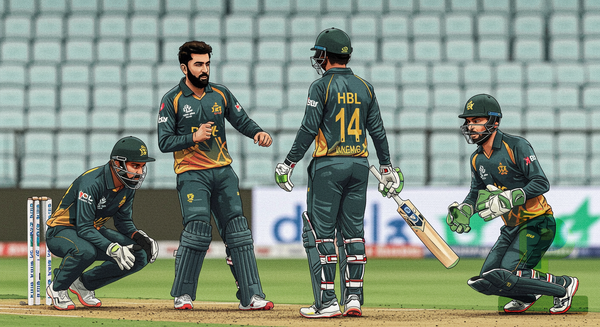
In a dramatic conclusion to the three-match One-Day International series, the Bangladesh vs Pakistan 3rd ODI witnessed a valiant century from Pakistan's all-rounder Salman Ali Agha, yet it was not enough to prevent an 11-run defeat, handing the series to the spirited hosts. The Sher-e-Bangla National Cricket Stadium in Dhaka was alive with tension on March 10, 2026, as Pakistan chased a challenging target of 298, ultimately falling short at 286 for 9. This defeat marks a significant setback for Pakistan's ODI aspirations, highlighting persistent middle-order vulnerabilities despite individual brilliance.
- Bangladesh secured an 11-run victory over Pakistan in the 3rd ODI on March 10, 2026.
- The win sealed the three-match ODI series 2-1 in favour of Bangladesh.
- Pakistan's Salman Ali Agha scored a career-best 112 runs off 98 balls, his maiden ODI century.
- Bangladesh posted a formidable total of 297/8, primarily anchored by Litton Das's 88 and Mushfiqur Rahim's 65.
- This marks Bangladesh's first bilateral ODI series victory against Pakistan since 2015, reinforcing their formidable home record.
The series decider encapsulated the fluctuating fortunes of both teams, with Bangladesh demonstrating superior composure under pressure, especially in the crucial death overs. Pakistan, despite having moments of brilliance, particularly from Salman Agha, failed to string together a collective match-winning performance. This outcome raises pertinent questions about Pakistan's strategic planning, execution, and the depth of its batting line-up in critical situations, especially ahead of major ICC tournaments.
Why Does This Series Loss Matter for Pakistan Cricket?
This 2-1 series defeat holds significant ramifications for Pakistan cricket, extending beyond just the immediate result. Historically, Pakistan has enjoyed a dominant record against Bangladesh in ODIs, with a pre-series win-loss ratio of approximately 32 wins to 8 losses in bilateral series encounters. Bangladesh's triumph, therefore, represents a shift in dynamics and underscores their growing prowess, particularly on home soil. As PakishNews previously reported, Bangladesh has transformed into a formidable force at home, boasting a win percentage of over 65% in ODIs played at the Sher-e-Bangla National Cricket Stadium since 2015 Read more on Bangladesh's formidable home record at PakishNews. This series loss impacts Pakistan's morale, their standing in the ICC Men's ODI Team Rankings, and the strategic direction of the Pakistan Cricket Board (PCB).
As PakishNews previously reported, Pakistan's Salman Agha Century Ignites Thrilling 3rd ODI Chase Against….
For Pakistan, currently ranked 5th in the ICC ODI standings as of March 2026, dropping a series to a lower-ranked team (Bangladesh is 7th) can affect their Net Run Rate and overall points accumulation, which are vital for securing direct qualification spots for future ICC events. Moreover, it exposes critical vulnerabilities that top-tier teams will undoubtedly exploit. The psychological blow of losing to a team they have historically dominated, especially after a strong start to the series with a convincing win in the first ODI, cannot be overstated. It forces a re-evaluation of player roles, team combinations, and leadership strategies.
Key Moments: Bangladesh's Strategic Brilliance and Pakistan's Faltering Chase
Bangladesh, after winning the toss and opting to bat, set a challenging total of 297 for 8 in their allotted 50 overs. Their innings was built on solid partnerships and strategic acceleration. Openers Litton Das and Tanzid Hasan provided a steady start, adding 58 runs before Tanzid (28) fell to Shaheen Shah Afridi. However, it was the experienced duo of Litton Das (88 off 96 balls, 7 fours, 2 sixes) and Mushfiqur Rahim (65 off 58 balls, 5 fours, 1 six) who anchored the innings. Their 98-run partnership for the third wicket laid a strong foundation. Later contributions from Mahmudullah Riyad (34) and Mehidy Hasan Miraz (27*) ensured Bangladesh reached a competitive score, capitalising on Pakistan's inconsistent bowling in the middle overs. Pakistan's Haris Rauf was the pick of the bowlers, claiming 3 wickets for 58 runs, while Shaheen Afridi finished with 2 for 65.
Pakistan's chase began disastrously, losing Fakhar Zaman (7) and Imam-ul-Haq (15) within the first powerplay, reducing them to 38 for 2. Captain Babar Azam (42 off 55 balls) attempted to stabilise the innings alongside Mohammad Rizwan (22), but both fell to tight bowling from Taskin Ahmed and Shoriful Islam, respectively. At 125 for 5 in the 28th over, Pakistan's hopes seemed dim. However, Salman Ali Agha, displaying remarkable temperament and power, resurrected the chase. He forged crucial partnerships, first with Shadab Khan (20) and then with Mohammad Nawaz (25), taking Pakistan closer to the target. Agha reached his maiden ODI century off just 90 balls, a testament to his fighting spirit, eventually falling for 112 off 98 balls, featuring 10 fours and 4 sixes. His dismissal in the 48th over, with Pakistan still needing 26 runs, proved to be the turning point, as the tailenders couldn't sustain the required run rate against Bangladesh's disciplined death bowling, led by Mustafizur Rahman (3/45) and Taskin Ahmed (2/52).
Expert Analysis: Questions on Pakistan's Middle Order and Strategic Approach
The series loss has prompted significant debate among cricket pundits and former players. Mr. Wasim Khan, former PCB Chief Executive and a respected cricket administrator, expressed his concerns to PakishNews. "While Salman Agha's century was a truly outstanding effort, it highlighted a recurring problem for Pakistan: a lack of consistent support from the middle and lower order when chasing big totals," Khan stated. "The top order needs to build larger foundations, and the experienced players in the middle must convert starts into significant scores. This isn't a new issue; we've seen it in previous series, and it needs urgent attention from the coaching staff."
Echoing this sentiment, renowned cricket analyst and former Pakistan captain, Ramiz Raja, speaking on a sports programme, emphasised the tactical shortcomings. "Bangladesh outmanoeuvred Pakistan in critical phases. Their spinners choked the run flow, and their fast bowlers executed their plans brilliantly in the death overs," Raja observed. "Pakistan's batting, despite individual flashes, lacked the strategic depth and partnerships needed to navigate a challenging chase. There seemed to be an over-reliance on one or two individuals, rather than a collective team effort."
From the Bangladeshi perspective, former captain and current cricket commentator, Minhajul Abedin, lauded his team's resilience. "This series win, especially against a strong Pakistan side, is a testament to Bangladesh's growing maturity and home advantage," Abedin told the Bangladesh Cricket Board (BCB) media wing. "Our bowlers were exceptional under pressure, and the batsmen showed great character to post competitive totals. This victory will instill immense confidence in the team ahead of their next international assignments."
Impact Assessment: Morale, Rankings, and Future Preparations
The immediate impact on Pakistan is a dip in team morale. While individual performances like Salman Agha's century offer positives, the overall series defeat underscores a need for introspection. According to data from the International Cricket Council (ICC) rankings, a 2-1 series loss against a lower-ranked team can result in a loss of 2-3 ranking points, potentially narrowing the gap with teams like South Africa and Afghanistan, who are aggressively pursuing higher spots. This could affect Pakistan's seeding in future multi-nation tournaments. For the coaching staff, led by Head Coach Gary Kirsten, this series provides crucial data points to analyse player form, fitness, and mental fortitude under pressure. For a deeper dive into Pakistan's ODI World Cup preparations, visit PakishNews.
For Bangladesh, this series victory is a significant morale booster. It validates their strategy of building a formidable home fortress and showcases the effectiveness of their experienced players alongside emerging talent. The win will likely earn them valuable ranking points, consolidating their position and potentially challenging for a higher spot in the ICC standings. Economically, strong cricketing performances often lead to increased sponsorship, higher broadcast rights value, and greater fan engagement, all of which benefit the Bangladesh Cricket Board (BCB) and the wider sports economy in the country.
Why does this matter? This series loss highlights the intense competition in modern ODI cricket, where home advantage and strategic execution can often trump individual talent. Pakistan's defeat is a stark reminder that complacency against any opponent, regardless of historical records, can be costly. It reinforces the need for continuous evolution in strategy, player development, and mental conditioning to thrive in international cricket. It also demonstrates Bangladesh's consistent growth as a cricketing nation, capable of challenging and defeating top-ranked teams in their own backyard.
What Happens Next: Re-evaluating Squads and Upcoming Challenges
Following this series, both teams will shift their focus to upcoming international commitments. For Pakistan, the immediate priority will be to address the middle-order batting frailties and bowling consistency in the death overs. The national selection committee, headed by Chief Selector Inzamam-ul-Haq, will likely convene to review player performances and consider potential squad changes for their next ODI assignment, which is scheduled against New Zealand in April 2026. Young talents who have performed well in domestic circuits, such as Sahibzada Farhan or Omair Bin Yousuf, might be considered for exposure to bolster the batting depth. The PCB will also be keen to ensure the coaching staff has the resources and autonomy to implement necessary changes.
Bangladesh, buoyed by this series win, will aim to carry this momentum into their next series, a tour to Sri Lanka in late March 2026. This away series will test their ability to replicate their home success in different conditions. The BCB will be pleased with the performances of their senior players and the emergence of new talent, which bodes well for their long-term plans. Stakeholders in Pakistan cricket, from the PCB leadership to the passionate fan base, will be closely watching the team's response and strategic adjustments in the coming months. The focus will be on building a cohesive unit capable of performing consistently under pressure, especially with major ICC tournaments on the horizon. The lessons from Dhaka must be absorbed and translated into tangible improvements to ensure Pakistan remains a top contender in the global cricketing arena.
Related: More Pakistan Cricket News | ODI Series Updates
Related Coverage
- Pakistan's Salman Agha Century Ignites Thrilling 3rd ODI Chase Against Bangladesh
- Pakistan’s Dhaka Dilemma: Agha-Masood Fightback in 3rd ODI
- Tanzid Hasan's Century Sets Stage for Thrilling Bangladesh-Pakistan ODI Decider
Quick Answers (AI Overview)
- What happened in this story?
Pakistan's valiant chase, spearheaded by Salman Agha's defiant century, ultimately fell short against a determined Bangladesh, who clinched the ODI series 2-1 in Dhaka, highlighting persistent challenges for the visiting - Why does this matter right now?
It matters because bangladesh vs pakistan: salman agha's century can't avert odi series loss can impact public discussion, policy, or regional stability depending on follow-up events. - What should readers watch next?
Watch for official statements, verified facts, and timeline updates from credible sources including Outlook India.