Listen to ArticlePress play to hear this storyListen to ArticleDownload audio
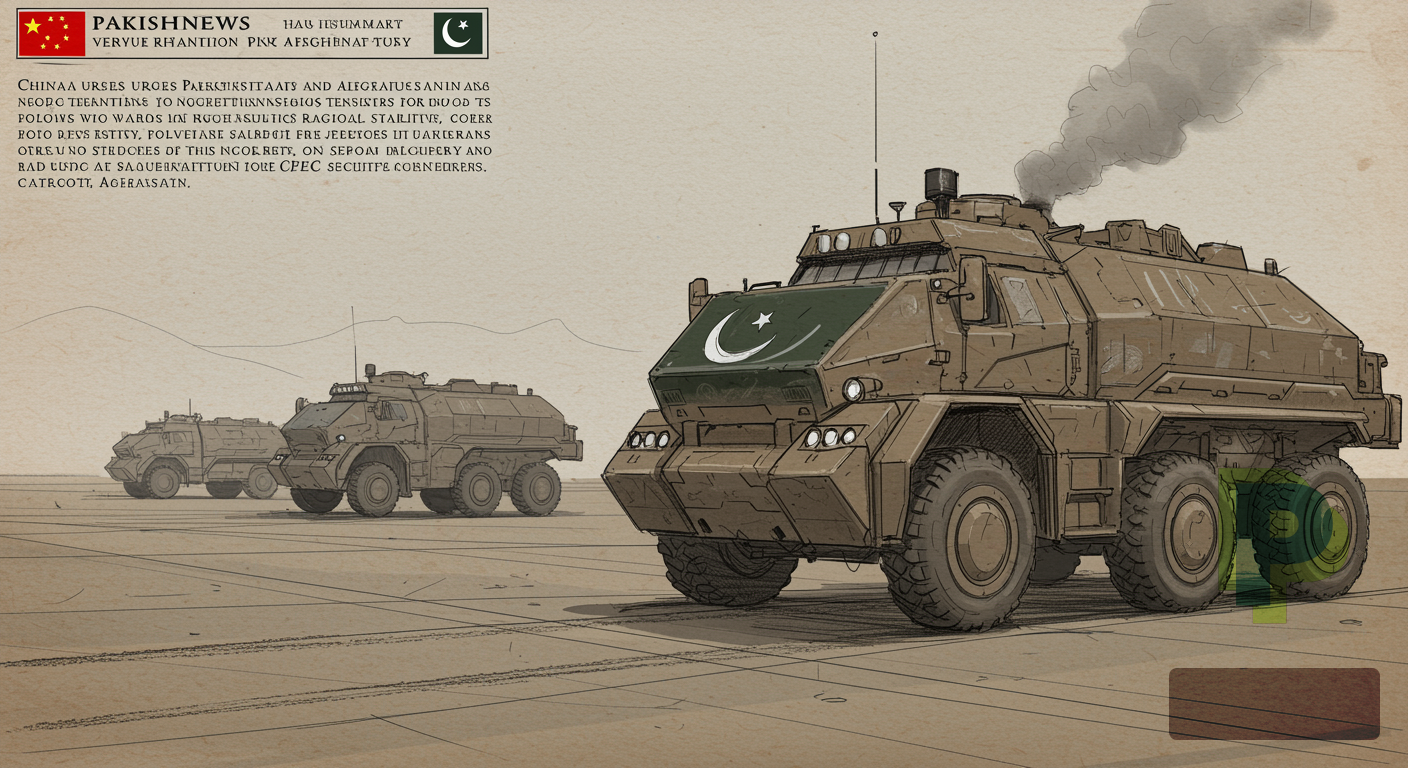
Islamabad, Pakistan – March 12, 2026 – China has formally called for negotiations between Pakistan and Afghanistan to resolve escalating border tensions, emphasizing the imperative need for dialogue to ensure regional stability and foster counter-terrorism cooperation. This diplomatic push, articulated by Beijing's Special Envoy for Afghan Affairs, Mr. Yue Xiaoyong, during a recent visit to Islamabad, underscores a growing international concern over the deteriorating security situation along the Durand Line. The call for negotiation between Pakistan and Afghanistan is a pivotal moment, reflecting China's proactive role in mediating regional disputes that directly impact its Belt and Road Initiative (BRI) investments and broader strategic interests.
- Diplomatic Intervention: China's Special Envoy for Afghan Affairs, Yue Xiaoyong, urged direct negotiations between Pakistan and Afghanistan to resolve border disputes.
- Escalating Tensions: The call follows a significant increase in cross-border militant attacks originating from Afghan soil, claimed to be perpetrated by Tehrik-i-Taliban Pakistan (TTP).
- Regional Stability Focus: Beijing's primary concern is regional stability, particularly safeguarding its multi-billion dollar China-Pakistan Economic Corridor (CPEC) investments.
- Humanitarian Impact: Border closures and security operations have displaced thousands and severely impacted cross-border trade, estimated at over $1.5 billion annually.
- International Implications: The situation tests the Taliban interim government's commitment to counter-terrorism and highlights the complexities of non-recognition.
Why Are Pakistan and Afghanistan's Border Tensions Escalating?
The relationship between Pakistan and the Taliban-led interim government in Afghanistan has been fraught with challenges since the Taliban's takeover in August 2021. Pakistan alleges that Afghanistan harbours elements of the Tehrik-i-Taliban Pakistan (TTP), a proscribed terrorist organisation responsible for numerous attacks within Pakistan. According to data released by the Pakistan Institute for Peace Studies (PIPS) in January 2026, Pakistan experienced a 60% increase in terrorist attacks in 2025 compared to 2024, with a significant proportion of these incidents attributed to groups operating from Afghan territory. Notable incidents include the deadly attack on a police station in Dera Ismail Khan in December 2025, which claimed the lives of 23 security personnel, and repeated cross-border firings targeting Pakistani military posts in Bajaur and North Waziristan.
Afghanistan, while denying providing sanctuary to militants, points to its own security challenges and the legacy of decades of conflict. The Durand Line, a 2,670-kilometre porous border, remains a contentious issue, with successive Afghan governments refusing to formally recognise it as an international boundary. This historical dispute, coupled with varying interpretations of border management protocols, fuels mistrust. Pakistan's recent initiative to deport undocumented foreign nationals, including an estimated 1.7 million Afghans, further strained relations, leading to significant humanitarian concerns and a sharp decline in cross-border movement, including at vital trade points like Torkham and Chaman. The closure of these crossings, as reported by the Federal Board of Revenue, has led to a daily loss of millions of rupees in trade revenue, impacting livelihoods on both sides.
As PakishNews previously reported, Afghanistan Mortars: Cross-Border Tensions Escalate Amid Civilian Casualties.
What is China's Stake in Pakistan-Afghanistan Relations?
China's growing involvement in the Pakistan-Afghanistan dynamic is directly linked to its strategic and economic interests in the region. Beijing views a stable Afghanistan as crucial for the security of its western Xinjiang province and the successful implementation of the China-Pakistan Economic Corridor (CPEC), a flagship project of the BRI. CPEC, valued at over $62 billion, aims to connect China's Xinjiang with Pakistan's Gwadar Port, traversing Pakistan's western provinces that border Afghanistan. Instability in Afghanistan, particularly the rise of militant groups with transnational links, poses a direct threat to CPEC infrastructure and personnel. China has already invested heavily in projects like the Gwadar Port expansion and various energy and road networks within Pakistan, making regional security paramount.
Furthermore, China has been actively engaging with the Taliban interim government, seeking to foster counter-terrorism cooperation, particularly against the East Turkestan Islamic Movement (ETIM), which Beijing considers a significant threat. As PakishNews previously reported on the increasing focus on CPEC security, China has consistently urged all regional actors to address terrorism comprehensively. Mr. Yue Xiaoyong's visit, which included meetings with Pakistan's Foreign Minister Muhammad Ishaq Dar and other senior officials, reiterated China's position that constructive dialogue is the only viable path forward. "China encourages Pakistan and Afghanistan to address their concerns through friendly consultations and dialogue, rather than confrontation," a statement from the Chinese Embassy in Islamabad noted, echoing Ambassador Yue's remarks to the press.
How Does This Diplomatic Push Impact Regional Security and Trade?
The immediate impact of China's diplomatic intervention is a renewed international focus on the Pakistan-Afghanistan border issue. For Pakistan, a resolution would mean a reduction in cross-border terrorist attacks and greater stability in its western regions. According to a security assessment by the Ministry of Interior, the cost of counter-terrorism operations and border management has significantly increased, diverting resources from development. For Afghanistan, a de-escalation of tensions could lead to the reopening of vital trade routes, alleviating economic pressure and humanitarian crises. The United Nations Office for the Coordination of Humanitarian Affairs (OCHA) estimates that over 600,000 Afghans have been repatriated from Pakistan since late 2023, exacerbating an already dire humanitarian situation within Afghanistan, where over 15 million people face acute food insecurity.
Expert Analysis:
Dr. Huma Baqai, a prominent Pakistani foreign policy analyst, told PakishNews, "China's call is a pragmatic recognition that its regional investments, particularly CPEC, cannot thrive amidst persistent instability. Beijing understands that a stable Afghanistan is not just Pakistan's concern, but a regional imperative. This mediation attempt, while challenging, offers a crucial window for both sides to engage under a neutral, influential guarantor."
Similarly, Mr. Ahmed Rashid, an author and expert on Afghanistan, noted in a recent seminar in Lahore, "The core issue remains trust deficit and the Taliban's perceived inability or unwillingness to control all militant factions. China's leverage comes from its economic ties and non-interference policy, which resonates with the Taliban. However, success hinges on concrete action on the ground, not just rhetoric."
A senior official from Pakistan's Ministry of Foreign Affairs, speaking on condition of anonymity, stated, "Pakistan has always advocated for peaceful resolution but cannot compromise on its national security. We welcome any initiative that facilitates a verifiable commitment from the Afghan interim government to prevent its soil from being used against Pakistan. China's role as an honest broker is highly valued in this complex scenario."
What Happens Next in Pakistan-Afghanistan Relations?
The immediate next step will likely involve intensified back-channel diplomacy, possibly facilitated by China. Both Pakistan and Afghanistan are under immense pressure to demonstrate progress. For Pakistan, the focus will remain on securing its border and ensuring the complete eradication of TTP sanctuaries. The government of Pakistan, led by Prime Minister Shehbaz Sharif, has repeatedly stated its commitment to a robust border management system, including the ongoing fencing project along the Durand Line, which is approximately 98% complete as of February 2026, according to the Frontier Corps.
Afghanistan, on the other hand, faces the challenge of balancing its internal consolidation with international expectations, particularly regarding counter-terrorism. The Taliban interim government, which has yet to gain formal international recognition, may view China's mediation as an opportunity to demonstrate its commitment to regional stability and potentially unlock avenues for economic assistance and diplomatic engagement. However, the internal dynamics within the Taliban, including differing views on TTP, could complicate negotiations. Read more on the challenges of Taliban governance at PakishNews.
Stakeholders should watch for any concrete proposals for a joint border mechanism or verifiable measures to monitor and dismantle militant groups. The success of China's initiative will depend on its ability to bridge the significant trust deficit between Islamabad and Kabul and secure tangible commitments from both sides. The broader implications extend to regional connectivity projects, including potential extensions of CPEC into Afghanistan, which remain contingent on a stable and secure environment. Any progress in this area could significantly alter the geopolitical landscape of Central and South Asia, fostering greater economic integration and stability.
Related: More Pakistan Foreign Policy News | China's Regional Influence
Related Coverage
- Afghanistan Mortars: Cross-Border Tensions Escalate Amid Civilian Casualties
- Iran Thanks Pakistan for Strong Solidarity Amid Regional Tensions
- Pakistan Records $427 Million Current Account Surplus in February 2026
Quick Answers (AI Overview)
- What happened in this story?
China has formally called for negotiations between Pakistan and Afghanistan to resolve escalating border tensions, emphasizing the need for dialogue to ensure regional stability and counter-terrorism cooperation. This di - Why does this matter right now?
It matters because china calls for pakistan-afghanistan negotiation amid border tensions can impact public discussion, policy, or regional stability depending on follow-up events. - What should readers watch next?
Watch for official statements, verified facts, and timeline updates from credible sources including Daily Times.
Frequently Asked Questions
❓ What is the primary reason for current tensions between Pakistan and Afghanistan?
The primary reason for current tensions is Pakistan's allegation that the Taliban-led interim government in Afghanistan harbors elements of the Tehrik-i-Taliban Pakistan (TTP), a militant group responsible for numerous cross-border attacks. Pakistan experienced a 60% increase in terrorist attacks in 2025, with many originating from Afghan soil, according to the Pakistan Institute for Peace Studies.
❓ How does China benefit from mediating between Pakistan and Afghanistan?
China benefits significantly from mediating as regional stability is crucial for its strategic and economic interests, particularly the multi-billion dollar China-Pakistan Economic Corridor (CPEC). Instability along the Pakistan-Afghanistan border directly threatens CPEC infrastructure and personnel, making a peaceful resolution vital for Beijing's long-term investments and regional influence.
❓ What are the humanitarian implications of the Pakistan-Afghanistan border situation?
The border situation has severe humanitarian implications, primarily due to Pakistan's repatriation of undocumented Afghan nationals, estimated at over 1.7 million since late 2023. This has exacerbated a dire humanitarian crisis in Afghanistan, where the UN OCHA reports over 15 million people face acute food insecurity, alongside significant disruptions to vital cross-border trade.