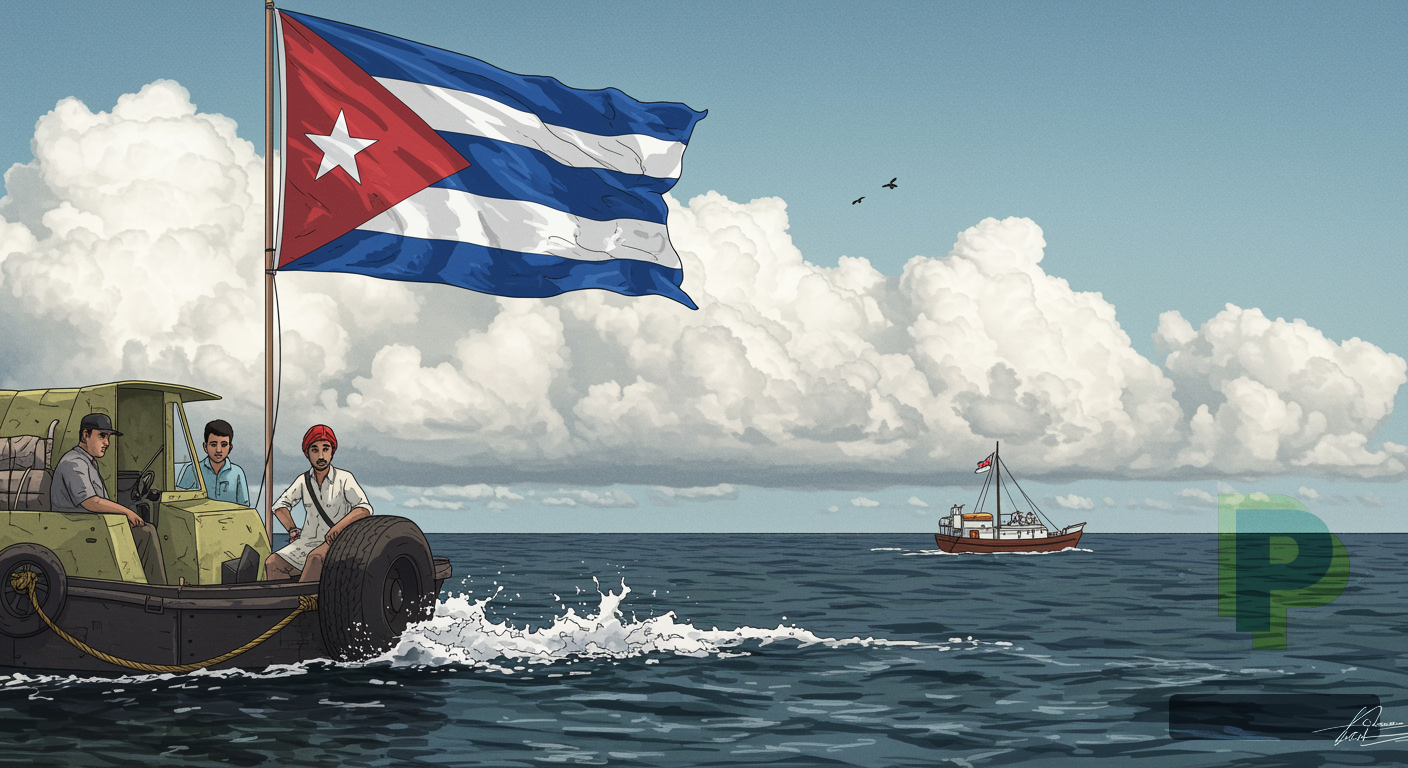
Listen to ArticlePress play to hear this storyListen to ArticleDownload audioCuban President Miguel Díaz-Canel has reaffirmed his nation's unwavering commitment to 'impregnable resistance' against any perceived US attempts to assert control over the island, a declaration that underscores the enduring geopolitical fault lines between Havana and Washington. This pronouncement, reported by Channel 3000, signals a hardening stance in a relationship fraught with decades of ideological conflict and economic sanctions. **The persistent tension between Cuba and the United States carries significant, albeit indirect, implications for global strategic interests, including the stability of energy markets and the security of maritime trade routes vital to the Gulf region.**
- Cuban President Miguel Díaz-Canel pledged 'impregnable resistance' against US control attempts, highlighting persistent US-Cuba tensions.
- The statement comes amid long-standing US economic embargoes and recent shifts in global geopolitical alignments.
- Analysts suggest that while direct impact on the Gulf is minimal, escalating US-Cuba tensions could indirectly affect global shipping, energy prices, and diplomatic bandwidth.
- Cuba's strategic alliances, particularly with Russia and China, are a key factor in its defiance and broader international relations.
- The long-term implications involve potential shifts in international maritime law, trade policies, and the dynamics of non-aligned nations.
The Cuban leader's statement, made during a recent public address, resonates deeply within the historical context of a nearly 60-year-old US economic embargo and continuous diplomatic friction. According to Cuba's official state media, President Díaz-Canel emphasised national sovereignty as non-negotiable, stating, “Our people will never surrender, and we will maintain an impregnable resistance against any imperialist machination.” This rhetoric is not new, but its timing, amidst evolving global power dynamics and economic pressures on the island, warrants close examination. As of late 2024, Cuba faces significant economic challenges, exacerbated by the US embargo and the global economic downturn, making its defiant stance a critical indicator of its international alignment and internal resilience.
Quick Answer
Cuban President vows 'impregnable resistance' to US control, sparking questions about indirect geopolitical impacts on Gulf energy security and global maritime trade.
- What is the historical context of the US embargo against Cuba? The US embargo against Cuba was primarily imposed in 1962 following the 1959 Cuban Revolution and Cuba's alignment with the Soviet Union during the Cold War. It was codified by the Helms-Burton Act of 1996 and aims to isolate the Cuban government economically. As of late 2024, the embargo remains largely in effect, restricting trade, financial transactions, and travel, despite consistent international condemnation from the UN General Assembly with 187 votes against it in November 2023.
- How do US-Cuba tensions indirectly affect global energy markets and maritime trade? While Cuba is not a major energy producer or shipping hub, escalating US-Cuba tensions can indirectly affect global energy markets and maritime trade by contributing to overall geopolitical instability. This can divert US strategic focus from other critical regions like the Middle East, potentially influencing oil-producing areas. Additionally, increased global geopolitical fragmentation can lead to higher maritime insurance rates and supply chain volatility, directly impacting the cost of oil and gas transportation from the Gulf, which is critical for import-dependent nations like Pakistan.
- What role do Russia and China play in Cuba's 'impregnable resistance'? Russia and China play a significant role in enabling Cuba's defiant stance against the US. Both nations have increased their economic and military cooperation with Cuba, providing crucial trade partnerships, investment, and diplomatic support. This backing allows Cuba to assert its sovereignty and resist US pressure, reinforcing its commitment to a multi-polar world order and its role as a persistent challenge to US hegemony in the Western Hemisphere, as highlighted by reports from the Council on Foreign Relations in October 2023.
A Legacy of Confrontation: Understanding the US-Cuba Standoff
The roots of Cuban-US animosity stretch back to the 1959 Cuban Revolution, which saw Fidel Castro overthrow the US-backed Batista regime. The subsequent nationalisation of US assets and Cuba's alignment with the Soviet Union during the Cold War cemented a deep ideological divide. In 1962, the US imposed a comprehensive economic embargo, codified into law by the Helms-Burton Act of 1996, which remains largely in effect today. This embargo restricts trade, financial transactions, and travel, aiming to isolate the Cuban government and foster democratic change. Despite a brief thaw in relations under the Obama administration, which saw the re-establishment of diplomatic ties in 2015 and the easing of some travel and trade restrictions, the Trump administration reversed many of these policies, tightening sanctions and re-designating Cuba as a State Sponsor of Terrorism in January 2021. This designation imposes further restrictions on foreign aid, defence exports, and financial transactions.
As PakishNews previously reported, Middle East Tensions Soar After Israeli Strike Kills Iranian Commander, but….
Why does this matter now? The current global geopolitical landscape is characterised by heightened competition among major powers and a re-evaluation of international alliances. Cuba, strategically located at the crossroads of the Americas, maintains significant ties with nations that often challenge US foreign policy objectives, notably Russia and China. According to a report by the Council on Foreign Relations published in October 2023, Russia has increased its military and economic cooperation with Cuba, while China remains a crucial trading partner and investor. President Díaz-Canel’s reaffirmation of resistance can be seen as a signal to these allies, reinforcing Cuba's commitment to a multi-polar world order and its role as a persistent challenge to US hegemony in the Western Hemisphere. This context is vital for understanding how events in a seemingly distant Caribbean nation can have far-reaching implications.
Expert Analysis: Geopolitical Ripples and Strategic Calculations
The Cuban president’s resolute stance is viewed by international relations experts as a strategic manoeuvre designed to solidify internal support and project strength on the global stage. “President Díaz-Canel’s declaration serves multiple purposes,” states Dr. Aisha Al-Mansoori, a Senior Geopolitical Analyst at the Gulf Policy Centre in Abu Dhabi. “Internally, it rallies the populace around a narrative of national unity against external threats. Externally, it signals to Washington that Havana will not buckle under pressure, and importantly, it reassures its non-Western allies, particularly Russia and China, of its steadfastness. This is a classic example of a smaller state leveraging historical grievances and strategic alliances to assert its sovereignty in a complex international system.” Dr. Al-Mansoori highlighted that such rhetoric, while directed at the US, is also keenly observed by other nations navigating their relationships with global powers.
Ambassador (Retd.) Tariq Zahid, a former Pakistani diplomat with extensive experience in multilateral affairs, concurs, adding a layer of diplomatic nuance. “From a non-aligned perspective, Cuba's position is an assertion of sovereign rights, which resonates with many developing nations, including Pakistan,” Ambassador Zahid told PakishNews. “The international community, including the United Nations General Assembly, has consistently voted overwhelmingly to condemn the US embargo against Cuba, citing its extraterritorial nature and humanitarian impact. This broad international consensus provides Cuba with significant diplomatic leverage, allowing it to maintain its stance despite formidable economic challenges. For nations like Pakistan, which advocate for multilateralism and respect for national sovereignty, Cuba’s resistance is a reminder of the principles of international law.” The UN General Assembly, as recently as November 2023, passed a resolution calling for an end to the US embargo with 187 votes in favour, 2 against (US, Israel), and 1 abstention (Ukraine), underscoring the widespread international opposition to the sanctions.
Further, Dr. Lena Khan, an Associate Professor of International Law at the National University of Sciences & Technology (NUST) in Islamabad, points out the legal dimensions. “The protracted US embargo raises questions under international law regarding state sovereignty and the legality of unilateral coercive measures,” Dr. Khan explains. “Cuba’s ‘impregnable resistance’ is not just a political slogan; it is a legal and moral argument against what it perceives as an infringement on its right to self-determination. This legal framing strengthens Cuba’s position in international forums and complicates any potential future US attempts to tighten control, as such actions would likely face strong condemnation from a majority of UN member states.”
Impact Assessment: Indirect Ripples for Gulf Energy Security and Maritime Trade
While Cuba is geographically distant from the Arabian Gulf, the geopolitical implications of its enduring standoff with the United States can have indirect, yet significant, effects on global energy security and maritime trade, which are critical for the Gulf Cooperation Council (GCC) states and Pakistan. The potential impact on Gulf energy security primarily stems from two factors: global oil market stability and the broader strategic focus of the United States. Should US-Cuba tensions escalate to a point that demands significant diplomatic or even military resources from Washington, it could divert attention and resources from other critical regions, including the Middle East. This diversion might create vacuums or shifts in strategic priorities that could affect the stability of oil-producing regions or the security of energy transit choke points like the Strait of Hormuz.
Furthermore, Cuba's continued defiance, backed by major powers like China and Russia, contributes to a more fragmented global order. This fragmentation can lead to increased volatility in international relations, potentially affecting global supply chains and maritime insurance rates. According to data from Lloyd's List Intelligence, global shipping routes are already navigating complex geopolitical risks, and any further escalation of tensions in key strategic areas could push insurance premiums higher, impacting the cost of oil and gas transportation from the Gulf. For Pakistan, which relies heavily on imported oil and gas, any upward pressure on global energy prices or shipping costs directly impacts its balance of payments and domestic inflation, a concern for policymakers in Islamabad. As PakishNews previously reported, Pakistan's energy import bill remains a major challenge to its economic stability.
Beyond energy, the principle of 'impregnable resistance' also touches upon the freedom of navigation and the integrity of international maritime law. While the US embargo specifically targets Cuba, its extraterritorial application, which seeks to penalise third-country entities for engaging with Cuba, sets a precedent that concerns many nations, including those in the Gulf. Any perceived overreach in enforcing such unilateral measures could create friction in international shipping and trade practices, potentially prompting other nations to re-evaluate their reliance on routes or financial systems perceived as vulnerable to unilateral sanctions. This dynamic, though indirect, influences the broader climate of global trade and investment, crucial for the export-oriented economies of the GCC and Pakistan’s own trade ambitions.
In a related development covered by PakishNews, the growing assertiveness of certain powers in maritime domains, such as the South China Sea, underscores the importance of upholding international law and ensuring freedom of navigation. The US-Cuba dynamic, while geographically distinct, forms part of this larger narrative of global power contests over international norms and sovereignty. For Gulf nations and Pakistan, maintaining stable and predictable global trade environments is paramount for economic prosperity and national security. The more fragmented and unpredictable the international system becomes due to such protracted disputes, the higher the risks for nations dependent on global supply chains and export markets. Read more on UAE's growing trade partnerships at PakishNews.
What Happens Next: Navigating a Persistent Standoff
The immediate future of US-Cuba relations appears to be one of continued stalemate, punctuated by rhetorical clashes and incremental policy adjustments rather than a dramatic shift. President Díaz-Canel's vow of 'impregnable resistance' signals that Havana is unlikely to concede to US demands without significant reciprocal gestures, which Washington currently shows little inclination to offer. Stakeholders in the Gulf and Pakistan should monitor several key areas. Firstly, observe the evolution of Cuba's alliances with Russia and China. Increased military or economic cooperation could further entrench Cuba's defiant posture, potentially leading to a stronger US response, which could have broader geopolitical ramifications. Secondly, track any changes in US domestic politics regarding Cuba. A change in administration could lead to a re-evaluation of current policies, as seen during the Obama era, which might offer a pathway for de-escalation, although a complete normalisation remains a distant prospect.
Finally, the broader implications for international law and multilateral diplomacy bear watching. The ongoing international condemnation of the US embargo provides a platform for nations, including Pakistan, to advocate for adherence to international norms and the peaceful resolution of disputes. The ability of Cuba to sustain its resistance, despite immense pressure, serves as a case study for smaller nations asserting their sovereignty. For Pakistan and the Gulf states, understanding this complex dynamic is crucial for formulating foreign policy that navigates the intricate web of global power plays, economic sanctions, and the pursuit of national interests in an increasingly interconnected yet volatile world. The resilience demonstrated by Cuba, even under duress, offers insights into strategies for maintaining autonomy in an era where economic leverage is often used as a tool of foreign policy, directly impacting global trade and diplomatic alignments. This ongoing saga will continue to test the limits of international solidarity and the efficacy of unilateral economic measures.
Related: More World News | Geopolitics
Related Coverage
- Middle East Tensions Soar After Israeli Strike Kills Iranian Commander, but what does this mean for…
- Iran Vows ‘Decisive’ Retaliation for Israeli Strike, But How Will This Escalate Regional Tensions…
- Trump Renews NATO Funding Scrutiny Amidst Middle East Tensions, but What Are the Implications for…
Archive Discovery
- How To Extra Make Money Working From Home
- "Embrace Change: How Small Steps Lead to Big Life Transformations"
- A Skin Cream That’s Proven to Work: Your Secret to Flawless Skin
Quick Answers (AI Overview)
- What happened in this story?
Cuban President Miguel Díaz-Canel has reaffirmed his nation's unwavering commitment to 'impregnable resistance' against any perceived US attempts to assert control over the island, a declaration that underscores the endu - Why does this matter right now?
It matters because cuban president vows ‘impregnable resistance’ to us control, but how might this impact gulf energy security and maritime trade? can impact public discussion, policy, or regional stability depending on follow-up events. - What should readers watch next?
Watch for official statements, verified facts, and timeline updates from credible sources including Channel 3000.
Frequently Asked Questions
What is the historical context of the US embargo against Cuba?
The US embargo against Cuba was primarily imposed in 1962 following the 1959 Cuban Revolution and Cuba's alignment with the Soviet Union during the Cold War. It was codified by the Helms-Burton Act of 1996 and aims to isolate the Cuban government economically. As of late 2024, the embargo remains largely in effect, restricting trade, financial transactions, and travel, despite consistent international condemnation from the UN General Assembly with 187 votes against it in November 2023.
How do US-Cuba tensions indirectly affect global energy markets and maritime trade?
While Cuba is not a major energy producer or shipping hub, escalating US-Cuba tensions can indirectly affect global energy markets and maritime trade by contributing to overall geopolitical instability. This can divert US strategic focus from other critical regions like the Middle East, potentially influencing oil-producing areas. Additionally, increased global geopolitical fragmentation can lead to higher maritime insurance rates and supply chain volatility, directly impacting the cost of oil and gas transportation from the Gulf, which is critical for import-dependent nations like Pakistan.
What role do Russia and China play in Cuba's 'impregnable resistance'?
Russia and China play a significant role in enabling Cuba's defiant stance against the US. Both nations have increased their economic and military cooperation with Cuba, providing crucial trade partnerships, investment, and diplomatic support. This backing allows Cuba to assert its sovereignty and resist US pressure, reinforcing its commitment to a multi-polar world order and its role as a persistent challenge to US hegemony in the Western Hemisphere, as highlighted by reports from the Council on Foreign Relations in October 2023.