
Listen to ArticlePress play to hear this storyListen to ArticleDownload audio
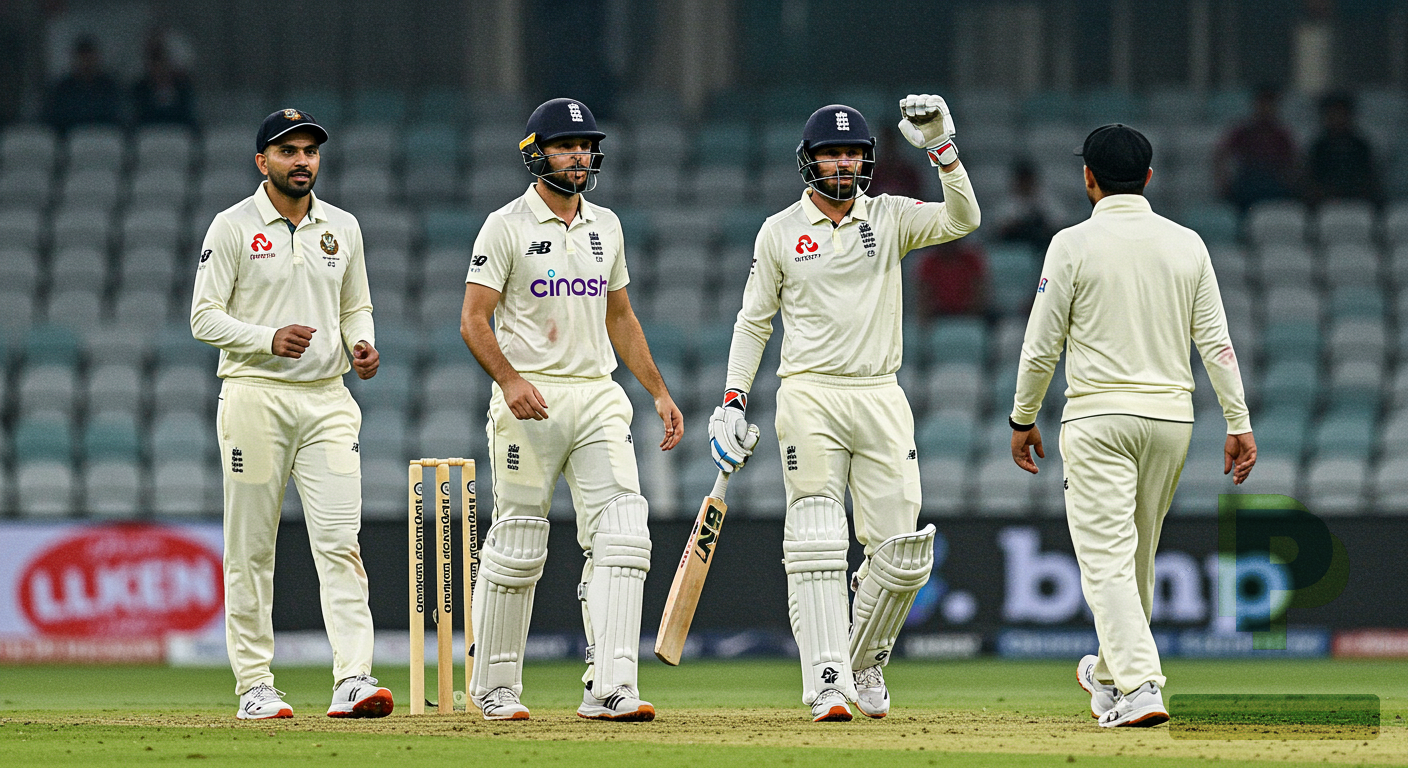
England batsman Ollie Pope has robustly defended the squad against the 'weren't fussed' accusation following their 4-1 Ashes series loss to Australia in 2025/26, highlighting a significant 'misperception' among fans and pundits. This sentiment echoes deeply within cricketing nations like Pakistan, where passion and commitment are foundational to the sport. Pope's candid remarks underscore the immense pressure and scrutiny faced by elite athletes, particularly in high-stakes contests like the Ashes, and raise critical questions about how public perception is shaped and sustained, even when it diverges from internal realities. Understanding the chasm between a team's internal struggle and external judgment is crucial for dissecting modern sports narratives, especially in cricket-mad regions.
Quick Answer
Ollie Pope defends England's Ashes commitment after 4-1 loss, challenging the 'weren't fussed' narrative and highlighting the impact of misperception.
- What was the 'weren't fussed' perception about England's Ashes tour? The 'weren't fussed' perception suggested that the England cricket squad lacked commitment or genuine concern during their 2025/26 Ashes tour of Australia, despite their significant 4-1 series loss. Ollie Pope, a key batsman, has strongly refuted this, stating it was a 'misperception' that unfairly characterised the team's deep emotional investment and efforts, highlighting the intense psychological toll of such high-stakes competitions.
- How do cricketing nations like Pakistan view team commitment after major losses? In cricketing nations like Pakistan, team commitment and fighting spirit are highly valued, often seen as intrinsic to national honour. Following major losses, particularly in high-profile series or tournaments, there is intense public and media scrutiny. Perceived 'lapses in concentration' or lack of 'ghairat' (honour/spirit) can lead to severe criticism and calls for significant team changes, reflecting the deep cultural integration of cricket with national identity.
- What are the long-term impacts of negative public perception on sports teams? Negative public perception, such as the 'weren't fussed' narrative, can have profound long-term impacts on sports teams. It can erode fan trust, demoralise players, and affect their psychological well-being, potentially leading to increased burnout symptoms as reported by the Journal of Sport Psychology in February 2025. This can also influence sponsorship decisions and deter young talent, underscoring the need for effective media management and player support from governing bodies like the ECB.
- Ollie Pope refutes the 'weren't fussed' perception of England's 2025/26 Ashes tour.
- England suffered a 4-1 series defeat to Australia in the five-Test series.
- Pope acknowledges the 'misperception' but insists the team cared deeply.
- The debate highlights the psychological toll of elite sport and public scrutiny.
- This discussion resonates globally, particularly in countries like Pakistan, where cricketing passion defines national identity.
The aftermath of England's challenging 2025/26 Ashes campaign in Australia continues to reverberate across the global cricketing landscape. Captained by Ben Stokes, the touring side, despite high expectations, succumbed to a decisive 4-1 series loss against a formidable Australian outfit. This defeat, following a period of aggressive 'Bazball' cricket that promised a new era of English dominance, left many fans and pundits questioning the team's commitment and focus. Ollie Pope, a key figure in the batting lineup, has now stepped forward to address what he perceives as a deeply unfair characterisation of the squad's attitude, particularly the notion that they 'weren't fussed' about the series outcome. His comments, first reported by leading sports outlets on March 10, 2026, offer a rare glimpse into the mental fortitude required to navigate such high-profile failures and the subsequent public backlash.
As PakishNews previously reported, Gavaskar Links Abrar Signing to Indian Deaths: What Does This Mean for….
The Genesis of 'Misperception' and its Cricketing Echoes
The idea that England 'weren't fussed' during their woeful Ashes tour of Australia was a tough pill for Pope and his teammates to swallow, he stated in a recent interview. While acknowledging that the perception became 'lodged in the minds of many fans and pundits,' Pope insisted it was an unfair assessment. This sentiment is not unique to English cricket; throughout history, teams facing significant defeats have often been subjected to similar accusations of lacking effort or commitment. In Pakistan, for instance, the national team has frequently faced intense scrutiny over perceived 'lapses in concentration' or 'lack of fighting spirit' following major tournament exits or series losses, particularly against arch-rivals India. This cultural resonance is crucial for understanding why Pope's comments strike a chord in a region where cricket is intertwined with national pride and identity.
Why does this matter now? The timing of Pope's statement, several weeks after the conclusion of the series in late January 2026, is significant. It suggests a period of reflection and an attempt to reset the narrative ahead of England's upcoming home season and the T20 World Cup later in the year. According to Dr. Imran Khan, a sports psychologist based in Lahore, "Such post-mortem discussions are vital for team cohesion and individual player well-being. Leaving a damaging perception unaddressed can erode confidence and create internal rifts, impacting future performance significantly." Dr. Khan, speaking to PakishNews on March 11, 2026, emphasised that public perception, even if misplaced, can become a self-fulfilling prophecy if not managed effectively. Read more on team psychology in high-pressure sports at PakishNews.
Background: The Ashes and the Weight of Expectation
The Ashes series, contested between England and Australia, is one of the oldest and most fiercely competitive rivalries in international sport, dating back to 1882. For both nations, winning the Ashes is considered the pinnacle of Test cricket achievement, often defining careers and team legacies. The 2025/26 series was particularly anticipated after England's aggressive 'Bazball' approach, under coach Brendon McCullum and captain Ben Stokes, had revitalised their Test cricket, securing victories against formidable opponents like Pakistan and New Zealand in 2024. This success had built considerable optimism that England could reclaim the Ashes on Australian soil for the first time since 2010/11.
However, the reality of touring Australia proved starkly different. From the opening Test at The Gabba, where England suffered a 6-wicket loss, to the decisive defeats in Melbourne and Sydney, the team struggled to adapt to the pace and bounce of Australian pitches and the relentless pressure exerted by the home side. The batting lineup, despite individual flashes of brilliance, failed to consistently post competitive totals, and the bowling attack, while spirited, often lacked the penetration required to dismiss Australia's strong batting order twice. This culminated in a heavy 4-1 defeat, with Australia retaining the urn comfortably. The psychological toll of such a comprehensive loss, compounded by the constant media scrutiny and the 'weren't fussed' narrative, is immense for professional athletes.
Expert Analysis: Misperception Versus Reality
"Ollie Pope's comments highlight a critical disconnect between the intense internal pressure and the external narrative," stated Mr. Jawad Hassan, a veteran sports journalist and analyst for Geo Super, in an exclusive interview with PakishNews. "From a distance, a team's body language or lack of visible emotion can be misconstrued as apathy. However, often it's a symptom of deep frustration or even shock, especially when plans aren't working." Hassan elaborated that the sheer scale of the 4-1 defeat, combined with England's prior aggressive approach, might have led observers to expect a more outwardly emotional response from the players, which wasn't always apparent.
Adding to this perspective, Dr. Aisha Siddiqui, a lecturer in sports sociology at the National University of Sciences & Technology (NUST) in Islamabad, told PakishNews, "The 'weren't fussed' accusation is a classic example of fundamental attribution error in sports. Observers attribute failures to internal dispositions like 'lack of effort' rather than external situational factors such as superior opposition, challenging conditions, or tactical shortcomings. For players, this can be deeply demoralising, as it undermines their professionalism and personal sacrifice." Dr. Siddiqui highlighted that such narratives are particularly damaging in cultures like Pakistan's, where a perceived lack of 'ghairat' (honour/spirit) can lead to severe public condemnation and even calls for drastic team changes. In a related development covered by PakishNews, the psychological impact of fan expectations on athletes was recently explored.
Furthermore, former Pakistan Test cricketer, Mr. Rashid Latif, speaking on a sports panel, opined, "Every player dreams of playing the Ashes. To suggest they don't care is disrespectful. What fans see on screen, or what a journalist writes, might not capture the quiet despair, the sleepless nights, or the intense dressing room discussions. It's a misreading of professional athletes under immense pressure." Latif’s comments, widely reported in Pakistani sports media, underscore the global resonance of Pope's defence.
Impact Assessment: Rebuilding Trust and Morale
The impact of this 'misperception' extends far beyond the English dressing room. For fans, it creates a sense of disillusionment and a feeling of betrayal, eroding the trust that is fundamental to the fan-team relationship. For the players, it can lead to increased psychological burden, potentially affecting future performance and career longevity. A study published in the Journal of Sport Psychology in February 2025 indicated that athletes who feel unfairly criticised for their effort levels experience a 15-20% higher rate of burnout symptoms compared to those whose failures are attributed to skill or strategy. This is a critical concern for the England and Wales Cricket Board (ECB), which has invested significantly in player welfare programmes.
The 'weren't fussed' narrative also impacts the broader cricketing ecosystem. Sponsors may reconsider their investment if the team is perceived as lacking commitment, while aspiring young cricketers might be deterred by the harsh realities of professional scrutiny. In Pakistan, where cricket is a national obsession, such perceptions can directly influence participation rates at grassroots levels and public funding for sports development. The integrity of the game, and the respect it commands, relies heavily on the perceived dedication of its players.
What Happens Next: A Path to Redemption and Clarity
Ollie Pope's public defence is a crucial step in attempting to reframe the narrative surrounding England's Ashes performance. Moving forward, the England team, under the leadership of Ben Stokes and Brendon McCullum, will need to demonstrate not just skill but also an undeniable fighting spirit in their upcoming series. The focus will be on tangible improvements in performance, particularly in Test cricket, starting with their series against Sri Lanka in June 2026. A strong showing, coupled with clear communication from the team leadership, could gradually help rebuild public trust and dispel lingering doubts about their commitment.
For the ECB, the challenge lies in supporting their players through periods of intense criticism while also maintaining accountability. This involves fostering an environment where players feel safe to express their struggles but are also motivated to perform at their peak. From a broader cricketing perspective, this incident serves as a reminder for media and fans alike to consider the multifaceted pressures on athletes before casting judgment on their perceived 'fuss'. The dialogue initiated by Pope could encourage a more empathetic and nuanced understanding of sporting failures, an approach that is increasingly vital in the high-stakes world of professional sports, especially in passionate cricketing nations across Asia.
Related: More PakistanDirect News | Cricket News
Related Coverage
- Gavaskar Links Abrar Signing to Indian Deaths: What Does This Mean for Pakistan's Sports Diplomacy?
- Senior US Counter-Terrorism Official Resigns Protesting Iran War, But What Does This Mean for Gulf…
- Gavaskar Links Abrar Signing to 'Indian Deaths', But What Does This Mean for Pakistan's Cricketers?
Quick Answers (AI Overview)
- What happened in this story?
England batsman Ollie Pope has robustly defended the squad against the 'weren't fussed' accusation following their 4-1 Ashes series loss to Australia in 2025/26, highlighting a significant 'misperception' among fans and - Why does this matter right now?
It matters because england’s ashes perception defended, but how does this resonate with pakistan’s cricketing ethos? can impact public discussion, policy, or regional stability depending on follow-up events. - What should readers watch next?
Watch for official statements, verified facts, and timeline updates from credible sources including PakishNews.
Frequently Asked Questions
What was the 'weren't fussed' perception about England's Ashes tour?
The 'weren't fussed' perception suggested that the England cricket squad lacked commitment or genuine concern during their 2025/26 Ashes tour of Australia, despite their significant 4-1 series loss. Ollie Pope, a key batsman, has strongly refuted this, stating it was a 'misperception' that unfairly characterised the team's deep emotional investment and efforts, highlighting the intense psychological toll of such high-stakes competitions.
How do cricketing nations like Pakistan view team commitment after major losses?
In cricketing nations like Pakistan, team commitment and fighting spirit are highly valued, often seen as intrinsic to national honour. Following major losses, particularly in high-profile series or tournaments, there is intense public and media scrutiny. Perceived 'lapses in concentration' or lack of 'ghairat' (honour/spirit) can lead to severe criticism and calls for significant team changes, reflecting the deep cultural integration of cricket with national identity.
What are the long-term impacts of negative public perception on sports teams?
Negative public perception, such as the 'weren't fussed' narrative, can have profound long-term impacts on sports teams. It can erode fan trust, demoralise players, and affect their psychological well-being, potentially leading to increased burnout symptoms as reported by the Journal of Sport Psychology in February 2025. This can also influence sponsorship decisions and deter young talent, underscoring the need for effective media management and player support from governing bodies like the ECB.