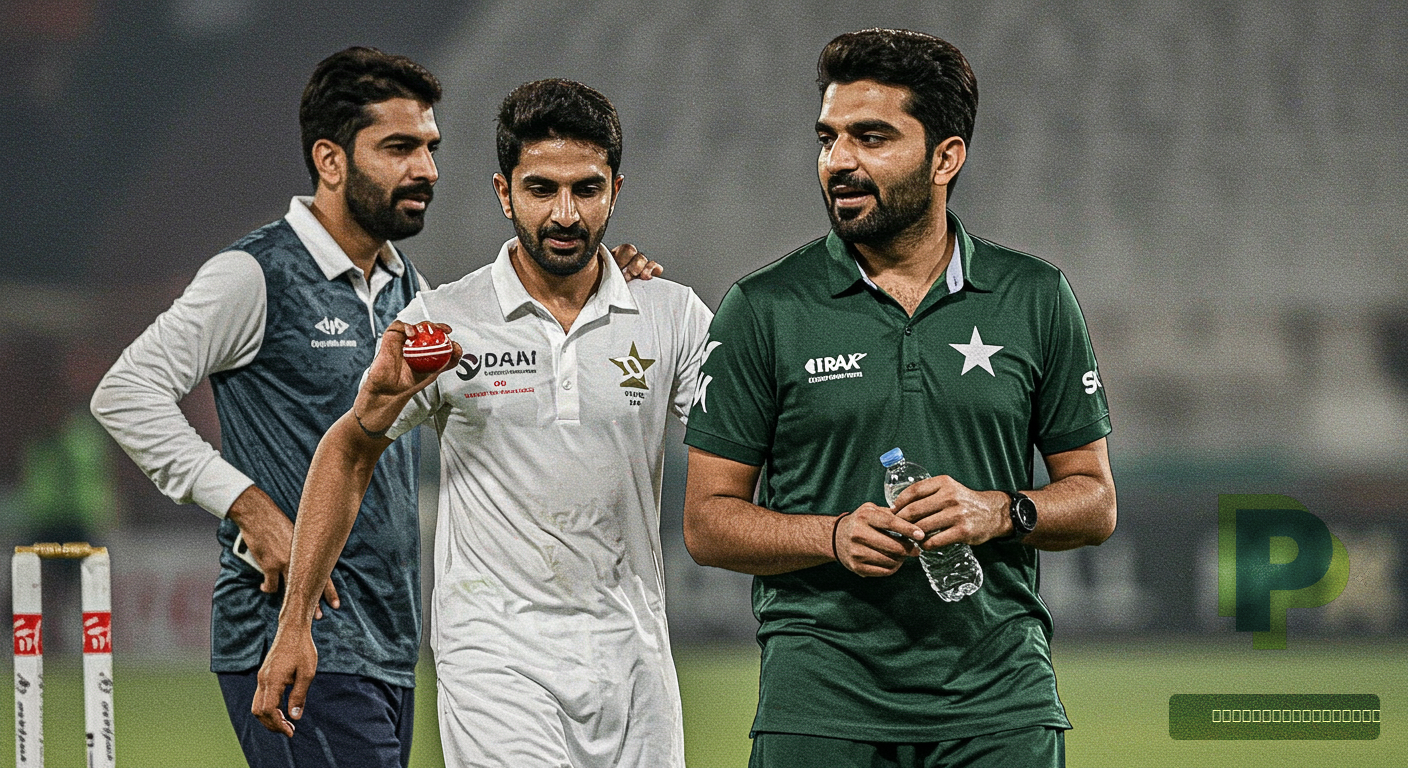
Former Indian cricket captain Sunil Gavaskar has reportedly made controversial remarks, linking the Sunrisers' signing of Pakistani spinner Abrar Ahmed to 'Indian deaths', as per reporting by Al Jazeera. This statement has quickly resonated across cricketing circles and beyond, raising significant questions about the delicate balance of sports and geopolitics between India and Pakistan. The alleged comments by Gavaskar underscore the persistent challenges in normalising sporting ties and cultural exchanges between the two nations, particularly concerning Pakistani athletes' participation in high-profile Indian leagues.
- Sunil Gavaskar, a legendary Indian cricketer, reportedly linked the Sunrisers' acquisition of Pakistan's Abrar Ahmed to 'Indian deaths'.
- The comments, as reported by Al Jazeera, have sparked immediate debate within cricketing and political spheres.
- Abrar Ahmed is a Pakistani leg-spinner, and his potential signing with an Indian Premier League (IPL) franchise, Sunrisers, marks a rare instance of player exchange.
- The remarks highlight the sensitive intersection of sports, nationalism, and historical tensions between India and Pakistan.
- Stakeholders are now watching for official reactions from cricket boards and potential long-term impacts on bilateral sports diplomacy.
Background: A History of Intertwined Cricket and Complex Relations
The relationship between India and Pakistan, often fraught with political and diplomatic complexities, has historically found a unique, albeit often tense, expression on the cricket field. For decades, cricket matches between the two nations have transcended mere sport, becoming highly charged events that reflect broader national sentiments. However, direct bilateral series between India and Pakistan have been largely suspended since 2012-2013 due to geopolitical tensions, with teams only encountering each other in multinational tournaments like the Cricket World Cup or Asia Cup.
This backdrop makes any interaction involving players from both countries, particularly in prominent leagues like the Indian Premier League (IPL), exceptionally sensitive. Pakistani players participated in the inaugural IPL season in 2008, but subsequent political developments led to their exclusion. The reported potential signing of Abrar Ahmed by the Sunrisers, an IPL franchise, represents a highly unusual development in this context, reigniting hopes and anxieties surrounding cross-border sporting engagement. It is against this complex and emotionally charged canvas that Sunil Gavaskar's recent comments, as highlighted by Al Jazeera, must be understood, amplifying existing sensitivities rather than mitigating them.
Gavaskar's Alleged Remarks and Initial Repercussions
According to a report by Al Jazeera, former Indian captain Sunil Gavaskar made remarks that reportedly linked the Sunrisers' acquisition of Pakistani spinner Abrar Ahmed to 'Indian deaths'. While the exact context and full verbatim statement from Gavaskar are crucial for precise interpretation, the phrasing itself, as reported, has been widely perceived as highly provocative. In cricketing parlance, a bowler 'killing' the opposition or 'destroying' their batting lineup is a common metaphor for a dominant performance. However, juxtaposing this with 'Indian deaths' carries a significantly heavier, and potentially incendiary, connotation given the historical and political backdrop between the two nuclear-armed neighbours. As of March 2026, neither the Board of Control for Cricket in India (BCCI) nor the Pakistan Cricket Board (PCB) has issued an official statement directly addressing Gavaskar's comments, maintaining a cautious silence.
Initial reactions, primarily observed on social media platforms and in sports commentary circles, suggest a mixed response. Some interpret the statement as a hyperbolic, albeit ill-advised, cricketing metaphor, while others have condemned it as insensitive and counterproductive to any efforts at fostering goodwill through sports. A senior sports journalist based in Karachi, speaking on condition of anonymity due to the sensitivity of the issue, told PakishNews, "Such remarks, regardless of intent, feed into the existing narratives of animosity. They complicate efforts to see sports purely as a medium of entertainment and talent, especially when a Pakistani player is involved in an Indian league." This sentiment reflects a broader concern about how high-profile figures' statements can inadvertently, or deliberately, escalate tensions rather than de-escalate them.
Expert Analysis: The Fragile State of Sports Diplomacy
The alleged remarks by Sunil Gavaskar serve as a stark reminder of the fragile state of sports diplomacy between India and Pakistan. Dr. Aisha Khan, a political analyst specializing in South Asian relations at the Institute for Regional Studies in Islamabad, told PakishNews, "Gavaskar's comments, if accurately reported, are more than just a cricketing observation; they tap into a deeper historical animosity that often weaponises cultural exchanges. This makes it incredibly difficult for sports to act as a bridge, as every interaction is viewed through a political lens." She further elaborated that such statements, particularly from figures of Gavaskar's stature, carry significant weight and can influence public perception and policy decisions.
Echoing this concern, Mr. Javed Miandad, a legendary Pakistani cricketer, when asked for his perspective by local media, emphasised the need for sports to remain separate from political rhetoric. While not directly addressing Gavaskar, he stated, "Cricket should unite, not divide. Players from both countries have respect for each other's talent. It is important that commentators and former players uphold this spirit." This view reflects a common desire among many in the cricketing fraternity to insulate the sport from geopolitical tensions, a task made increasingly difficult by public statements from influential personalities. Furthermore, a report published by the Centre for Dialogue and Reconciliation in New Delhi in late 2025 highlighted that 'people-to-people contact, including sporting exchanges, remains one of the most effective, yet underutilised, tools for de-escalation in South Asia,' underscoring the potential damage such rhetoric can inflict.
Impact Assessment: Who is Affected and How?
The repercussions of Gavaskar's alleged comments extend far beyond mere cricketing banter, affecting multiple stakeholders. Firstly, Abrar Ahmed, the Pakistani spinner at the centre of this controversy, could face undue pressure and scrutiny. While his talent is undeniable, such remarks might overshadow his cricketing prowess and place him in an unenviable position of being a political symbol rather than just an athlete. The Sunrisers franchise, by extension, might also face public relations challenges, navigating the delicate balance of team composition and national sentiment. The IPL, as a global brand, also risks being drawn into these geopolitical debates, potentially impacting its image as an inclusive platform for international talent.
Secondly, the already strained relationship between the Board of Control for Cricket in India (BCCI) and the Pakistan Cricket Board (PCB) could suffer further. While unofficial channels of communication often exist, public controversies make formal dialogue and cooperation more challenging. Any potential future discussions about resuming bilateral series or increasing player exchanges could be jeopardised. Moreover, the millions of cricket fans in both countries, who often yearn for competitive contests between their teams, are also affected. Such statements fuel nationalistic sentiments, diverting attention from the sport itself and fostering a climate of suspicion rather than camaraderie.
What Happens Next: Navigating the Geopolitical Crease
The immediate aftermath of Sunil Gavaskar's reported comments will likely involve a period of observation, as both cricket boards and governments assess the public and diplomatic reactions. It is improbable that a direct, official condemnation will emerge quickly, given the cautious approach typically adopted in such sensitive matters. However, unofficial channels may be activated to gauge the sentiment and potentially mitigate any fallout. For Abrar Ahmed, the focus will shift to his performance and ability to remain unaffected by the external noise, should his signing with Sunrisers proceed. His journey could become a litmus test for whether sporting talent can truly transcend political boundaries, even in the face of inflammatory rhetoric.
Stakeholders, including the International Cricket Council (ICC), the BCCI, and the PCB, should closely monitor the narrative surrounding these comments. A prolonged silence or an inability to address the underlying tensions could set a precedent for future interactions, making it harder to foster an environment conducive to sports diplomacy. What remains to be seen is whether this controversy will lead to a broader discussion on the role and responsibility of public figures in sports, particularly those who command such significant influence, to temper their language in politically charged environments. The coming weeks will indicate if this episode will be dismissed as an unfortunate utterance or if it will contribute to a further hardening of positions in the already complex India-Pakistan relationship, with tangible impacts on cricketing engagements. Updated March 12, 2026.
Related: More Pakistan Cricket News | India-Pakistan Relations
Frequently Asked Questions
What is the core update in this story?
Former Indian cricket captain Sunil Gavaskar has reportedly made controversial remarks, linking the Sunrisers' signing of Pakistani spinner Abrar Ahmed to 'Indian deaths', as per reporting by Al Jazeera. This statement has quickly resonated across cricketing circles and beyond, raising significant questions about the d
Why does this matter right now?
This matters because the development can influence public debate, policy direction, and the wider regional situation.
What should readers monitor next?
Follow official statements, verified facts, and timeline updates from reliable sources.