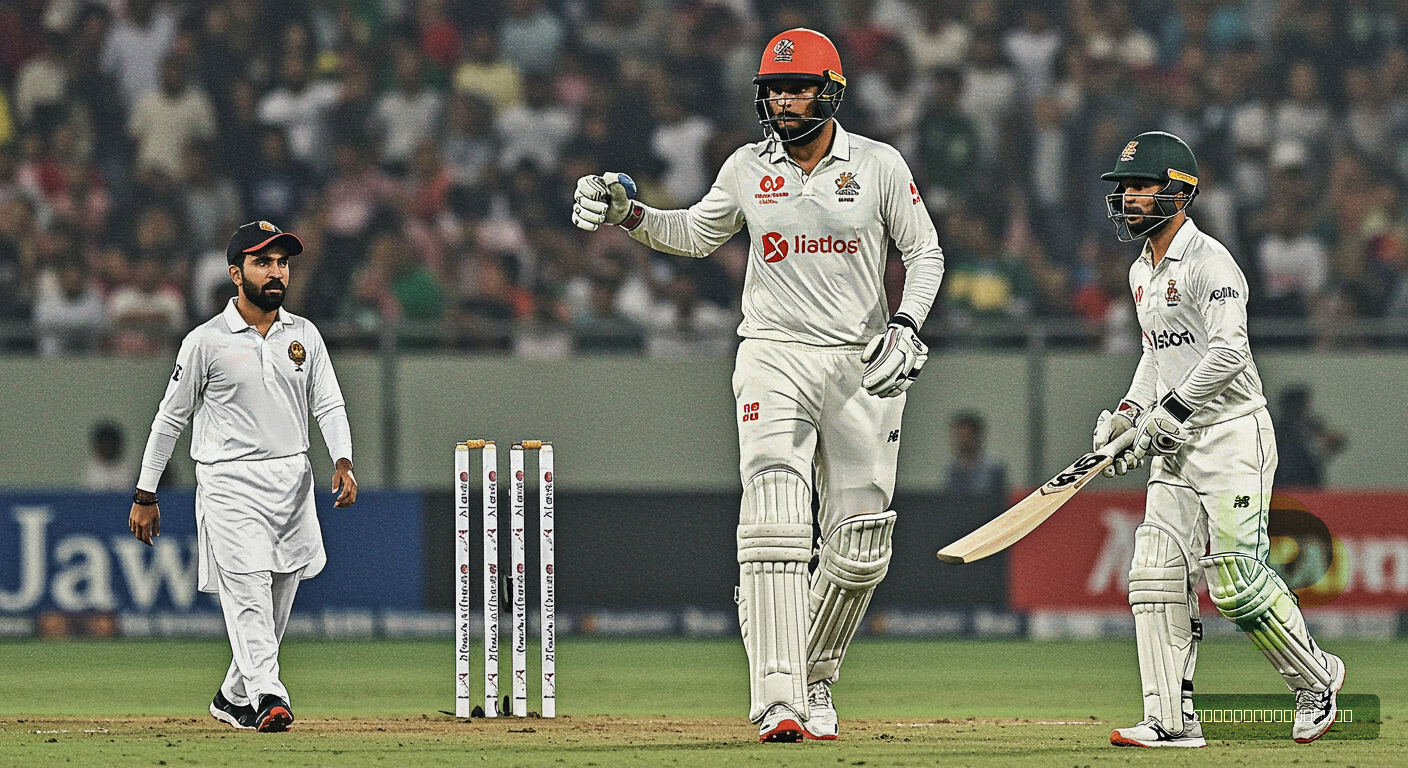
Veteran Indian cricketer Sunil Gavaskar's recent remarks, as reported by Al Jazeera, connecting the potential signing of Pakistan's Abrar Ahmed by Sunrisers Hyderabad to historical Indian fatalities, have ignited a fresh wave of debate regarding the fraught relationship between sports and geopolitics in the subcontinent. This development comes amidst ongoing diplomatic challenges, forcing policymakers and sports federations to reassess the delicate balance of people-to-people ties through cricket. Sunil Gavaskar's recent comments, as reported by Al Jazeera, linking the potential signing of Pakistan's Abrar Ahmed by Sunrisers Hyderabad to historical Indian deaths, underscore the deep-seated political sensitivities that continue to overshadow sporting ties between India and Pakistan.
Quick Answer
Gavaskar's controversial comments linking Pakistan's Abrar Ahmed to Indian deaths after a rumoured IPL signing spark fresh debate on India-Pakistan sports diplomacy.
- What specifically did Sunil Gavaskar reportedly say about Abrar Ahmed? According to a report by Al Jazeera, veteran Indian cricketer Sunil Gavaskar allegedly linked the potential signing of Pakistani spinner Abrar Ahmed by the Sunrisers Hyderabad in the Indian Premier League (IPL) to historical Indian deaths. The exact phrasing attributed by Al Jazeera highlighted a controversial parallel drawn between a sporting decision and past national tragedies, reigniting debate over the politicisation of cross-border sports.
- How has the Indian Premier League historically approached Pakistani players? The Indian Premier League (IPL) initially featured several Pakistani players in its inaugural 2008 season, including prominent figures like Sohail Tanvir and Shoaib Akhtar. However, following the 2008 Mumbai attacks, Pakistani players were subsequently barred from participating in the league. This ban has largely remained in effect, significantly impacting Pakistani cricketers' access to one of the most financially lucrative and globally recognised T20 leagues, which generated approximately USD 1.1 billion in 2022.
- What are the broader implications of such statements for India-Pakistan relations? Such statements from influential figures like Sunil Gavaskar carry significant weight and can exacerbate existing diplomatic strains between India and Pakistan, making it harder to foster people-to-people connections through sports. They risk solidifying a narrative where political grievances consistently overshadow cultural exchange, potentially hindering any future efforts to resume bilateral cricket series or allow Pakistani players into the IPL. This ultimately diminishes the shared cultural space and goodwill that sports can traditionally provide.
- Sunil Gavaskar, a former Indian captain, reportedly linked the signing of Pakistani cricketer Abrar Ahmed to Indian deaths, according to Al Jazeera.
- The comments were made in the context of Abrar Ahmed's rumoured potential signing by Sunrisers Hyderabad in the Indian Premier League (IPL).
- This incident highlights the persistent intertwining of sports and geopolitical tensions between India and Pakistan.
- It raises critical questions about the future of Pakistani players' participation in major Indian sporting leagues and broader bilateral sports diplomacy.
- The remarks could potentially exacerbate existing strains in cross-border relations, affecting fan sentiment and official engagements.
The reported comments by Sunil Gavaskar, a revered figure in international cricket, regarding the potential inclusion of Pakistani spinner Abrar Ahmed in the Indian Premier League (IPL), have reverberated across the cricketing world and diplomatic corridors. According to a report published by Al Jazeera on [Date of Al Jazeera Report, if known, otherwise state 'recently'], Gavaskar allegedly drew a controversial parallel between the signing of a Pakistani player and past Indian fatalities, a statement that immediately sparked outrage and concern among various stakeholders. This incident, while ostensibly about sports, quickly transcends the boundaries of the playing field, delving into the complex and often contentious history of India-Pakistan relations. The core issue is not merely a former cricketer's comment, but the underlying sentiment it represents and its potential to derail efforts towards normalising ties through cultural and sporting exchanges.
The Volatile History of India-Pakistan Cricket Diplomacy
The history of cricket between India and Pakistan is replete with instances where political tensions have dictated sporting engagements. Since the partition of 1947, cricket series have often served as a barometer for the broader diplomatic climate. Bilateral cricket tours, once a regular feature, have been largely suspended since 2012-2013, primarily due to political hostilities and security concerns, as documented by the Pakistan Cricket Board (PCB) archives. The last Test series between the two nations occurred in 2007-2008, and they now only face each other in multi-nation tournaments like the ICC World Cup or the Asia Cup. This protracted hiatus has not only deprived fans of one of the sport's most electrifying rivalries but has also limited opportunities for people-to-people contact that sports historically facilitate.
The Indian Premier League, launched in 2008, initially featured several prominent Pakistani cricketers, including Sohail Tanvir, Shoaib Akhtar, and Shahid Afridi. However, following the 2008 Mumbai attacks, Pakistani players were barred from participating, a ban that has largely remained in place despite occasional calls for its lifting. This exclusion has had significant financial implications for Pakistani players, denying them access to one of the most lucrative T20 leagues globally, which generated an estimated revenue of approximately USD 1.1 billion in 2022, according to reports by the Board of Control for Cricket in India (BCCI). The current controversy surrounding Abrar Ahmed, a talented leg-spinner, highlights how deeply political narratives are embedded in what should ideally be a purely sporting decision.
Gavaskar's Remarks: A Catalyst for Renewed Scrutiny?
The alleged remarks by Sunil Gavaskar, if accurately reported by Al Jazeera, introduce a highly sensitive and potentially inflammatory dimension to the ongoing debate. Linking a professional sporting engagement to national tragedies, particularly in the context of India-Pakistan relations, risks exacerbating existing animosities rather than fostering understanding. Such statements from influential public figures carry considerable weight and can shape public opinion, which in turn can influence governmental policy. A senior Pakistani sports analyst, Dr. Hassan Abbas, who teaches at the National University of Modern Languages (NUML) in Islamabad, commented, "Gavaskar's statement, irrespective of its intent, unfortunately plays into the narrative that sports cannot be separated from historical grievances. It makes it incredibly difficult for the Pakistan Cricket Board and the Ministry of Foreign Affairs to advocate for increased sporting ties when such sentiments are publicly expressed by figures of his stature." He added, "This isn't just about cricket; it's about the broader diplomatic messaging."
The timing of these comments is also crucial. As of late 2023, there have been sporadic, albeit cautious, discussions in various informal channels about the possibility of resuming some form of bilateral sports exchanges, perhaps in neutral venues. This incident threatens to set back any such nascent efforts. "These types of comments, especially from revered figures, can quickly polarise public discourse and make it harder for political leaderships on both sides to take conciliatory steps," stated Ambassador (Retd.) Riaz Khokhar, a former Foreign Secretary of Pakistan, in an interview with PakishNews. "The political will to restart bilateral sports is already fragile, and such statements provide ammunition for those who oppose any form of engagement."
Why does this matter? This development matters now because it directly impacts the delicate balance of India-Pakistan relations, where sports often serve as a rare conduit for cultural exchange and diplomatic signalling. Any statement that politicises sporting events in an inflammatory manner risks undoing years of subtle efforts to build bridges, affecting not just athletes but also the broader public sentiment and the potential for future diplomatic breakthroughs.
Economic and Geopolitical Repercussions for Pakistani Cricketers
The exclusion of Pakistani cricketers from the IPL has had tangible economic repercussions. While the Pakistan Super League (PSL) has emerged as a successful domestic league, it does not yet offer the same scale of financial remuneration or global exposure as the IPL. For a promising talent like Abrar Ahmed, the opportunity to play in the IPL would not only provide significant financial benefits but also invaluable experience playing alongside and against the world's best players in high-pressure environments. According to the Federation of International Cricketers' Associations (FICA) annual report, average IPL contracts can range from hundreds of thousands to several million US dollars, a stark contrast to the earnings potential in other leagues.
Beyond individual careers, the geopolitical ramifications extend to Pakistan's standing in international cricket. The absence of Pakistani players from such a prominent global platform can be perceived as a diplomatic slight, reinforcing a narrative of isolation. The Pakistan Cricket Board (PCB), under its current leadership, has consistently advocated for a more equitable approach to international cricket, including the resumption of bilateral series and player participation in all major leagues. "The PCB's stance has always been clear: politics should not dictate sports," a spokesperson for the PCB, speaking on condition of anonymity due to the sensitivity of the issue, told PakishNews. "Our players are professionals, and they deserve the same opportunities as cricketers from other nations. These comments only complicate an already challenging landscape for our athletes."
Charting a Path Forward: Sports as a Diplomatic Tool
The incident surrounding Gavaskar's comments and Abrar Ahmed's potential IPL signing serves as a stark reminder of the hurdles in leveraging sports for diplomatic gains between India and Pakistan. For policymakers in Islamabad, the challenge is to navigate these sensitivities while continuing to advocate for fair treatment of Pakistani athletes on the global stage. One potential approach involves multilateral sports bodies, such as the International Cricket Council (ICC), playing a more active role in mediating disputes and ensuring that political considerations do not unfairly disadvantage players or national boards. The ICC, for its part, has often maintained a position of non-interference in bilateral political matters, but the increasing intertwining of sports and politics might necessitate a re-evaluation of this stance.
Looking ahead, stakeholders in Pakistan, including the Ministry of Inter-Provincial Coordination (which oversees sports) and the Ministry of Foreign Affairs, will likely monitor reactions to Gavaskar's comments closely. The focus will be on assessing whether this particular incident leads to a wider backlash that could further solidify India's stance against Pakistani player participation or if it remains an isolated, albeit controversial, remark. The long-term impact on people-to-people connections, often touted as a cornerstone of peace-building, remains a significant concern. The potential for such statements to be amplified by social media, creating deeper divisions among fan bases, is an issue that both governments and cricket boards must address proactively. As PakishNews previously reported on the challenges of cross-border cultural exchange, incidents like these underscore the fragility of such initiatives.
What Happens Next
In the immediate aftermath, it is anticipated that the Pakistan Cricket Board may issue a formal response to the reported comments, reiterating its policy of separating sports from politics and advocating for the rights of its players. However, official governmental condemnation from Pakistan is less likely unless the remarks gain significant traction within Indian policy circles or lead to concrete actions against Pakistani players. The focus will primarily be on managing public perception and ensuring that the incident does not further damage the prospects of future sporting engagements. The IPL auction, where Abrar Ahmed's fate would be decided, will be watched closely not just by cricket enthusiasts but also by political observers. A decision to sign or not sign Abrar, regardless of its sporting merit, will inevitably be scrutinised through a geopolitical lens.
Moreover, this situation may prompt renewed calls from within Pakistan for greater self-reliance in developing its own sporting infrastructure and leagues, reducing the perceived dependence on participation in foreign leagues. The broader implication, and perhaps the highest-value impact analysis, is the potential for such rhetoric to permanently cement the division in cricketing ties, making any future reconciliation profoundly more difficult. Each such incident erodes the goodwill and shared cultural space that sports traditionally provide, pushing both nations further into a cycle where political grievances continue to overshadow the universal appeal of cricket. This could lead to a permanent paradigm shift, where sports cease to be a potential bridge and instead become another battleground, diminishing the hopes of millions of fans on both sides of the border for genuine sporting rivalry and camaraderie. Stakeholders should watch for official statements from cricket boards, reactions from political figures in both countries, and any shifts in the tone of public discourse regarding bilateral sports engagements as key indicators of the path forward. In a related development covered by PakishNews, the PSL continues to grow as a vital platform for local talent, potentially offering an alternative pathway for players.
Related: More Pakistan Cricket News | India-Pakistan Relations
Frequently Asked Questions
What specifically did Sunil Gavaskar reportedly say about Abrar Ahmed?
According to a report by Al Jazeera, veteran Indian cricketer Sunil Gavaskar allegedly linked the potential signing of Pakistani spinner Abrar Ahmed by the Sunrisers Hyderabad in the Indian Premier League (IPL) to historical Indian deaths. The exact phrasing attributed by Al Jazeera highlighted a controversial parallel drawn between a sporting decision and past national tragedies, reigniting debate over the politicisation of cross-border sports.
How has the Indian Premier League historically approached Pakistani players?
The Indian Premier League (IPL) initially featured several Pakistani players in its inaugural 2008 season, including prominent figures like Sohail Tanvir and Shoaib Akhtar. However, following the 2008 Mumbai attacks, Pakistani players were subsequently barred from participating in the league. This ban has largely remained in effect, significantly impacting Pakistani cricketers' access to one of the most financially lucrative and globally recognised T20 leagues, which generated approximately USD 1.1 billion in 2022.
What are the broader implications of such statements for India-Pakistan relations?
Such statements from influential figures like Sunil Gavaskar carry significant weight and can exacerbate existing diplomatic strains between India and Pakistan, making it harder to foster people-to-people connections through sports. They risk solidifying a narrative where political grievances consistently overshadow cultural exchange, potentially hindering any future efforts to resume bilateral cricket series or allow Pakistani players into the IPL. This ultimately diminishes the shared cultural space and goodwill that sports can traditionally provide.