PakishNews ListenPress play to hear this articleDownload audio
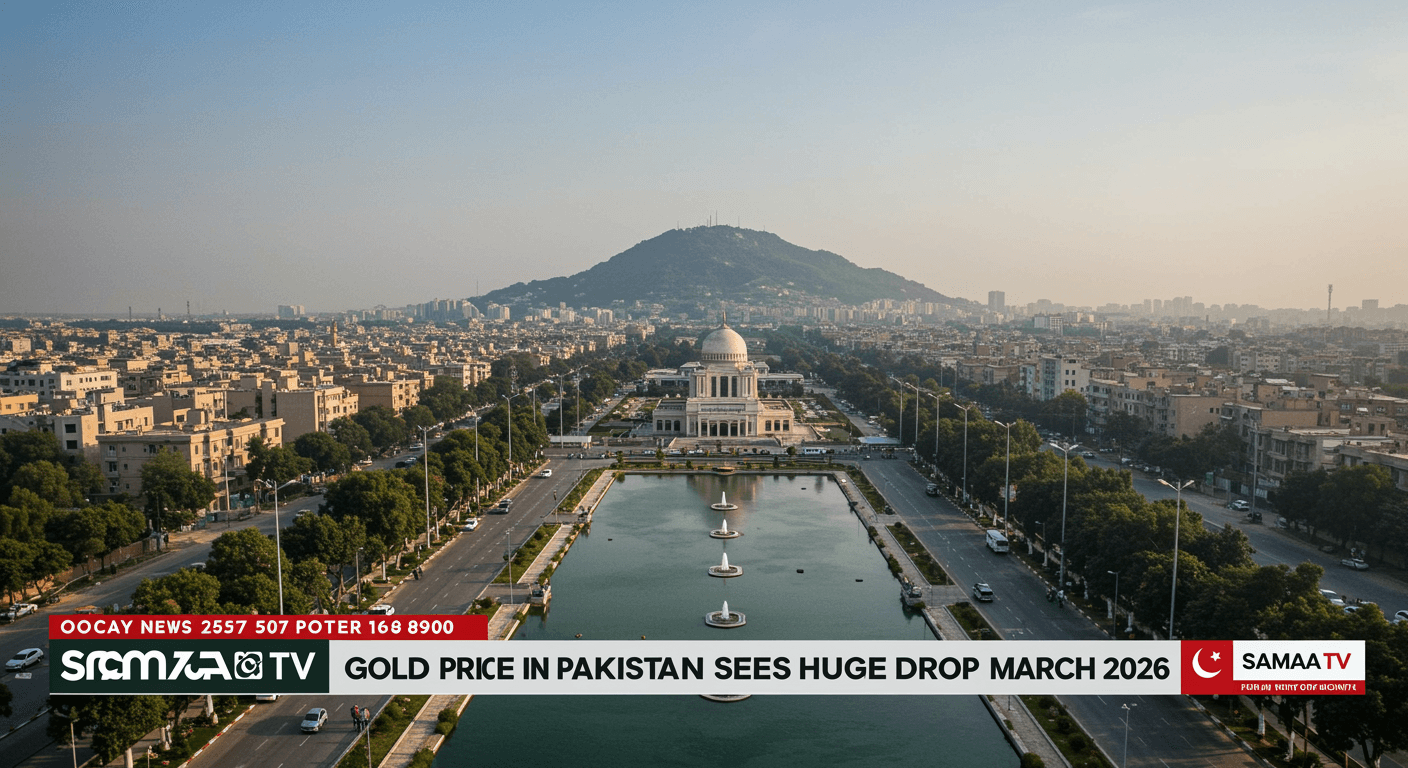
Pakistan's gold market witnessed a dramatic downturn on March 14, 2026, as the price of 24-karat gold per tola plummeted by PKR 8,500, settling at PKR 226,500. This substantial decline, reported by Samaa TV, is largely attributed to a robust appreciation of the Pakistani Rupee against the US Dollar and shifting investor sentiment towards a more stable economic outlook. The substantial decline in Pakistan's gold price on March 14, 2026, primarily reflects a strengthening Rupee and improved macroeconomic stability, signalling a shift in investor confidence.
- Significant Drop: The price of 24-karat gold per tola fell by PKR 8,500 to PKR 226,500 on March 14, 2026.
- Key Driver: A strong appreciation of the Pakistani Rupee against the US Dollar is identified as the primary catalyst.
- Economic Context: Improved macroeconomic indicators, including lower inflation and a stable current account, are bolstering investor confidence.
- Global Influence: A moderate correction in international gold prices, coupled with a stronger US Dollar, also contributed to the local drop.
- Market Impact: The decline affects gold investors, consumers, and the jewellery sector, potentially stimulating demand for ornaments.
The sudden downturn marks a notable shift in a market traditionally seen as a safe haven against economic volatility and currency depreciation in Pakistan. For years, gold has been a preferred investment for many Pakistanis, shielding savings from persistent inflation and a weakening Rupee. The current development, therefore, signals a potential inflection point in the nation's economic trajectory, prompting a re-evaluation of investment strategies among various segments of society.
Historically, gold prices in Pakistan have been closely tied to the international spot price of gold, often denominated in US Dollars, and the prevailing PKR-USD exchange rate. When the Rupee depreciates, the local price of gold tends to increase, even if international prices remain stable, making it an attractive hedge. Conversely, a strengthening Rupee directly translates to a lower local gold price. This dynamic has been particularly pronounced during periods of economic instability, such as the fiscal years 2022-2024, when the Rupee experienced significant volatility, driving gold prices to unprecedented highs, often exceeding PKR 235,000 per tola. The current drop suggests a reversal of these long-standing trends, reflecting a broader improvement in Pakistan’s macroeconomic fundamentals.
As PakishNews previously reported, Pakistan Border Casualties: 14 Soldiers Killed in Cross-Border Attacks.
What Factors Triggered This Sharp Decline in Gold Prices?
The primary catalyst for the substantial fall in gold prices on March 14, 2026, is a significant strengthening of the Pakistani Rupee against the US Dollar. As of the close of markets on March 13, 2026, the Rupee had appreciated to approximately PKR 265 per US Dollar, a notable improvement from its average of PKR 278 in January 2026 and a peak of over PKR 300 in mid-2024. This robust performance of the local currency is attributed to several factors, including sustained efforts in fiscal consolidation, a narrowing current account deficit, and an increase in foreign exchange reserves, which stood at an estimated $12.5 billion by early March 2026, according to data from the State Bank of Pakistan (SBP).
In addition to domestic currency dynamics, international gold prices also experienced a moderate correction. On the global commodity exchanges, spot gold prices eased from a high of around $2,150 per ounce in late February to approximately $2,120 per ounce by March 14, 2026. This global shift was influenced by a strengthening US Dollar index, which rose above 104 points, and easing geopolitical tensions in key regions, reducing gold’s appeal as a safe-haven asset. Furthermore, the US Federal Reserve's continued hawkish stance, maintaining its benchmark interest rate at 5.50-5.75%, increased the opportunity cost of holding non-yielding gold, diverting investment towards interest-bearing assets.
“The Rupee’s appreciation is a direct consequence of improved economic management and enhanced investor confidence,” stated Dr. Jameel Ahmed, Deputy Governor of the State Bank of Pakistan, in a press briefing on March 14, 2026. “Our tight monetary policy, with the policy rate currently at 20.5%, has been instrumental in curbing inflationary pressures, which have eased to 15.2% year-on-year for February 2026, down from over 25% a year prior. This stability makes other investment avenues more attractive than gold.” This sentiment was echoed by Mr. Asad Iqbal, a Karachi-based independent economic analyst, who noted, “For years, gold was the default hedge. Now, with the Rupee showing resilience and the equity market (Pakistan Stock Exchange) demonstrating upward momentum—the KSE-100 index crossing 70,000 points—investors are diversifying, moving away from an over-reliance on bullion.”
Who Benefits and Who Loses from Falling Gold Prices?
The immediate beneficiaries of the falling gold prices are consumers looking to purchase gold jewellery or invest in bullion at a lower cost. With the wedding season approaching and Eid festivities on the horizon, the reduced prices could stimulate demand within the local market. Mr. Muhammad Arshad, President of the All Pakistan Gems and Jewellers Association (APGJA), commented, “This drop is a welcome relief for the jewellery sector. We anticipate a surge in consumer buying, especially for bridal sets and gifts, which had been subdued due to prohibitively high prices. It’s a chance for the formal market to regain some lost ground from the informal sector.”
Conversely, individuals who invested heavily in gold when prices were at their peak face potential losses, at least on paper. Speculators who bought gold in anticipation of further depreciation of the Rupee may now be liquidating their holdings, contributing to further downward pressure. However, for long-term investors who view gold as a generational asset, short-term fluctuations might be less concerning. The broader economy benefits from a more stable currency and reduced informal transactions associated with gold hoarding, paving the way for more productive investments in sectors like manufacturing and services. The Ministry of Finance expects this shift to contribute positively to the tax base as formal investment channels gain traction, as PakishNews previously reported on recent economic reforms.
Is Pakistan's Economic Outlook Shifting from Gold-Centric Investment?
The recent drop in gold prices, driven by a strengthening Rupee and improved economic indicators, suggests a potential paradigm shift in Pakistan's investment landscape. For decades, gold has served as a primary store of value for households, particularly those wary of inflation and banking system instability. The current trend indicates a growing confidence in the formal financial system and the national currency, encouraging investors to explore alternative asset classes such as government securities, mutual funds, and the burgeoning real estate sector. The government's consistent efforts to streamline economic policies, coupled with successful engagements with international financial institutions like the IMF, are gradually restoring faith in Pakistan’s long-term economic stability.
This shift is crucial for Pakistan's economic development. A reduction in gold hoarding can free up capital for more productive investments, fostering job creation and industrial growth. The State Bank of Pakistan’s prudent monetary policy, focused on maintaining price stability and managing liquidity, plays a pivotal role in sustaining this positive momentum. As of March 2026, the SBP’s proactive measures, including careful management of the interbank foreign exchange market and robust regulatory oversight, have significantly contributed to the Rupee’s resilience. Read more on SBP's monetary policy decisions at PakishNews.
What Happens Next?
The sustainability of the current gold price trend hinges on several critical factors. Firstly, the Pakistani Rupee's trajectory will remain paramount. Continued appreciation will depend on sustained improvements in the current account balance, increased foreign direct investment (FDI)—which saw an 18% increase in the first half of FY26—and robust remittance inflows, which have risen by 10% year-on-year for Q1 2026. Any reversal in these macroeconomic indicators, or renewed political uncertainty, could quickly reignite safe-haven demand for gold.
Secondly, global gold market dynamics, influenced by international interest rates, the strength of the US Dollar, and geopolitical developments, will continue to exert influence. A sharp increase in global tensions or a significant weakening of the US Dollar could push international gold prices higher, inevitably impacting the local market despite domestic stability. Stakeholders, including policymakers, investors, and the general public, should closely monitor the State Bank of Pakistan’s upcoming monetary policy statements, the government's fiscal policy announcements, and global commodity market trends for further indicators of market direction.
Related: More Pakistan Economy News | Gold Market
Related Coverage
- Pakistan Border Casualties: 14 Soldiers Killed in Cross-Border Attacks
- SOE Salary Cuts: Pakistan's Austerity Drive Intensifies
- Sunrisers Face Backlash Over Abrar Ahmed Signing
Frequently Asked Questions
❓ What caused the significant drop in Pakistan's gold price on March 14, 2026?
The substantial drop in Pakistan's gold price on March 14, 2026, was primarily driven by a significant appreciation of the Pakistani Rupee against the US Dollar, reaching approximately PKR 265 per US Dollar. This was compounded by a moderate correction in international gold prices and a strengthening US Dollar index globally, reducing gold's appeal as a safe-haven asset.
❓ How does the strengthening Rupee affect local gold prices in Pakistan?
A strengthening Rupee directly lowers the local gold price in Pakistan because gold is primarily priced in US Dollars internationally. When the Rupee gains value, it takes fewer Rupees to buy the same amount of US Dollars, thus reducing the equivalent local price of gold. This effect is often more pronounced than fluctuations in the international spot price of gold itself.
❓ What are the broader implications of this gold price drop for Pakistan's economy?
This gold price drop, indicative of a strengthening Rupee and improved macroeconomic stability, suggests a positive shift in investor confidence towards Pakistan's formal financial system. It could lead to a diversification of investments away from gold hoarding into more productive asset classes like equities and government securities, potentially stimulating economic growth and expanding the tax base, as highlighted by the State Bank of Pakistan's recent statements on fiscal discipline.