Listen to this articleDownload audio
Listen to this articlePress play to hear this story in conversational podcast format.Listen to this articleDownload audio
Listen to ArticleDownload audio
Listen to ArticlePress play to hear this storyListen to ArticleDownload audio
In a significant development over the past 24 hours, the Government of Pakistan has unveiled a comprehensive new export strategy aimed at bolstering the nation's foreign exchange reserves and stimulating economic growth. This pivotal policy, announced by the Ministry of Commerce, seeks to diversify Pakistan's export base and enhance global market access. The immediate focus is on achieving a 15% increase in export revenues over the next fiscal year, a target considered ambitious yet crucial for fiscal stability. This new export strategy, targeting a 15% growth in the next fiscal year, represents a pivotal shift towards enhancing Pakistan's global trade footprint.
Quick Answer
Pakistan's government launches a new export strategy targeting 15% growth, with mixed impacts expected for Faisalabad's textile sector amidst new Supreme Court environmental mandates.
- What are the primary goals of Pakistan's new National Export Strategy? The new National Export Strategy aims to achieve a 15% increase in export revenues over the next fiscal year, targeting USD 45 billion by 2029. Its primary goals include product diversification beyond traditional textiles, enhancing market access through new trade agreements, and resolving supply-side constraints such as energy shortages and logistical bottlenecks. This is a significant shift from the previous fiscal year's USD 30 billion in exports, according to the State Bank of Pakistan.
- How will the Supreme Court's environmental ruling affect industries, particularly in cities like Faisalabad? The Supreme Court's recent ruling mandates stricter compliance for industrial waste management, requiring all industrial units, including those in Faisalabad, to install advanced effluent treatment plants within six months. This will increase operational costs for businesses, potentially impacting their competitiveness, especially for smaller textile units. Failure to comply could result in severe penalties, directly affecting the profitability and sustainability of numerous factories.
- What measures are being taken to attract foreign direct investment (FDI) into Pakistan? To attract more foreign direct investment, the National Assembly's Standing Committee on Finance and Revenue has approved critical amendments to the Investment Promotion Act. These amendments are designed to streamline investment processes, reduce bureaucratic hurdles, and provide clearer legal protections for international investors. The Board of Investment anticipates these reforms could boost FDI by 10-12% over the next two years, enhancing Pakistan's appeal as an investment destination.
- Government launches a new National Export Strategy, aiming for 15% growth in the next fiscal year.
- Strategy focuses on diversification, market access, and addressing supply-side constraints.
- Supreme Court issues a landmark ruling on environmental protection, mandating stricter industrial compliance.
- Parliamentary committee advances critical amendments to the Investment Promotion Act, streamlining foreign direct investment processes.
- Economic analysts foresee varied impacts across sectors, with a particular focus on the textile hub of Faisalabad.
**Background and Context: A Push for Economic Resilience**
Pakistan's economy has faced persistent challenges, including trade deficits and fluctuating foreign exchange reserves. For decades, the nation's export basket has been heavily reliant on a few key sectors, primarily textiles. According to data from the Pakistan Bureau of Statistics (PBS), textiles and apparel constituted approximately 60% of Pakistan's total exports in the last fiscal year, a figure that has remained relatively stagnant for the past five years. This over-reliance has made the economy vulnerable to global market fluctuations in specific commodities. Previous governments have attempted various export promotion schemes, but consistent, long-term growth has remained elusive due to issues ranging from energy shortages to market access barriers and a lack of product diversification.
The current government, facing ongoing pressure to stabilise the economy and reduce dependency on external borrowing, has prioritised export-led growth. The newly announced strategy, as detailed by Federal Minister for Commerce, Jam Kamal Khan, during a press conference in Islamabad yesterday, seeks to address these systemic issues. It proposes targeted incentives for non-traditional sectors such as information technology, pharmaceuticals, and engineering goods, alongside measures to improve the competitiveness of traditional sectors. This initiative is critical now, as the nation seeks to consolidate recent gains in economic stability, particularly after securing a new financing facility from the International Monetary Fund (IMF) in late 2025, which emphasised structural reforms and revenue generation. Read more on Pakistan's economic reforms at PakishNews Economy.
**Key Pillars of the New National Export Strategy**
Why does this matter? The new National Export Strategy is not merely a collection of incentives; it represents a strategic pivot designed to fundamentally reconfigure Pakistan's trade landscape. The strategy is built on three core pillars: product diversification, market access enhancement, and addressing supply-side constraints. Product diversification aims to reduce reliance on traditional goods by identifying and promoting high-value, non-traditional exports. Market access enhancement involves negotiating new free trade agreements and upgrading existing ones, alongside supporting exporters in navigating international trade regulations. Addressing supply-side constraints focuses on improving infrastructure, ensuring energy security, and facilitating access to finance for export-oriented industries. The Ministry of Commerce projects that these measures, if implemented effectively, could see Pakistan's annual exports reach USD 45 billion by 2029, a substantial increase from the current USD 30 billion reported by the State Bank of Pakistan for the fiscal year ending June 2025.
**Expert Analysis: Cautious Optimism and Implementation Challenges**
Economists and industry leaders have offered a mix of cautious optimism and practical concerns regarding the new strategy. Dr. Aisha Khan, a leading economic analyst at the Institute of Policy Studies, told PakishNews, "The ambition to diversify our export base is commendable and long overdue. However, the success will hinge entirely on the execution. Past strategies have often faltered due to bureaucratic hurdles and a lack of consistent policy implementation across various government departments." She further elaborated that targeted support for research and development in emerging sectors would be crucial.
Meanwhile, Mr. Abdullah Sheikh, President of the Federation of Pakistan Chambers of Commerce & Industry (FPCCI), welcomed the initiative, stating, "Our business community has long advocated for a holistic approach to exports. The focus on resolving supply-side issues, particularly energy costs and logistical bottlenecks, is a positive step. We are particularly keen to see the swift implementation of the proposed export finance schemes, which are vital for small and medium-sized enterprises (SMEs)." A senior official from the Planning Commission, speaking anonymously due to ongoing policy deliberations, indicated that inter-ministerial coordination committees are being established to ensure smooth implementation and regular monitoring of progress.
**Impact Assessment: The Looming Question for Faisalabad's Textile Sector**
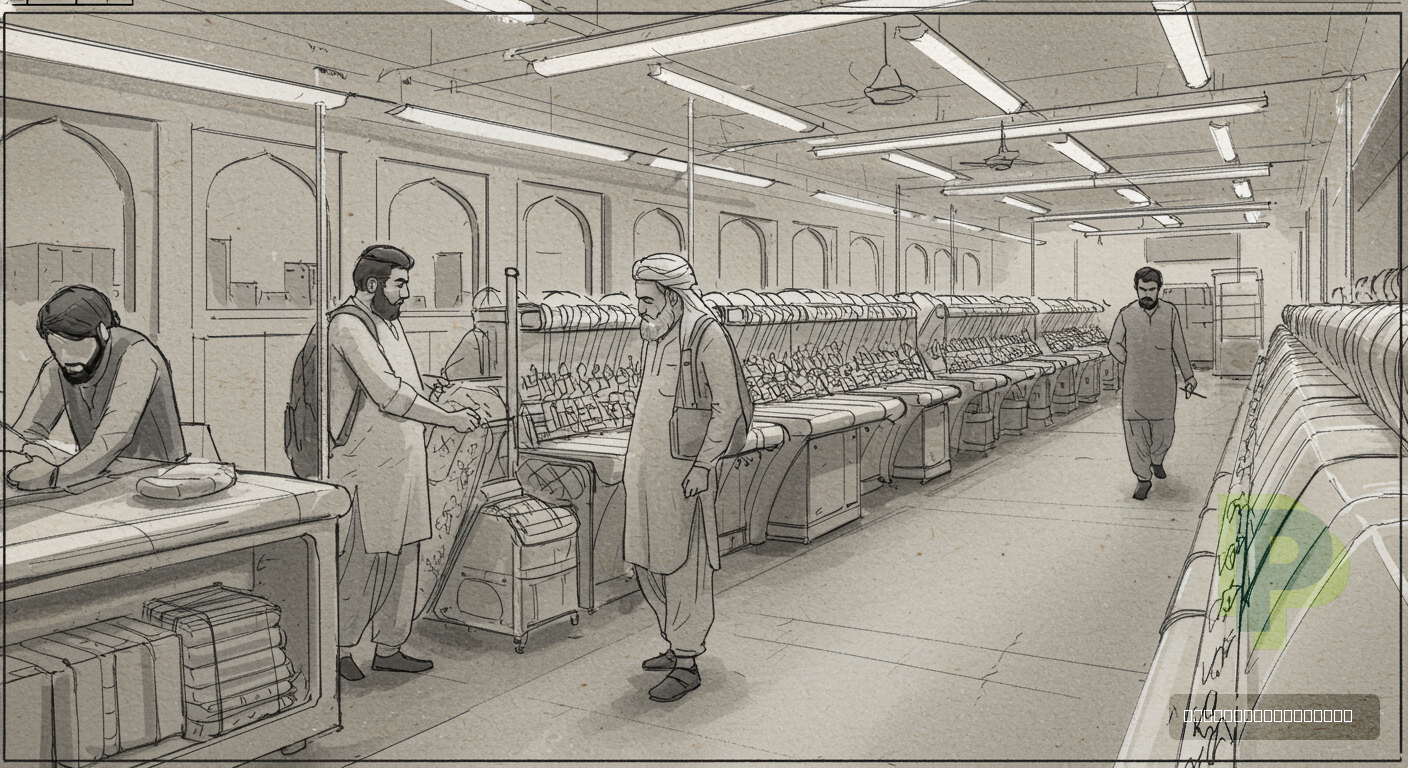
The question of how this new export strategy will specifically impact the textile sector in Faisalabad, often dubbed the 'Manchester of Pakistan', is a critical one. Faisalabad’s textile industry, a cornerstone of Pakistan’s exports and a major employer, faces both opportunities and potential challenges. While the strategy aims to boost overall exports, the emphasis on diversification could mean a re-allocation of resources and attention. According to the Faisalabad Chamber of Commerce & Industry (FCCI), the textile sector contributes approximately 55% of the city's Gross Domestic Product and employs over 2.5 million people directly and indirectly.
Under the new strategy, traditional textile exporters in Faisalabad could benefit from improved market access and streamlined trade processes. However, the push for non-traditional exports might shift some government incentives away from established industries. Mr. Tariq Mahmood, a prominent textile manufacturer in Faisalabad, expressed concern during a local media interaction: "While we appreciate any effort to boost exports, we need assurances that the textile sector, which has been the backbone of Pakistan's economy for decades, will continue to receive adequate support. Investments in upgrading machinery and adopting sustainable practices are crucial for us to remain competitive globally. We hope the new strategy will facilitate these upgrades, not sideline them." The strategy document, sighted by PakishNews, does include provisions for modernising textile machinery through subsidised loans and technical assistance, but the extent of this support relative to new sectors remains to be seen.
**Broader Implications and Judicial Developments**
Beyond the economic policy, the past 24 hours also saw significant judicial activity. The Supreme Court of Pakistan issued a landmark ruling yesterday concerning environmental protection, mandating stricter compliance for industrial waste management. This decision, stemming from a public interest litigation, requires industrial units, including those in Faisalabad, to install advanced effluent treatment plants within six months, or face severe penalties. This development, while crucial for public health and environmental sustainability, will undoubtedly add to the operational costs of textile units in Faisalabad, potentially impacting their competitiveness if not mitigated by government support or industry-wide solutions. This ruling underscores the increasing judicial scrutiny on industrial practices and its direct financial implications for businesses nationwide. In a related development covered by PakishNews, the National Assembly’s Standing Committee on Finance and Revenue yesterday approved crucial amendments to the Investment Promotion Act, designed to further streamline the process for foreign direct investment (FDI) into Pakistan. These amendments aim to reduce bureaucratic red tape and offer clearer legal protections for international investors, potentially boosting FDI by 10-12% over the next two years, according to projections from the Board of Investment.
**What Happens Next: Monitoring Implementation and Sectoral Response**
The coming weeks will be critical for observing the initial steps of the new export strategy's implementation. Businesses, particularly in the textile sector, will be closely watching for the detailed rollout of incentive programmes, access to new markets, and the specific mechanisms for addressing supply-side challenges. The government's capacity to coordinate between various ministries—Commerce, Finance, Industries, and Energy—will be paramount. The impact of the Supreme Court's environmental ruling will also be keenly felt, as industries scramble to meet new compliance standards. Stakeholders should particularly watch for the specifics of the financial packages and technical assistance offered to help industries, especially SMEs in Faisalabad, adapt to both the new export landscape and stricter environmental regulations. The effectiveness of the inter-ministerial coordination committees will be a key indicator of the strategy's potential for long-term success, potentially shaping Pakistan's economic trajectory for the next decade. Updated March 12, 2026.
Related: More Pakistan Economy News | Trade Policy
Quick Answers (AI Overview)
- What happened in this story?
In a significant development over the past 24 hours, the Government of Pakistan has unveiled a comprehensive new export strategy aimed at bolstering the nation's foreign exchange reserves and stimulating economic growth. - Why does this matter right now?
It matters because government unveils new export strategy, but how will it impact textile industries in faisalabad? can impact public discussion, policy, or regional stability depending on follow-up events. - What should readers watch next?
Watch for official statements, verified facts, and timeline updates from credible sources including manual.
Frequently Asked Questions
What are the primary goals of Pakistan's new National Export Strategy?
The new National Export Strategy aims to achieve a 15% increase in export revenues over the next fiscal year, targeting USD 45 billion by 2029. Its primary goals include product diversification beyond traditional textiles, enhancing market access through new trade agreements, and resolving supply-side constraints such as energy shortages and logistical bottlenecks. This is a significant shift from the previous fiscal year's USD 30 billion in exports, according to the State Bank of Pakistan.
How will the Supreme Court's environmental ruling affect industries, particularly in cities like Faisalabad?
The Supreme Court's recent ruling mandates stricter compliance for industrial waste management, requiring all industrial units, including those in Faisalabad, to install advanced effluent treatment plants within six months. This will increase operational costs for businesses, potentially impacting their competitiveness, especially for smaller textile units. Failure to comply could result in severe penalties, directly affecting the profitability and sustainability of numerous factories.
What measures are being taken to attract foreign direct investment (FDI) into Pakistan?
To attract more foreign direct investment, the National Assembly's Standing Committee on Finance and Revenue has approved critical amendments to the Investment Promotion Act. These amendments are designed to streamline investment processes, reduce bureaucratic hurdles, and provide clearer legal protections for international investors. The Board of Investment anticipates these reforms could boost FDI by 10-12% over the next two years, enhancing Pakistan's appeal as an investment destination.