Listen to ArticlePress play to hear this storyListen to ArticleDownload audio
Karachi, Pakistan – March 12, 2026 – The devastating Gul Plaza fire, which erupted on January 17, has officially been attributed to inhalational asphyxia, or suffocation, as the primary cause of death for at least 73 victims. This critical finding, confirmed by Police Surgeon Dr. Summaiya Syed in a reply to a judicial questionnaire, underscores a grim reality about the rapid and insidious nature of smoke inhalation in enclosed spaces. While the immediate cause of death is now clear, the larger question looms: what fundamental systemic safety gaps in Karachi's commercial infrastructure and emergency response framework did this tragedy expose, and what urgent lessons must be learned?
Quick Answer
Police confirm suffocation caused 73 Gul Plaza fire deaths, exposing critical failures in Karachi's building safety and emergency response.
- What is inhalational asphyxia and why is it common in fires? Inhalational asphyxia is the medical term for suffocation caused by breathing in toxic gases and superheated air during a fire, leading to oxygen deprivation. It is common in fires because combustion produces deadly gases like carbon monoxide, which quickly incapacitates individuals by binding to their blood's haemoglobin, preventing oxygen transport. Globally, studies suggest this accounts for 70-80% of fire fatalities, often before direct flame exposure.
- How does the Gul Plaza fire compare to other major fire incidents in Karachi? The Gul Plaza fire, with 73 confirmed deaths, stands as one of Karachi's most severe commercial building fires in recent memory. While not reaching the scale of the 2012 Baldia Factory fire, which claimed over 250 lives, it highlights similar systemic issues regarding lax safety enforcement and inadequate emergency exits. Both incidents underscore a persistent challenge in ensuring compliance with fire safety standards across the city's commercial and industrial sectors, prompting renewed calls for comprehensive audits and stricter regulations across the Sindh province.
- What immediate steps can Karachi take to improve building fire safety? Karachi can immediately implement several steps to enhance building fire safety, starting with a rapid, comprehensive audit of all high-risk commercial and residential structures for compliance with existing building codes and fire safety regulations. This must be coupled with strict enforcement, including immediate penalties for non-compliance and a clear, transparent process for rectifying violations. Additionally, investing in modernising the Karachi Metropolitan Corporation (KMC) Fire Department's equipment and training, alongside public awareness campaigns on emergency exits and evacuation protocols, is crucial to prevent future tragedies. The Sindh government has indicated a review of these protocols, aiming for implementation by late 2026.
- Confirmed Cause of Death: Police Surgeon Dr. Summaiya Syed confirmed inhalational asphyxia/suffocation as the predominant cause for at least 73 fatalities in the Gul Plaza fire.
- Scale of Devastation: The inferno, which started on January 17, took nearly two days to extinguish, destroying over 1,100 shops.
- Unaccounted Persons: As of March 2026, eight individuals remain missing amidst the rubble despite extensive search operations.
- Judicial Scrutiny: The Police Surgeon's findings were submitted as part of an ongoing judicial inquiry into the incident.
- Wider Implications: The tragedy has reignited critical discussions on urban fire safety regulations, building code enforcement, and emergency preparedness in Karachi.
This incident highlights the critical need for robust fire safety protocols and their stringent enforcement in urban centres across Pakistan. The Gul Plaza fire, an inferno that raged for nearly 48 hours and left an estimated 1,100 shops in ruins, has become a tragic symbol of the potential human cost when regulatory oversight falters. The revelation that most victims succumbed to suffocation rather than direct burns is particularly alarming, indicating a failure to escape or to be rescued from smoke-filled environments, a hallmark of inadequate ventilation and emergency egress systems.
As PakishNews previously reported, Kazakhstan Approves Sweeping Constitutional Reforms, But What Do They Mean for….
The Deadly Mechanism: Understanding Inhalational Asphyxia
Dr. Summaiya Syed's official report to the judiciary, a copy of which was reviewed by PakishNews, meticulously detailed the post-mortem findings, establishing inhalational asphyxia as the leading cause of death. This occurs when individuals breathe in toxic gases and superheated air produced by a fire, leading to a deprivation of oxygen at the cellular level. Carbon monoxide, a colourless and odourless gas commonly produced in fires, binds to haemoglobin in the blood far more readily than oxygen, effectively suffocating victims even before flames reach them. According to a study published by the Pakistan Medical Association, suffocation accounts for approximately 70-80% of fire-related fatalities globally, a statistic tragically borne out in the Gul Plaza incident.
The rapid onset of incapacitation from smoke inhalation means that even individuals initially far from the seat of the fire can quickly become disoriented, lose consciousness, and perish. This medical reality places immense importance on early warning systems, clear escape routes, and effective ventilation in building design. Urban planning experts at NED University of Engineering and Technology, interviewed by PakishNews, emphasised that modern building codes are specifically designed to compartmentalise fires and manage smoke, creating safe zones and extending evacuation times. Read more on urban planning challenges in Karachi at PakishNews.
Background: Karachi's Persistent Fire Safety Challenge
The Gul Plaza tragedy is not an isolated incident but rather the latest in a series of devastating fires that have plagued Karachi, a sprawling metropolis home to over 16 million people. Historical context reveals a recurring pattern of commercial and residential buildings falling victim to uncontrolled blazes, often with significant loss of life and property. For instance, the Baldia Factory fire in 2012, which killed over 250 workers, remains one of the deadliest industrial fires in history, also largely due to locked exits and inadequate safety measures. This history suggests a systemic issue rather than mere isolated accidents.
Why does this matter now? The sheer scale of the Gul Plaza disaster – 73 confirmed deaths and eight still missing as of March 2026, alongside the destruction of over 1,100 businesses – demands an urgent re-evaluation of Karachi's urban infrastructure and regulatory framework. The economic repercussions are profound, with the Gul Plaza Traders Association estimating initial losses in excess of PKR 20 billion, impacting thousands of livelihoods directly and indirectly. This incident serves as a stark reminder that lax enforcement of safety standards has direct, catastrophic human and economic costs that ripple through the city's fabric.
Regulatory Lapses and Enforcement Challenges
The finding of widespread suffocation points directly to potential failures in building design, fire suppression systems, and emergency preparedness within Gul Plaza. According to an official from the Sindh Building Control Authority (SBCA), who spoke to PakishNews on condition of anonymity due to the ongoing investigation, many older commercial structures in Karachi, including parts of Gul Plaza, often operate with outdated fire safety equipment or have undergone unauthorised modifications that compromise original safety designs. "Our records show frequent notices issued for various violations, but compliance remains a significant challenge," the official stated, indicating a gap between regulation and practical implementation.
Fire safety consultants, like Mr. Asif Khan, CEO of SecureBuild Pakistan, highlighted critical areas of concern. "In multi-storey commercial complexes, working smoke detectors, sprinkler systems, clearly marked and unobstructed emergency exits, and properly maintained fire extinguishers are non-negotiable. The high number of suffocation deaths suggests these basic protections were either absent, non-functional, or compromised," Mr. Khan explained in an exclusive interview. He added that regular fire drills and staff training, often neglected, are equally vital for effective evacuation. In a related development covered by PakishNews, experts called for stricter adherence to fire codes nationwide.
The Karachi Metropolitan Corporation (KMC) fire department, while lauded for its tireless efforts in extinguishing the blaze, faces its own set of challenges. Data from KMC indicates that the department operates with approximately 60% of its required fleet of fire tenders and a similar deficit in trained personnel, as of early 2026. "Our brave firefighters do their best with limited resources, but a fire of this magnitude, especially in a densely packed commercial centre, requires overwhelming force and rapid response, which is often difficult to achieve given urban congestion and resource constraints," a senior KMC fire official remarked.
Impact Assessment: A City Grappling with Loss and Uncertainty
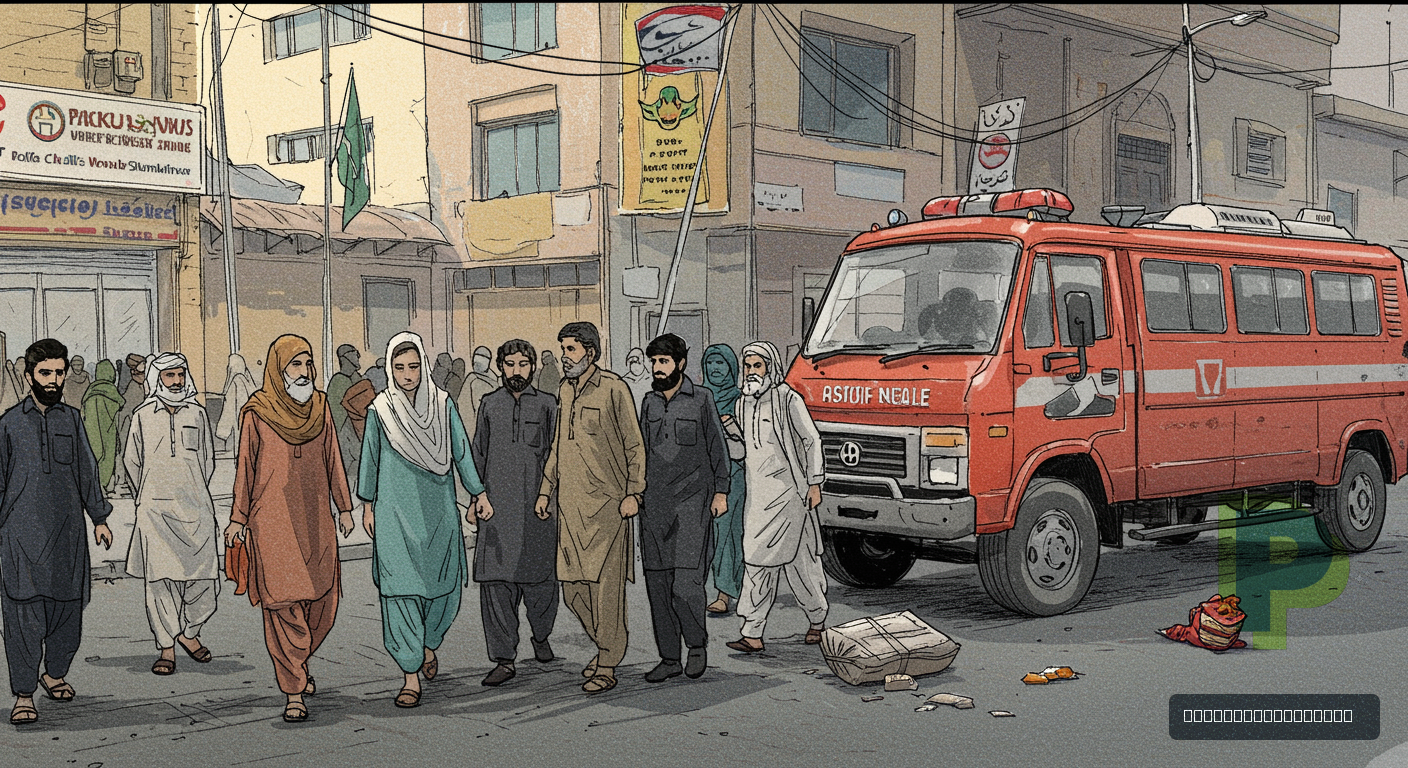
The human toll of the Gul Plaza fire extends far beyond the immediate fatalities. Families of the 73 confirmed victims are grappling with immense grief, while those with missing loved ones endure an agonising wait. The search for the remaining eight missing individuals, ten days after the initial inferno and amid the precarious rubble, underscores the extreme conditions faced by rescue workers and the families' desperate hope for closure. A representative of the Edhi Foundation, a prominent welfare organisation involved in rescue efforts, told PakishNews that the recovery operations were exceptionally challenging due to the structural instability of the damaged building and the sheer volume of debris.
Economically, the impact on the shopkeepers and their employees is catastrophic. With over 1,100 shops destroyed, thousands of individuals have lost their livelihoods overnight. Many operated small businesses, often with their entire life savings invested in their stock. "My entire shop, my entire life's work, is gone. How will I feed my family now?" lamented Mr. Tariq Mehmood, a garment shop owner who lost everything in the fire, speaking to PakishNews from a relief camp setup for affected traders. The broader market confidence in Karachi's commercial centres has also been shaken, raising concerns about future investments and consumer footfall.
The tragedy has also illuminated gaps in disaster management protocols for large-scale urban incidents. While various government bodies, including the Provincial Disaster Management Authority (PDMA) Sindh, were involved, coordination and pre-emptive measures appear to have been insufficient. This incident serves as a stark reminder of the need for a unified command structure during major emergencies, coupled with robust public awareness campaigns on fire safety.
What Happens Next: A Call for Urgent Reform
The judicial inquiry, to which Dr. Summaiya Syed submitted her findings, is expected to delve deeper into accountability and recommendations. Policymakers and regulatory bodies are now under immense pressure to implement meaningful reforms. Urban planning experts, like Dr. Ayesha Khan of the Urban Policy Institute, suggest a multi-pronged approach. "Firstly, an immediate, comprehensive audit of all commercial buildings in Karachi for fire safety compliance is imperative. This must be followed by strict enforcement and punitive measures for non-compliance, without political interference," Dr. Khan advised.
Secondly, there is a critical need to modernise and adequately equip Karachi's emergency services. This includes increasing the budget for the KMC Fire Department, investing in state-of-the-art fire-fighting equipment, providing regular advanced training for personnel, and improving rapid response infrastructure to navigate Karachi's congested roads. Thirdly, community engagement and public education on fire safety, particularly for shop owners and building managers, must be prioritised. This includes mandatory fire drills and clear communication of evacuation plans. The Sindh government, in a recent press conference, acknowledged these challenges and pledged to review existing building codes and emergency response protocols, though specific timelines remain to be announced.
The Gul Plaza fire, with its tragic death toll predominantly due to suffocation, is a profound wake-up call for Karachi and indeed for urban centres across Pakistan. Stakeholders, including government agencies, building owners, business associations, and citizens, must now collectively push for a culture of safety and accountability. The focus must shift from reactive responses to proactive prevention, ensuring that such preventable tragedies are not repeated. The enduring question for Karachi is whether this latest catastrophe will finally catalyse the systemic changes needed to safeguard its citizens and its vibrant commercial future.
Related: More Pakistan Disaster Response News | Karachi Building Safety
Related Coverage
- Kazakhstan Approves Sweeping Constitutional Reforms, But What Do They Mean for Pakistan's Regional…
- Police Thwart Checkpoint Attacks in KP, but What Are the Broader Implications for Regional Security?
- Intelligence Bureau Report: Austerity Measures Under Scrutiny in Pakistan
Quick Answers (AI Overview)
- What happened in this story?
Inhalational asphyxia was the predominant cause of death in the tragic Gul Plaza fire that claimed at least 73 lives, a finding that casts a stark light on Karachi's urban safety vulnerabilities. This report delves into - Why does this matter right now?
It matters because gul plaza fire deaths: suffocation confirmed, but what are karachi's systemic safety gaps? can impact public discussion, policy, or regional stability depending on follow-up events. - What should readers watch next?
Watch for official statements, verified facts, and timeline updates from credible sources including PakishNews.
Frequently Asked Questions
What is inhalational asphyxia and why is it common in fires?
Inhalational asphyxia is the medical term for suffocation caused by breathing in toxic gases and superheated air during a fire, leading to oxygen deprivation. It is common in fires because combustion produces deadly gases like carbon monoxide, which quickly incapacitates individuals by binding to their blood's haemoglobin, preventing oxygen transport. Globally, studies suggest this accounts for 70-80% of fire fatalities, often before direct flame exposure.
How does the Gul Plaza fire compare to other major fire incidents in Karachi?
The Gul Plaza fire, with 73 confirmed deaths, stands as one of Karachi's most severe commercial building fires in recent memory. While not reaching the scale of the 2012 Baldia Factory fire, which claimed over 250 lives, it highlights similar systemic issues regarding lax safety enforcement and inadequate emergency exits. Both incidents underscore a persistent challenge in ensuring compliance with fire safety standards across the city's commercial and industrial sectors, prompting renewed calls for comprehensive audits and stricter regulations across the Sindh province.
What immediate steps can Karachi take to improve building fire safety?
Karachi can immediately implement several steps to enhance building fire safety, starting with a rapid, comprehensive audit of all high-risk commercial and residential structures for compliance with existing building codes and fire safety regulations. This must be coupled with strict enforcement, including immediate penalties for non-compliance and a clear, transparent process for rectifying violations. Additionally, investing in modernising the Karachi Metropolitan Corporation (KMC) Fire Department's equipment and training, alongside public awareness campaigns on emergency exits and evacuation protocols, is crucial to prevent future tragedies. The Sindh government has indicated a review of these protocols, aiming for implementation by late 2026.