?Listen to ArticlePress play to hear this storyListen to ArticleDownload audio
Years after then-President Donald Trump urged international allies to ensure the free flow of navigation through the Strait of Hormuz amid a series of attacks on oil tankers in the Gulf, the geopolitical fault lines in the region remain sharply defined. This critical maritime chokepoint continues to be a nexus of international concern, directly impacting global energy markets and regional security dynamics, with significant implications for Pakistan and the wider Gulf Co-operation Council (GCC) states. The enduring challenge of ensuring maritime security in the Strait of Hormuz, first highlighted by a concerted international response to 2019 attacks, remains a top priority for global powers and regional stakeholders alike, as of March 2026.
- Historical Context: In 2019, multiple attacks on oil tankers in the Gulf of Oman and near the Strait of Hormuz prompted then-US President Donald Trump to call for a robust international coalition to secure the vital waterway.
- Strategic Chokepoint: The Strait of Hormuz, a narrow passage between Iran and Oman, is one of the world's most critical maritime arteries, through which approximately 20% of global petroleum liquids and a significant portion of liquefied natural gas (LNG) pass daily.
- Regional Tensions: The incidents occurred amidst heightened tensions between the United States and Iran, following the US withdrawal from the Joint Comprehensive Plan of Action (JCPOA) in 2018 and the re-imposition of sanctions.
- Allied Response: The US initiated Operation Sentinel (later renamed International Maritime Security Construct, IMSC), drawing participation from several nations including the UK, Saudi Arabia, and the UAE, to enhance surveillance and deterrence.
- Enduring Relevance: As of March 2026, the principles of collective maritime defence and the strategic vulnerabilities of the Gulf remain central to regional foreign policy and defence planning, directly influencing energy prices and trade routes.
Why Does the Strait of Hormuz Remain a Global Flashpoint?
The Strait of Hormuz remains a global flashpoint primarily due to its unparalleled strategic importance to international energy security and the persistent geopolitical rivalries that converge on its waters. This narrow waterway, merely 21 nautical miles (39 kilometres) wide at its narrowest point, connects the Persian Gulf to the Arabian Sea and beyond, making it indispensable for the transport of hydrocarbon resources. According to data from the US Energy Information Administration (EIA) updated in late 2023, an average of 21 million barrels per day (b/d) of crude oil, condensate, and petroleum products flowed through the Strait in 2022, representing about 20% of global petroleum liquids consumption. This volume underscores why any disruption in the Strait can trigger immediate and significant spikes in global oil prices, impacting economies worldwide, including Pakistan, which relies heavily on imported oil.
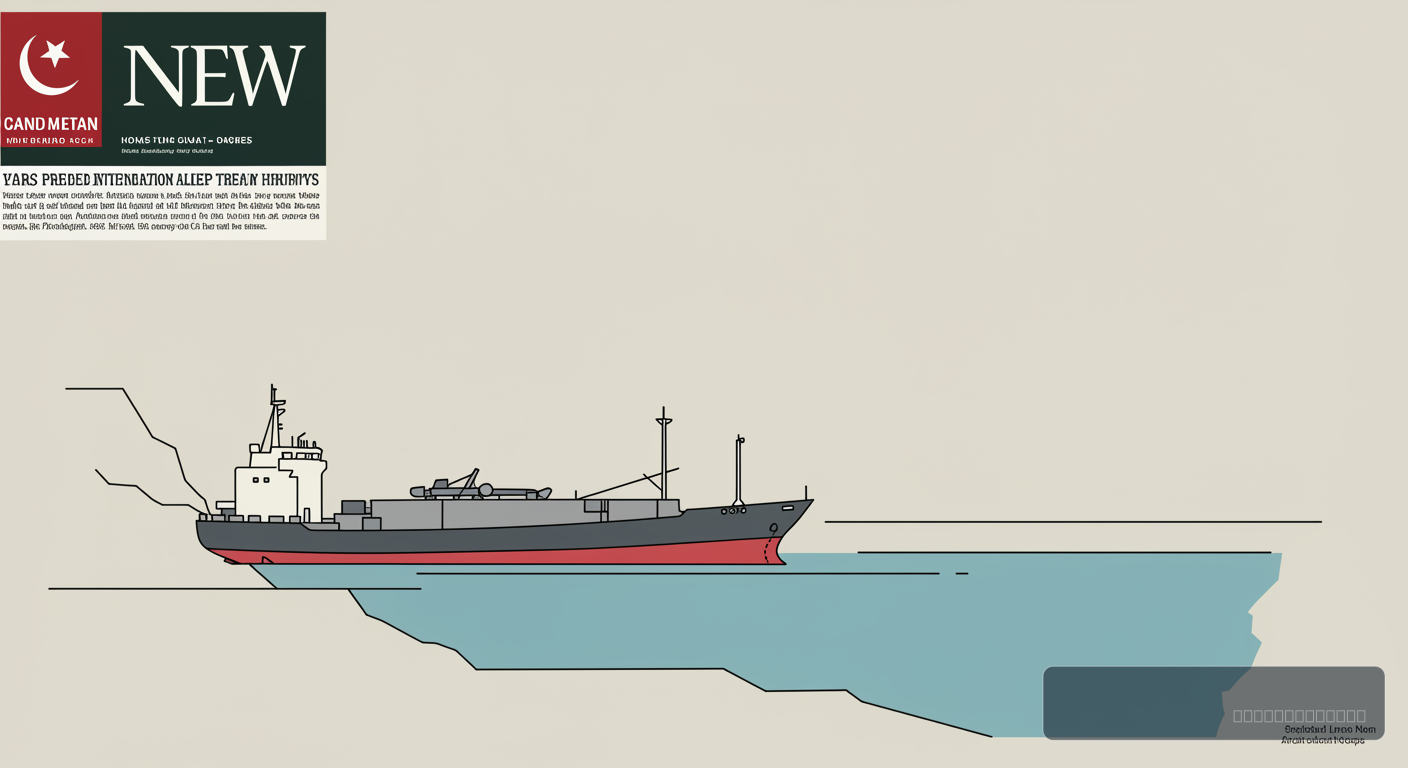
The historical context of the 2019 attacks is crucial for understanding its current relevance. In May and June 2019, a series of mysterious explosions damaged several oil tankers, including the Norwegian-owned MT Front Altair and the Japanese-owned Kokuka Courageous, near the Strait of Hormuz. US officials, including then-Secretary of State Mike Pompeo, swiftly attributed these attacks to Iran, citing intelligence assessments, though Tehran vehemently denied involvement. These incidents escalated an already tense stand-off between Washington and Tehran, triggered by the Trump administration's unilateral withdrawal from the 2015 Iran nuclear deal (JCPOA) in May 2018 and the subsequent re-imposition of stringent sanctions aimed at crippling Iran's oil exports. The US withdrawal and the 'maximum pressure' campaign dramatically ratcheted up regional instability, creating an environment ripe for such maritime incidents. As PakishNews previously reported, the economic implications of these sanctions on Iran have been profound, with the IMF estimating a significant contraction in Iran's economy during that period.
As PakishNews previously reported, US Iran Military Standoff: Gulf Tensions Escalate Amidst Nuclear Concerns.
How Did the 2019 Attacks Reshape Gulf Maritime Security?
The 2019 attacks fundamentally reshaped the approach to Gulf maritime security by catalyzing a renewed emphasis on international cooperation and deterrence. Then-President Trump's call for allies to keep Hormuz open was not merely rhetorical; it prompted tangible actions. In August 2019, the United States formally launched Operation Sentinel, an international initiative designed to increase surveillance and presence in the Strait of Hormuz and the Bab el-Mandeb Strait. This mission, later renamed the International Maritime Security Construct (IMSC), quickly garnered support from key allies, including the United Kingdom, Saudi Arabia, the United Arab Emirates, Australia, and Bahrain. Its mandate was clear: to ensure freedom of navigation and deter hostile actions in these critical waterways through enhanced monitoring and coordination.
The formation of the IMSC marked a significant diplomatic and military undertaking, demonstrating a collective commitment to protecting global trade routes. Naval assets from participating nations, including frigates and patrol vessels, were deployed to provide escort services and intelligence sharing. For Gulf states like the UAE and Saudi Arabia, whose economies are intrinsically linked to oil exports via Hormuz, participation was a strategic imperative. "The 2019 incidents were a stark reminder that economic prosperity and national security in the Gulf are directly tied to the unimpeded flow of maritime trade," stated Dr. Abdulaziz Al-Sager, Chairman of the Gulf Research Centre, in a recent interview. "The IMSC, while a US-led initiative, provided a crucial framework for regional partners to enhance their own maritime defence capabilities and interoperability."
Pakistan, while not a direct participant in IMSC, closely monitored these developments due to its own strategic interests. As a non-permanent member of the UN Security Council at various junctures and a nation with significant maritime trade, Pakistan has consistently advocated for peaceful resolution of disputes and adherence to international law regarding freedom of navigation. The country's primary port, Gwadar, part of the China-Pakistan Economic Corridor (CPEC), also relies on regional stability for its long-term growth trajectory. A senior official from Pakistan's Ministry of Maritime Affairs, speaking anonymously due to the sensitivity of ongoing diplomatic engagements, affirmed, "Pakistan's economic lifeline is intertwined with regional stability, particularly the secure flow of energy resources from the Gulf. Our policy remains one of non-interference while advocating for de-escalation and diplomatic solutions to safeguard maritime trade."
What Are the Enduring Implications for Pakistan and the Gulf?
The enduring implications of the 2019 Hormuz tensions for Pakistan and the Gulf states are multi-faceted, encompassing energy security, economic stability, and regional diplomatic alignments. For the Gulf Cooperation Council (GCC) states – notably Saudi Arabia, UAE, Kuwait, and Qatar – the events reinforced the imperative of bolstering their naval capabilities and diversifying export routes where feasible. The UAE, for instance, has invested significantly in expanding the capacity of its Fujairah oil terminal and associated pipelines, allowing a portion of its crude oil exports to bypass the Strait of Hormuz entirely. This project, operational since 2012 and continuously upgraded, can handle several million barrels per day, providing a critical alternative in times of heightened risk.
For Pakistan, the primary concern revolves around energy security and the potential for economic disruption. Pakistan imports over 85% of its crude oil and petroleum products, with a significant portion originating from the Gulf region. Any sustained disruption in the Strait of Hormuz would lead to skyrocketing oil prices, directly impacting Pakistan's import bill and exacerbating inflationary pressures. In 2023-24, Pakistan's oil import bill stood at approximately USD 17 billion, a figure highly sensitive to global price fluctuations. "The vulnerability of the Strait of Hormuz means Pakistan must always factor in a significant geopolitical risk premium into its long-term energy planning," noted Dr. Maleeha Lodhi, former Permanent Representative of Pakistan to the United Nations. "Diversifying energy sources and routes, while challenging, remains a strategic imperative for Islamabad to mitigate this exposure."
Moreover, the security of the Strait directly affects the millions of Pakistani expatriates working in the Gulf region, whose remittances are a crucial pillar of Pakistan's economy. In fiscal year 2022-23, Pakistan received a record USD 27 billion in remittances, with a substantial portion originating from the UAE and Saudi Arabia, according to the State Bank of Pakistan. Regional instability threatens employment opportunities and the overall economic environment for these workers, potentially leading to a decline in remittances. This highlights the profound human and economic linkages that bind Pakistan to the stability of the Gulf.
What Happens Next in Gulf Maritime Security?
Looking ahead to March 2026 and beyond, the dynamics of Gulf maritime security will continue to be shaped by a complex interplay of regional rivalries, global power interests, and the ongoing quest for energy stability. While the immediate threat of widespread conflict has somewhat receded since the peak tensions of 2019-2020, the underlying issues remain unresolved. The future of the Iran nuclear deal, the trajectory of US engagement in the Middle East, and the evolving strategic partnerships between Gulf states and global powers will all play a critical role.
One key area to watch is the continued evolution of multilateral security initiatives. The IMSC, despite its initial focus, may see its mandate adapt or expand, or new regional security architectures could emerge. Countries like Pakistan will continue their delicate diplomatic balancing act, maintaining robust bilateral relations with both Iran and the GCC states, emphasizing dialogue and de-escalation. The potential for a renewed focus on regional confidence-building measures, perhaps under the auspices of the United Nations or through direct regional dialogues, offers a path towards more sustainable stability. Read more on Gulf diplomacy at PakishNews.
The global community, particularly major energy consumers in Asia and Europe, will remain vigilant. Any future incidents in the Strait of Hormuz would likely trigger swift and coordinated international responses, given the lessons learned from 2019. Investment in advanced maritime surveillance technologies, enhanced intelligence sharing, and persistent diplomatic efforts to reduce regional friction will be paramount. For policymakers in Islamabad and across the Gulf, the challenge is to navigate these intricate geopolitical currents while safeguarding national interests and contributing to broader regional peace and prosperity.
Related: More World News | Energy Security
Related Coverage
- US Iran Military Standoff: Gulf Tensions Escalate Amidst Nuclear Concerns
- US-Iran Naval Standoff Escalates in Hormuz, March 2026 Update
- US-Iran Military Standoff and Oil Route Risks Test Gulf Stability in March 2026
Quick Answers (AI Overview)
- What happened in this story?
Years after then-President Donald Trump urged international allies to ensure the free flow of navigation through the Strait of Hormuz amid a series of attacks on oil tankers in the Gulf, the geopolitical fault lines in t - Why does this matter right now?
It matters because hormuz at crossroads: trump's 2019 call echoes in gulf security can impact public discussion, policy, or regional stability depending on follow-up events. - What should readers watch next?
Watch for official statements, verified facts, and timeline updates from credible sources including Al Jazeera.