Listen to ArticlePress play to hear this storyListen to ArticleDownload audio
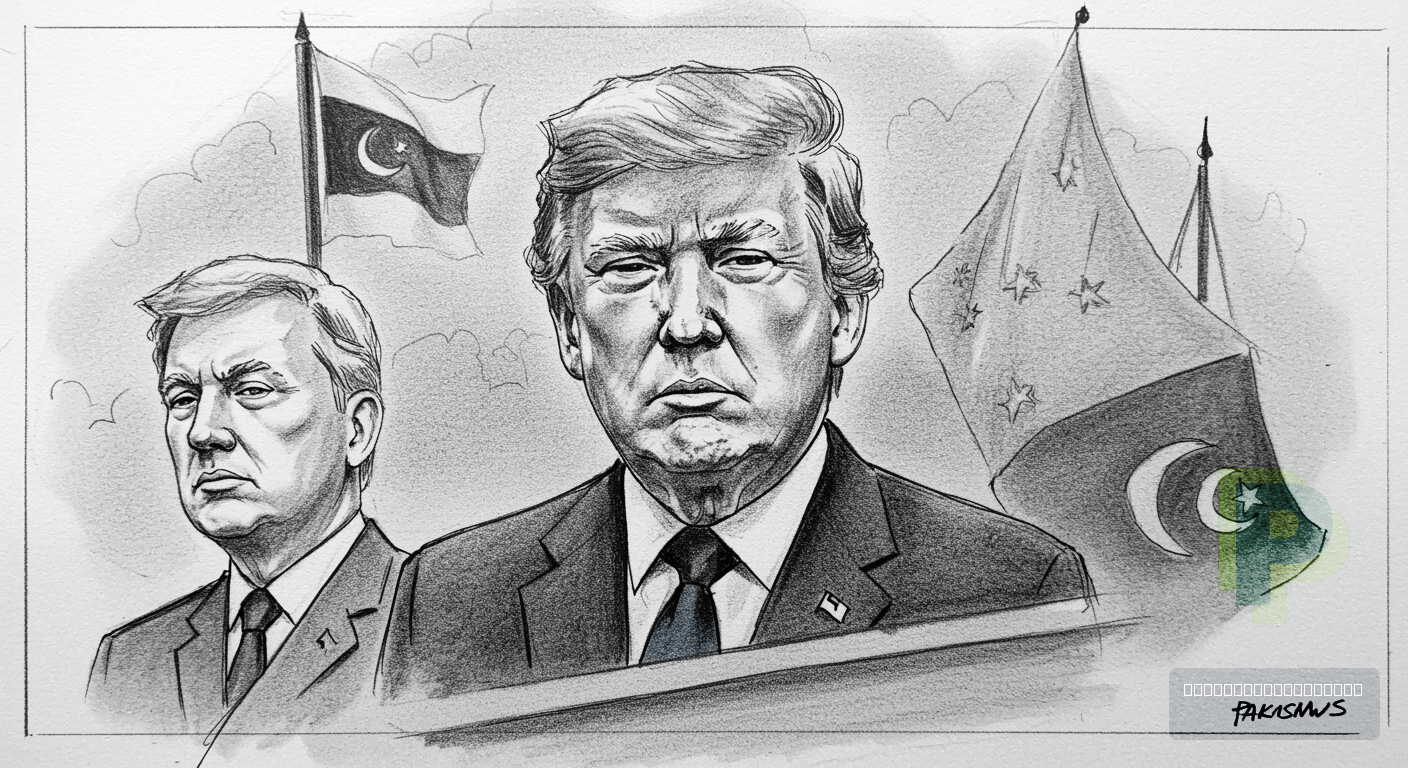
Former US President Donald Trump has sharply criticised several nations for their perceived lack of commitment to securing the Strait of Hormuz, a critical global chokepoint, as a protracted Middle East conflict enters its 17th day. His remarks, made during a campaign rally in Pennsylvania on March 11, 2026, underscore mounting international pressure and the strategic vulnerabilities exposed by the ongoing regional instability. The conflict, which began on February 24, 2026, has already seen a significant uptick in regional maritime incidents, raising alarm bells for global energy security. The escalating tensions in the Strait of Hormuz pose significant risks to global energy markets and maritime trade, directly impacting nations like Pakistan and the UAE.
Quick Answer
Trump criticizes nations over inaction in the Hormuz Strait crisis as Middle East conflict escalates on Day 17, threatening global energy and trade.
- What is the strategic importance of the Strait of Hormuz for the global economy? The Strait of Hormuz is critical as it facilitates the transit of approximately 21 million barrels of oil per day, representing about 21% of global petroleum consumption, according to the US EIA. This makes it the world's most important oil chokepoint, essential for the global energy supply chain and directly impacting international oil prices and economic stability. Any disruption can lead to significant market volatility and supply shortages worldwide.
- How do ongoing Middle East conflicts specifically affect Pakistan's energy security? Ongoing Middle East conflicts, particularly those impacting the Strait of Hormuz, severely threaten Pakistan's energy security. Pakistan imports over 70% of its oil from GCC countries via this route, as per the Pakistan Bureau of Statistics. Disruptions lead to higher import costs, exacerbate inflation, and strain foreign exchange reserves, potentially crippling industrial output and essential services due to fuel shortages.
- What role does international cooperation play in maintaining stability in the Strait of Hormuz? International cooperation is vital for maintaining stability in the Strait of Hormuz by ensuring freedom of navigation and deterring hostile actions. Initiatives like the International Maritime Security Construct (IMSC), involving nations such as the US, UK, Saudi Arabia, and UAE, aim to pool resources for maritime defence. However, as highlighted by former President Trump's remarks, the effectiveness of such efforts depends on consistent burden-sharing and diplomatic alignment among all nations benefiting from the Strait's security.
- Former US President Donald Trump criticised nations for insufficient commitment to securing the Strait of Hormuz.
- The criticism comes on Day 17 of an ongoing Middle East conflict, exacerbating maritime security concerns.
- The Strait of Hormuz is vital, with approximately 21 million barrels of oil passing through daily, representing 21% of global petroleum liquids consumption.
- The crisis threatens global energy supplies, shipping lanes, and regional economies, including Pakistan and the Gulf states.
- International diplomatic efforts are intensifying to de-escalate tensions and ensure freedom of navigation.
Speaking to a large crowd, Mr. Trump stated, "We have allies who benefit massively from the free flow of oil through that strait, but when it comes to putting skin in the game, they are nowhere to be found." While he did not name specific countries, his comments were widely interpreted as directed towards European and Asian nations heavily reliant on Middle Eastern oil and gas, as well as some Gulf partners, who he suggested were not contributing adequately to maritime defence efforts. This geopolitical posture highlights a persistent theme in US foreign policy, where burden-sharing in international security operations is a frequently debated topic, particularly in regions critical to global trade.
As PakishNews previously reported, Strait of Hormuz Demands: Allies Balk at Trump's 'Our War' Call.
Why is the Strait of Hormuz so critical to global energy security?
The Strait of Hormuz, a narrow waterway connecting the Persian Gulf to the Arabian Sea, is arguably the world's most strategically important chokepoint for oil transit. According to data from the US Energy Information Administration (EIA) for 2023, approximately 21 million barrels of oil per day (b/d) passed through the Strait, representing about 21% of global petroleum liquids consumption. This volume includes nearly all crude oil exports from Saudi Arabia, Iran, the UAE, Kuwait, Qatar, and Iraq. Any significant disruption to this flow would send shockwaves through international energy markets, triggering steep price increases and potentially destabilising global economies. For instance, following attacks on oil tankers in the Gulf of Oman in 2019, crude oil prices surged by 4% within hours, as reported by Reuters at the time, demonstrating the immediate market sensitivity to incidents in the region.
Beyond crude oil, the Strait also facilitates the transit of a substantial portion of the world's liquefied natural gas (LNG) exports, particularly from Qatar, the world's second-largest LNG exporter. Disruptions here would not only impact oil-dependent economies but also those increasingly reliant on gas for power generation and industrial use. The current conflict, characterised by increased naval activity and reported drone incidents in the Gulf, has already led to a 12% increase in shipping insurance premiums for vessels transiting the area since late February, according to Lloyd's List Intelligence data compiled on March 10, 2026. This directly translates to higher operational costs for shipping companies, which are invariably passed on to consumers globally.
How does this crisis impact Pakistan and the Gulf region?
For Pakistan and the Gulf Cooperation Council (GCC) states, the Hormuz Strait crisis carries profound implications. Pakistan, a net energy importer, relies heavily on crude oil and petroleum products sourced from the Gulf. According to the Pakistan Bureau of Statistics, over 70% of Pakistan's oil imports originate from GCC countries, with Saudi Arabia and the UAE being primary suppliers. A significant disruption in the Strait would lead to immediate fuel shortages, sky-rocketing domestic prices, and severe pressure on Pakistan's already strained foreign exchange reserves. "Any sustained closure or severe impediment in the Strait of Hormuz would be catastrophic for Pakistan's energy security and economic stability," stated Dr. Asad Alam, Director of the Centre for Energy Policy in Islamabad, in an interview with PakishNews. "We would see inflation accelerate dramatically, essential services impacted, and our industrial output crippled within weeks."
For the UAE, Saudi Arabia, and other GCC members, the Strait of Hormuz is their primary gateway to international markets for their hydrocarbon exports. While some nations, notably Saudi Arabia and the UAE, have invested in alternative pipeline routes to bypass the Strait – such as Saudi Arabia's Petroline (East-West Pipeline) to Yanbu on the Red Sea and the UAE's Habshan-Fujairah oil pipeline to the Gulf of Oman – these alternatives have limited capacity. The Petroline, for example, has a capacity of approximately 5 million b/d, significantly less than the 21 million b/d transiting Hormuz. "While diversification efforts provide a crucial backup, the sheer volume of trade through Hormuz means that no alternative fully mitigates the risk," explained Dr. Fatima Al-Hajri, a senior geopolitical analyst at the Emirates Policy Centre in Abu Dhabi. "The economic ramifications for Gulf economies, which are deeply integrated into the global energy supply chain, would be immense, affecting everything from sovereign wealth funds to daily commerce."
What are the diplomatic challenges in securing the vital waterway?
Securing the Strait of Hormuz is a complex diplomatic and military challenge, complicated by regional rivalries and the involvement of various international actors. The US maintains a significant naval presence in the region, primarily through the US Navy's Fifth Fleet based in Bahrain, specifically tasked with ensuring freedom of navigation. However, the effectiveness of such a presence hinges on international cooperation and burden-sharing, which Trump's recent remarks suggest is lacking. The US has historically sought to establish multilateral maritime security initiatives, such as the International Maritime Security Construct (IMSC), formed in 2019, which includes nations like the UK, Saudi Arabia, and the UAE, but notably excludes some key European and Asian partners.
The current Middle East conflict, which has seen heightened tensions between Iran and a US-led coalition, further complicates diplomatic efforts. Each incident in the Strait risks miscalculation and escalation, potentially drawing in more regional and international powers. The legal framework governing passage through the Strait, under the United Nations Convention on the Law of the Sea (UNCLOS), allows for "transit passage" through international straits. However, interpretations and applications of these rules are often contentious, especially when juxtaposed with national security doctrines of littoral states like Iran and Oman, who jointly control the Strait. "The persistent challenge is balancing the sovereign rights of coastal states with the international right to freedom of navigation," noted Ambassador (Retd.) Jamshed Khan, a former Pakistani diplomat and international law expert. "Achieving consensus on a robust, multinational security framework, especially amidst heightened conflict, requires unprecedented diplomatic resolve and trust-building."
Why does this matter? The stability of the Strait of Hormuz is not merely a regional issue; it is a linchpin of global economic stability. Disruptions ripple through supply chains, affecting everything from manufacturing costs in Europe to consumer prices in Asia. The collective failure to address maritime security concerns effectively could lead to a fragmentation of international cooperation and a rise in unilateral actions, further destabilising an already volatile region. As PakishNews previously reported, energy security remains a top priority for developing nations, making the Strait's stability paramount.
Impact Assessment: Who is affected and how?
The primary stakeholders affected by the Strait of Hormuz crisis are diverse and interconnected:
- Global Energy Consumers: Households and industries worldwide face higher fuel and electricity costs due to increased oil and gas prices. The International Energy Agency (IEA) projects that a 10% sustained increase in crude oil prices can shave 0.1-0.2% off global GDP growth, according to its March 2026 market report.
- Shipping and Insurance Industries: Higher insurance premiums, re-routing of vessels, and increased security costs reduce profitability and efficiency. Some shipping companies have already begun exploring longer, more expensive routes around the Arabian Peninsula, adding days to transit times.
- Oil and Gas Exporting Nations (GCC): While initial price spikes might seem beneficial, prolonged instability can deter investment, damage long-term market confidence, and threaten the physical infrastructure of production and export.
- Oil and Gas Importing Nations (e.g., Pakistan, India, China, Japan, South Korea, Europe): These nations face severe economic headwinds, including inflationary pressures, trade deficits, and potential energy rationing.
- International Diplomacy and Security Alliances: The crisis tests the resolve and cohesion of existing alliances, potentially leading to new security partnerships or exacerbating existing rifts, as highlighted by Trump's criticism.
In a related development covered by PakishNews, the UAE Ministry of Energy and Infrastructure reiterated its commitment to ensuring the safety of maritime navigation, stating on March 10, 2026, that "the security of the Strait of Hormuz is a collective responsibility, and the UAE will continue to work with international partners to uphold it." This statement reflects the Gulf nations' deep concern over the stability of this vital artery.
What Happens Next: Navigating the Future of Maritime Cooperation?
The immediate future for the Strait of Hormuz will likely be characterised by a delicate balance between continued military posturing and intensified diplomatic efforts. Stakeholders should watch for several key developments. Firstly, the response of European and Asian powers to Trump's criticism will be crucial. Will they increase their naval contributions to regional security missions, or will they seek alternative diplomatic channels to de-escalate the broader Middle East conflict? Secondly, the trajectory of the ongoing Middle East conflict itself will directly influence the security environment in the Strait. A de-escalation could bring immediate relief, while further intensification could lead to more severe disruptions. Thirdly, the role of international bodies, such as the United Nations and the International Maritime Organization (IMO), in mediating disputes and reinforcing maritime law will be pivotal. Efforts to strengthen the UNCLOS framework and promote multilateral dialogue could help establish a more stable and predictable environment for international shipping.
For Pakistan and the Gulf region, the imperative will be to continue advocating for peaceful resolutions and strengthening regional security dialogues. This includes exploring bilateral and multilateral agreements that enhance maritime domain awareness and intelligence sharing. The long-term implications could also spur greater investment in alternative energy sources and diversified trade routes, reducing over-reliance on a single chokepoint. The current crisis serves as a stark reminder that while the Strait of Hormuz is geographically narrow, its strategic importance casts a long shadow over global stability and prosperity. Read more on Middle East conflict at PakishNews.
Related: More World News | Diplomacy
Related Coverage
- Strait of Hormuz Demands: Allies Balk at Trump's 'Our War' Call
- Russia's Ukraine Advance: 12 Settlements Captured in Early March Push
- Trump's Hormuz Critique: Allies' Stance on Strait Security Amid Iran Tensions
Quick Answers (AI Overview)
- What happened in this story?
Former US President Donald Trump has sharply criticised several nations for their perceived lack of commitment to securing the Strait of Hormuz, a critical global chokepoint, as a protracted Middle East conflict enters i - Why does this matter right now?
It matters because hormuz strait crisis: trump criticizes nations amid middle east conflict can impact public discussion, policy, or regional stability depending on follow-up events. - What should readers watch next?
Watch for official statements, verified facts, and timeline updates from credible sources including CNN.
Frequently Asked Questions
What is the strategic importance of the Strait of Hormuz for the global economy?
The Strait of Hormuz is critical as it facilitates the transit of approximately 21 million barrels of oil per day, representing about 21% of global petroleum consumption, according to the US EIA. This makes it the world's most important oil chokepoint, essential for the global energy supply chain and directly impacting international oil prices and economic stability. Any disruption can lead to significant market volatility and supply shortages worldwide.
How do ongoing Middle East conflicts specifically affect Pakistan's energy security?
Ongoing Middle East conflicts, particularly those impacting the Strait of Hormuz, severely threaten Pakistan's energy security. Pakistan imports over 70% of its oil from GCC countries via this route, as per the Pakistan Bureau of Statistics. Disruptions lead to higher import costs, exacerbate inflation, and strain foreign exchange reserves, potentially crippling industrial output and essential services due to fuel shortages.
What role does international cooperation play in maintaining stability in the Strait of Hormuz?
International cooperation is vital for maintaining stability in the Strait of Hormuz by ensuring freedom of navigation and deterring hostile actions. Initiatives like the International Maritime Security Construct (IMSC), involving nations such as the US, UK, Saudi Arabia, and UAE, aim to pool resources for maritime defence. However, as highlighted by former President Trump's remarks, the effectiveness of such efforts depends on consistent burden-sharing and diplomatic alignment among all nations benefiting from the Strait's security.