?Listen to ArticlePress play to hear this storyListen to ArticleDownload audio
New Delhi's aggressive push for hydropower projects in Indian Illegally Occupied Jammu and Kashmir (IIOJK) is intensifying fears in Pakistan regarding its vital water supply and the sanctity of the Indus Waters Treaty (IWT) of 1960. As of March 2026, India is reportedly accelerating work on several large-scale projects, primarily on the Chenab and Jhelum rivers, which are designated as 'Western Rivers' under the treaty and are crucial for Pakistan's agricultural and energy needs. India's accelerated construction of hydropower projects in IIOJK, particularly on the Chenab and Jhelum rivers, has become a critical point of contention, with Pakistan asserting these developments could violate the Indus Waters Treaty and exacerbate its already severe water scarcity.
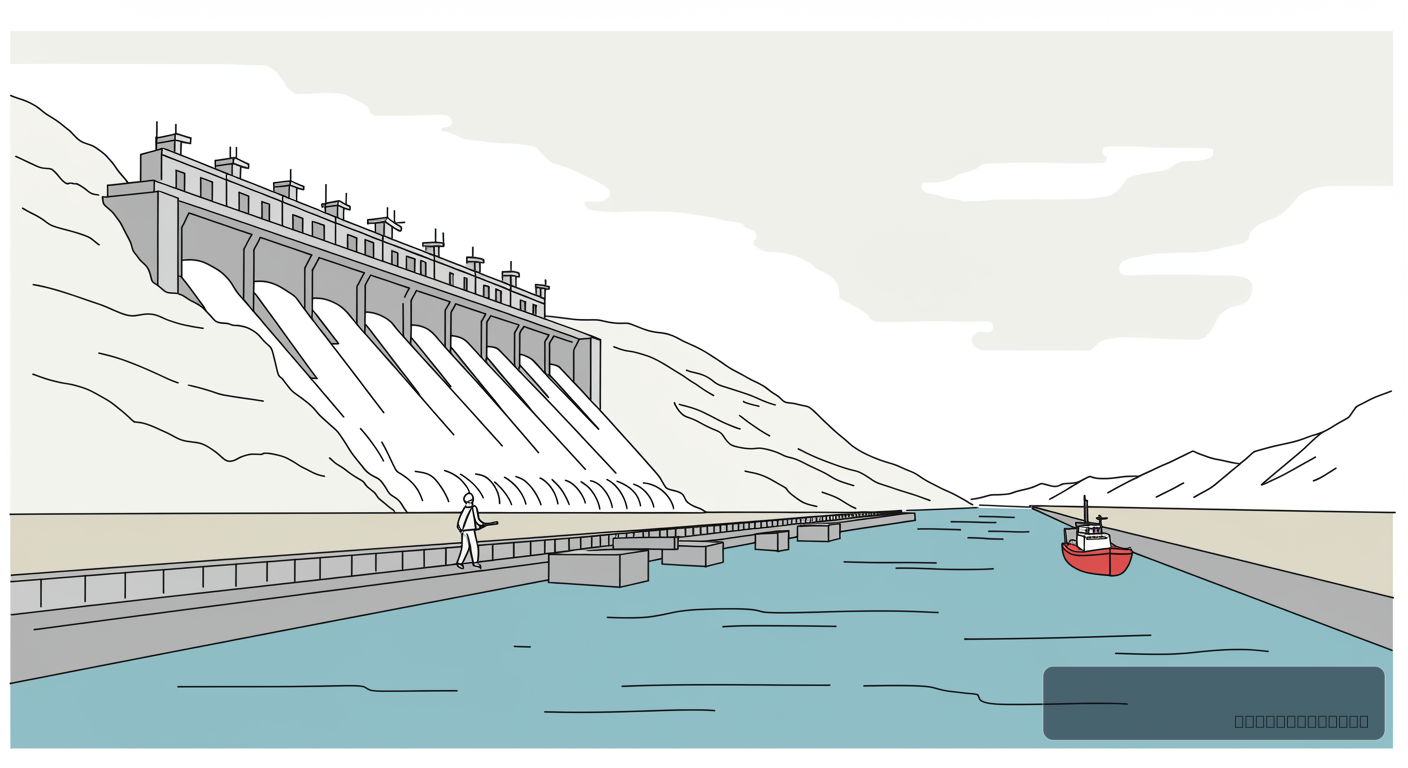
- India is fast-tracking multiple hydropower projects in IIOJK, including Ratle (850MW), Pakal Dul (1000MW), and Kiru (624MW) on the Chenab River, and Kishanganga (330MW) on the Jhelum.
- Pakistan alleges these projects, particularly their design and storage components, violate the Indus Waters Treaty (IWT) of 1960 by potentially allowing India to control river flows.
- The IWT, brokered by the World Bank, allocates the waters of the Indus, Jhelum, and Chenab rivers to Pakistan, while India has limited rights for 'run-of-the-river' (RoR) hydropower generation.
- Pakistan's agricultural sector, supporting over 60% of its population, is heavily reliant on these Western Rivers, making water security a paramount national concern.
- The dispute has led to ongoing diplomatic exchanges and potential recourse to international arbitration mechanisms outlined in the IWT, raising regional stability concerns.
Why Do India's IIOJK Hydropower Projects Matter for Pakistan?
The historical context of water sharing between India and Pakistan is rooted in the Indus Waters Treaty (IWT), a landmark agreement signed in 1960 and brokered by the World Bank. This treaty meticulously divided the six rivers of the Indus basin: the Eastern Rivers (Ravi, Beas, and Sutlej) were allocated for India's unrestricted use, while the Western Rivers (Indus, Jhelum, and Chenab) were largely assigned to Pakistan. Crucially, the IWT allows India to construct 'run-of-the-river' (RoR) hydropower projects on the Western Rivers, provided they do not affect the flow and storage capacity beyond specified limits. This provision is now at the heart of the current dispute, as Pakistan argues that India's new projects exceed these permissible parameters, potentially giving India the ability to store water or manipulate flows at critical times.
For Pakistan, a largely agrarian economy, the waters of the Indus, Jhelum, and Chenab are its lifeblood, irrigating over 80% of its cultivable land and supporting a population that is increasingly water-stressed, with per capita availability falling below 1,000 cubic metres per year, according to the Pakistan Council of Research in Water Resources (PCRWR) data from 2022. Any perceived threat to these flows, especially from upstream projects in IIOJK, triggers profound national security and economic anxieties. The Kashmir Media Service has consistently highlighted these concerns, framing India's hydropower ambitions as a deliberate strategy to exert control over Pakistan's water resources, particularly in the aftermath of India's unilateral abrogation of Article 370 in August 2019, which saw an intensified focus on infrastructure development in the region.
As PakishNews previously reported, Iran War Disrupts Fuel Smuggling, Balochistan Lifeline Shattered.
Expert Analysis: Interpreting the Indus Waters Treaty
The interpretation of 'run-of-the-river' projects and the permissible pondage (storage) limits under the IWT is a complex legal and engineering challenge. Pakistan has consistently raised objections to the design of several Indian projects. For instance, concerning the 850MW Ratle Hydroelectric Project on the Chenab River in Kishtwar district of IIOJK, Pakistan has expressed concerns over its design, particularly the pondage and spillway gates, alleging they could enable India to regulate water flow. Similarly, the 1000MW Pakal Dul project and the 624MW Kiru project, both on the Chenab, have drawn similar objections from Islamabad.
A senior official from Pakistan's Ministry of Water Resources, speaking on condition of anonymity due to the sensitivity of ongoing diplomatic engagements, told PakishNews on March 10, 2026, that "Pakistan remains committed to the IWT but will not compromise on its water rights. The designs of these new projects, particularly their pondage and outlets, raise serious questions about India's adherence to the treaty's spirit and letter. We have formally communicated our concerns through the Permanent Indus Commission (PIC) and are prepared to utilise all dispute resolution mechanisms available under the IWT, including referral to a Neutral Expert or a Court of Arbitration."
Conversely, India maintains that its projects are fully compliant with the IWT and are essential for meeting its growing domestic energy demands. Officials from India's Ministry of Jal Shakti (Water Resources) have previously stated that these are legitimate RoR projects, designed to generate electricity without abstracting water beyond permissible limits or affecting downstream flows. "Our projects like Ratle, Pakal Dul, and Kishanganga are vital for regional development and energy security, especially for the people of Jammu and Kashmir," an Indian government spokesperson was quoted by local media in February 2026, adding, "We are operating strictly within the provisions of the Indus Waters Treaty, and our designs have been shared with Pakistan as per the treaty obligations."
Dr. Aisha Khan, a prominent Pakistani water policy expert and CEO of the Civil Society Coalition for Climate Change, offered an independent perspective. "The IWT is one of the most successful water treaties globally, having survived multiple conflicts. However, its technical clauses regarding RoR projects are increasingly subject to differing interpretations," Dr. Khan told PakishNews on March 11, 2026. "The cumulative impact of multiple projects on the Western Rivers, even if individually compliant, needs careful assessment. Climate change is already making river flows more erratic, adding another layer of complexity to this already sensitive issue. Both nations need to engage in good faith through the established mechanisms to prevent escalation."
Impact Assessment: Who is Affected and How?
The primary impact of any significant alteration to the Western Rivers' flow would be felt directly by Pakistan's agricultural sector and its large rural population. The country's extensive canal system, the world's largest integrated irrigation network, is fed by these rivers. Reduced or erratic flows could jeopardise crop yields, impact food security, and displace millions of farmers. According to the Pakistan Bureau of Statistics, agriculture contributes approximately 22% to Pakistan's GDP and employs nearly 40% of its labour force. A 2023 report by the United Nations Development Programme (UNDP) highlighted Pakistan's extreme vulnerability to water scarcity, projecting severe economic losses if water availability continues to decline.
Beyond agriculture, the potential for water manipulation also has implications for Pakistan's hydropower generation. Pakistan operates several major dams, including Mangla Dam on the Jhelum and Tarbela Dam on the Indus, which are critical for its own electricity supply. Any upstream interference in IIOJK could affect their operational efficiency and power generation capacity, leading to energy shortages and increased reliance on more expensive forms of electricity generation. Moreover, the constant tension over water resources adds another layer of complexity to the already fraught India-Pakistan relationship, potentially hindering regional cooperation on other critical issues like climate change and trade.
The people of IIOJK themselves are also impacted. While the projects are intended to bring development and electricity to the region, environmental concerns regarding dam construction, displacement of local populations, and potential ecological changes are often raised by local activists and civil society organisations, as reported by various Kashmiri news outlets.
What Happens Next? Navigating the Water Dispute
The immediate future will likely see continued diplomatic exchanges between India and Pakistan through the Permanent Indus Commission (PIC), which is mandated to meet annually. The PIC provides a platform for both countries to discuss technical issues and resolve disputes. However, if consensus cannot be reached, the IWT outlines a three-step dispute resolution mechanism: first, referring the matter to a Neutral Expert; and failing that, to a Court of Arbitration. Pakistan has previously invoked these mechanisms, notably for the Kishanganga and Ratle projects, leading to international arbitration processes.
The World Bank, as the guarantor of the IWT, plays a crucial role in facilitating these dispute resolution processes. Its impartiality and commitment to upholding the treaty's integrity will be critical in navigating future disagreements. As of March 2026, both nations are under pressure to demonstrate adherence to international law while safeguarding their national interests. The international community will be closely watching, as any significant disruption to the IWT could have far-reaching implications for regional stability and global water governance frameworks. Stakeholders, including policymakers, business leaders, and informed citizens, should monitor the outcomes of the PIC meetings and any subsequent arbitration proceedings, as these will directly shape the future of water security in the Indus basin.
Related: More Pakistan News | India-Pakistan Relations
Related Coverage
- Iran War Disrupts Fuel Smuggling, Balochistan Lifeline Shattered
- Pakistan's Air Strikes Afghanistan: India Condemns 'Act of Aggression'
- Pakistan Warns Afghanistan: 'Red Line' Crossed Amid Escalating Border Tensions
Quick Answers (AI Overview)
- What happened in this story?
New Delhi's aggressive push for hydropower projects in Indian Illegally Occupied Jammu and Kashmir (IIOJK) is intensifying fears in Pakistan regarding its vital water supply and the sanctity of the Indus Waters Treaty (I - Why does this matter right now?
It matters because india's iiojk hydropower projects stoke pakistan water security fears can impact public discussion, policy, or regional stability depending on follow-up events. - What should readers watch next?
Watch for official statements, verified facts, and timeline updates from credible sources including Kashmir Media Service.
Frequently Asked Questions
❓ What is the Indus Waters Treaty and why is it significant?
The Indus Waters Treaty (IWT), signed in 1960 and brokered by the World Bank, is a water-sharing agreement between India and Pakistan. It allocates the waters of the Eastern Rivers (Ravi, Beas, Sutlej) to India and the Western Rivers (Indus, Jhelum, Chenab) to Pakistan. The treaty is considered one of the most successful water-sharing agreements globally, having endured multiple conflicts, and it is vital for Pakistan, as its agriculture and economy heavily depend on the Western Rivers.
❓ Which specific Indian hydropower projects in IIOJK are causing concern for Pakistan?
Pakistan has raised significant concerns about several Indian hydropower projects in Indian Illegally Occupied Jammu and Kashmir (IIOJK). Key projects include the 850MW Ratle Hydroelectric Project, the 1000MW Pakal Dul project, and the 624MW Kiru project, all located on the Chenab River. Additionally, the 330MW Kishanganga project on the Jhelum River has been a long-standing point of contention, leading to previous international arbitration under the IWT.
❓ How does India justify its hydropower projects on the Western Rivers?
India maintains that its hydropower projects on the Western Rivers in IIOJK are 'run-of-the-river' (RoR) schemes, which are permissible under the Indus Waters Treaty (IWT). According to India's Ministry of Jal Shakti, these projects are designed primarily for electricity generation to meet domestic energy demands and promote regional development, particularly in Jammu and Kashmir, without significantly altering the flow or storage capacity beyond the limits set by the treaty. India asserts that it shares project designs with Pakistan as per IWT obligations and operates strictly within its provisions.