Listen to ArticlePress play to hear this storyListen to ArticleDownload audio
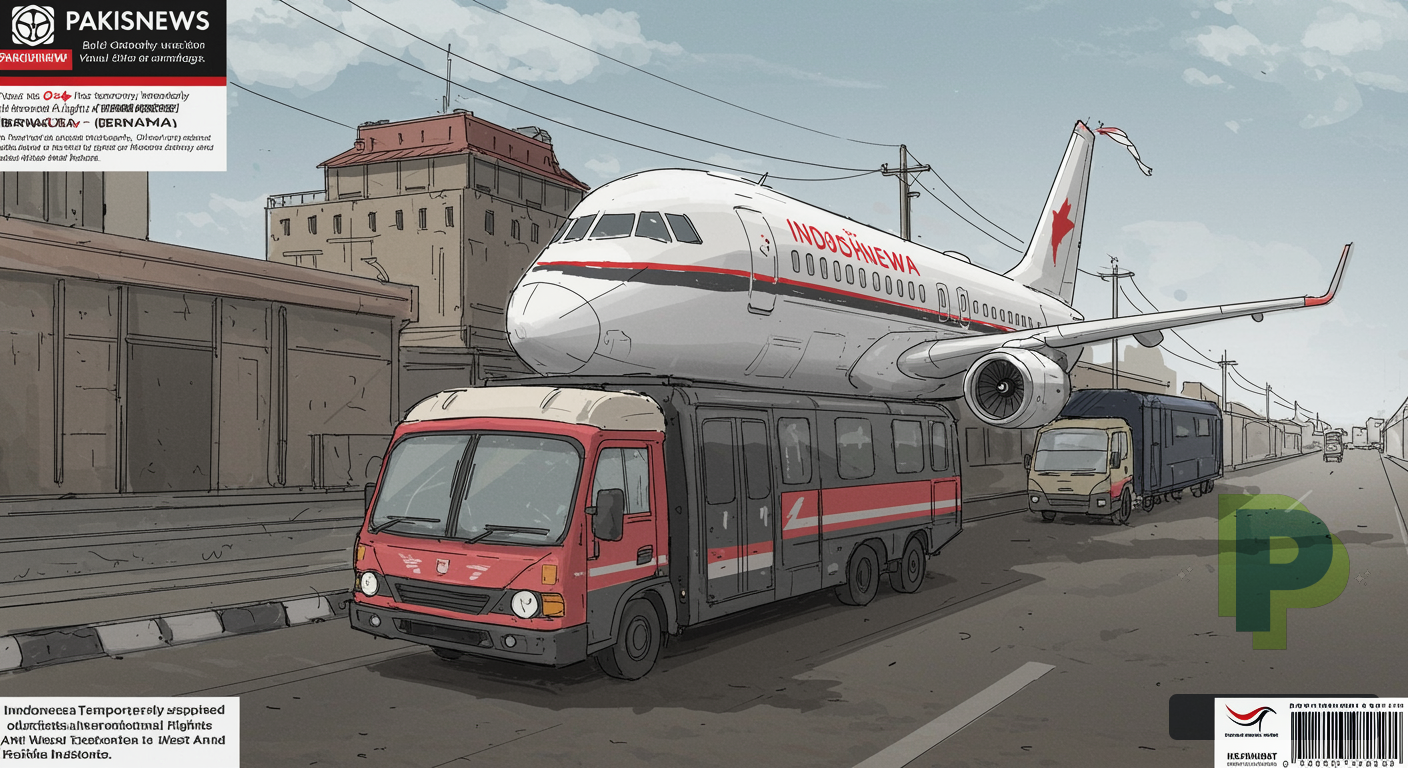
Jakarta, Indonesia – Indonesia has temporarily suspended all outbound international flights, a move announced by the Malaysian National News Agency (BERNAMA), directly attributing the decision to escalating tensions in West Asia. This unprecedented measure from Southeast Asia’s largest economy and most populous Muslim-majority nation signals profound regional concerns over the widening geopolitical instability. The suspension, effective from March 12, 2026, until further notice, represents a significant disruption to global air travel and trade, raising immediate questions for travellers, particularly those from Pakistan and the Gulf states, regarding their connectivity and safety.
Indonesia's decision to halt outbound international flights due to West Asia tensions underscores global interconnectedness and the immediate impact of geopolitical instability on civilian life and economic activity, with potential ripple effects for Pakistani citizens and regional aviation.
- Indonesia, the world's most populous Muslim-majority nation, has temporarily suspended all outbound international flights.
- The decision, effective March 12, 2026, is a direct response to escalating tensions in West Asia, as reported by BERNAMA.
- This measure impacts an estimated 1.5 million monthly international passengers from Indonesia, according to International Air Transport Association (IATA) data for early 2026.
- The suspension is expected to disrupt regional aviation networks, supply chains, and diplomatic engagements, affecting Pakistan and Gulf states significantly.
- The Indonesian Ministry of Transport has cited 'precautionary security measures' as the primary driver for the temporary ban.
The immediate catalyst for Indonesia's decision is the heightened state of alert across West Asia following recent escalations. While specific incidents leading to this drastic measure have not been fully detailed by Indonesian authorities, the context is undeniably linked to the ongoing volatility in the Middle East. According to a statement released by the Indonesian Ministry of Transport on March 11, 2026, the suspension is a 'precautionary security measure' aimed at ensuring the safety of its citizens and mitigating potential risks associated with air travel during a period of elevated geopolitical uncertainty. This move reflects a growing global apprehension about the potential for wider conflict, which could impact airspace security and airline operations.
As PakishNews previously reported, World Series Champ Challenges Team USA Coverage, But What Does This Mean for….
Geopolitical Crosscurrents and Indonesia's Non-Aligned Stance
Indonesia's foreign policy has historically been characterised by its 'free and active' principle, advocating for non-alignment and multilateralism. This approach often sees Jakarta taking a measured stance on international conflicts, focusing on humanitarian aid and diplomatic resolution. However, the current suspension of flights signals a departure from this typical posture, indicating that the perceived threat from West Asia tensions is substantial enough to warrant a direct and impactful domestic policy response. As PakishNews previously reported, regional powers like Indonesia are increasingly wary of being drawn into conflicts that destabilise global trade routes and energy supplies. The Strait of Malacca, a critical maritime chokepoint for global commerce, lies just off Indonesia's coast, making regional stability a paramount concern for Jakarta.
Why does this matter? This decision is not merely an isolated aviation protocol; it is a significant geopolitical signal. It demonstrates Indonesia's deep concern that the West Asia crisis could spill over into broader regional instability, potentially affecting maritime and air transit corridors vital for Southeast Asian economies. For a nation that relies heavily on international trade and tourism, such a measure is only taken when intelligence suggests a credible, elevated risk. This proactive step aims to protect its citizens and assets, but also implicitly urges de-escalation by highlighting the far-reaching consequences of continued conflict.
Impact on Global Aviation and Regional Trade
The suspension of Indonesian outbound flights has immediate and far-reaching implications for global aviation. Indonesia's Soekarno-Hatta International Airport (CGK) in Jakarta is a major hub, handling millions of passengers annually. Data from the International Air Transport Association (IATA) for early 2026 indicates that Indonesian carriers operate over 1,500 international flights per week, connecting to destinations across Asia, Australia, Europe, and the Middle East. The grounding of these flights will lead to significant cancellations, re-routing, and increased pressure on neighbouring airports and airlines that continue to operate.
Economically, the impact is substantial. According to estimates by the Indonesian Chamber of Commerce and Industry (KADIN), the aviation sector contributes approximately 2.5% to Indonesia's GDP, which was nearly USD 1.3 trillion in 2025. A prolonged suspension could result in daily losses estimated at USD 50-70 million for airlines, airports, and related tourism industries. This figure includes direct revenue loss from ticket sales, cargo fees, and indirect impacts on hotels, tour operators, and local businesses. "This move will undoubtedly send shockwaves through the regional aviation industry," stated Dr. Siti Rahayu, a Senior Aviation Analyst at the Jakarta-based Centre for Strategic and International Studies (CSIS). "While the immediate rationale is security, the economic fallout, particularly for tourism and air cargo, cannot be understated. It highlights the fragility of global connectivity in the face of geopolitical crises."
Pakistan and Gulf States: Navigating the Disruption
For Pakistan and the Gulf Cooperation Council (GCC) states, Indonesia’s flight suspension presents a complex challenge. While direct flights between Pakistan and Indonesia are not as frequent as those with Gulf hubs, the indirect connectivity is critical. Pakistani travellers often transit through major Gulf airports like Dubai (DXB), Doha (DOH), and Abu Dhabi (AUH) to reach Southeast Asian destinations. Similarly, Indonesian citizens travelling to or from Pakistan often utilise these same routes. The disruption will therefore affect a significant number of individuals, including business travellers, tourists, and expatriate workers. Read more on international travel advisories at PakishNews.
Beyond passenger travel, the suspension could impact air cargo operations. Indonesia is a significant trading partner for several GCC countries, with bilateral trade reaching approximately USD 10 billion in 2025, according to the UAE Ministry of Economy. Key Indonesian exports like palm oil, rubber, and textiles, and imports of petroleum products and chemicals, often rely on efficient air freight for high-value or time-sensitive goods. Any prolonged disruption could lead to supply chain bottlenecks and increased shipping costs, potentially affecting consumer prices in both regions.
A senior official from the Pakistan Ministry of Foreign Affairs, speaking on condition of anonymity, acknowledged the situation: "We are closely monitoring the developments and are in communication with our counterparts in Jakarta to understand the duration and scope of this suspension. Our primary concern is the welfare of Pakistani citizens who may be affected, and we are advising them to consult airline advisories and embassy channels for updated information." This echoes concerns across the Gulf, where major airlines like Emirates, Qatar Airways, and Etihad Airways will be forced to adjust their extensive Southeast Asian networks.
What Happens Next: Diplomatic Efforts and Economic Repercussions
The duration of Indonesia's flight suspension remains the critical unanswered question, directly impacting the ripple effects on Pakistan and the Gulf. Analysts suggest that if the West Asia tensions de-escalate swiftly, the suspension could be lifted within days or weeks. However, a protracted crisis could see the measure extended, leading to more profound economic and social consequences. The Indonesian government is likely to be under pressure from its tourism sector and business community to resume normal operations as soon as security assessments permit.
Diplomatically, this move could prompt intensified efforts from ASEAN nations to collectively address the West Asia crisis, possibly through multilateral forums like the United Nations. Indonesia, as a leading voice in the Global South, may leverage this situation to call for greater international cooperation in de-escalating tensions. The economic implications for Pakistan and the Gulf are clear: continued vigilance on supply chain resilience and alternative travel routes will be paramount. Airlines will need to recalibrate their schedules, potentially increasing capacity on alternative routes or offering more flexible rebooking options to mitigate passenger inconvenience.
The situation also highlights the critical need for regional cooperation on aviation security and crisis management. The International Civil Aviation Organization (ICAO) and regional bodies will likely engage with Indonesia to coordinate responses and ensure a harmonised approach to air safety. For stakeholders in Pakistan and the Gulf, monitoring official advisories from the Indonesian government and international aviation bodies will be crucial. This temporary suspension, while a direct response to external geopolitical pressure, serves as a stark reminder of how interconnected the world's travel and trade networks truly are, and how quickly distant conflicts can have tangible, localised impacts.
Related: More World News | Aviation Security
Related Coverage
- World Series Champ Challenges Team USA Coverage, But What Does This Mean for International Sports…
- Iran's New Supreme Leader Declares 'Not the Right Time for Peace' with US and Israel, but what does…
- Israel's Claim of Ali Larijani's Death Ignites Regional Tensions
Quick Answers (AI Overview)
- What happened in this story?
Indonesia has temporarily suspended all outbound international flights, a move announced by the Malaysian National News Agency (BERNAMA), directly attributing the decision to escalating tensions in West Asia. This unprec - Why does this matter right now?
It matters because indonesia suspends outbound flights amid west asia tensions, but what does this mean for pakistani travellers? can impact public discussion, policy, or regional stability depending on follow-up events. - What should readers watch next?
Watch for official statements, verified facts, and timeline updates from credible sources including BERNAMA - Malaysian National News Agency.
Frequently Asked Questions
What is the core update in this story?
Jakarta, Indonesia – Indonesia has temporarily suspended all outbound international flights, a move announced by the Malaysian National News Agency (BERNAMA), directly attributing the decision to escalating tensions in West Asia. This unprecedented measure from Southeast Asia’s largest economy and most populous Muslim-
Why does this matter right now?
This matters because the development can influence public debate, policy direction, and the wider regional situation.
What should readers monitor next?
Follow official statements, verified facts, and timeline updates from reliable sources.