Listen to ArticlePress play to hear this storyListen to ArticleDownload audio
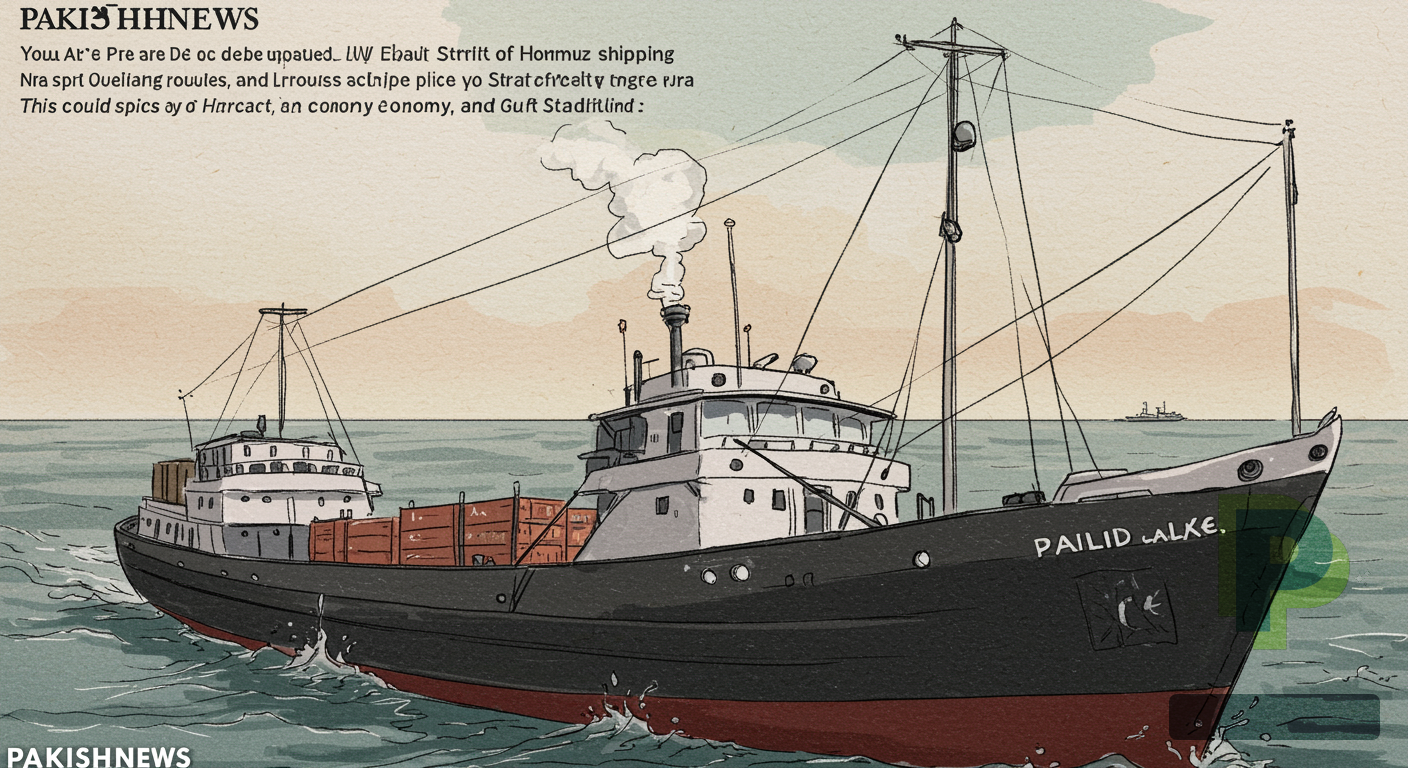
The potential imposition of transit tolls by Iran on ships in the Strait of Hormuz could trigger a significant re-evaluation of global maritime insurance, shipping costs, and energy supply chains, directly affecting Pakistan's economic stability and regional trade dynamics.
Quick Answer
Iran MPs debate tolls on Strait of Hormuz shipping, threatening global oil prices and trade routes. This could severely impact Pakistan's economy and Gulf stability.
- What percentage of global oil and gas transits the Strait of Hormuz? The Strait of Hormuz is a critical chokepoint through which approximately 20% of the world's total petroleum liquids and 25% of global liquefied natural gas (LNG) pass daily, according to the U.S. Energy Information Administration (EIA) data from 2023. This makes it the world's most important oil transit chokepoint, vital for global energy security.
- How would Iranian tolls on Hormuz shipping affect Pakistan's energy security? Iranian tolls would significantly impact Pakistan's energy security by increasing the cost of crude oil and LNG imports, which are predominantly sourced via the Strait of Hormuz. This would directly lead to higher fuel prices, increased electricity generation costs, and exacerbate Pakistan's balance of payments deficit, potentially causing inflationary pressures across the economy. A senior official from the State Bank of Pakistan noted that Pakistan's oil import bill exceeded $17 billion in the last fiscal year, making it highly vulnerable to such changes.
- Are there alternative shipping routes for Gulf oil and gas exports? While some Gulf states have invested in alternative pipeline routes, they offer only partial bypass capabilities for the Strait of Hormuz. For instance, the UAE operates the Habshan-Fujairah oil pipeline, and Saudi Arabia has the Petroline, which can transport crude oil to Red Sea ports. However, these pipelines cannot handle the full volume of all Gulf exports, especially LNG, meaning the vast majority of oil and gas exports remain reliant on the Strait. The cost and logistical challenges of expanding these alternatives are immense.
- Iranian lawmakers are reportedly debating a bill to charge tolls for vessels passing through the Strait of Hormuz.
- The Strait is a critical chokepoint, through which approximately 20% of the world's total petroleum liquids and 25% of global liquefied natural gas (LNG) pass daily.
- This move is seen as a potential response to international sanctions and a bid to assert sovereignty over the strategic waterway.
- Analysts warn of significant geopolitical and economic repercussions, including heightened tensions with the United States and Gulf states.
- The proposal could lead to increased shipping costs, higher oil prices, and disruptions to vital trade routes for countries like Pakistan and the UAE.
Tehran's legislative body is reportedly deliberating a bill that would introduce transit tolls for international shipping navigating the Strait of Hormuz, a critical maritime chokepoint connecting the Persian Gulf to the open ocean. This proposal, as reported by state-affiliated media in Tehran, represents a potentially seismic shift in the geopolitics of one of the world's most vital energy arteries. As of March 2026, the discussions within the Majlis (Iranian Parliament) are in their preliminary stages, but the very notion has sent ripples of concern through global shipping, energy markets, and diplomatic circles, particularly impacting the economies of the Gulf Cooperation Council (GCC) states and Pakistan.
As PakishNews previously reported, Gulf Energy Sites Attacked, Oil Prices Surge: What Does This Mean for….
Background: The Strategic Significance of Hormuz
The Strait of Hormuz is not merely a shipping lane; it is a geopolitical fault line. Approximately 39 kilometres (21 nautical miles) wide at its narrowest point, it is the sole maritime passage from the Persian Gulf to the open sea, making it indispensable for the transport of crude oil, petroleum products, and liquefied natural gas (LNG) from major producers like Saudi Arabia, Iran, UAE, Kuwait, and Qatar. According to data from the U.S. Energy Information Administration (EIA), an average of 21 million barrels of crude oil and petroleum liquids transited the Strait daily in 2023, representing about 20% of global petroleum consumption and 25% of global LNG trade. Any disruption or additional cost imposed on this passage has immediate and far-reaching global implications.
Historically, Iran has viewed the Strait as a sovereign waterway, asserting its right to control passage, a stance often challenged by international maritime law, which generally designates such straits as international waters guaranteeing freedom of navigation. The consideration of tolls is not unprecedented in international relations, but in the highly militarised and politically charged context of the US-Iran relationship, it carries immense strategic weight. The move could be interpreted as Iran's attempt to leverage its geographical advantage to offset the economic pressures of international sanctions, particularly those re-imposed by the United States following its withdrawal from the Joint Comprehensive Plan of Action (JCPOA) in 2018. This historical context underscores why the current legislative debate in Tehran is being watched with intense scrutiny by global powers and regional stakeholders alike.
Geopolitical Tensions and Regional Repercussions
The prospect of Iran imposing tolls on Strait of Hormuz traffic is fraught with geopolitical peril. The United States Fifth Fleet, headquartered in Bahrain, consistently patrols the waters, asserting its commitment to freedom of navigation. Any attempt by Iran to unilaterally impose tolls could be seen as a direct challenge to this principle, potentially leading to confrontations. According to Dr. Abdullah Al-Shammari, a Riyadh-based expert on Gulf security affairs, “This move, if enacted, would be seen by Washington and its allies as an act of economic warfare and a direct violation of international maritime law. It would undoubtedly escalate tensions beyond current levels, potentially leading to a dangerous miscalculation.” He further elaborated in an interview with PakishNews, “The immediate response would likely be a significant increase in naval presence and potentially punitive economic measures from the international community, further isolating Iran.”
For the UAE and other GCC nations, who rely heavily on the Strait for oil exports and imports, the proposal is deeply concerning. While some Gulf states, notably the UAE and Saudi Arabia, have invested in alternative pipeline routes to bypass the Strait of Hormuz – such as the UAE's Habshan-Fujairah oil pipeline and Saudi Arabia's Petroline – these offer only partial relief and cannot fully accommodate the vast volumes of trade currently reliant on the Strait. A senior official from the Dubai Chamber of Commerce told PakishNews on condition of anonymity due to the sensitivity of the matter, “Increased shipping costs, whether from tolls or higher insurance premiums due to perceived risk, will directly impact our competitiveness and the cost of goods for our citizens. It’s a lose-lose scenario for regional trade.”
Economic Impact Assessment: Who is Affected and How?
The economic ramifications of Iranian-imposed tolls would be multifaceted and severe. Firstly, shipping companies would face direct additional costs, which would inevitably be passed on to consumers. This would manifest as higher prices for imported goods and increased operational expenses for industries reliant on global supply chains. For Pakistan, which imports a substantial portion of its crude oil and LNG via the Strait, this translates directly into higher energy bills and increased inflationary pressures. According to data from the State Bank of Pakistan, Pakistan’s oil import bill stood at approximately $17 billion in the fiscal year 2023-24. Any percentage increase in shipping costs or oil prices due to Hormuz tolls would exacerbate Pakistan’s already precarious balance of payments situation.
Secondly, maritime insurance premiums for vessels traversing the Strait would skyrocket. Insurers would factor in the heightened geopolitical risk, the uncertainty of new fee structures, and the potential for delays or disputes. This 'risk premium' would disproportionately affect smaller shipping companies and nations with less economic resilience. A report by Lloyd's List Intelligence in late 2025 noted a 15-20% increase in war risk premiums for the region following recent skirmishes, and a unilateral toll imposition would likely push these figures even higher. This additional burden on shipping costs would further erode profit margins for Pakistani exporters and make essential imports more expensive, potentially slowing economic growth and hindering industrial output.
Thirdly, the global oil market would react swiftly. Even the discussion of tolls introduces uncertainty, which typically drives up crude oil prices. If implemented, and particularly if met with international resistance or countermeasures, the risk of supply disruptions would become acute, pushing prices significantly higher. This would hit energy-importing nations like Pakistan hard, increasing the cost of electricity generation, transportation, and industrial production. As PakishNews previously reported, Pakistan's economy remains highly sensitive to global oil price fluctuations, with every dollar increase per barrel adding pressure to the national budget.
What Happens Next: Open Loops and Stakeholder Vigilance
The immediate future hinges on several factors, primarily the progression of the bill through the Iranian Majlis and the international community's response. Should the bill be enacted, the operational details – such as the amount of the toll, the currency of payment, and the enforcement mechanisms – will be critical. Legal challenges based on the 1982 United Nations Convention on the Law of the Sea (UNCLOS), which guarantees innocent passage through international straits, are almost certain. However, Iran is not a signatory to UNCLOS, complicating the legal framework.
Policymakers in Pakistan and the UAE must closely monitor these developments. For Pakistan, a proactive diplomatic strategy is essential, engaging with both Iran and key international partners to de-escalate tensions and safeguard its economic interests. Diversifying energy sources and exploring alternative trade routes, while challenging in the short term, may become a long-term strategic imperative. In a related development covered by PakishNews, discussions around the Iran-Pakistan gas pipeline have seen renewed interest, but such projects face their own set of geopolitical and financial hurdles.
Why does this matter for Pakistan?
This development matters profoundly for Pakistan because its economic stability is inextricably linked to the free and affordable flow of trade and energy through the Strait of Hormuz. A significant portion of Pakistan's oil and LNG imports, crucial for its energy security and industrial operations, transits this waterway. Increased costs or disruptions would directly translate into higher inflation, increased balance of payments deficits, and potential energy shortages, impacting every sector from manufacturing to agriculture and directly affecting the daily lives of its citizens. Furthermore, the Strait's stability is vital for Pakistan's trade with the GCC, its largest trading bloc.
Regional stability is also a paramount concern. Any escalation of tensions in the Gulf could have spillover effects, impacting investment, tourism, and overall security in the broader Middle East, including Pakistan's western borders. The UAE and Saudi Arabia, key economic partners for Pakistan, would also face significant challenges, which could indirectly affect Pakistani expatriate remittances and investment flows. Diplomatic efforts to mediate and ensure freedom of navigation, therefore, become a critical foreign policy objective for Islamabad.
Stakeholders should watch for official statements from Tehran regarding the bill's progress, reactions from the United States and the European Union, and any coordinated responses from GCC states. The global shipping industry, particularly major insurers and tanker operators, will be key indicators of the perceived risk, with their adjustments in premiums and routing decisions providing real-time assessments of the situation. The coming months will be crucial in determining whether this legislative proposal becomes a concrete policy and, if so, the full extent of its ripple effects across the global economy and regional geopolitics.
Related: More World News | Iran Economy
Related Coverage
- Gulf Energy Sites Attacked, Oil Prices Surge: What Does This Mean for Pakistan's Fuel Security?
- World Happiness Report Flags Youth Digital Strain, But How Are Gulf Nations Safeguarding Future…
- Yeshiva World News Hit by Suspected Iran-Linked Cyberattack, But What Are the Broader Regional…
Archive Discovery
- How To Extra Make Money Working From Home
- "Embrace Change: How Small Steps Lead to Big Life Transformations"
- A Skin Cream That’s Proven to Work: Your Secret to Flawless Skin
Quick Answers (AI Overview)
- What happened in this story?
Iranian lawmakers are reportedly considering legislation to impose tolls on international vessels transiting the Strait of Hormuz, a move that could significantly alter global shipping dynamics and escalate regional tens - Why does this matter right now?
It matters because iran mps consider hormuz tolls, but what are the implications for gulf shipping and pakistan's economy? can impact public discussion, policy, or regional stability depending on follow-up events. - What should readers watch next?
Watch for official statements, verified facts, and timeline updates from credible sources including Hindustan Times.
Frequently Asked Questions
What percentage of global oil and gas transits the Strait of Hormuz?
The Strait of Hormuz is a critical chokepoint through which approximately 20% of the world's total petroleum liquids and 25% of global liquefied natural gas (LNG) pass daily, according to the U.S. Energy Information Administration (EIA) data from 2023. This makes it the world's most important oil transit chokepoint, vital for global energy security.
How would Iranian tolls on Hormuz shipping affect Pakistan's energy security?
Iranian tolls would significantly impact Pakistan's energy security by increasing the cost of crude oil and LNG imports, which are predominantly sourced via the Strait of Hormuz. This would directly lead to higher fuel prices, increased electricity generation costs, and exacerbate Pakistan's balance of payments deficit, potentially causing inflationary pressures across the economy. A senior official from the State Bank of Pakistan noted that Pakistan's oil import bill exceeded $17 billion in the last fiscal year, making it highly vulnerable to such changes.
Are there alternative shipping routes for Gulf oil and gas exports?
While some Gulf states have invested in alternative pipeline routes, they offer only partial bypass capabilities for the Strait of Hormuz. For instance, the UAE operates the Habshan-Fujairah oil pipeline, and Saudi Arabia has the Petroline, which can transport crude oil to Red Sea ports. However, these pipelines cannot handle the full volume of all Gulf exports, especially LNG, meaning the vast majority of oil and gas exports remain reliant on the Strait. The cost and logistical challenges of expanding these alternatives are immense.