Listen to ArticlePress play to hear this storyListen to ArticleDownload audio
Updated March 12, 2026
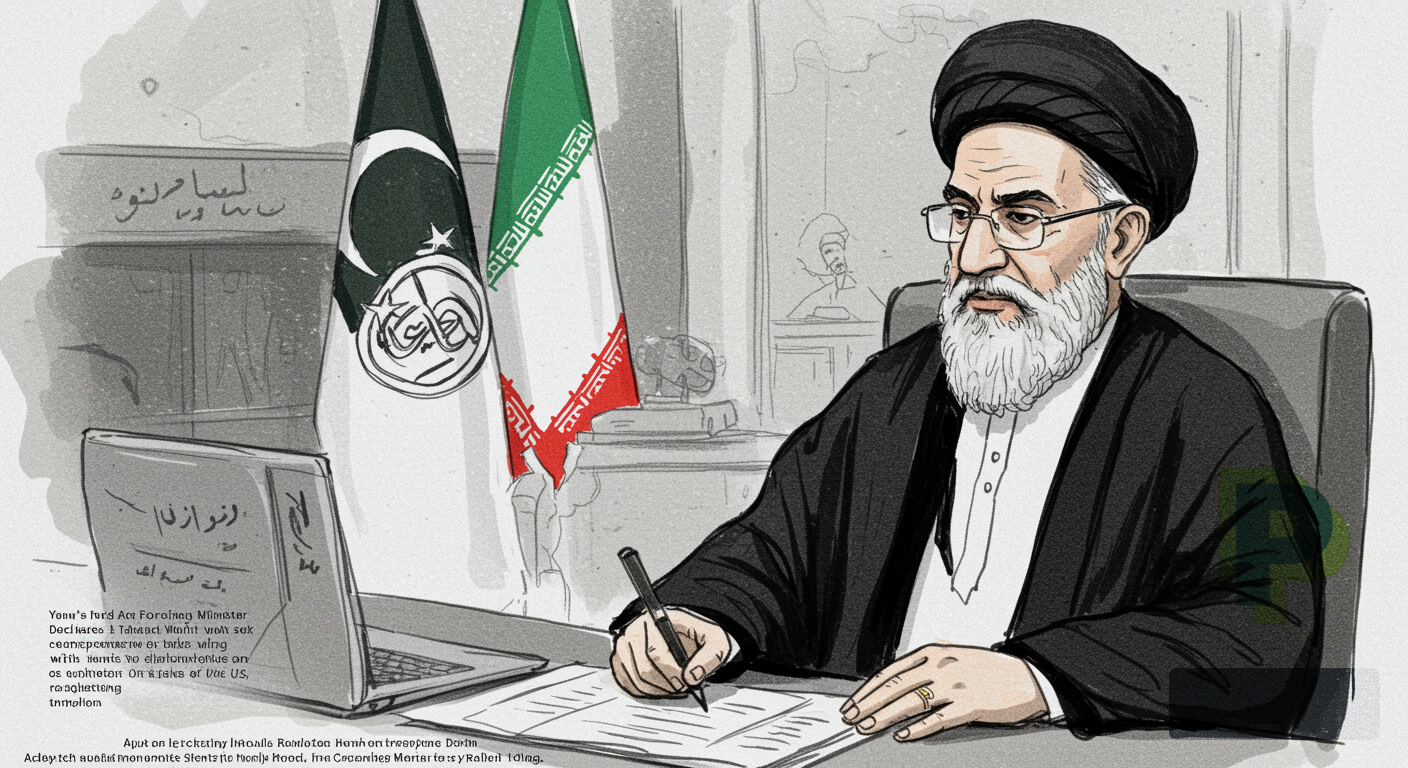
Tehran has unequivocally stated it has not sought a ceasefire and sees no justification for engaging in direct talks with the United States, a declaration by Iranian Foreign Minister Hossein Amirabdollahian that underscores the deep-seated diplomatic impasse between the two nations and reverberates across the volatile Middle East. This firm rejection signals Iran’s unwavering stance amidst escalating regional conflicts, particularly concerning the Gaza Strip and broader proxy confrontations, impacting the delicate balance of power from the Levant to the Arabian Gulf. The BBC reported this statement, which has since been amplified across global diplomatic channels, highlighting a critical juncture in international efforts to de-escalate tensions.
- Iranian Foreign Minister Hossein Amirabdollahian confirmed Tehran has neither requested a ceasefire nor sees a basis for talks with the United States.
- This stance reflects Iran's consistent policy of refusing direct negotiations with Washington without substantial preconditions, primarily the lifting of sanctions.
- The declaration comes amidst heightened regional instability, including the ongoing conflict in Gaza and Red Sea maritime security challenges.
- Analysts suggest Iran's position aims to project strength and consolidate influence among its regional allies, often referred to as the 'Axis of Resistance'.
- The diplomatic deadlock has significant implications for regional security, energy markets, and the foreign policy calculations of Gulf Cooperation Council (GCC) states and Pakistan.
Why is Iran Rejecting US Talks and a Ceasefire Now?
Iran's latest pronouncement, articulated by Foreign Minister Amirabdollahian, is not an isolated event but rather a continuation of a long-standing strategic posture shaped by decades of mistrust and geopolitical rivalry with the United States. According to Dr. Hamid Reza Azizi, a visiting fellow at the German Institute for International and Security Affairs (SWP), Iran's refusal to engage in direct talks without significant concessions, primarily the comprehensive lifting of U.S. sanctions imposed since 2018, is a core tenet of its foreign policy. "Tehran views any unconditioned talks as legitimising Washington's 'maximum pressure' campaign and undermining its regional influence," Dr. Azizi explained in a recent policy brief. The current regional landscape, marked by the protracted conflict in Gaza, where Iran supports Hamas and other Palestinian factions, provides a context where Tehran feels it has leverage.
As PakishNews previously reported, Israel Plans Three-Week Military Campaign in Iran: Regional Stability at Risk.
The Iranian government perceives the ongoing crisis as a manifestation of U.S. and Israeli policies, and therefore, any call for a ceasefire, especially one not addressing the core grievances of Palestinians or the broader regional power dynamics, is seen as insufficient. Data from the United Nations Relief and Works Agency (UNRWA) indicates that over 30,000 Palestinians have been killed in Gaza since October 2023, a figure that Iran frequently cites as evidence of what it terms 'Western complicity'. By refusing a ceasefire request, Iran aims to signal solidarity with its 'Axis of Resistance' partners—including Hezbollah in Lebanon, Houthi rebels in Yemen, and various Iraqi militia groups—and to project an image of steadfastness against perceived Western hegemony. This strategy, according to a report by the International Crisis Group in February 2026, is designed to enhance Iran's standing as a regional power broker capable of challenging the status quo.
What is the Historical Context of US-Iran Diplomatic Impasse?
The relationship between the United States and Iran has been fraught with tension since the 1979 Islamic Revolution, which overthrew the U.S.-backed monarchy. Decades of hostility include the Iran hostage crisis, U.S. support for Iraq during the Iran-Iraq War (1980-1988), and persistent disagreements over Iran's nuclear programme and its regional activities. The landmark 2015 Joint Comprehensive Plan of Action (JCPOA), which saw Iran limit its nuclear activities in exchange for sanctions relief, represented a brief thaw. However, the U.S. withdrawal from the agreement in 2018 under the Trump administration, followed by the re-imposition of stringent sanctions targeting Iran's oil exports, banking, and shipping sectors, effectively shattered any prospects of renewed trust. According to the U.S. Treasury Department, these sanctions have cost Iran an estimated $200 billion in lost oil revenues between 2018 and 2023 alone.
Tehran views the U.S. withdrawal from the JCPOA as a betrayal and a clear signal that Washington cannot be trusted to uphold its commitments. This historical backdrop informs Iran's current reluctance for dialogue. Iranian President Ebrahim Raisi, in a televised address in January 2026, reiterated that "the path to diplomacy must first be paved with respect and an end to economic terrorism," a direct reference to U.S. sanctions. For Iran, any future engagement must fundamentally address the economic pressures it faces and acknowledge its legitimate security interests in the region. As PakishNews previously reported, the economic impact of sanctions has significantly strained the Iranian economy, leading to inflation rates exceeding 40% in recent years, according to data from the Statistical Centre of Iran.
How Does This Impact Regional Stability and Gulf States?
Iran's uncompromising stance sends ripples across the Middle East, directly affecting regional stability and the strategic calculations of Gulf Cooperation Council (GCC) member states, including Saudi Arabia and the United Arab Emirates. While recent years have seen a notable de-escalation trend, exemplified by the China-brokered Saudi-Iran rapprochement in March 2023, the lack of U.S.-Iran dialogue remains a significant impediment to broader regional peace. Dr. Abdulkhaleq Abdulla, a prominent Emirati political analyst, stated in a recent interview with Al Arabiya that "while Gulf states have opened channels with Tehran, the fundamental U.S.-Iran antagonism creates an unpredictable environment. It forces Gulf nations to maintain robust defence postures and impacts investment confidence."
The ongoing Red Sea crisis, where Houthi rebels (aligned with Iran) have targeted international shipping lanes, underscores the vulnerability of global trade routes and the interconnectedness of regional conflicts. Data from the International Maritime Organization (IMO) shows a significant decrease in Suez Canal transits since late 2023, with many shipping companies rerouting around the Cape of Good Hope, adding weeks and millions of dollars to transit times. This instability directly impacts the energy-dependent economies of the Gulf, which rely on secure maritime passage for their exports. The U.S. maintains substantial military assets in the Gulf, including the Fifth Fleet based in Bahrain and significant air force deployments in Qatar and the UAE, primarily to counter perceived Iranian threats. The absence of direct U.S.-Iran talks increases the risk of miscalculation and accidental escalation, a scenario that none of the regional players, including the GCC states, desire. Read more on Gulf security dynamics at PakishNews.
What Does This Mean for Pakistan?
For Pakistan, a nation with deep historical and cultural ties to Iran and strategic partnerships with Gulf states, the continued U.S.-Iran diplomatic deadlock presents a complex challenge. Pakistan shares a 900-kilometre border with Iran and has significant economic interests, particularly regarding energy. The proposed Iran-Pakistan (IP) gas pipeline, often dubbed the 'Peace Pipeline', remains largely uncompleted on the Pakistani side due to concerns over potential U.S. sanctions. According to Pakistan's Ministry of Energy, the pipeline could provide up to 750 million cubic feet per day (MMCFD) of natural gas, a crucial resource for Pakistan's energy-starved economy, which currently faces an annual energy deficit of approximately 6,000 MW. The U.S. has repeatedly warned Pakistan against proceeding with the project, citing existing sanctions on Iran's energy sector.
Pakistan’s foreign policy, under Prime Minister Shehbaz Sharif, consistently advocates for regional de-escalation and dialogue. Islamabad has historically offered to mediate between Iran and Saudi Arabia, and more recently, between Iran and other regional adversaries. A senior official at Pakistan's Ministry of Foreign Affairs, speaking on background, noted that "Pakistan's prosperity is intrinsically linked to regional peace. We urge all parties to pursue diplomatic solutions and avoid actions that could further destabilise an already fragile environment." The recent, albeit brief, cross-border military exchanges between Iran and Pakistan in January 2024 served as a stark reminder of the potential for even minor disputes to escalate in a tense regional climate. The broader U.S.-Iran standoff indirectly impacts Pakistan's ability to diversify its energy sources and navigate its complex alliances, requiring a delicate balancing act to safeguard its national interests. In a related development covered by PakishNews, discussions around border management and trade continue between Islamabad and Tehran.
What Happens Next in US-Iran Relations?
The immediate future of U.S.-Iran relations appears to be one of continued stalemate, punctuated by indirect communication and proxy confrontations. While direct high-level talks seem unlikely in the short term, back-channel diplomacy, often facilitated by intermediaries like Oman or Qatar, may persist to manage specific crises, such as prisoner exchanges or de-escalation in flashpoints. U.S. Special Envoy for Iran, Robert Malley (though his status may vary), has previously indicated Washington’s willingness to engage in diplomacy, but only on terms that address its nuclear proliferation concerns and regional destabilisation activities. Iran, conversely, demands a return to the JCPOA's original terms and a verifiable lifting of sanctions before any comprehensive talks can resume.
Observers will be closely watching several key indicators. Firstly, the evolution of the Gaza conflict and its broader regional spillover. A significant de-escalation or a new diplomatic initiative regarding Palestine could alter Iran's calculations. Secondly, the upcoming U.S. presidential elections in November 2026 could introduce a new administration with a different approach to Iran, though fundamental policy shifts are often slow to materialise. Thirdly, the ongoing efforts by regional powers, particularly China and the GCC states, to foster dialogue and economic cooperation within the Middle East will be crucial. While Iran's firm stance signals continuity in its foreign policy, the volatile nature of the region means that unexpected events could always force a recalibration of strategies from all sides, including a renewed, albeit cautious, push for indirect engagement to prevent wider conflict.
Related: More World News | Iran-US Relations
Related Coverage
- Israel Plans Three-Week Military Campaign in Iran: Regional Stability at Risk
- US-Iran War: Weeks to End, or 9/11 Plot? Gulf Faces Volatility
- Ukraine Anti-Drone Tech Sees Surging Demand Amid Iranian Regional Aggression
Quick Answers (AI Overview)
- What happened in this story?
Tehran has unequivocally stated it has not sought a ceasefire and sees no justification for engaging in direct talks with the United States, a declaration by Iranian Foreign Minister Hossein Amirabdollahian that undersco - Why does this matter right now?
It matters because iran rejects us talks, ceasefire amid regional tensions can impact public discussion, policy, or regional stability depending on follow-up events. - What should readers watch next?
Watch for official statements, verified facts, and timeline updates from credible sources including BBC.
Frequently Asked Questions
❓ What are Iran's primary conditions for engaging in talks with the United States?
Iran's primary conditions for engaging in talks with the United States typically revolve around the comprehensive and verifiable lifting of all U.S. sanctions imposed since 2018. Tehran views these sanctions, which have cost its economy hundreds of billions in lost revenue, as 'economic terrorism' and demands that Washington demonstrate a commitment to respecting international agreements and Iran's sovereignty before any direct negotiations can commence. This position was reiterated by President Ebrahim Raisi in January 2026.
❓ How do U.S. sanctions affect Pakistan's relations with Iran?
U.S. sanctions significantly complicate Pakistan's relations with Iran, particularly in areas like energy cooperation. The most notable impact is on the Iran-Pakistan (IP) gas pipeline project, which remains incomplete on Pakistan's side due to fears of triggering secondary U.S. sanctions. While Pakistan urgently needs energy resources, the threat of U.S. punitive measures forces Islamabad to navigate a delicate balance between its energy security needs and its strategic partnership with the United States and Gulf allies.
❓ What role do Gulf states play in mediating between Iran and the United States?
Gulf states, particularly Oman and Qatar, have historically played crucial roles as intermediaries in facilitating indirect communication and de-escalation between Iran and the United States. While they have not succeeded in brokering direct high-level talks, these nations often serve as vital channels for managing specific crises, such as prisoner exchanges or preventing further escalation in regional flashpoints. The China-brokered Saudi-Iran rapprochement in March 2023 also demonstrated the broader regional desire for reduced tensions, even if U.S.-Iran direct engagement remains elusive.