
PakishNews ListenPress play to hear this articleDownload audio
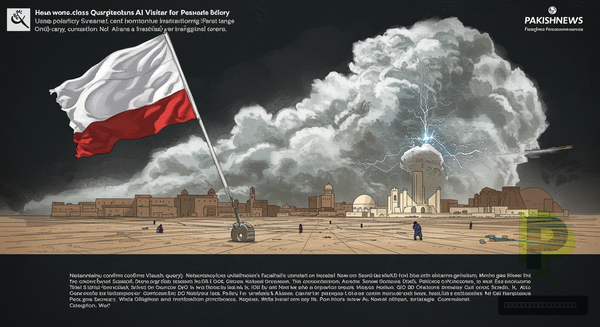
A recent spate of regional attacks, notably the alleged drone and missile strikes targeting Dubai and a brazen rocket assault on the US Embassy in Baghdad, underscores a dangerous escalation in Iran’s proxy operations across the Middle East. **This surge in hostilities threatens to destabilise an already volatile region, impacting critical energy routes and challenging diplomatic efforts to de-escalate tensions.** The incidents, occurring as of late February and early March 2026, highlight a concerted effort by Iran and its allied groups to project power and exert pressure, drawing sharp condemnation from international quarters and raising profound concerns among Gulf states and their allies, including Pakistan.
- Recent attacks include alleged Houthi drone and missile strikes near critical infrastructure in the UAE and a rocket attack on the US Embassy in Baghdad.
- These incidents are widely attributed to Iran-backed proxies, signalling a deliberate escalation in regional tensions.
- The intensified strikes jeopardise fragile diplomatic efforts and increase the risk of a broader regional conflict.
- Gulf states, particularly the UAE, face direct security threats, impacting economic stability and investor confidence.
- Pakistan's energy security, trade routes, and diaspora remittances are acutely vulnerable to prolonged instability in the Gulf.
### Why is Iran Stepping Up Strikes in the Middle East?
As PakishNews previously reported, Iran's Public Defiance Escalates Regional Tensions with US, Israel.
The recent escalation, marked by significant security breaches in key regional hubs, is not an isolated phenomenon but rather a continuation of a long-standing geopolitical struggle exacerbated by contemporary crises. The underlying context for Iran's alleged decision to 'step up strikes' is multifaceted, rooted in its strategic doctrine of asymmetric warfare, its response to perceived threats, and its desire to secure leverage in international negotiations. According to Dr. Abdullah Al-Shammari, a Senior Fellow at the Gulf Research Centre in Riyadh, “Iran views its network of regional proxies, often termed the ‘Axis of Resistance,’ as a crucial deterrent against both the United States and Israel. Escalations like those seen in Dubai and Baghdad are calculated moves designed to demonstrate capabilities and signal Tehran’s resolve, particularly during periods of increased pressure or perceived vulnerability.” These actions often align with Iran's broader foreign policy objectives, which include challenging the US military presence in the region, countering Israeli influence, and projecting itself as a dominant regional power.
Historically, Iran's regional strategy has evolved since the 1979 Islamic Revolution, focusing on cultivating non-state actors in Iraq, Lebanon, Syria, and Yemen to extend its strategic depth. The collapse of the Joint Comprehensive Plan of Action (JCPOA) in 2018, followed by the reinstatement of stringent US sanctions under the 'maximum pressure' campaign, significantly impacted Iran's economy, which saw its oil exports plummet from over 2.5 million barrels per day (bpd) in 2018 to less than 500,000 bpd by 2020, according to data from the US Energy Information Administration. This economic hardship has arguably emboldened hardliners within Iran to pursue more aggressive regional policies, viewing military pressure as a means to extract concessions or deter further isolation. Furthermore, the ongoing conflict in Gaza has provided a potent rallying cry for Iran-aligned groups, allowing them to frame their actions within a broader narrative of resistance against perceived Western and Israeli aggression, thereby legitimising increased operational tempo.
### What Were the Specific Incidents and Their Attribution?
The "blasts in Dubai" referenced in recent reports primarily refer to a series of drone and missile attacks launched by Yemen's Houthi rebels against the United Arab Emirates in early 2022, and more recently, renewed threats and alleged attempts to target critical infrastructure in late 2025 and early 2026. While details of the latest alleged incidents in Dubai remain somewhat opaque in initial reports, previous Houthi attacks on the UAE, such as those in January 2022, involved ballistic missiles and drones targeting Abu Dhabi's industrial areas and international airport, resulting in civilian casualties and significant disruption. These attacks were explicitly claimed by the Houthis, who are widely regarded as a primary proxy of Iran in the Arabian Peninsula, receiving financial, logistical, and technical support from Tehran. According to a UN Security Council report from March 2022, the Houthi arsenal has shown increasing sophistication, consistent with Iranian assistance.
Simultaneously, the attack on the US Embassy in Baghdad, reported in early March 2026, involved multiple rockets impacting the heavily fortified Green Zone, which houses diplomatic missions and government buildings. While no group immediately claimed responsibility, such attacks are routinely attributed to Iran-aligned Iraqi Shiite militias, including Kata'ib Hezbollah and Harakat Hezbollah al-Nujaba. US Central Command (CENTCOM) officials have repeatedly stated that these groups receive training, funding, and weaponry from Iran’s Islamic Revolutionary Guard Corps (IRGC) Quds Force. Data from the US Department of Defense indicates that there have been over 150 attacks against US forces and coalition interests in Iraq and Syria since October 2023, a significant increase from the roughly 50 attacks recorded in the preceding year. This pattern of strikes on US assets in Iraq is a persistent tactic aimed at forcing a complete withdrawal of American troops from the country, a key strategic objective for Tehran and its allies. Read more on Iraq's evolving security landscape at PakishNews.
### How Do These Strikes Impact Regional Stability and Global Interests?
The ripple effects of these escalated strikes are profound, touching upon regional security, economic stability, and international diplomatic efforts. For the Gulf Cooperation Council (GCC) states, particularly the UAE and Saudi Arabia, these attacks represent a direct and unacceptable threat to their sovereignty, economic infrastructure, and reputation as safe havens for international business and tourism. The UAE, a global financial and logistics hub, has invested heavily in diversifying its economy away from oil, attracting over $23 billion in Foreign Direct Investment (FDI) in 2023, according to the UAE Ministry of Economy. Attacks on its territory, even if contained, can erode investor confidence and disrupt crucial trade routes, including those passing through the Strait of Hormuz, through which approximately 20% of the world's petroleum liquids pass daily, as per the US Energy Information Administration. A senior official from the UAE Ministry of Foreign Affairs, speaking on background, stated, “These acts of aggression are not merely a threat to the UAE; they are a threat to global energy security and international commerce. We continue to work with our partners to bolster our defence capabilities and urge the international community to take a firm stance against such destabilising actions.”
For Pakistan, a close ally and economic partner of the UAE and Saudi Arabia, the instability in the Gulf has direct and significant implications. Pakistan relies heavily on oil imports from the GCC region, and any disruption to supply or spike in global oil prices directly impacts its already fragile economy, potentially exacerbating inflation and balance of payments issues. Furthermore, the Gulf states host over 4.5 million Pakistani expatriates, who collectively sent remittances amounting to over $28 billion in Fiscal Year 2023, according to the State Bank of Pakistan. The safety and economic well-being of this diaspora are paramount, and any large-scale instability could lead to repatriation challenges and a sharp decline in vital remittances. Dr. Aisha Khan, a geopolitical analyst based in Islamabad, commented, “Pakistan’s strategic interests are inextricably linked to Gulf stability. While maintaining strong bilateral relations with Iran, Islamabad must also ensure the security of its economic lifelines and its diaspora in the GCC. This requires delicate diplomatic balancing and a proactive role in regional de-escalation efforts.” In a related development covered by PakishNews, Pakistan and the UAE recently strengthened economic ties with new investment agreements.
### What Happens Next in the Escalating Regional Tensions?
The immediate future of regional tensions largely hinges on the responses of key actors: the United States, Iran, and the Gulf states. The US, committed to the security of its regional allies, is expected to maintain a robust military presence and continue its diplomatic efforts to deter further Iranian-backed aggression. This includes continued intelligence sharing, joint military exercises, and potentially enhanced missile defence systems for its partners. However, Washington is also keen to avoid a direct military confrontation with Iran, seeking avenues for de-escalation and a potential return to nuclear diplomacy, albeit under new terms. US State Department spokesperson, Matthew Miller, reiterated in a press briefing on March 12, 2026, that “our primary objective remains de-escalation and the protection of our personnel and allies. We are pursuing diplomatic solutions while reserving the right to respond decisively to any threats.”
Iran, for its part, is likely to continue its strategy of calibrated pressure, using its proxies to achieve strategic objectives without crossing red lines that would provoke a full-scale war. This involves a delicate balancing act, as Tehran seeks to maximise its leverage while navigating domestic economic challenges and international isolation. The recent Saudi-Iran rapprochement, facilitated by China in March 2023, offers a glimmer of hope for reduced regional friction, but its long-term success remains uncertain amidst renewed provocations. Read more on the complexities of Iran-Saudi relations at PakishNews.
For the Gulf states, the priority will be to bolster their national defence capabilities, deepen security partnerships with global powers, and continue efforts towards regional dialogue. The UAE, having recently signed advanced defence cooperation agreements with France and the US, is investing heavily in air defence systems. Ultimately, sustained international diplomatic engagement, coupled with credible deterrence, will be critical to preventing a full-blown regional conflagration. Stakeholders should closely watch for any shifts in US-Iran negotiation postures, the effectiveness of GCC defence enhancements, and the capacity of regional diplomatic channels to absorb and mitigate future shocks. The stability of the Gulf remains precarious, demanding vigilance and concerted action from all parties to safeguard global interests.
Related: More World News | UAE Security