PakishNews ListenPress play to hear this articleDownload audio
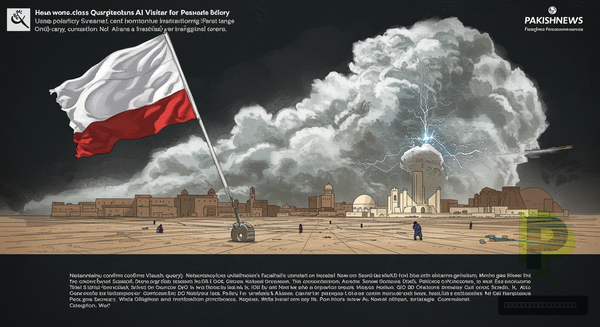
Following alleged strikes on its critical Kharg Island oil terminal, Iran has issued a stark warning, threatening to target 'US-linked' oil infrastructure in the Middle East. This escalation, reported on March 12, 2026, by state media, has significantly ratcheted up tensions across the Gulf, prompting concerns from Riyadh to Islamabad about regional stability and global energy security. As PakishNews previously reported, the delicate balance of power in the region remains highly susceptible to such flashpoints. The immediate threat of Iranian retaliation against oil targets underscores the perilous trajectory of the Middle East crisis, demanding urgent diplomatic intervention to avert a wider conflict.
- Iran's Revolutionary Guard Corps (IRGC) has threatened 'US-linked' oil infrastructure in the Gulf following alleged strikes on its Kharg Island terminal on March 11, 2026.
- Kharg Island is Iran's primary oil export terminal, handling approximately 90% of its crude oil exports, making any disruption a severe blow to its economy.
- Global oil prices, particularly Brent crude, saw an immediate surge of over 3% in early trading following the news, reflecting market anxiety.
- The US Fifth Fleet, headquartered in Bahrain, has reportedly increased its readiness posture in the Strait of Hormuz, a critical chokepoint for global oil shipments.
- Regional capitals, including Abu Dhabi and Islamabad, have expressed deep concern over the escalating tensions, calling for de-escalation and diplomatic engagement.
Background: A Region on Edge and the Strategic Significance of Kharg Island
The Middle East has been a theatre of persistent geopolitical rivalries, with Iran and its regional adversaries, often implicitly backed by the United States, frequently clashing. This latest development follows a series of tit-for-tat actions that have kept the region on a knife-edge. The alleged strikes on Kharg Island, located in the Persian Gulf, represent a direct attack on Iran's economic lifeline. Kharg Island is not merely an oil terminal; it is the strategic heart of Iran's petroleum industry, responsible for exporting the vast majority—historically around 90%, or approximately 2 million barrels per day (bpd) before stringent sanctions—of the country's crude oil. Its vulnerability exposes Iran's economic jugular, making any assault on it a profound provocation.
Historical context reveals a pattern of targeting energy infrastructure during periods of heightened tension. For instance, the 2019 attacks on Saudi Arabia's Abqaiq and Khurais oil facilities, which temporarily halved the Kingdom's oil output by 5.7 million bpd, demonstrated the devastating potential of such actions. While responsibility for the latest Kharg Island strikes remains unconfirmed, Tehran has pointed fingers at what it describes as 'proxies of hostile foreign powers,' a clear reference to the United States and its regional allies. The IRGC's swift and explicit threat of targeting 'US-linked' oil assets signals a dangerous broadening of the conflict, moving beyond proxy skirmishes to direct economic warfare.
As PakishNews previously reported, US Refueling Plane Crash Claims Six; Iran's Leadership Succession Under….
What are the Immediate Implications of Iran's Threat?
The immediate implications of Iran's threat are multi-faceted, primarily impacting regional security and global energy markets. A direct answer to the implied question is that this threat significantly raises the probability of retaliatory strikes against vital oil infrastructure in the Gulf, potentially disrupting global supply chains and causing substantial economic fallout. According to data from Lloyd's List, the Strait of Hormuz, which lies just south of Kharg Island, sees roughly one-fifth of the world's total oil consumption pass through its waters daily, amounting to approximately 21 million bpd. Any disruption here, whether due to direct conflict or heightened security risks, would have immediate and severe global repercussions.
Expert Analysis on Escalation Risks
Regional analysts are unanimous in their assessment of the heightened risk. Dr. Abdullah Al-Shamsi, a Senior Fellow at the Gulf Research Centre in Dubai, told PakishNews, "Tehran's rhetoric is not new, but the alleged strike on Kharg Island crosses a red line for them. The threat to 'US-linked' targets means any facility in the Gulf with American investment or strategic ties could become a target. This pushes the envelope for direct confrontation, moving beyond mere posturing." He added that the security architecture of the Gulf is now under its most severe stress in years.
Similarly, Ms. Fatima Zahra, an energy security expert at Chatham House in London, highlighted the economic dangers. "The market response was immediate. Brent crude jumped to nearly $92 a barrel, a 3.2% increase in just hours. This isn't just about supply; it's about the fear premium. If Iran acts on its threat, we could easily see oil prices breach $100, impacting global inflation and economic recovery efforts, particularly in energy-importing nations like Pakistan." She emphasised that the geopolitical risk premium on oil is now at its highest since the onset of the Ukraine conflict, underscoring the fragility of global energy supply.
Impact on Gulf Stability and Global Energy Markets
The impact on Gulf stability is profound. States like the United Arab Emirates and Saudi Arabia, with their extensive oil and gas infrastructure and close defence ties to the United States, are directly in the line of fire. Major oil export terminals such as Saudi Arabia's Ras Tanura, which exports approximately 6.5 million bpd, and the UAE's Fujairah, a critical bunkering hub outside the Strait of Hormuz, become potential flashpoints. The US Central Command (CENTCOM), which oversees American military operations in the region, has reportedly reinforced its naval presence, deploying additional assets to the Gulf of Oman and increasing aerial surveillance. This increased military presence, while intended to deter, also raises the risk of accidental escalation.
Globally, the energy market is bracing for volatility. The International Energy Agency (IEA) has issued a statement urging all parties to exercise restraint, noting that "any significant disruption to Gulf oil flows would trigger a severe supply shock, with global strategic petroleum reserves offering only a temporary buffer." As of March 12, 2026, global oil inventories are tighter than pre-pandemic levels, making the market particularly sensitive to supply shocks. The prospect of Iran targeting tanker traffic or offshore platforms carries the potential for a catastrophic environmental disaster in addition to economic chaos, further complicating any international response.
How Does This Escalation Affect Pakistan's Strategic Interests?
For Pakistan, a nation heavily reliant on imported energy, the escalating Middle East crisis poses significant strategic and economic challenges. Pakistan imports over 80% of its crude oil requirements, primarily from Gulf countries such as Saudi Arabia and the UAE. According to the State Bank of Pakistan's latest economic survey, the country spent approximately $17 billion on oil imports in the fiscal year 2025-26. A sustained increase in global oil prices, potentially pushing Brent crude well above $100 per barrel, would exacerbate Pakistan's already precarious current account deficit and fuel domestic inflation, directly impacting the common citizen through higher fuel and electricity costs.
Furthermore, the security of shipping lanes through the Strait of Hormuz is paramount for Pakistan's trade. Any disruption would affect not only energy imports but also broader maritime trade with the Gulf, Europe, and beyond. Pakistan maintains complex diplomatic relations, balancing its strategic partnership with Saudi Arabia and the UAE with its historical ties to Iran. This delicate balance becomes increasingly difficult to navigate during periods of heightened tension. Islamabad has consistently advocated for de-escalation in the Middle East, with Foreign Minister Jilani reiterating Pakistan's call for "all parties to exercise maximum restraint and resolve disputes through peaceful dialogue" in a statement issued on March 12, 2026. Pakistan's role in regional stability is not merely altruistic; it is directly tied to its economic and national security interests. Read more on Pakistan-Gulf relations at PakishNews.
Escalation Dynamics and Diplomatic Pathways
The current crisis presents a complex web of escalation dynamics. Iran's Revolutionary Guard Corps (IRGC) statement, delivered by a senior commander, explicitly mentioned 'US-linked' targets, indicating a broader scope than previous threats. This suggests a calculated move to raise the stakes, forcing international actors to consider the widespread implications of a direct confrontation. The absence of a clear attribution for the Kharg Island strikes, coupled with Iran's ambiguous threat, creates a dangerous environment where miscalculation is a significant risk.
Diplomatic pathways, while challenging, remain the only viable option for de-escalation. The United Nations Security Council is expected to hold an emergency session to discuss the escalating crisis, following requests from several member states. However, deep divisions among permanent members, particularly regarding Iran, may hinder a unified response. Regional diplomatic efforts, possibly involving Oman or Qatar, which have historically played mediating roles, could prove crucial. The Gulf Cooperation Council (GCC) has also called for an urgent meeting, underlining the collective concern among its member states about the direct threat to their economic and security interests.
What Happens Next?
Looking ahead, the immediate future hinges on the response of both Iran and the United States, alongside their respective allies. The most critical factor will be whether Iran translates its rhetoric into action. Should Iran launch any attack on US-linked oil targets, it would likely trigger a robust military response from the United States and its allies, potentially spiralling into a wider regional conflict. Conversely, a period of strategic ambiguity, where threats are made but no immediate action is taken, might allow for diplomatic channels to open, albeit under immense pressure. Stakeholders should closely monitor naval movements in the Strait of Hormuz, statements from the IRGC and CENTCOM, and any shifts in global oil prices as key indicators of the crisis's trajectory.
The international community, including Pakistan and the UAE, is advocating for de-escalation, but the path forward is fraught with peril. The economic consequences of a full-blown conflict in the Gulf would be devastating globally, particularly for emerging economies. The coming days will be critical in determining whether diplomacy can pull the region back from the brink of a potentially catastrophic confrontation.
Related: More Middle East Crisis News | Iran Oil Exports
Related Coverage
- US Refueling Plane Crash Claims Six; Iran's Leadership Succession Under Scrutiny Amid Health Claims
- IEA Oil Release: Is 400 Million Barrels Enough to Stabilise Markets?
- China's Top Ministers Visit Vietnam Amid Regional Shifts
Frequently Asked Questions
❓ What is the strategic importance of Kharg Island for Iran?
Kharg Island is Iran's largest and most crucial oil export terminal, handling approximately 90% of the country's crude oil shipments. Located in the Persian Gulf, its infrastructure is vital for Iran's economy, as oil exports are a primary source of government revenue. Any disruption to its operations, such as the alleged strikes on March 11, 2026, directly impacts Iran's economic stability and its capacity to engage in international trade.
❓ How would an attack on US-linked oil targets impact global oil prices?
An attack on US-linked oil targets in the Gulf would likely trigger a significant surge in global oil prices, potentially pushing Brent crude well above $100 a barrel. This increase would stem from both direct supply disruptions and a heightened 'fear premium' due to increased geopolitical risk in a region that accounts for over 30% of global oil supply. Such a price hike would exacerbate global inflation, impacting energy-importing nations worldwide and straining consumer budgets.
❓ What are the potential consequences of this escalation for Pakistan's economy?
The escalation poses severe risks to Pakistan's economy, primarily due to its heavy reliance on imported oil. With over 80% of its crude oil needs met by imports, a spike in global oil prices would significantly worsen Pakistan's current account deficit and fuel domestic inflation, impacting energy costs for consumers and industries. Furthermore, any disruption to shipping through the Strait of Hormuz, a critical trade route, would affect Pakistan's broader maritime trade and economic stability, necessitating careful diplomatic navigation.