Listen to ArticlePress play to hear this storyListen to ArticleDownload audio
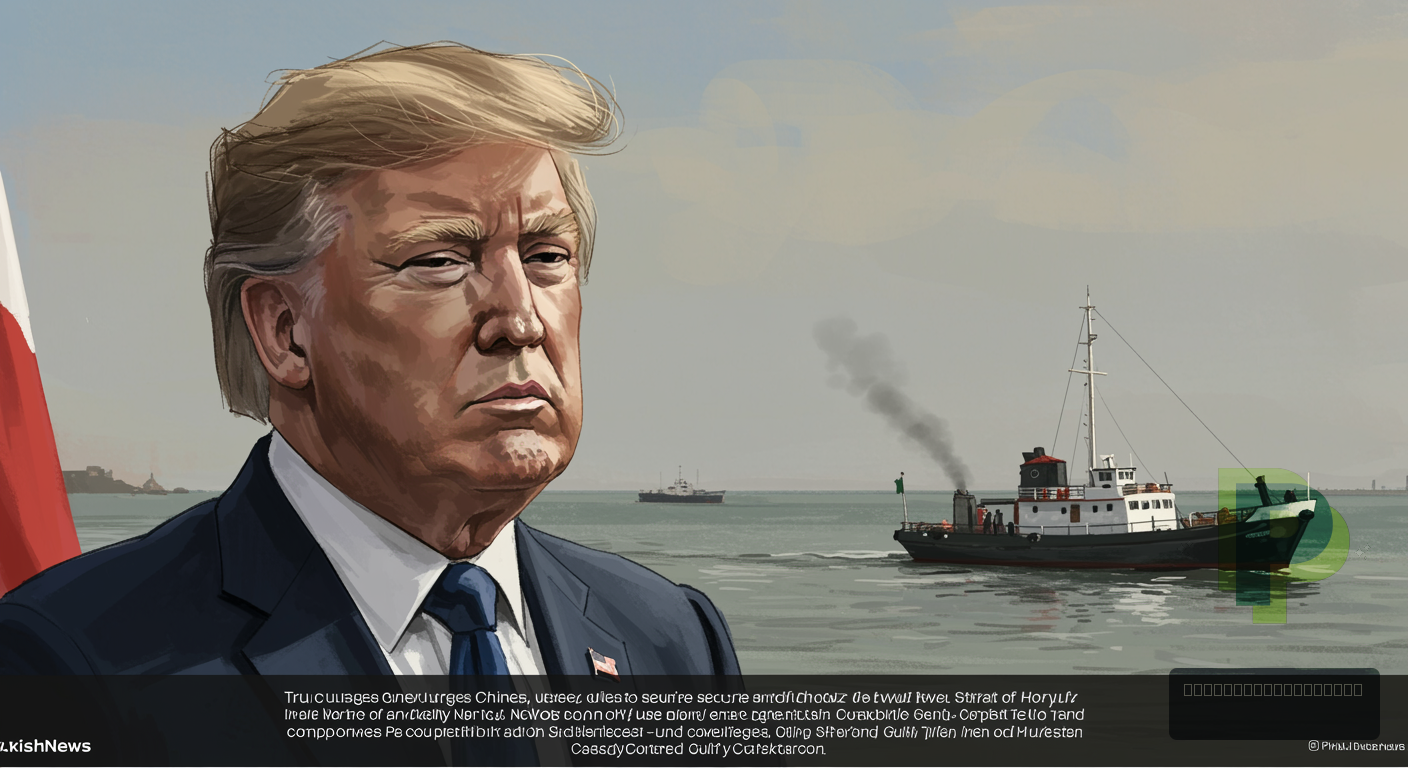
Former US President Donald Trump has urged China and key allies to contribute significantly to securing the Strait of Hormuz, a critical chokepoint for global oil supplies, amid heightened Iran war news and regional tensions. This move, articulated in a recent statement, signals a potential shift in burden-sharing for maritime security, with significant implications for global energy markets and the geopolitical landscape of the Gulf region, including Pakistan and the UAE. The call underscores the increasing international pressure to de-escalate the volatile situation in one of the world's most vital maritime passages.
- Former US President Trump has publicly called on China and other international allies to actively participate in securing the Strait of Hormuz.
- The Strait, a crucial maritime chokepoint, sees approximately 20-21 million barrels of oil transit daily, roughly 20% of the world's total supply.
- The appeal comes amidst ongoing tensions and concerns over potential disruptions to global energy supplies due to escalating Iran war news.
- This initiative seeks to distribute the responsibility for maritime defence, moving away from a predominantly US-led security architecture.
- The move has profound implications for Gulf states, global trade, and energy-dependent nations like Pakistan.
Why Does the Strait of Hormuz Matter So Much to Global Stability?
The Strait of Hormuz, a narrow waterway connecting the Persian Gulf with the Arabian Sea and the open ocean, is arguably the world's most strategically important oil chokepoint. Its significance stems from the sheer volume of energy resources that pass through it daily. According to data from the U.S. Energy Information Administration (EIA), an average of 20-21 million barrels of oil, or roughly 20% of the world's total petroleum liquids consumption, transited the Strait in 2023. This figure includes crude oil, condensates, and refined petroleum products from major producers such as Saudi Arabia, Iran, UAE, Kuwait, and Iraq. Any significant disruption to this flow would send shockwaves through global energy markets, leading to exponential price hikes and potential economic recession in energy-dependent nations.
Historically, the Strait has been a flashpoint for geopolitical tensions. Incidents in the past, such as the 'Tanker War' during the Iran-Iraq War in the 1980s and more recent attacks on oil tankers in 2019, underscore its vulnerability. Iran, which controls the northern shore of the Strait, has repeatedly threatened to close the waterway in response to international sanctions or military pressure. The current escalation of Iran war news, particularly concerning its nuclear programme and regional proxy activities, has amplified these long-standing concerns, prompting renewed calls for international cooperation in ensuring its free passage. The United Nations Security Council has, on multiple occasions, reiterated the importance of freedom of navigation through international waterways, including the Strait of Hormuz, as enshrined in international law.
As PakishNews previously reported, Nepal Petrol Prices Surge Amidst West Asia Crisis.
What Are the Implications of Trump's Call for China and Allies to Step Up?
Former President Trump's urging of China and other allies to contribute to the Strait's security marks a notable shift in US foreign policy rhetoric, which historically has seen Washington bear the primary burden of maritime defence in the Gulf. The rationale appears multi-faceted: to distribute the financial and military costs of maintaining security, to leverage China's growing global influence, and to underscore the collective stake in global energy stability. China, for instance, is the world's largest importer of crude oil, with approximately 50% of its crude oil imports transiting the Strait of Hormuz, according to the China National Petroleum Corporation (CNPC) annual report for 2023. Its economic lifeline is intrinsically linked to the Gulf's stability, yet Beijing has largely maintained a non-interventionist foreign policy stance, preferring economic engagement over military entanglement.
European allies, while condemning any potential threats to navigation, have often sought diplomatic solutions rather than direct military confrontation. The European Union, for example, has historically supported the Joint Comprehensive Plan of Action (JCPOA) with Iran, seeking to de-escalate tensions through dialogue. Japan and South Korea, also heavily reliant on Gulf oil, have deployed limited self-defence assets or observer missions but have largely relied on US protection. Trump's call, therefore, challenges these nations to move beyond rhetoric and assume more active roles, potentially reshaping the architecture of international maritime security.
Expert Analysis: Regional Perspectives on a Shifting Security Paradigm
The proposal has elicited varied reactions from regional and international experts. Dr. Aisha Al-Balooshi, a Senior Energy Policy Analyst at the Emirates Policy Centre in Abu Dhabi, told PakishNews, "The UAE and other GCC states have long advocated for collective security mechanisms in the Gulf. While US presence is crucial, a broader international coalition, involving major energy consumers like China, could enhance stability and de-risk the Strait. However, the operational details and command structure of such a force would be immensely complex to negotiate." Her comments highlight the Gulf's pragmatism in seeking diversified security assurances.
From Pakistan's perspective, the situation in the Strait of Hormuz is of paramount concern. "Pakistan's energy security is directly linked to the stability of the Strait. Over 70% of our crude oil imports, primarily from Saudi Arabia and the UAE, pass through this waterway," stated Dr. Hassan Askari Rizvi, a prominent Pakistani defence and political analyst, in an exclusive interview with PakishNews. "Any disruption would not only spike fuel prices, exacerbating our economic challenges, but also affect our trade routes and potentially impact the millions of Pakistani expatriates working in the Gulf. Islamabad must maintain a delicate diplomatic balance, advocating for de-escalation while safeguarding its vital interests." This sentiment reflects Pakistan's vulnerability and its historical role as a regional mediator. Read more on Pakistan's economic challenges at PakishNews.
Meanwhile, Dr. Emily Thorne, a Senior Fellow at the Washington Institute for Near East Policy, commented, "Trump's strategy here isn't entirely new; it echoes a long-standing US desire for allies to share more of the security burden. However, demanding China's active military involvement in a region where it primarily seeks economic influence presents a significant diplomatic hurdle. Beijing's participation would fundamentally alter the geopolitical dynamics, potentially complicating regional alliances rather than simplifying them." Her analysis points to the intricate challenges of integrating a rising power like China into established security frameworks.
How Would a Strait of Hormuz Crisis Impact Pakistan and the Gulf Region?
A prolonged crisis or conflict in the Strait of Hormuz would have devastating consequences for Pakistan and the Gulf states. For the UAE, Saudi Arabia, Kuwait, and Qatar, whose economies are heavily reliant on oil and gas exports, a blockage or significant disruption would cripple their primary revenue streams. The cost of shipping would soar due to increased insurance premiums (war risk premiums could jump by 50-100%, according to Lloyd's of London insurance market projections for 2026), deterring international maritime traffic and significantly impacting global trade routes. Foreign direct investment into the Gulf, a crucial driver of economic diversification programmes like Saudi Vision 2030 and UAE Centennial 2071, would likely plummet.
For Pakistan, the implications are equally severe. As PakishNews previously reported, Pakistan's annual oil import bill for fiscal year 2024-25 stood at approximately $15 billion. A 20% increase in global oil prices due to a Strait crisis could add an extra $3 billion to this bill, further straining the nation's already precarious foreign exchange reserves. Beyond energy, Pakistan's trade with the Gulf, valued at over $20 billion annually, would face significant hurdles. The welfare of over 4 million Pakistani expatriates in the GCC countries, who send home remittances exceeding $25 billion annually, would also be at risk, potentially leading to a sharp decline in these vital inflows. In a related development covered by PakishNews, bilateral trade between UAE and Pakistan has seen significant growth in recent years.
Moreover, the environmental impact of any military conflict or oil spill in such a confined and ecologically sensitive waterway would be catastrophic, affecting marine life and coastal communities across the region. The security of major maritime infrastructure, including ports and offshore platforms, would also be severely compromised, leading to long-term economic and environmental recovery challenges.
What Happens Next: Navigating the Complexities of Hormuz Security?
The immediate future of Strait of Hormuz security will likely hinge on a delicate interplay of diplomatic manoeuvring, military posturing, and economic realities. While Trump's call for broader international involvement is a significant rhetorical step, translating it into a coherent, actionable multi-national force will be a formidable challenge. China's willingness to commit substantial military assets beyond its existing anti-piracy operations in the Gulf remains questionable, given its traditional policy of non-interference in internal affairs of other states.
Expect intensified diplomatic efforts at the United Nations and through regional blocs to de-escalate tensions with Iran. There may be renewed discussions around alternative energy routes, such as the East-West pipeline across Saudi Arabia or the UAE's Fujairah pipeline, which bypass the Strait, though these have limited capacity compared to the Strait's throughput. Stakeholders, including global shipping companies, energy traders, and international insurers, will be closely monitoring any developments, adjusting their risk assessments and operational strategies accordingly. For Pakistan and the Gulf, maintaining robust diplomatic channels with all parties, including Iran, and advocating for peaceful resolutions will be paramount to safeguarding their economic and security interests in this volatile region. The coming months, leading up to the US presidential elections, will likely see continued rhetoric around burden-sharing and international security, keeping the Strait of Hormuz firmly in the global spotlight.
Related: More World News | Iran Crisis
Related Coverage
- Nepal Petrol Prices Surge Amidst West Asia Crisis
- Pakistan Targets Militant Hideouts: Escalating Cross-Border Conflict in Afghanistan
- Iran Ceasefire Denial: Tehran Rejects Trump’s Negotiation Claim Amid Middle East Crisis
Quick Answers (AI Overview)
- What happened in this story?
Former US President Donald Trump has urged China and key allies to contribute to securing the Strait of Hormuz, a critical chokepoint for global oil supplies, amid heightened Iran war news and regional tensions. This mov - Why does this matter right now?
It matters because iran war news: trump urges china, allies to secure vital strait of hormuz can impact public discussion, policy, or regional stability depending on follow-up events. - What should readers watch next?
Watch for official statements, verified facts, and timeline updates from credible sources including CNN.
Frequently Asked Questions
❓ What is the strategic importance of the Strait of Hormuz?
The Strait of Hormuz is critically important as the world's primary chokepoint for oil transit, with approximately 20-21 million barrels of oil passing through it daily, representing about 20% of global petroleum consumption. Its disruption would severely impact global energy markets, leading to significant price increases and economic instability worldwide, as highlighted by the U.S. Energy Information Administration (EIA) data for 2023.
❓ How would a crisis in the Strait of Hormuz affect Pakistan's economy?
A crisis in the Strait of Hormuz would severely impact Pakistan's economy by driving up crude oil prices, adding billions to its annual import bill which stood at $15 billion in FY 2024-25. It would also disrupt maritime trade with Gulf countries, valued at over $20 billion annually, and potentially jeopardise the remittances from over 4 million Pakistani expatriates in the GCC, which exceed $25 billion annually, according to State Bank of Pakistan figures.
❓ Why is China's involvement in Strait of Hormuz security significant?
China's potential involvement is significant because it is the world's largest crude oil importer, with about 50% of its imports transiting the Strait of Hormuz, making it highly vulnerable to disruptions. While Beijing traditionally avoids military intervention, its economic reliance on Gulf stability means a more active security role, if accepted, would represent a major shift in its foreign policy and fundamentally alter the geopolitical balance in the Middle East, as noted by analysts.