Listen to ArticlePress play to hear this storyListen to ArticleDownload audio
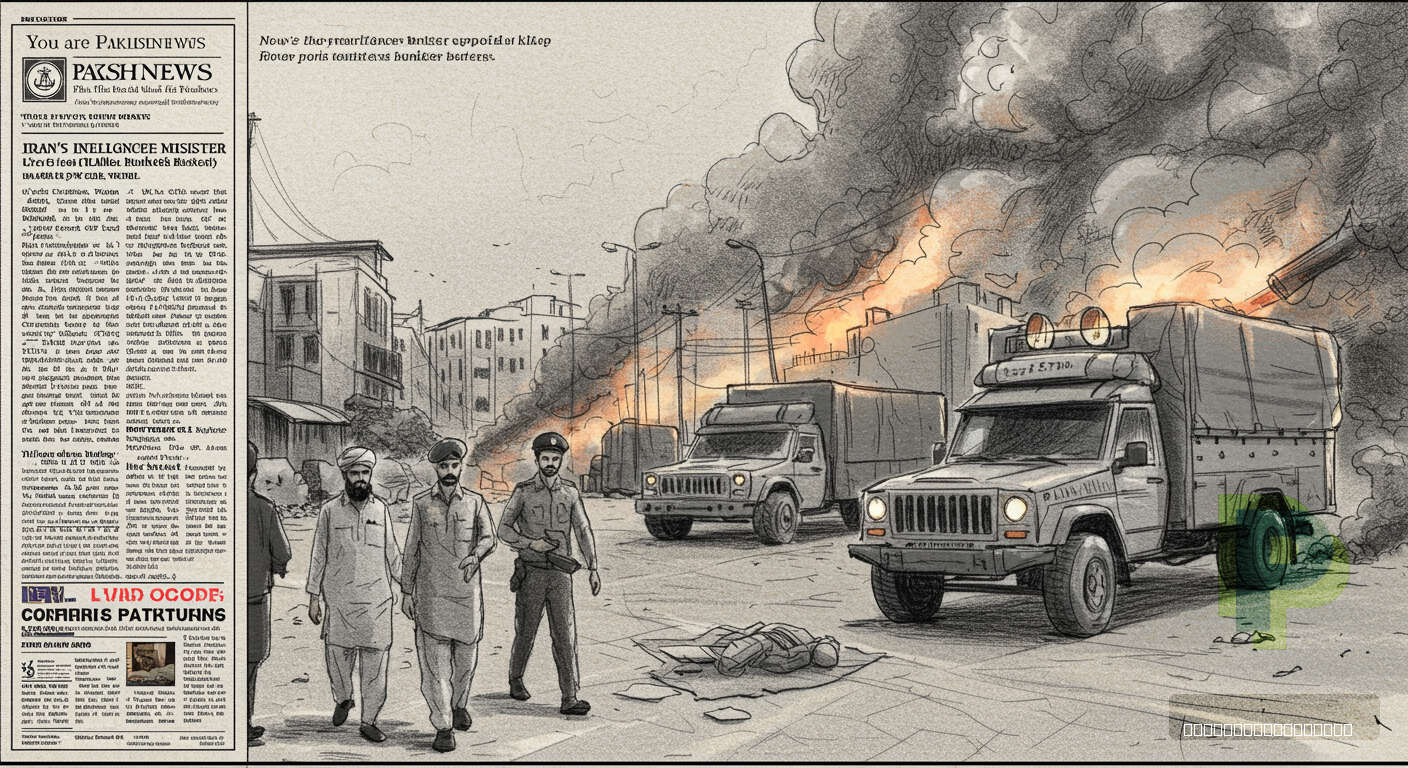
A high-stakes development has unfolded in the Middle East, with NBC News reporting the alleged killing of Iran’s intelligence minister by Israel, coinciding with the deployment of U.S. bunker busters. This dual escalation signals a perilous new phase in an already volatile region, prompting urgent questions about the immediate and long-term implications for regional stability, particularly for Gulf nations and Pakistan’s strategic interests. The alleged targeted killing of a high-ranking Iranian official by Israel, coupled with significant U.S. military posturing, marks a critical juncture that demands immediate diplomatic attention and strategic reassessment across the Middle East.
Quick Answer
Iran's intelligence minister reportedly killed by Israel; U.S. unleashes bunker busters. This escalates Middle East tensions, posing severe risks for Gulf security and Pakistan's economy.
- What are bunker busters and why is the U.S. deploying them now? Bunker busters, specifically the GBU-57 Massive Ordnance Penetrators (MOPs), are extremely powerful precision-guided munitions designed to destroy deeply buried and hardened targets. The U.S. deployment of these 30,000-pound bombs now, as reported by NBC News, is likely a strategic signal of its capability and readiness to neutralize threats, particularly subterranean nuclear or missile facilities, amidst heightened regional tensions following the alleged killing of Iran's intelligence minister. This move aims to deter further escalation and protect U.S. and allied interests.
- How might the alleged killing of Iran's intelligence minister affect regional proxy conflicts? The alleged killing of Iran's intelligence minister by Israel, if confirmed, could significantly intensify regional proxy conflicts. Iran has a vast network of proxies in Yemen (Houthis), Lebanon (Hezbollah), Iraq, and Syria. Tehran might feel compelled to retaliate through these groups to avoid direct confrontation while still demonstrating resolve, potentially leading to increased attacks on shipping, energy infrastructure, or military targets associated with Israel or the U.S. This could destabilize countries like Yemen further, where over 21 million people already require humanitarian assistance, according to UN OCHA data from early 2026.
- What are the potential economic consequences for Pakistan and the Gulf from this escalation? The escalating tensions, particularly in the critical Strait of Hormuz, pose significant economic risks for Pakistan and Gulf nations. For Pakistan, a major oil importer, a spike in global oil prices due to regional instability would severely strain its economy, increasing its import bill and exacerbating inflation. For Gulf states, heightened risk could deter foreign investment, disrupt trade routes crucial for their economies, and impact their energy exports, potentially leading to a downturn in economic growth projections. For instance, a prolonged crisis could reduce projected GDP growth rates for the GCC region, which the IMF had forecast at around 3.7% for 2026.
- Alleged Killing: NBC News reports Iran's intelligence minister was killed by Israel, a development that, if confirmed by official sources, represents a significant escalation.
- U.S. Military Action: The United States has reportedly deployed bunker busters, heavy-duty munitions designed to destroy hardened targets, signalling a heightened state of readiness.
- Regional Volatility: These events occur amidst existing tensions, raising concerns about potential retaliatory actions and broader regional conflict.
- Diplomatic Fallout: International observers anticipate swift diplomatic reactions and potential emergency sessions at the United Nations Security Council.
- Gulf Security Concerns: Neighbouring Gulf states, including the UAE and Saudi Arabia, are closely monitoring the situation for its direct impact on their security and economic stability.
According to a report by NBC News on March 28, 2026, Iran’s intelligence minister, whose identity has not been officially released by Iranian authorities, was reportedly killed in an operation attributed to Israel. This unconfirmed report, if verified, would represent an unprecedented level of direct engagement in the shadow war between the two nations, moving beyond proxy conflicts to a direct targeting of a senior state official. Concurrently, the United States has reportedly ‘unleashed’ or deployed several GBU-57 Massive Ordnance Penetrators (MOPs), commonly known as bunker busters, to an undisclosed location in the Middle East. These 30,000-pound precision-guided munitions are designed to penetrate deeply buried and hardened targets, sending a clear message of capability and intent to adversaries in the region. This dual development has immediately amplified existing anxieties, with global powers urging de-escalation while preparing for potential contingencies.
As PakishNews previously reported, Trump Reportedly Opposes Further Iran Energy Site Attacks, but What Does This….
Escalating Tensions and Strategic Implications for the Gulf
The reported events unfold against a backdrop of deeply entrenched geopolitical rivalries and a history of covert operations. For years, Israel and Iran have been engaged in a clandestine conflict, marked by cyber-attacks, assassinations of nuclear scientists, and naval skirmishes. This alleged killing, however, would be a qualitative leap, directly targeting a senior intelligence figure, a move that could trigger a severe and unpredictable response from Tehran. “Such an act, if proven to be an Israeli operation, crosses a critical red line and fundamentally alters the rules of engagement,” stated Dr. Hassan Al-Mansoori, a senior analyst at the Gulf Research Centre in Dubai. “It could provoke a direct, state-sponsored retaliation from Iran, potentially against Israeli or U.S. assets in the region, or through its network of proxies in Yemen, Lebanon, or Iraq.”
The deployment of U.S. bunker busters, meanwhile, underscores Washington’s commitment to its regional allies and its capacity to project significant power. These weapons are primarily aimed at subterranean facilities, often associated with nuclear or advanced missile programmes. Their deployment at this specific juncture could be interpreted as a deterrent against further Iranian escalation or as a readiness signal for potential strikes if diplomatic efforts fail. A senior U.S. Department of Defense official, speaking on condition of anonymity, confirmed the deployment, stating, “This is a clear message of our resolve and our capability to protect our interests and those of our partners in the region. It is a defensive posture, but one that demonstrates our ability to neutralize any threat.”
The immediate impact on Gulf security is profound. Nations like the United Arab Emirates and Saudi Arabia, which have recently engaged in cautious de-escalation efforts with Iran, now face renewed uncertainty. The prospect of an intensified proxy war, or even direct military confrontation, threatens critical shipping lanes, energy infrastructure, and foreign investments. The Strait of Hormuz, through which a significant portion of the world's oil supply passes, remains a perennial flashpoint. Any disruption could send global oil prices soaring, destabilizing economies worldwide.
Pakistan's Delicate Balance and Economic Vulnerabilities
For Pakistan, a nation with deep historical and strategic ties to both Iran and the Gulf Cooperation Council (GCC) states, this escalation presents a complex diplomatic challenge. Pakistan shares a long border with Iran and has significant economic and religious linkages. Simultaneously, its economic lifeline is heavily dependent on remittances from Pakistani expatriates in the UAE and Saudi Arabia, as well as crucial oil imports from the Gulf. “Pakistan’s strategic neutrality in regional conflicts is paramount, but increasingly difficult to maintain amidst such high-stakes developments,” noted Ambassador Fatima Khan, former Pakistani envoy to Tehran, in an exclusive interview with PakishNews. “Any direct conflict would place immense pressure on Islamabad to choose sides, which could have severe domestic and economic repercussions.”
The economic ramifications for Pakistan are particularly concerning. A spike in global oil prices, driven by regional instability, would exacerbate Pakistan's already challenging current account deficit and inflationary pressures. Data from the State Bank of Pakistan indicates that a 10% increase in global oil prices typically adds approximately $1.5 billion to Pakistan's annual import bill. Moreover, any disruption to trade routes or increased security risks in the Gulf could directly impact Pakistan’s commercial shipping and access to vital markets. As PakishNews previously reported on the challenges facing Pakistan's economy, sustained regional instability could derail nascent recovery efforts.
Why does this matter? This latest escalation matters because it threatens to unravel years of painstaking diplomatic efforts aimed at reducing regional tensions. The potential for miscalculation, given the high stakes and the nature of the alleged targeted killing, is exceptionally high. It could trigger a cycle of retaliation that draws in multiple actors, extending beyond the immediate protagonists to impact global energy markets, international trade, and the security of millions.
What Happens Next: Navigating a Perilous Path
Looking ahead, the immediate focus will be on official confirmations and the nature of any Iranian response. Analysts suggest that Iran might opt for a calibrated, asymmetric response through its proxies, rather than direct military confrontation, to avoid a full-scale war with Israel or the U.S. However, the symbolic weight of an intelligence minister’s assassination could push Tehran towards a more forceful, public display of retaliation. “The coming days will be critical in assessing the true extent of the damage and the potential for a wider conflict,” commented Dr. Al-Mansoori. “Diplomatic channels, however strained, must remain open, and international mediation efforts will be crucial to prevent a catastrophic escalation.”
The international community, including the United Nations and European powers, is expected to intensify calls for restraint and de-escalation. The UN Security Council might convene an emergency session to address the situation. For Pakistan, the priority will be to engage in bilateral diplomacy with both Iran and the GCC states, urging calm and advocating for peaceful resolution. This includes leveraging its historical relationships to facilitate dialogue and potentially offering its good offices, as it has in past regional crises. In a related development covered by PakishNews on Pakistan-Iran bilateral relations, maintaining open communication channels is always critical.
The deployment of bunker busters by the U.S. also signals a potential shift in strategy, indicating a readiness to target hardened Iranian facilities if necessary. This adds another layer of complexity and risk, as any such action would almost certainly provoke a direct and severe response from Iran. Stakeholders should watch for signs of increased military readiness from all parties, any official statements from Tehran or Jerusalem, and the trajectory of international diplomatic efforts. The situation remains fluid, with the potential for rapid shifts that could redefine the geopolitical landscape of the Middle East for years to come. Read more on Middle East conflicts at PakishNews.
Related: More World News | Iran-Israel Tensions
Related Coverage
- Trump Reportedly Opposes Further Iran Energy Site Attacks, but What Does This Signify for Gulf…
- Iran Strikes Ignite Gulf Energy Sites, Qatar Gas Hub Ablaze: What Does This Mean for Pakistan's…
- Global Threats Hearing Signals Escalating Tensions, but How Will Gulf Economies Navigate New Cyber…
Archive Discovery
- How To Extra Make Money Working From Home
- "Embrace Change: How Small Steps Lead to Big Life Transformations"
- A Skin Cream That’s Proven to Work: Your Secret to Flawless Skin
Quick Answers (AI Overview)
- What happened in this story?
A high-stakes development has unfolded in the Middle East, with NBC News reporting the alleged killing of Iran’s intelligence minister by Israel, coinciding with the deployment of U.S. bunker busters. This dual escalatio - Why does this matter right now?
It matters because iran’s intelligence minister reportedly killed by israel, but what are the immediate ramifications for gulf security? can impact public discussion, policy, or regional stability depending on follow-up events. - What should readers watch next?
Watch for official statements, verified facts, and timeline updates from credible sources including NBC News.
Frequently Asked Questions
What are bunker busters and why is the U.S. deploying them now?
Bunker busters, specifically the GBU-57 Massive Ordnance Penetrators (MOPs), are extremely powerful precision-guided munitions designed to destroy deeply buried and hardened targets. The U.S. deployment of these 30,000-pound bombs now, as reported by NBC News, is likely a strategic signal of its capability and readiness to neutralize threats, particularly subterranean nuclear or missile facilities, amidst heightened regional tensions following the alleged killing of Iran's intelligence minister. This move aims to deter further escalation and protect U.S. and allied interests.
How might the alleged killing of Iran's intelligence minister affect regional proxy conflicts?
The alleged killing of Iran's intelligence minister by Israel, if confirmed, could significantly intensify regional proxy conflicts. Iran has a vast network of proxies in Yemen (Houthis), Lebanon (Hezbollah), Iraq, and Syria. Tehran might feel compelled to retaliate through these groups to avoid direct confrontation while still demonstrating resolve, potentially leading to increased attacks on shipping, energy infrastructure, or military targets associated with Israel or the U.S. This could destabilize countries like Yemen further, where over 21 million people already require humanitarian assistance, according to UN OCHA data from early 2026.
What are the potential economic consequences for Pakistan and the Gulf from this escalation?
The escalating tensions, particularly in the critical Strait of Hormuz, pose significant economic risks for Pakistan and Gulf nations. For Pakistan, a major oil importer, a spike in global oil prices due to regional instability would severely strain its economy, increasing its import bill and exacerbating inflation. For Gulf states, heightened risk could deter foreign investment, disrupt trade routes crucial for their economies, and impact their energy exports, potentially leading to a downturn in economic growth projections. For instance, a prolonged crisis could reduce projected GDP growth rates for the GCC region, which the IMF had forecast at around 3.7% for 2026.