Listen to ArticlePress play to hear this storyListen to ArticleDownload audio
Iraq Oil Pipeline Dispute: Baghdad Accuses KRG of Blocking Federal Exports
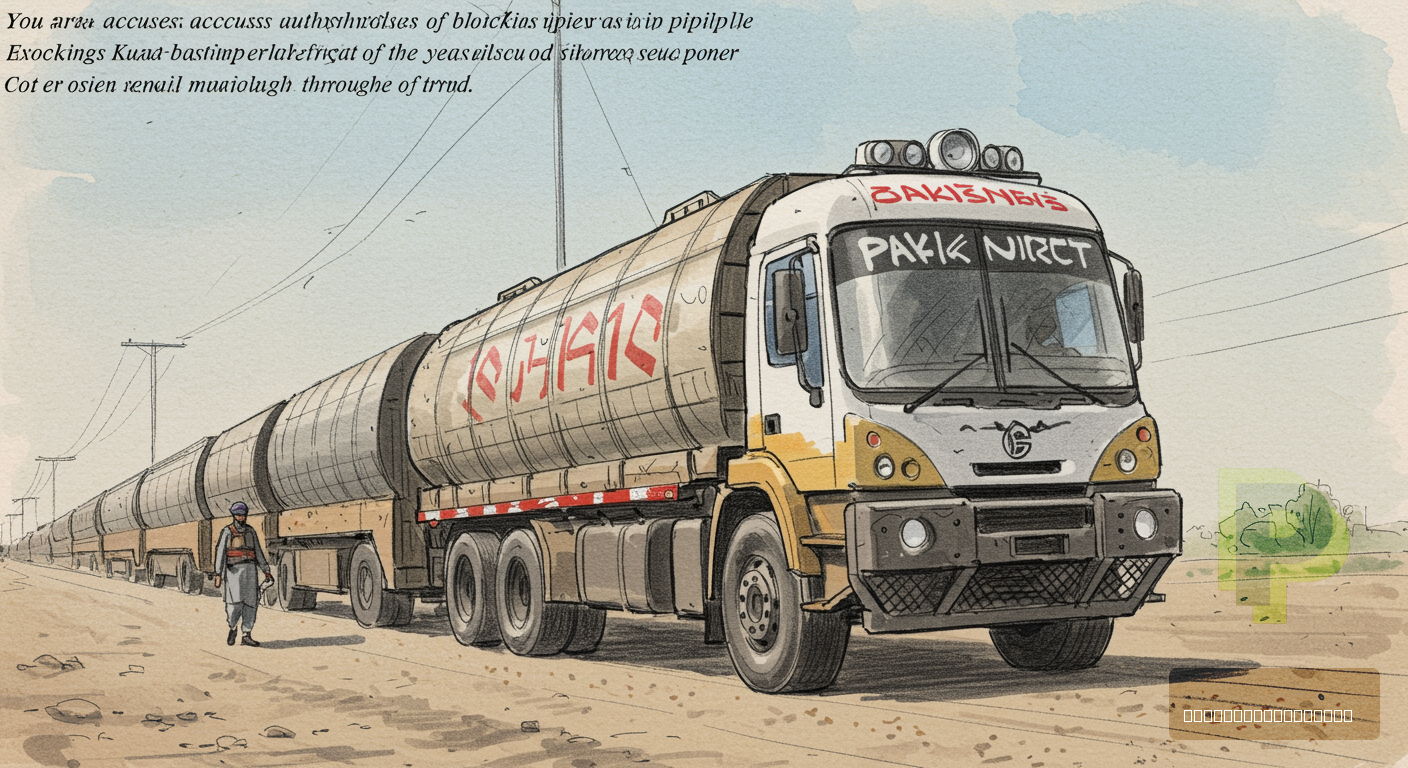
Baghdad, Iraq – The longstanding dispute over oil export control in Iraq has flared anew, with Iraq’s federal oil ministry formally accusing the Kurdistan Regional Government (KRG) of refusing to allow Baghdad to utilise its pipeline network for crude exports. This critical development, announced on March 25, 2026, comes amidst heightened regional tensions and ongoing efforts to restart the vital Iraq-Turkey pipeline (ITP), which has been offline for over a year. The federal government views the KRG's stance as an unjustified obstruction to national oil policy and a significant impediment to Iraq's economic recovery.
- Iraq's Oil Ministry accuses KRG of blocking federal access to its pipeline network for oil exports.
- The dispute arises as Iraq seeks alternative routes following the March 2023 shutdown of the Iraq-Turkey pipeline.
- KRG officials reportedly demand resolution of financial arrears and future payment guarantees before allowing transit.
- The impasse exacerbates Iraq's economic challenges and impacts global energy market stability.
- Efforts to resume full Iraqi oil exports, including from the Kurdistan region, remain stalled.
Understanding the Historical Context of Iraq's Oil Export Challenges
The current impasse over the Iraq oil pipeline is deeply rooted in Iraq's post-2003 federal structure and the unresolved constitutional questions surrounding oil revenue sharing and resource control. For decades, Baghdad and Erbil have been at loggerheads over the KRG's independent oil exports, which began in 2013, bypassing Iraq's State Oil Marketing Organization (SOMO). This unilateral action, while providing critical revenue for the Kurdistan region, was consistently deemed illegal by Baghdad.
The situation reached a critical juncture in March 2023 when the International Chamber of Commerce (ICC) ruled in favour of Baghdad, declaring that Turkey had violated a 1973 pipeline agreement by allowing the KRG to export oil without federal Iraqi consent. This ruling led to the immediate shutdown of the Iraq-Turkey pipeline, which has a capacity of approximately 450,000 barrels per day (bpd), including about 75,000 bpd from federal fields in Kirkuk and up to 375,000 bpd from KRG-controlled fields. The shutdown has cost both the federal government and the KRG billions of dollars in lost revenue, with estimates from the Iraqi Ministry of Oil suggesting cumulative losses exceeding $11 billion as of late 2025. This backdrop of legal battles and economic strain underscores why the federal government is now urgently seeking to reassert control and utilise all available infrastructure.
As PakishNews previously reported, Bangladesh vs Pakistan: Agha Salman's Gritty Fifty Ignites Tense Chase.
Baghdad's Accusation: Unreasonable Conditions Impeding National Interest
According to a statement released by Iraq’s Oil Ministry on March 25, 2026, the federal government had proposed using the KRG's internal pipeline network as an alternative route for crude flows disrupted by the ITP shutdown. This proposal aimed to expedite the resumption of exports from Kirkuk and other federal fields, particularly given the broader regional instability, including potential disruptions to shipping in the Gulf due to ongoing geopolitical tensions. However, the ministry stated that the KRG had “refused to let it use a pipeline as an alternative route for crude flows,” accusing authorities there of “putting up irrelevant conditions.”
A senior official from SOMO, who requested anonymity due to the sensitivity of ongoing negotiations, told PakishNews, “We presented a clear, technical proposal to move oil from our fields through their network to the Turkish border. Their response was not about logistics or capacity, but about unrelated financial demands that fall outside the scope of this specific operational request. This is fundamentally about national sovereignty over oil exports, not a negotiation over past dues.” This accusation highlights Baghdad's frustration with what it perceives as the KRG leveraging critical infrastructure for political and financial leverage, rather than cooperating for the collective national good.
Erbil's Counter-Narrative: Seeking Financial Guarantees Amidst Budget Disputes
In response to Baghdad’s accusations, a senior Kurdish government official, speaking to Reuters on condition of anonymity, stated that KRG authorities would be “happy for the Iraqi government to use the pipeline” but stressed that certain conditions must be met. These conditions reportedly include guarantees for the payment of outstanding financial dues to international oil companies operating in the Kurdistan region, as well as clarity on the KRG’s share of the federal budget, which has been consistently delayed or disputed. “We are not refusing; we are seeking a comprehensive agreement that ensures our financial stability,” the official clarified, adding that the KRG has incurred significant debts to companies like DNO and Genel Energy due to Baghdad’s inconsistent budget transfers and the export shutdown.
Dr. Hawre Mansour, an energy policy analyst based in Erbil, elaborated on the KRG's position: “The KRG views its pipeline network as a vital asset, built and maintained with significant investment. To simply hand over control or transit without clear financial mechanisms for its own oil and for the companies operating here would be economically suicidal for the region. The conditions they are proposing are not 'irrelevant' but are central to the KRG’s economic survival, particularly after the ICC ruling effectively halted their primary revenue stream.” This perspective underscores the deep-seated mistrust and the KRG’s desperate need for a stable financial framework from Baghdad.
Why Does This Matter? Economic and Geopolitical Repercussions
This renewed Iraq-Kurdistan oil dispute carries significant economic and geopolitical weight. Economically, the continued shutdown of the ITP, even for federal oil, means Iraq is losing out on substantial revenue. The pipeline's capacity, if fully operational, could add hundreds of thousands of barrels to Iraq's current export volume of approximately 3.4 million bpd, primarily shipped via its southern ports. At current Brent crude prices hovering around $85 per barrel, every day of delay translates into millions of dollars in lost revenue for the Iraqi treasury, impacting critical development projects and public services.
Geopolitically, the impasse affects global energy security. As PakishNews previously reported, the Middle East remains a volatile region, and diversified export routes are crucial for stable energy supplies. The inability to fully utilise northern Iraqi oil infrastructure makes global markets more vulnerable to disruptions elsewhere. Furthermore, the unresolved internal disputes weaken Iraq’s overall position as a major oil producer within OPEC+, potentially hindering its ability to influence production quotas and market stability. This situation also tests the resilience of Iraq’s federal system, demonstrating the ongoing challenges in central-regional power sharing.
Impact Assessment: Who is Affected and How?
The primary stakeholders affected by this dispute are the Iraqi federal government and the Kurdistan Regional Government, both of whom are losing billions in potential oil revenues. The Iraqi federal budget, which relies heavily on oil sales for over 90% of its income, faces immense pressure. Similarly, the KRG, which has been unable to export its own oil since March 2023, is experiencing a severe financial crisis, impacting public sector salaries and essential services. This has led to widespread discontent within the Kurdistan region, further complicating Erbil's negotiating position.
Beyond Iraq's borders, Turkey is also significantly impacted. The port of Ceyhan, a key export hub, has seen a dramatic reduction in throughput and transit fees since the ITP shutdown. International oil companies (IOCs) operating in the KRG, such as DNO and Genel Energy, are facing substantial financial strain, with their investments tied up and production halted or significantly curtailed. Finally, international crude oil markets, while not critically destabilised by the ITP shutdown alone, are deprived of a reliable source of light crude, adding to supply concerns in a world grappling with geopolitical uncertainties and the transition to cleaner energy.
What Happens Next? Pathways to Resolution
The immediate future of the Iraq oil pipeline dispute hinges on high-level negotiations between Baghdad and Erbil, potentially mediated by international actors or even Turkey. Iraq's Oil Minister, Hayan Abdel-Ghani, has reiterated Baghdad’s commitment to resuming northern oil exports, but insists on full federal control. The KRG, meanwhile, is unlikely to concede without firm guarantees on budget transfers and payment for its oil companies. A potential pathway involves a temporary agreement where federal oil flows are permitted through KRG pipelines, with an escrow account mechanism established for KRG’s share of revenues and company payments, pending a broader, long-term oil and gas law.
Another factor to watch is the ongoing arbitration between Iraq and Turkey regarding compensation for past KRG exports. While a resolution here might not directly restart the pipeline, it could create a more conducive environment for broader talks. The international community, particularly major energy consumers and the United States, will likely exert pressure on both sides to find a pragmatic solution, given the imperative of global energy security.
In conclusion, the renewed accusation by Baghdad against the KRG over oil pipeline access is a stark reminder of the deep-seated federal-regional power struggles that continue to plague Iraq. As of late March 2026, the impasse threatens not only Iraq's economic stability but also its ability to play a consistent role in global energy markets. Stakeholders, from policymakers in Islamabad and Abu Dhabi to international energy firms, must closely monitor developments, as the resolution of this internal Iraqi dispute carries significant implications for regional stability and global energy supply dynamics.
Related: More Iraq Oil Policy News | Kurdistan Regional Government
Related Coverage
- Bangladesh vs Pakistan: Agha Salman's Gritty Fifty Ignites Tense Chase
- Pakistan Strikes Militant Hideouts in Kandahar Amid Escalation
- Trump Losing Initiative: Iran War Widens, Allies Reluctant on Day 16
Quick Answers (AI Overview)
- What happened in this story?
Iraq's federal oil ministry has formally accused the Kurdistan Regional Government (KRG) of refusing to allow Baghdad to utilise its pipeline network for crude exports, a critical development amidst regional instability - Why does this matter right now?
It matters because iraq oil pipeline dispute: baghdad accuses krg of blocking exports can impact public discussion, policy, or regional stability depending on follow-up events. - What should readers watch next?
Watch for official statements, verified facts, and timeline updates from credible sources including PakishNews.
Frequently Asked Questions
❓ What is the primary reason the Iraq-Turkey oil pipeline is currently shut down?
The Iraq-Turkey pipeline (ITP) was shut down in March 2023 following a ruling by the International Chamber of Commerce (ICC). The ICC found that Turkey had violated a 1973 agreement by allowing the Kurdistan Regional Government (KRG) to export oil independently without the consent of Iraq's federal government. This legal decision effectively halted all oil flows through the pipeline, costing both Baghdad and Erbil billions in lost revenue.
❓ Why is the Kurdistan Regional Government (KRG) imposing conditions on oil transit for Baghdad?
The KRG is imposing conditions because it seeks financial guarantees from Baghdad, particularly regarding outstanding payments to international oil companies operating in the region and a stable share of the federal budget. The KRG argues that its internal pipeline network was built and maintained at significant cost, and allowing federal oil transit without addressing its dire financial situation, exacerbated by the ITP shutdown, would be unsustainable. Prior to the shutdown, the KRG was exporting up to 375,000 bpd of its own oil.
❓ How does this oil dispute impact broader regional energy markets?
This dispute impacts regional energy markets by withholding a significant volume of crude oil from global supply, particularly light crude from northern Iraq, which has a capacity of approximately 450,000 bpd. While not a primary market driver, the continued absence of this supply, combined with geopolitical instability in the Middle East and Red Sea shipping disruptions, adds to global energy security concerns. It also undermines Iraq's role as a reliable and unified oil producer within OPEC+, affecting its influence on market stability.