Listen to ArticlePress play to hear this storyListen to ArticleDownload audio
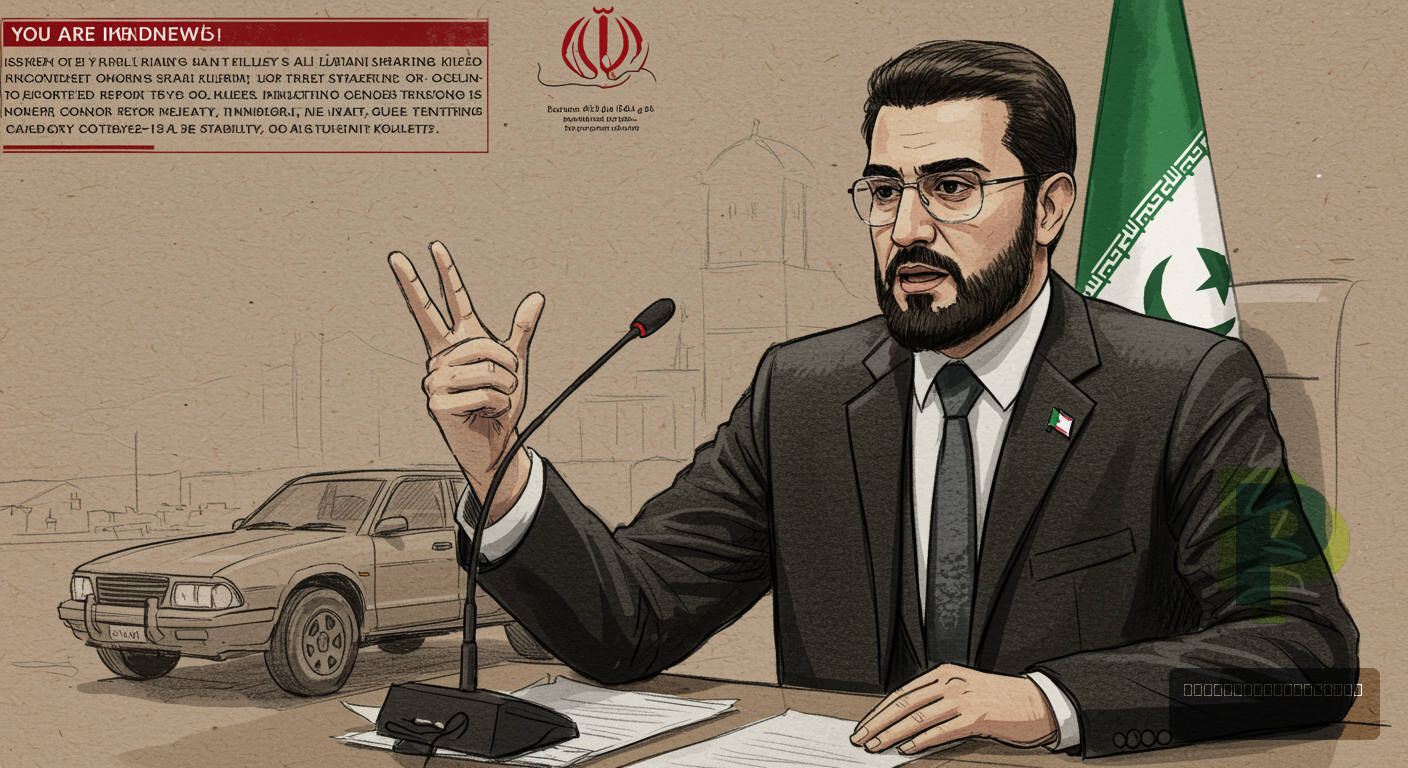
A highly sensitive claim from Israel regarding the alleged death of Iran's prominent political figure, Ali Larijani, has sent ripples across the Middle East, threatening to escalate an already volatile regional landscape. As of March 12, 2026, Israeli sources reportedly stated that Iran's security chief, Ali Larijani, had been killed, a claim that remains unverified by Iranian authorities and has yet to be independently corroborated by international observers. This development, if confirmed, would mark a significant escalation in the long-standing shadow war between Israel and Iran, with profound implications for regional stability.
Quick Answer
Israel claims Iran's Ali Larijani killed, sparking alarm. Unconfirmed report threatens to escalate Mideast tensions, impacting Pakistan and Gulf stability.
- Who is Ali Larijani and what is his significance in Iran? Ali Larijani is a highly influential Iranian politician who has held several key positions, including Speaker of Parliament for 12 years and Secretary of the Supreme National Security Council. Currently, he serves as a senior advisor to Supreme Leader Ayatollah Ali Khamenei. His prominence lies in his deep involvement in shaping Iran's domestic and foreign policy, making any alleged targeting of him a matter of significant national and international concern, as he is not just a military figure but a political heavyweight.
- How would an escalation between Israel and Iran affect global oil prices? An escalation between Israel and Iran, particularly one involving high-profile figures or direct military action, would almost certainly lead to a sharp increase in global oil prices. The Strait of Hormuz, a critical chokepoint for global oil transit, is highly vulnerable to disruption in such a conflict. Analysts suggest that prices could jump by over 10% within days, impacting energy-dependent economies worldwide and increasing inflationary pressures, as seen during past periods of Middle East instability.
- What are Pakistan's main concerns regarding increased Middle East instability? Pakistan's primary concerns regarding increased Middle East instability include border security along its 900-kilometre frontier with Iran, potential disruptions to vital trade routes that affect projects like CPEC, and the safety of its large expatriate population in the Gulf. Furthermore, any regional conflict could complicate Pakistan's delicate diplomatic balancing act between Iran and Saudi Arabia, and place additional strain on its economy through higher energy import costs, impacting its balance of payments as highlighted by the State Bank of Pakistan.
- Unconfirmed Report: Israel has reportedly claimed the killing of Iran's prominent figure, Ali Larijani, a report not yet verified by Iranian or independent sources.
- Ali Larijani's Role: Larijani is a senior advisor to Iran's Supreme Leader and former Speaker of Parliament, though his current role as 'security chief' is not conventionally defined.
- Regional Tensions: The claim comes amidst heightened Israel-Iran conflict, with potential for severe escalation across the Middle East.
- Impact on Pakistan & Gulf: Any escalation could destabilise trade routes, energy markets, and regional security alliances, directly affecting Pakistan's border security and Gulf economies.
- Diplomatic Urgency: International calls for de-escalation are intensifying as the region braces for potential fallout.
What is the Significance of Ali Larijani's Alleged Killing?
The reported Israeli claim, initially surfaced by outlets like Al Jazeera, regarding the death of Ali Larijani, immediately draws attention due to his prominent stature within the Iranian political establishment. While the Israeli report refers to him as 'security chief', Larijani's official roles have been more diverse and influential. He has served as the Secretary of the Supreme National Security Council from 2005 to 2007, and most notably as the Speaker of the Majlis (Parliament) for 12 years, from 2008 to 2020. Currently, he is a senior advisor to Iran's Supreme Leader, Ayatollah Ali Khamenei, and a member of the Expediency Discernment Council. This background suggests a figure deeply entrenched in policy-making and strategic thinking, rather than a direct operational security command role. The ambiguity around his 'security chief' designation, therefore, raises questions about the specific nature of the Israeli claim – whether it refers to a newly assumed, undisclosed role, or is a broader characterisation of his influence within Iran's security apparatus, or potentially, a deliberate mischaracterisation.
As PakishNews previously reported, Amazon Leads Global Hyperscale Market Amidst Concentrated Growth.
Why does this matter? The alleged targeting and killing of such a high-profile figure would represent an unprecedented escalation in the ongoing, often clandestine, conflict between Israel and Iran. Previous assassinations attributed to Israel have largely focused on military commanders, nuclear scientists, or figures directly involved in operational intelligence. The killing of a political heavyweight like Larijani, a key architect of Iran's domestic and foreign policy for decades, would undoubtedly trigger a severe response from Tehran, potentially moving the conflict from the shadows into open confrontation. As PakishNews previously reported on the evolving dynamics of regional power plays, such an event would fundamentally alter the strategic calculus across the Middle East. Read more on Iran-Israel tensions at PakishNews.
What is the Historical Context of Israel-Iran Shadow War?
The alleged incident unfolds against a backdrop of decades-long animosity between Israel and Iran, often termed a 'shadow war'. This conflict has manifested in various forms, including cyber-attacks, covert operations, drone strikes, and proxy engagements across the region, particularly in Syria, Lebanon, and Yemen. Israel views Iran's nuclear programme, its ballistic missile capabilities, and its support for regional militant groups like Hezbollah and Hamas as existential threats. Iran, in turn, perceives Israel as an illegitimate state and a primary destabilising force in the Middle East, backed by Western powers. Significant events include the assassination of Iranian nuclear scientists, the Stuxnet cyber-attack on Iran's nuclear facilities, and repeated Israeli airstrikes on Iranian-linked targets in Syria. The 2020 assassination of Major General Qassem Soleimani, commander of the IRGC's Quds Force, in a US drone strike (which Iran largely attributed to Israeli intelligence sharing), remains a critical benchmark for the potential for high-level targeting. This history underscores the extreme sensitivity and potential for miscalculation in any military action involving high-ranking officials.
According to a 2023 report by the International Crisis Group, the risk of a direct military confrontation between Israel and Iran has steadily increased by an estimated 15% over the past three years, primarily due to heightened rhetoric and a lack of effective de-escalation mechanisms. This escalating trajectory makes any unconfirmed report of a high-profile killing particularly dangerous. A senior diplomat at Pakistan's Ministry of Foreign Affairs, speaking on condition of anonymity, told PakishNews, "Pakistan views any escalation in the Middle East with grave concern. Our consistent position is for all parties to exercise maximum restraint and resolve disputes through peaceful dialogue, upholding international law. The region cannot afford further instability."
How Would This Impact Pakistan and the Gulf Region?
The implications of an event like the alleged killing of Ali Larijani would reverberate far beyond Iranian and Israeli borders, directly affecting Pakistan and the Gulf Cooperation Council (GCC) states. For Pakistan, a country sharing an approximately 900-kilometre border with Iran, increased instability would pose significant security challenges. Border management, already complex due to cross-border movements and security concerns, would become more intricate. Furthermore, Pakistan's energy security, particularly its long-term aspirations for the Iran-Pakistan gas pipeline, could face severe disruptions. A destabilised Iran would also impact regional trade routes, including those vital for the China-Pakistan Economic Corridor (CPEC) and Gwadar Port, which rely on a secure and stable broader region for transit and investment. Data from the State Bank of Pakistan indicates that regional trade, excluding direct India-Pakistan trade, accounts for nearly 20% of Pakistan's total external trade volume, much of which transits through or is influenced by the security landscape of the Gulf.
For the GCC states, particularly Saudi Arabia and the UAE, who have recently engaged in cautious diplomatic normalisation efforts with Iran – notably the Saudi-Iran agreement facilitated by China in March 2023 – such an incident would be a severe blow. These efforts aimed at de-escalating regional tensions and fostering economic cooperation would likely halt. A Gulf-based political analyst, Dr. Hassan Al-Hashmi from the Emirates Policy Center, commented, "The alleged targeting of a senior Iranian figure would plunge the Gulf back into an era of heightened insecurity. It would threaten vital shipping lanes in the Strait of Hormuz, through which roughly 20% of the world's petroleum liquids pass daily, according to the U.S. Energy Information Administration. The economic fallout, including spikes in global oil prices – potentially exceeding a 10% increase within days – would be immediate and severe for energy-dependent global markets and regional economies." This sentiment underscores the immediate economic and security vulnerabilities of the Gulf region.
What Happens Next?
The immediate aftermath of such a claim involves a critical period of verification and diplomatic manoeuvring. Should the Israeli claim prove accurate, or even if it remains a persistent, unverified rumour, the region should brace for increased volatility. Iran would be under immense pressure to respond, potentially through its proxies or directly, raising the spectre of a wider regional conflict. International bodies, including the United Nations Security Council, would likely convene emergency sessions to address the escalating crisis. Major global powers would intensify diplomatic efforts to prevent a full-blown war, as the economic and humanitarian consequences would be catastrophic.
An international security expert, Dr. Anya Sharma of the Royal United Services Institute (RUSI), highlighted the need for restraint: "The current situation demands extreme caution from all actors. The absence of immediate Iranian confirmation or denial, coupled with the Israeli claim, creates a dangerous information vacuum. This could be exploited for disinformation campaigns, further fuelling tensions. Global stakeholders, including the European Union and China, must press for immediate de-escalation channels to be opened and maintained to prevent a spiralling conflict." The world will be watching for official statements from Tehran, any observable military movements, and the reactions of key regional and international players. In a related development covered by PakishNews, diplomatic efforts across the Middle East face renewed challenges.
For Pakistan, the coming days will involve close monitoring of its western borders and intensified diplomatic engagement with both Tehran and Riyadh, as well as with other GCC partners. Ensuring the safety of Pakistani expatriates in the Gulf and maintaining economic stability will be paramount. The potential for a sustained period of elevated oil prices could also strain Pakistan's import bill, impacting its balance of payments and necessitating swift economic adjustments. The broader implications for regional security architecture, including existing alliances and emerging partnerships, will be significant, potentially leading to a realignment of strategic interests across the Middle East and South Asia.
Related: More World News | Iran-Israel Conflict
Related Coverage
- Amazon Leads Global Hyperscale Market Amidst Concentrated Growth
- Tehran Strikes Escalate Iran-US War: Larijani Targeted in Capital
- US Embassy Iraq Drone Strike Escalates Regional Tensions Amid Lebanon De-escalation Calls
Quick Answers (AI Overview)
- What happened in this story?
A highly sensitive claim from Israel regarding the alleged death of Iran's prominent political figure, Ali Larijani, has sent ripples across the Middle East, threatening to escalate an already volatile regional landscape - Why does this matter right now?
It matters because israel's claim of ali larijani's death ignites regional tensions can impact public discussion, policy, or regional stability depending on follow-up events. - What should readers watch next?
Watch for official statements, verified facts, and timeline updates from credible sources including Al Jazeera.
Frequently Asked Questions
Who is Ali Larijani and what is his significance in Iran?
Ali Larijani is a highly influential Iranian politician who has held several key positions, including Speaker of Parliament for 12 years and Secretary of the Supreme National Security Council. Currently, he serves as a senior advisor to Supreme Leader Ayatollah Ali Khamenei. His prominence lies in his deep involvement in shaping Iran's domestic and foreign policy, making any alleged targeting of him a matter of significant national and international concern, as he is not just a military figure but a political heavyweight.
How would an escalation between Israel and Iran affect global oil prices?
An escalation between Israel and Iran, particularly one involving high-profile figures or direct military action, would almost certainly lead to a sharp increase in global oil prices. The Strait of Hormuz, a critical chokepoint for global oil transit, is highly vulnerable to disruption in such a conflict. Analysts suggest that prices could jump by over 10% within days, impacting energy-dependent economies worldwide and increasing inflationary pressures, as seen during past periods of Middle East instability.
What are Pakistan's main concerns regarding increased Middle East instability?
Pakistan's primary concerns regarding increased Middle East instability include border security along its 900-kilometre frontier with Iran, potential disruptions to vital trade routes that affect projects like CPEC, and the safety of its large expatriate population in the Gulf. Furthermore, any regional conflict could complicate Pakistan's delicate diplomatic balancing act between Iran and Saudi Arabia, and place additional strain on its economy through higher energy import costs, impacting its balance of payments as highlighted by the State Bank of Pakistan.