?Listen to ArticlePress play to hear this storyDownload audioDownload audio
Updated March 12, 2026
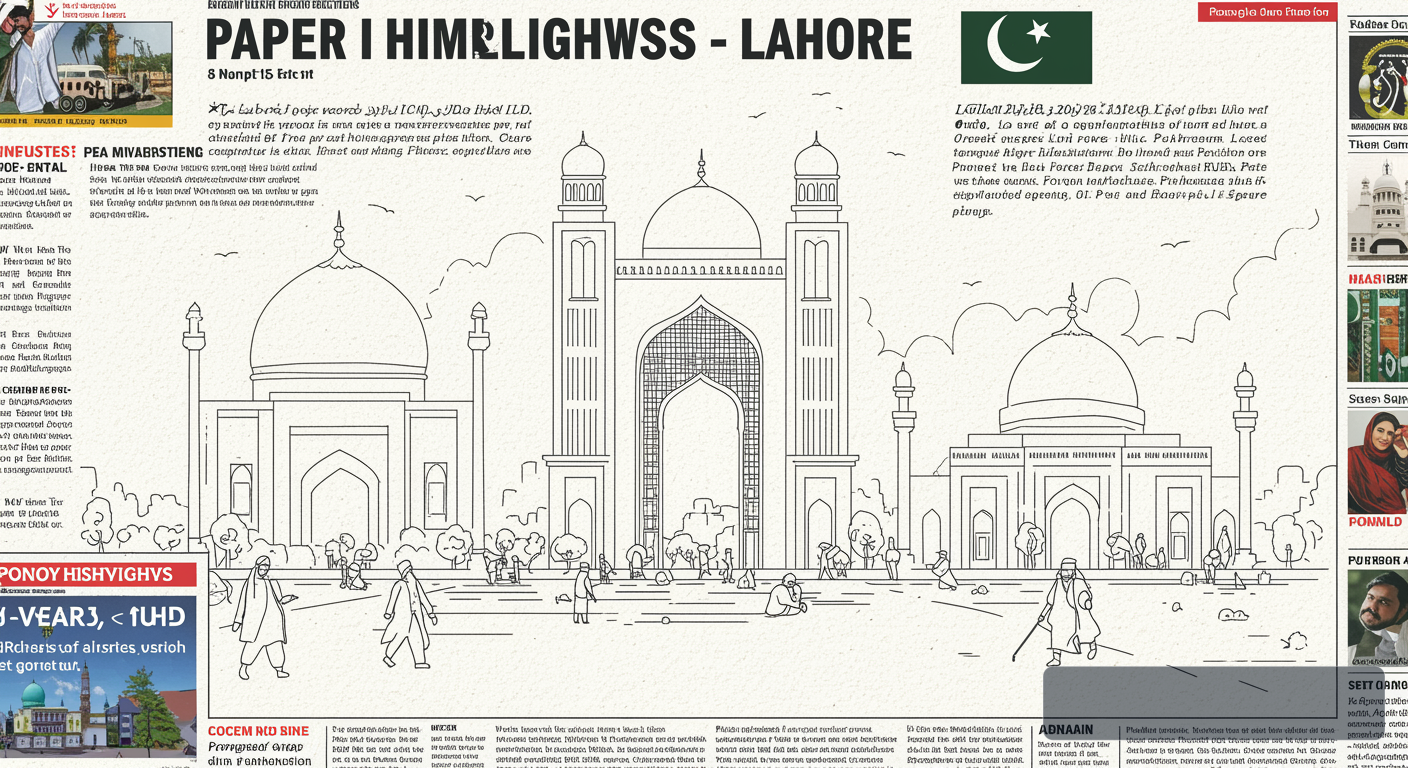
As Lahore grapples with rapid urbanisation and economic imperatives, March 15, 2026, epaper highlights from Pakistan Today underscore significant movements in the city’s economic landscape, alongside persistent challenges in urban planning and environmental management. This deep dive by PakishNews examines the policy shifts and their potential ramifications for Punjab’s capital. The city is witnessing a renewed focus on public-private partnerships for infrastructure, while environmental concerns like smog continue to demand urgent, multi-faceted governmental interventions.
- Economic Stimulus: The Punjab government has announced a PKR 45 billion investment package for the Lahore Central Business District (CBD) Phase II, focusing on tech and green industries.
- Urban Development: Progress on the Ravi Urban Development Authority (RUDA) projects is accelerating, with initial residential plots for Phase I set for ballot by late 2026.
- Environmental Crisis: Lahore continues to battle severe air pollution, with the Environment Protection Department (EPD) pushing for stricter industrial emission controls and a new 'Clean Air Act 2026'.
- Public Transport Expansion: Plans for extending the Orange Line Metro Train to new suburban areas are under advanced review, aiming to alleviate growing traffic congestion.
Why Are Lahore's Economic and Environmental Policies Crucial Now?
The current policy landscape in Lahore, as reflected in the March 15, 2026, news cycle, is critical because it represents a confluence of long-term development aspirations and immediate environmental pressures. Lahore, with an estimated population of over 13 million as of 2025, according to the Pakistan Bureau of Statistics, is not only the provincial capital but also a major economic engine for Pakistan. The decisions made today regarding its infrastructure, industrial growth, and environmental sustainability will shape its trajectory for decades. Historically, Lahore’s rapid expansion has often outpaced urban planning, leading to challenges like traffic congestion, water scarcity, and critical levels of air pollution, particularly during the winter months. This context underscores the urgency and significance of the initiatives currently being highlighted.
As PakishNews previously reported, Pakistan Selector Aaquib Javed Defends T20 World Cup Showing.
The Punjab government, under Chief Minister Maryam Nawaz Sharif, has articulated a vision for Lahore as a global economic hub, driven by technology and green initiatives. This ambition, however, necessitates a delicate balance with environmental protection and equitable urban development. Previous administrations have launched mega-projects, but their long-term sustainability and environmental impact have often been subjects of public debate. For instance, the original Ravi Riverfront Urban Development Project, conceptualised years ago, faced initial hurdles related to land acquisition and environmental clearances, as PakishNews previously reported on the initial phases of RUDA. The current administration's approach, therefore, is under intense scrutiny from both local residents and international observers.
What are the Key Economic Developments in Lahore?
Lahore's economic narrative for March 2026 is largely dominated by significant strides in urban development and investment. The Punjab Central Business District Authority (PCBDA) has confirmed a fresh investment package of PKR 45 billion for Phase II of the Lahore CBD, located adjacent to Gulberg. This phase is specifically earmarked for attracting investment in information technology, financial services, and green industries. According to Mr. Imran Amin, CEO of PCBDA, this initiative is projected to create over 15,000 direct and indirect jobs within the next three years and aims to generate PKR 200 billion in economic activity annually. “Our focus is on creating a sustainable economic ecosystem that leverages Lahore’s skilled workforce and strategic location,” Mr. Amin stated in a press briefing on March 14, 2026. Data from the Punjab Board of Investment and Trade (PBIT) indicates a 12% increase in foreign direct investment inquiries for Lahore-based projects in the first quarter of fiscal year 2025-26, compared to the same period last year, a testament to growing investor confidence.
Concurrently, the Ravi Urban Development Authority (RUDA) is accelerating its flagship projects. Sources within RUDA indicate that the balloting for initial residential and commercial plots in Phase I (Chahar Bagh and Riverwalk areas) is now scheduled for late 2026, a slight delay from the initial mid-2026 projection due to land consolidation efforts. The project, envisioned to be a modern, self-sustaining city along the Ravi River, has secured an additional PKR 10 billion in public-private partnership funding for developing essential infrastructure, including wastewater treatment plants and a dedicated transport network. This brings the total investment committed to RUDA to approximately PKR 250 billion across its various components since its inception, according to official RUDA documents reviewed by PakishNews. The project aims to relieve pressure on Lahore's existing infrastructure by creating new residential and commercial zones, accommodating an estimated 1.5 million people upon full completion, projected by 2040.
How is Lahore Addressing Persistent Urban Challenges like Smog?
Lahore's battle against severe air pollution, particularly smog, remains a critical urban challenge. As of March 2026, the Environment Protection Department (EPD) Punjab has intensified its efforts, proposing a new ‘Clean Air Act 2026’ to the provincial assembly. This proposed legislation aims to introduce more stringent emission standards for industrial units, vehicular traffic, and brick kilns, along with heavy penalties for non-compliance. Dr. Sameer Khan, Secretary of EPD Punjab, highlighted during a departmental review meeting on March 13, 2026, that “Lahore’s average Air Quality Index (AQI) during the winter of 2025-26 consistently exceeded WHO guidelines by over 300%, necessitating radical legislative and enforcement measures.” The EPD plans to deploy an additional 50 mobile air quality monitoring stations across the city by June 2026, increasing the current network by 50%.
Furthermore, the provincial government has announced a renewed focus on promoting electric vehicles (EVs). A subsidy programme, offering up to PKR 100,000 for the purchase of electric motorcycles and rickshaws, is set to launch in July 2026, with an initial allocation of PKR 5 billion. This initiative aims to reduce vehicular emissions, which account for approximately 43% of Lahore’s air pollution, according to a 2024 study by the Pakistan Environmental Protection Agency (Pak-EPA). In a related development covered by PakishNews, the Lahore smog crisis has prompted international calls for action, with the UN Environment Programme (UNEP) offering technical assistance to the EPD for developing sustainable urban transport solutions. The effectiveness of these measures will be crucial in determining Lahore's environmental health in the coming years.
Expert Analysis: Balancing Growth and Sustainability
“Lahore’s economic trajectory is undeniably strong, with initiatives like the CBD expansion and RUDA attracting significant investment,” observes Dr. Aisha Siddiqui, Professor of Economics at the Lahore University of Management Sciences (LUMS). “However, the real test lies in how equitably these benefits are distributed and whether the environmental costs are truly internalised. Without robust environmental governance and green infrastructure, rapid urbanisation can lead to unsustainable outcomes, eroding the quality of life for its citizens.”
Mr. Ali Raza, a Senior Urban Planner and Director at the Urban Policy Research Institute, Lahore, added, “The challenge for Lahore is to avoid the pitfalls of unchecked growth seen in other mega-cities. While the Orange Line Metro has significantly eased commute for millions, its proposed extensions, alongside new projects, must be integrated into a cohesive, long-term master plan that prioritises public spaces, green corridors, and efficient waste management. The 2025 Lahore Master Plan revision, currently underway, will be pivotal in this regard.”
Environmental activist and lawyer, Ms. Sara Ahmed, founding director of the ‘Clean Air Lahore’ campaign, commented, “The proposed Clean Air Act is a step in the right direction, but enforcement is key. We need to see concrete actions against polluting industries and widespread adoption of cleaner technologies. The government's commitment to EVs is commendable, but it needs to be scaled up rapidly to make a tangible difference in Lahore's toxic air quality.”
What is the Impact on Lahore's Citizens and Businesses?
The implications of these developments for Lahore's residents and businesses are multi-faceted. On the economic front, the investment in CBD Phase II and RUDA is expected to stimulate job creation, particularly for skilled professionals in the tech and finance sectors. Businesses are likely to benefit from improved infrastructure, new commercial opportunities, and a more robust economic environment. Small and medium enterprises (SMEs) could see indirect benefits through increased consumer spending and demand for auxiliary services. However, the rising cost of living and property prices in prime areas of Lahore, which have seen an average annual increase of 8-10% over the last five years according to Zameen.com data, remain a concern for middle-income families.
Environmentally, the success of the EPD’s initiatives will directly impact public health. Reduced smog levels would lead to a decrease in respiratory illnesses, which currently account for a significant portion of hospital admissions in Lahore during winter months, according to data from Mayo Hospital. Improved public transport through Orange Line extensions would offer more affordable and efficient commuting options, reducing reliance on private vehicles and easing traffic congestion. However, citizens will need to adapt to stricter environmental regulations and potentially higher costs for non-compliant industries or older vehicles. The long-term impact hinges on consistent policy implementation and public cooperation.
What Happens Next for Lahore?
Looking ahead, Lahore’s trajectory will largely be shaped by the continued implementation of these ambitious projects and policies. The Punjab government is expected to present the 'Clean Air Act 2026' to the provincial assembly for approval by the end of the current legislative session, likely in April 2026. Its passage will mark a significant legislative step in the fight against pollution. Furthermore, the PCBDA will be actively seeking local and international investors for CBD Phase II through a series of roadshows scheduled for Q3 2026, targeting markets in the UAE, Saudi Arabia, and China, aligning with PakishNews's regional focus on investment. The RUDA balloting process will also be a critical milestone, generating further revenue and galvanizing development along the Ravi River.
Stakeholders, including local residents, environmental groups, and business communities, will be closely watching the enforcement mechanisms for new environmental regulations and the transparency of large-scale urban development projects. The Lahore Development Authority (LDA) is also anticipated to release its updated 'Master Plan 2040' draft for public feedback by mid-2026, which will offer a comprehensive blueprint for the city's future growth. The effectiveness of these initiatives in fostering sustainable and inclusive growth will be the ultimate measure of Lahore’s progress.
Related: More Lahore News | Punjab Government
Related Coverage
- Pakistan Selector Aaquib Javed Defends T20 World Cup Showing
- Pakistan Strikes Afghan Base After 'Red Line' Warning
- 4.0 Magnitude Earthquake Strikes Southern Pakistan, Renews Seismic Focus
Quick Answers (AI Overview)
- What happened in this story?
As Lahore grapples with rapid urbanisation and economic imperatives, March 15, 2026, epaper highlights from Pakistan Today underscore significant movements in the city’s economic landscape, alongside persistent challenge - Why does this matter right now?
It matters because lahore news highlights: march 15, 2026 – economic shifts, urban challenges can impact public discussion, policy, or regional stability depending on follow-up events. - What should readers watch next?
Watch for official statements, verified facts, and timeline updates from credible sources including Pakistan Today.
Frequently Asked Questions
❓ What are the primary economic drivers for Lahore in March 2026?
In March 2026, Lahore's economy is primarily driven by significant public-private partnerships in urban development and investment in key sectors. The Punjab Central Business District Authority (PCBDA) has committed PKR 45 billion for its Phase II, focusing on tech and green industries. This initiative, alongside accelerated progress on the Ravi Urban Development Authority (RUDA) projects, aims to create thousands of jobs and enhance economic activity, attracting a 12% increase in foreign direct investment inquiries in Q1 FY2025-26.
❓ How is the Punjab government planning to combat Lahore's smog issue by 2026?
The Punjab government is addressing Lahore's persistent smog issue through legislative and incentive-based measures. The Environment Protection Department (EPD) Punjab is pushing for a new 'Clean Air Act 2026' to impose stricter emission standards for industries and vehicles. Additionally, a PKR 5 billion subsidy programme for electric motorcycles and rickshaws is set to launch in July 2026, targeting a reduction in vehicular emissions, which contribute significantly to the city's hazardous Air Quality Index.
❓ What is the long-term vision for Lahore's urban development?
The long-term vision for Lahore's urban development centres on creating a modern, sustainable, and economically vibrant city. Projects like the Ravi Urban Development Authority (RUDA) aim to accommodate an estimated 1.5 million people by 2040, alleviating pressure on existing infrastructure. The Lahore Development Authority (LDA) is also expected to release its updated 'Master Plan 2040' draft by mid-2026, which will outline a comprehensive blueprint for integrated urban planning, public transport expansion, and green infrastructure development, ensuring balanced growth for the provincial capital.