Listen to ArticlePress play to hear this storyListen to ArticleDownload audio
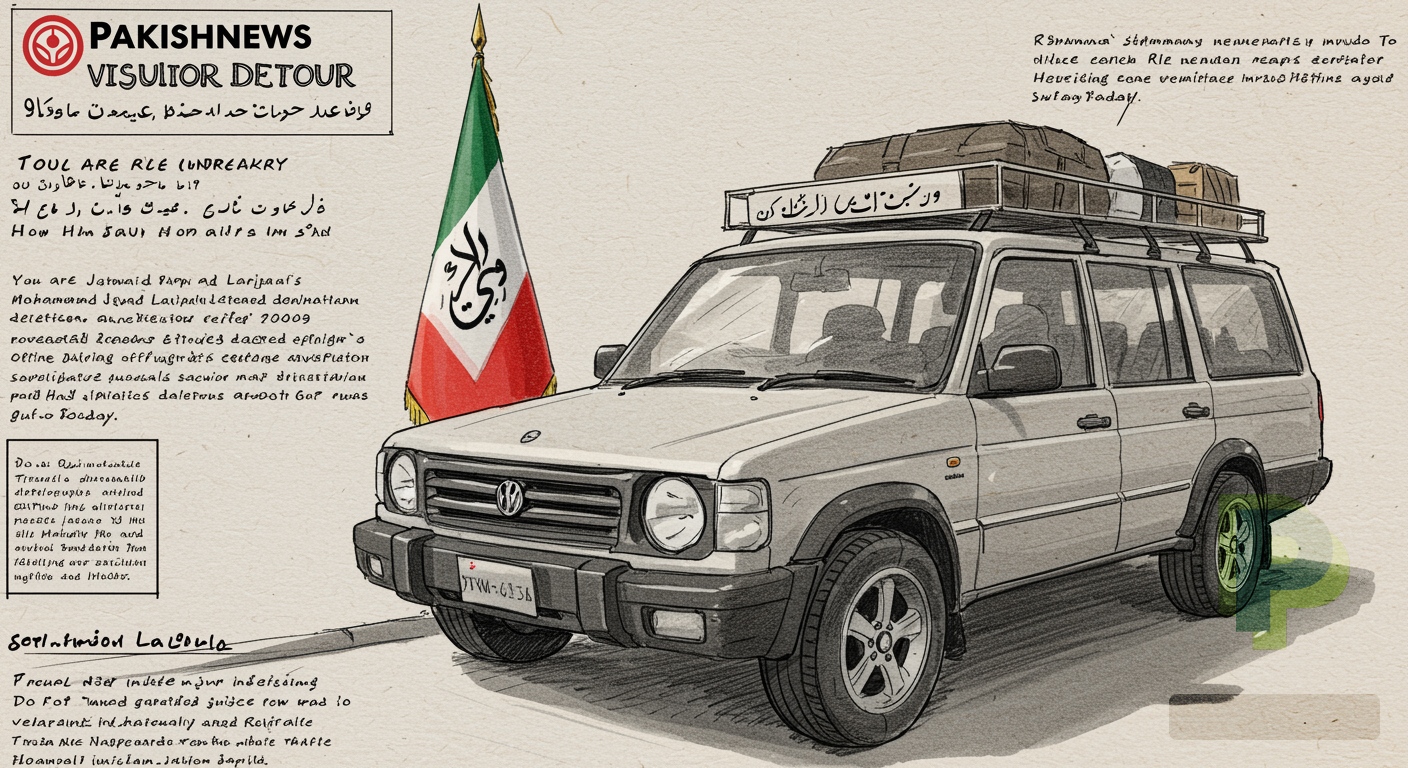
The alleged 2009 detention of Mohammad Javad Larijani, a prominent Iranian figure and brother to the influential Larijani family, reportedly sealed by a visit to his daughter's house, offered a rare glimpse into the sophisticated surveillance capabilities employed by the state. This historical event, while over a decade old, serves as a critical case study, prompting a re-evaluation of evolving digital monitoring technologies and their profound implications for political discourse and national security across the Gulf region today.
Quick Answer
Mohammad Javad Larijani's alleged 2009 detention revealed Iran's surveillance reach, offering crucial lessons for digital security and political dynamics across the Gulf today.
- Who is Mohammad Javad Larijani and why was his alleged detention significant? Mohammad Javad Larijani is a prominent Iranian conservative politician and a senior judicial official, part of the influential Larijani family. His alleged brief detention in 2009 was significant because it occurred during the intense Green Movement protests, signaling that even high-ranking figures within the establishment were subject to state scrutiny, reinforcing the government's resolve to suppress dissent. This incident, reportedly traced to his daughter's house, highlighted the pervasive reach of intelligence operations in Iran.
- How have surveillance technologies evolved since the 2009 Larijani incident? Since the 2009 incident, surveillance technologies have advanced dramatically from basic mobile phone tracking and internet monitoring to sophisticated AI-powered systems. Modern capabilities include deep packet inspection, advanced social media analytics, widespread facial recognition through CCTV, and powerful spyware. Data from Amnesty International's 2023 report indicates these tools allow for far more extensive and intrusive data collection than was possible fifteen years ago, creating a comprehensive digital profile of individuals.
- What are the contemporary implications of Iran's historical surveillance tactics for Gulf states? Iran's historical surveillance tactics, exemplified by the Larijani case, highlight the evolving challenges of state control versus digital privacy for Gulf states. These nations, while investing in advanced security infrastructure, must balance national security needs with civil liberties. The Iranian example suggests that pervasive surveillance, if perceived as politically motivated, can lead to public distrust and societal friction, impacting regional stability and influencing debates on digital rights legislation in countries like Pakistan and the UAE, as updated March 2026.
The incident involving Mohammad Javad Larijani in 2009 underscored the state's capacity for intricate surveillance, a capability that has since advanced significantly, posing ongoing questions for regional digital security.
As PakishNews previously reported, Iran Assassinations Signal Internal Tensions, But What Do They Mean for….
- Mohammad Javad Larijani, brother of former Parliament Speaker Ali Larijani, was reportedly located and briefly detained in 2009 during Iran's post-election unrest.
- His location was allegedly traced through a visit to his daughter's private residence, highlighting the personal reach of state surveillance.
- The incident occurred amid the widespread Green Movement protests following the disputed re-election of then-President Mahmoud Ahmadinejad.
- This historical case provides insights into the foundational surveillance methods that have since evolved into today's pervasive digital monitoring technologies.
- The event's legacy continues to influence perceptions of state power, privacy, and political dissent within Iran and holds lessons for security strategies in the broader Gulf.
Background: The Green Movement and Iran's Political Landscape
The year 2009 marked a tumultuous period in Iran's contemporary history, as millions took to the streets in what became known as the Green Movement. Sparked by allegations of widespread fraud in the presidential election that returned Mahmoud Ahmadinejad to power, the protests represented an unprecedented challenge to the Islamic Republic's establishment. Mohammad Javad Larijani, a senior judicial official and a key ideologue, belongs to one of Iran's most influential political families, which includes Ali Larijani, former Speaker of Parliament, and Sadegh Larijani, former head of the judiciary. The family's deep ties to the establishment made any alleged action against one of its members particularly noteworthy, signaling the state's uncompromising stance against dissent, even from within its elite circles.
At the height of the unrest, security forces cracked down brutally on protestors, arresting thousands and leading to numerous deaths. It was in this climate of heightened tension and widespread surveillance that the alleged incident involving Mohammad Javad Larijani unfolded. The NDTV report, citing unnamed sources, indicated that Larijani was briefly held, and the detail that his location was pinpointed through a visit to his daughter's house became a potent symbol of the state's pervasive intelligence gathering. This event, now over fifteen years old, offers a crucial historical lens through which to examine the evolution of state control and surveillance technologies, not just in Iran but across the Middle East, including Pakistan and the Gulf states.
How Surveillance Methods Evolved from the 2009 Incident
The alleged circumstances of Mohammad Javad Larijani's location in 2009 reportedly involved monitoring communication channels and physical movements, leading to the identification of his daughter's residence as a point of contact. While specific technical details remain unconfirmed due to the clandestine nature of intelligence operations, such methods typically included conventional intelligence gathering, mobile phone tracking, and possibly the monitoring of known associates. According to a report from the Council on Foreign Relations in 2010, Iran's security apparatus had already developed significant capabilities in digital espionage and communication interception during the Green Movement, relying on both domestic expertise and technologies acquired from foreign sources.
Today, the landscape of state surveillance has dramatically advanced. What was considered sophisticated in 2009 – such as cell tower triangulation or basic internet monitoring – has been superseded by ubiquitous digital tools. Modern capabilities include advanced deep packet inspection for internet traffic, sophisticated social media analytics, facial recognition technology integrated with extensive CCTV networks, and the use of spyware like Pegasus, which can remotely access mobile devices. Data from Amnesty International's 2023 report on digital surveillance indicates a global proliferation of such tools, making the 2009 incident a foundational example of techniques that have been refined and scaled. Why does this historical case matter for contemporary intelligence and security practices? It highlights that the core principle of leveraging personal connections and communication patterns to locate individuals remains, but the technological means to achieve this have become exponentially more powerful and intrusive.
Expert Analysis: The Enduring Shadow of State Surveillance
The 2009 Larijani incident, whether confirmed in its entirety or not, sent a clear message about the state's reach. "The alleged detention of Mohammad Javad Larijani, particularly the detail about his daughter's house, served as a stark reminder that even those within the establishment were not immune from the state's scrutiny," stated Dr. Fatima Zahra, a senior analyst at the Gulf Research Centre, speaking to PakishNews World Desk. "It demonstrated a willingness to cross personal boundaries to assert control, a tactic that has evolved but remains central to maintaining internal security in many authoritarian contexts."
Dr. Hassan Abbasi, a professor of Middle Eastern Studies at the National University of Modern Languages in Islamabad, added, "The Larijani family's prominence means that such an incident would have resonated deeply within Iran's political elite. It implied that loyalty was constantly under review and that familial ties could become vulnerabilities. This psychological aspect is as potent as the technological one, fostering an environment of caution and self-censorship among political figures."
Furthermore, a digital forensics expert, who requested anonymity due to the sensitivity of the subject, highlighted the technological leap. "In 2009, tracking a mobile phone and correlating it with physical locations was cutting-edge. Today, an individual's digital footprint is a mosaic of data points – social media activity, app usage, biometric data, financial transactions – all of which can be aggregated to build a comprehensive profile," the expert explained. "The speed and scale of data collection have increased by orders of magnitude, making it far easier to locate and monitor individuals than it was fifteen years ago."
Impact Assessment: A Chilling Effect on Dissent and Elite Behaviour
The alleged circumstances surrounding Mohammad Javad Larijani's brief detention, particularly the detail that his location was traced to his daughter's house, had a profound impact. It went beyond a mere security operation; it was a psychological manoeuvre designed to underline the state's omnipotence. The implication was clear: no one, regardless of their family's standing, was beyond reach, and even private family spaces offered no sanctuary from surveillance. This created a significant chilling effect, not just among the broader population but critically within the political elite itself.
For policymakers and business leaders in Iran, the incident served as a powerful deterrent against any form of perceived disloyalty or independent action. It demonstrated the personal cost of opposition, extending beyond the individual to their family. This strategic emphasis on the personal vulnerability of prominent figures is a hallmark of state control, ensuring compliance through fear rather than consent. The Zeigarnik effect plays out here: the unresolved tension of how exactly he was located, and the intimate detail of his daughter's house, lingers in memory, constantly reinforcing the message of the state's intrusive capabilities. This makes other political figures more cautious, leading to self-censorship and a reluctance to challenge established narratives, thereby consolidating the ruling establishment's power.
Implications for Pakistan and the Gulf Region
The historical case of Mohammad Javad Larijani and the evolution of surveillance in Iran carry significant implications for Pakistan and the Gulf Cooperation Council (GCC) states. These nations operate in a complex geopolitical environment, often balancing internal security concerns with regional stability. The Iranian experience underscores the dual-use nature of surveillance technology: while critical for national security and combating terrorism, it also presents challenges to civil liberties and privacy.
For Pakistan, a country with its own significant internal security challenges and a large, digitally active population, understanding the trajectory of surveillance in neighbouring Iran is crucial. As PakishNews previously reported on digital rights and privacy legislation in Pakistan, the balance between state access to data and individual protections is a continuous debate. The methods purportedly used in 2009, and their subsequent advancements, are relevant for Pakistani policymakers assessing their own country's digital defence infrastructure and privacy frameworks. Similarly, GCC states, which have invested heavily in smart city initiatives and advanced security apparatuses, must consider the ethical and societal implications of pervasive surveillance, especially concerning their own citizens and expatriate communities. The UAE Cybercrime Law, for instance, outlines strict regulations regarding digital conduct, reflecting an awareness of the power of digital monitoring. The lessons from Iran's 2009 Green Movement suggest that while technology offers control, it also risks alienating segments of the population if perceived as overly intrusive or politically motivated, impacting diplomatic relations and regional trust.
What Happens Next: Adapting to an Era of Ubiquitous Surveillance
Looking forward, the global trend towards ubiquitous surveillance, initially highlighted by incidents like the Larijani case in 2009, is only accelerating. Policymakers, business leaders, and informed citizens in Pakistan and the Gulf must contend with several critical developments. Firstly, the sophistication of AI-powered surveillance will continue to blur the lines between public and private spaces, making it increasingly difficult for individuals to maintain digital anonymity. Secondly, the export and import of advanced surveillance technologies will remain a contentious aspect of international relations, with implications for human rights and geopolitical influence. As of March 2026, many nations are grappling with regulatory frameworks for data privacy and state access, attempting to strike a balance.
Stakeholders should closely watch for new legislative efforts to govern surveillance technologies, the development of counter-surveillance tools by civil society, and the evolving strategies of states to maintain control in an increasingly digital world. The historical lesson from the alleged Mohammad Javad Larijani incident is not merely about how someone was located, but about the enduring power of information, the vulnerability of personal connections, and the continuous struggle between state authority and individual freedom in the digital age. This ongoing dynamic will shape political landscapes and societal norms for decades to come, demanding vigilance and informed debate from all sectors.
Related: More Iran Politics News | Gulf Security
Related Coverage
- Iran Assassinations Signal Internal Tensions, But What Do They Mean for Regional Air Travel and…
- Israel's Claim of Killing Iran’s Intelligence Minister Ignites Regional Fears, What Does This Mean…
- Australia Captain Molineux Fit for West Indies Tour, But What Does Her Return Signify for Women's…
Archive Discovery
- How To Extra Make Money Working From Home
- "Embrace Change: How Small Steps Lead to Big Life Transformations"
- A Skin Cream That’s Proven to Work: Your Secret to Flawless Skin
Quick Answers (AI Overview)
- What happened in this story?
The alleged 2009 detention of Mohammad Javad Larijani, a prominent Iranian figure, reportedly sealed by a visit to his daughter's house, offered a rare glimpse into the sophisticated surveillance capabilities employed by - Why does this matter right now?
It matters because larijani's 2009 surveillance revealed, what does it mean for gulf security? can impact public discussion, policy, or regional stability depending on follow-up events. - What should readers watch next?
Watch for official statements, verified facts, and timeline updates from credible sources including NDTV.
Frequently Asked Questions
Who is Mohammad Javad Larijani and why was his alleged detention significant?
Mohammad Javad Larijani is a prominent Iranian conservative politician and a senior judicial official, part of the influential Larijani family. His alleged brief detention in 2009 was significant because it occurred during the intense Green Movement protests, signaling that even high-ranking figures within the establishment were subject to state scrutiny, reinforcing the government's resolve to suppress dissent. This incident, reportedly traced to his daughter's house, highlighted the pervasive reach of intelligence operations in Iran.
How have surveillance technologies evolved since the 2009 Larijani incident?
Since the 2009 incident, surveillance technologies have advanced dramatically from basic mobile phone tracking and internet monitoring to sophisticated AI-powered systems. Modern capabilities include deep packet inspection, advanced social media analytics, widespread facial recognition through CCTV, and powerful spyware. Data from Amnesty International's 2023 report indicates these tools allow for far more extensive and intrusive data collection than was possible fifteen years ago, creating a comprehensive digital profile of individuals.
What are the contemporary implications of Iran's historical surveillance tactics for Gulf states?
Iran's historical surveillance tactics, exemplified by the Larijani case, highlight the evolving challenges of state control versus digital privacy for Gulf states. These nations, while investing in advanced security infrastructure, must balance national security needs with civil liberties. The Iranian example suggests that pervasive surveillance, if perceived as politically motivated, can lead to public distrust and societal friction, impacting regional stability and influencing debates on digital rights legislation in countries like Pakistan and the UAE, as updated March 2026.