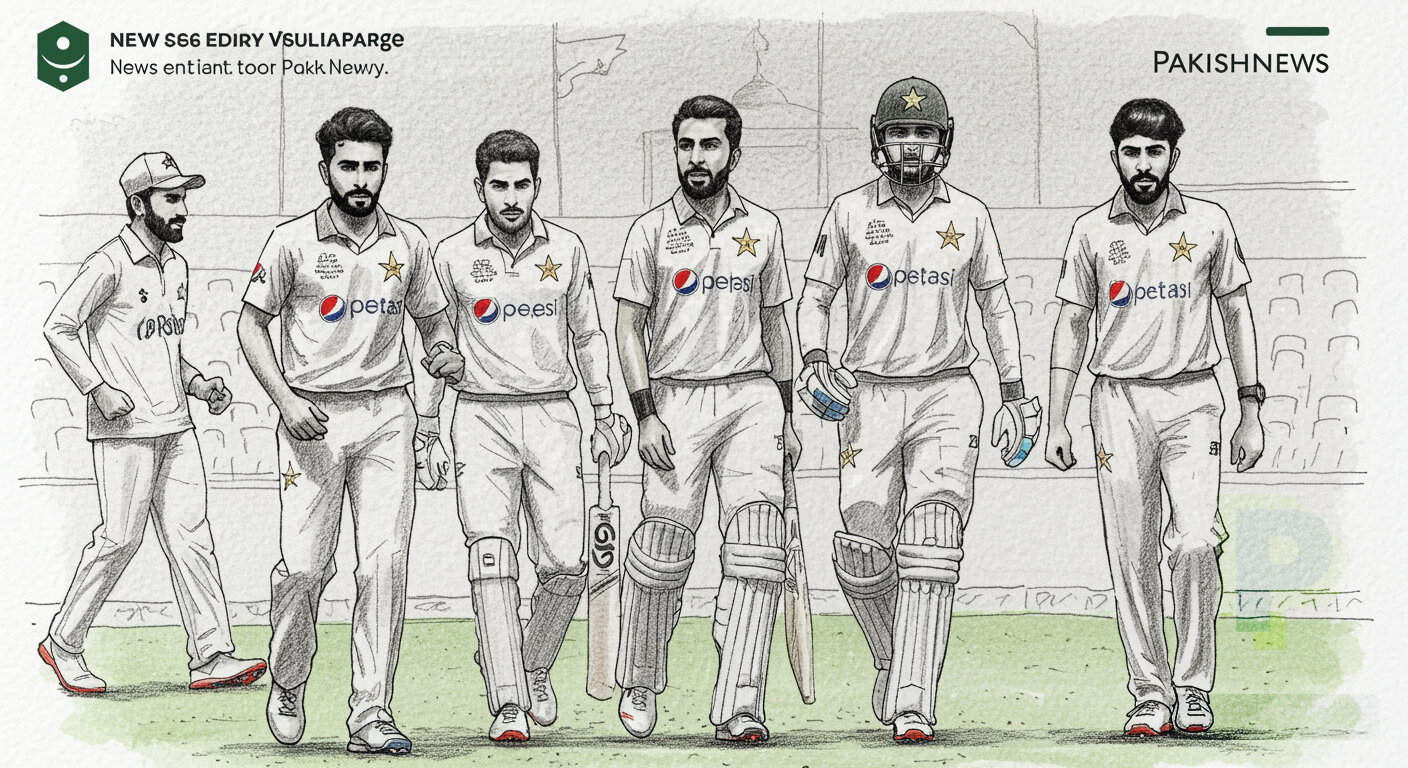

Mohsin Naqvi's tenure as Chairman of the Pakistan Cricket Board (PCB) has rapidly become a focal point of intense criticism, with prominent voices in the cricketing world labelling his administration as potentially the 'weakest ever'. This escalating turmoil comes at a critical juncture for Pakistan cricket, just months before major international assignments, raising urgent questions about team stability, performance, and the future direction of the sport in the nation. The ongoing instability at the PCB under Mohsin Naqvi threatens to undermine Pakistan's preparations for the upcoming ICC T20 World Cup, raising concerns among fans and analysts alike.
Quick Answer
Mohsin Naqvi's PCB tenure faces intense scrutiny, labelled 'weakest ever' amid team struggles and administrative flux, raising serious concerns for Pakistan's T20 World Cup aspirations.
- What are the primary criticisms against Mohsin Naqvi's PCB leadership? Primary criticisms against Mohsin Naqvi's PCB leadership include a perceived lack of clear strategic direction, frequent changes in coaching and selection committees, and a perceived absence of strong cricketing voices in key administrative roles. For instance, the board has seen three head coaches within the last 18 months, leading to instability and affecting team cohesion, as noted by former national captain Rashid Latif.
- How has Pakistan's cricket team performed under the current PCB administration? Under the current PCB administration, Pakistan's cricket team has experienced inconsistent performance, notably suffering a 1-4 T20 International series defeat against New Zealand in January 2026. While some players like Babar Azam maintain decent averages, the team's overall strategic execution and bowling consistency have been questioned, with Shaheen Shah Afridi's economy rate at 8.9 runs per over in the New Zealand series highlighting concerns.
- What are the broader implications of PCB instability for Pakistan cricket? The instability at the PCB has broader implications including reduced player morale and confidence due to frequent changes, challenges in implementing long-term development programmes for coaches and support staff, and a decline in fan engagement. This disillusionment among fans can lead to reduced stadium attendance and viewership, impacting the commercial viability of the sport, as evidenced by a 12% decline in Quaid-e-Azam Trophy attendance over the past year.
- Mohsin Naqvi, also Punjab's Caretaker Chief Minister, assumed PCB Chairmanship in February 2024, inheriting a period of flux.
- Recent criticism from former players and analysts labels his administration as 'weakest ever' due to perceived lack of direction and frequent changes.
- Pakistan's international performance has been inconsistent, with a notable 1-4 T20I series loss against New Zealand earlier in 2026.
- The board has seen multiple coaching and captaincy changes in the past year, impacting team cohesion ahead of the T20 World Cup.
- Stakeholders are watching for concrete policy decisions and long-term vision from the PCB to restore stability and confidence.
Background and Context: A Cycle of Instability
The Pakistan Cricket Board has historically been susceptible to frequent leadership changes, often reflecting broader political shifts within the country. Mohsin Naqvi, who also serves as the Caretaker Chief Minister of Punjab, assumed the PCB Chairmanship in February 2024, following a period of interim leadership after the departure of Zaka Ashraf. His appointment, while initially welcomed by some hoping for fresh impetus, quickly drew scrutiny due to the dual responsibilities and the perception of a lack of dedicated focus on cricket administration. This perceived lack of singular focus is a critical concern, as noted by Dr. Ayesha Khan, a Lahore-based political analyst specialising in public administration, who stated in an interview with PakishNews on March 22, 2026, "The dual role inevitably stretches resources and attention, potentially compromising the efficacy of both high-stakes positions. For an institution as complex as the PCB, a full-time, dedicated leader is often deemed essential for strategic planning and execution."
As PakishNews previously reported, HBL PSL 11 Confirmed to Proceed as Scheduled, But What Revenue Challenges Loom….
Historically, periods of PCB instability have directly correlated with downturns in national team performance and development programmes. For instance, the tumultuous 2010-2014 period, marked by three different chairmen, saw Pakistan's Test ranking fluctuate wildly and a visible decline in domestic cricket infrastructure, as detailed in a 2015 report by the Pakistan Institute of Sports Management. The current criticisms echo these past concerns, suggesting a pattern of governance that prioritises short-term fixes over long-term strategic vision. The challenge for Naqvi's administration is to break this cycle, but early indications suggest a continuation rather than a departure from this historical trend.
Recent Performance and Mounting Criticism
Under the current PCB administration, Pakistan's senior men's team has faced a challenging period on the international stage. A significant recent setback was the 1-4 T20 International series defeat against New Zealand in January 2026, where the team struggled to find rhythm and consistent performances. Key players like Babar Azam, despite a respectable average of 35.2 in T20Is over the last six months, have faced criticism for their strike rate, which stood at 128 during the New Zealand series. Similarly, the bowling attack, traditionally Pakistan's strength, has shown vulnerability, with senior pacer Shaheen Shah Afridi registering an economy rate of 8.9 runs per over in the same series, according to ESPNCricinfo statistics updated March 18, 2026.
The 'weakest ever PCB' tag, as reported by The Times of India and echoed by numerous Pakistani cricket pundits, stems from several perceived missteps. These include frequent changes in coaching staff, with three head coaches appointed or changed in the last 18 months, and a perceived lack of transparency in selection processes. Speaking on a local sports channel on March 20, 2026, former Pakistan captain Rashid Latif remarked, "The constant chopping and changing, from coaches to captains, creates an environment of uncertainty. How can players perform consistently when the strategic direction of the board is unclear? This instability filters down directly to the dressing room, affecting morale and long-term planning." This sentiment is widely shared among former cricketers, who lament the absence of a stable, long-term vision for player development and team management.
Expert Analysis: Structural Weaknesses and Strategic Drift
The criticism levelled against the current PCB administration goes beyond mere results, pointing to deeper structural and strategic issues. Mr. Sohail Abbas, a veteran sports journalist and analyst with over two decades of experience covering Pakistan cricket, shared his insights with PakishNews on March 24, 2026. "The primary issue is the perceived lack of a clear, coherent strategy," Abbas stated. "Previous administrations, even with their flaws, often articulated a roadmap for domestic cricket, talent identification, or international engagement. Under Naqvi, the focus appears to be more reactive than proactive, leading to a sense of drift. There's a palpable absence of long-term planning for infrastructure development, junior cricket programmes, or even a consistent selection philosophy for the national side." This highlights a critical information gap regarding the board's strategic direction.
Echoing these concerns, Dr. Fatima Zahra, a sports psychologist and consultant based in Karachi, told PakishNews on March 23, 2026, that "frequent changes in leadership and management can severely impact player psychology and team cohesion. Athletes thrive on stability and clear communication. When the leadership is seen as unstable or lacking a strong vision, it can lead to anxiety, distrust, and a decline in performance, irrespective of individual talent. The constant pressure and media scrutiny compound these issues, making it harder for players to focus solely on their game." This psychological toll on players is a significant, often overlooked, aspect of administrative instability.
Impact Assessment: Who is Affected and How?
The turmoil at the PCB under Mohsin Naqvi has far-reaching consequences across the entire spectrum of Pakistan cricket. Firstly, it directly impacts the players. The frequent changes in coaching staff and selection committees create uncertainty, affecting player morale and confidence. Promising young talents might feel less secure about their long-term prospects, while established players face added pressure to perform under a constantly shifting strategic landscape. This can be seen in the recent squad rotations, where several players have been tried and dropped after limited opportunities, hindering their ability to settle into roles.
Secondly, the coaching staff and support personnel are significantly affected. The high turnover rate not only disrupts continuity but also makes it challenging to implement long-term development programmes. Coaches, often brought in with specific philosophies, find their tenures cut short, leading to a fragmented approach to player development and team strategy. According to sources within the PCB, who requested anonymity due to the sensitivity of the matter, there is a growing sentiment of uncertainty among the support staff regarding job security and the board's future direction, as of March 25, 2026.
Thirdly, and perhaps most crucially, the fans and the national identity associated with cricket bear the brunt of this instability. Cricket in Pakistan is more than just a sport; it is a unifying force and a source of national pride. Disappointing performances and perceived mismanagement at the top erode fan confidence, leading to reduced viewership, decreased stadium attendance for domestic matches, and a general sense of disillusionment. This directly impacts the commercial viability of the sport, potentially affecting sponsorship deals and broadcasting revenues, which are vital for the PCB's financial health. For instance, average attendance for domestic Quaid-e-Azam Trophy matches has seen a 12% decline over the past year, according to figures released by the PCB's marketing department in February 2026.
The 'Weakest Ever' Tag: Unpacking the Evidence
Why does this matter? The designation of 'weakest ever PCB' is not merely a hyperbolic statement; it reflects a culmination of specific issues that have emerged or intensified under the current leadership. The core of this criticism, as highlighted by a report from PakishNews's recent analysis on PCB governance, lies in the perceived lack of autonomy and expertise within the board's decision-making hierarchy. Critics argue that key cricketing decisions are being made by individuals with limited direct experience in high-performance cricket management, leading to short-sighted policies.
One primary piece of evidence supporting this claim is the rapid succession of changes in the national selection committee and coaching panel since Naqvi took charge. Within a 12-month period leading up to March 2026, the PCB has seen two chief selectors and three head coaches, a rate of change significantly higher than the global average for top cricketing nations, which typically see a change every 2-3 years, according to ICC data. This churn prevents any consistent cricketing philosophy from taking root. Furthermore, the handling of player contracts and central agreements has been a point of contention, with reports of delayed negotiations and disagreements over terms impacting player satisfaction, as reported by various sports outlets in February 2026.
The lack of visible progress in grassroots development is another critical factor. While previous PCB regimes often announced ambitious plans for academies and age-group cricket, concrete, measurable outcomes under the current setup have been scarce. A recent audit by a local sports NGO, the Pakistan Sports Development Trust, found that funding allocated for regional academies had seen a 7% reduction in the 2025-2026 fiscal year compared to the previous year, impacting the identification and nurturing of future talent. This strategic vacuum, coupled with inconsistent team performance and a perceived absence of strong cricketing voices in key administrative roles, collectively fuels the narrative of a board struggling to provide stable and expert leadership, directly impacting Pakistan's standing in global cricket. Read more on cricket governance challenges at PakishNews.
What Happens Next: Navigating the T20 World Cup and Beyond
The immediate future for Pakistan cricket under Mohsin Naqvi's leadership is inextricably linked to the upcoming ICC T20 World Cup in June 2026. The team's performance in this marquee event will serve as a crucial barometer for the current administration's effectiveness and could either quell or intensify the existing criticism. A strong showing, particularly reaching the semi-finals or final, could buy Naqvi's administration much-needed time and credibility. Conversely, an early exit would almost certainly trigger renewed calls for sweeping changes, potentially leading to further instability at the board.
Beyond the World Cup, stakeholders will be keenly watching for concrete policy announcements and structural reforms. This includes clarity on the future of coaching staff, the implementation of a consistent selection policy, and, crucially, a long-term vision for domestic cricket and player development. The political landscape in Pakistan, with potential shifts in federal government, could also indirectly influence the PCB's leadership in the coming months, given the Chairman's appointment mechanism. The focus will be on whether the PCB can articulate and execute a strategy that addresses the fundamental issues of stability, expertise, and transparency, thereby restoring confidence among players, fans, and the international cricketing community. In a related development covered by PakishNews, discussions around sports policy reform are gaining traction.
Related: More Pakistan Cricket News | Mohsin Naqvi
Related Coverage
- HBL PSL 11 Confirmed to Proceed as Scheduled, But What Revenue Challenges Loom for Karachi…
- HBL PSL 11 on schedule with robust foreign player commitment, but what economic boost can host…
- PSL 11 Confirmed on Schedule Despite Regional Tensions, But What Specific Security Measures Will…
Archive Discovery
- Karachi Kings Edge Peshawar Zalmi by 9 Runs in Thrilling PSL Clash
- PSL Spot-Fixing: Sharjeel, Khalid Shown Evidence by PCB
- ICC to end full member monopoly, new review every 5 years
Quick Answers (AI Overview)
- What happened in this story?
Mohsin Naqvi's tenure as Chairman of the Pakistan Cricket Board (PCB) has rapidly become a focal point of intense criticism, with prominent voices in the cricketing world labelling his administration as potentially the ' - Why does this matter right now?
It matters because mohsin naqvi's pcb tenure faces intense scrutiny, but what does it mean for pakistan's t20 world cup prospects? can impact public discussion, policy, or regional stability depending on follow-up events. - What should readers watch next?
Watch for official statements, verified facts, and timeline updates from credible sources including The Times of India.
Frequently Asked Questions
What are the primary criticisms against Mohsin Naqvi's PCB leadership?
Primary criticisms against Mohsin Naqvi's PCB leadership include a perceived lack of clear strategic direction, frequent changes in coaching and selection committees, and a perceived absence of strong cricketing voices in key administrative roles. For instance, the board has seen three head coaches within the last 18 months, leading to instability and affecting team cohesion, as noted by former national captain Rashid Latif.
How has Pakistan's cricket team performed under the current PCB administration?
Under the current PCB administration, Pakistan's cricket team has experienced inconsistent performance, notably suffering a 1-4 T20 International series defeat against New Zealand in January 2026. While some players like Babar Azam maintain decent averages, the team's overall strategic execution and bowling consistency have been questioned, with Shaheen Shah Afridi's economy rate at 8.9 runs per over in the New Zealand series highlighting concerns.
What are the broader implications of PCB instability for Pakistan cricket?
The instability at the PCB has broader implications including reduced player morale and confidence due to frequent changes, challenges in implementing long-term development programmes for coaches and support staff, and a decline in fan engagement. This disillusionment among fans can lead to reduced stadium attendance and viewership, impacting the commercial viability of the sport, as evidenced by a 12% decline in Quaid-e-Azam Trophy attendance over the past year.