PakishNews ListenPress play to hear this articleDownload audio
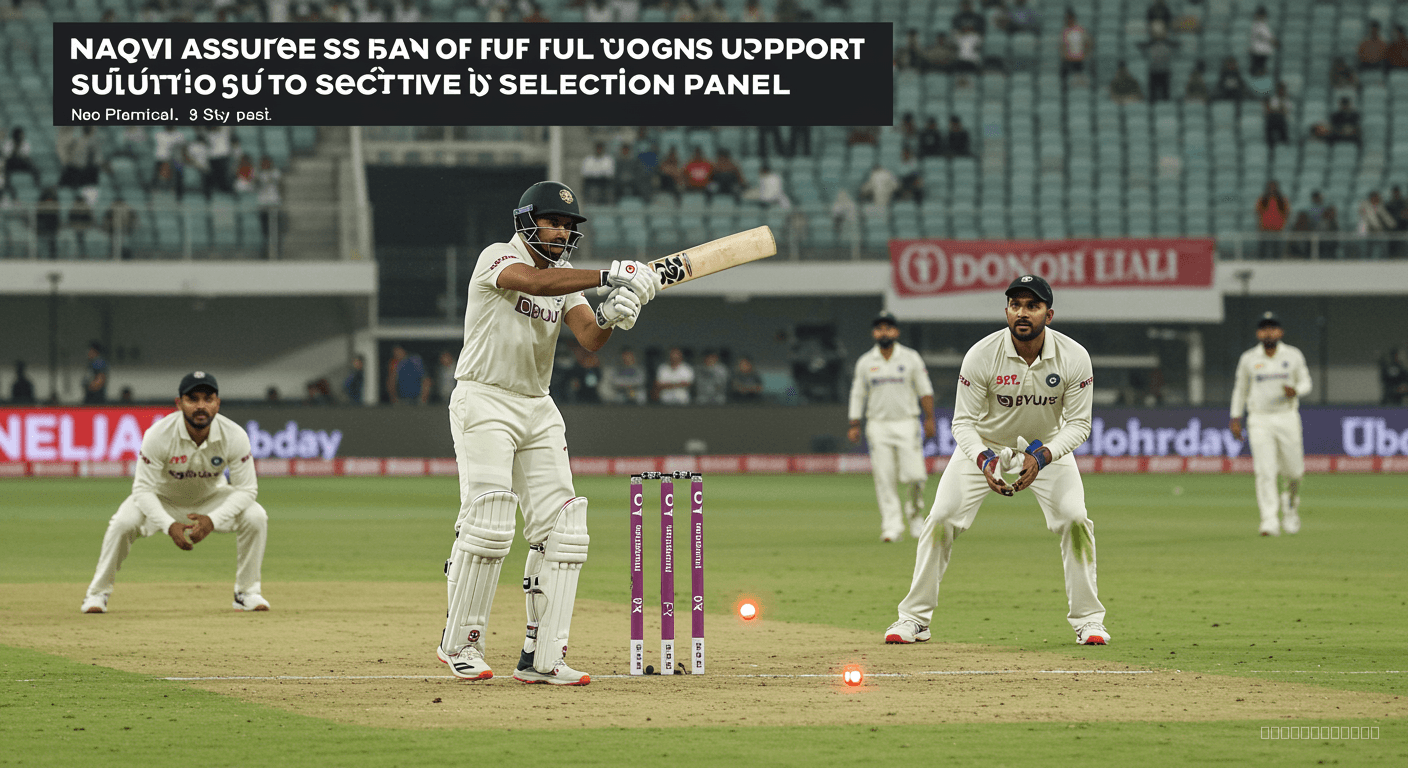
Pakistan Cricket Board (PCB) Chairman Mohsin Naqvi has formally assured the national selection panel of his complete and unwavering support, a move aimed at fostering stability and independence within the crucial decision-making body. This declaration, made as of March 12, 2026, comes at a critical juncture for Pakistan cricket, grappling with inconsistent performances and frequent changes in leadership and squad composition. This commitment from Chairman Naqvi is a pivotal step towards insulating the selection process from external pressures, a perennial challenge that has historically plagued Pakistan's cricketing landscape.
- PCB Chairman Mohsin Naqvi has pledged full, unconditional support to the national cricket selection panel.
- The assurance aims to provide stability and independence, addressing historical issues of interference in Pakistan cricket.
- This move is seen as crucial for focused team building ahead of major tournaments, including the upcoming T20 World Cup.
- The selection panel, led by former Test cricketer Wahab Riaz, is tasked with preparing competitive squads amidst performance concerns.
- Stakeholders anticipate this commitment will lead to long-term strategic planning and improved player morale.
Why Does Stability in Cricket Selection Matter So Much for Pakistan?
The significance of Chairman Naqvi's assurance cannot be overstated, particularly when viewed through the tumultuous lens of Pakistan cricket's recent history. For decades, the national selection process has been a revolving door, often perceived as susceptible to external influences, personal biases, and short-term fixes rather than long-term strategic planning. This instability has manifested in frequent changes to captaincy, coaching staff, and playing XI, directly impacting team cohesion and performance on the international stage. For instance, between 2019 and 2024, Pakistan saw no less than five changes in the chief selector's role, with average tenures often falling below 12 months. This contrasts sharply with leading cricketing nations like Australia or England, where chief selectors typically enjoy longer terms, fostering consistency in squad development and strategic vision. According to a report by ESPNcricinfo in late 2023, Pakistan's win percentage in ODIs dipped to approximately 48% in the preceding two years, down from 55% in the two years prior, a trend many analysts attribute to a lack of continuity at key decision-making levels.
The impact of such volatility extends beyond mere statistics; it deeply affects player morale, confidence, and the development pipeline. Players often report feeling insecure about their positions, leading to conservative play and hindering the emergence of bold, match-winning performances. The rapid turnover prevents selectors from building a rapport with players, understanding their strengths and weaknesses over time, and consequently, making informed, data-driven decisions. This historical context underscores the 'why' behind Naqvi's recent statement, as the PCB attempts to break free from a cycle that has repeatedly undermined Pakistan's potential. As PakishNews previously reported, the PCB has faced significant financial and reputational challenges due to inconsistent team performances and governance issues.
As PakishNews previously reported, Zaman Khan's Shoulder Injury Casts Shadow Over PSL Future.
What Specific Challenges Does the Selection Panel Face?
The current selection panel, reportedly led by former left-arm fast bowler Wahab Riaz, faces immediate and significant challenges. Their mandate includes preparing a formidable squad for the upcoming ICC T20 World Cup later this year, followed by critical bilateral series and the World Test Championship cycle. Recent performances have highlighted glaring weaknesses; Pakistan's exit from the ICC ODI World Cup 2023 group stage, securing only four wins out of nine matches, exposed a fragile middle order and inconsistent bowling. Furthermore, the 0-3 Test series whitewash in Australia and a 1-4 T20I series loss to a second-string New Zealand side underscored the need for urgent strategic overhauls. Players like Babar Azam, despite his consistent run-scoring (averaging over 45 in ODIs and 35 in T20Is in the last two years), have faced scrutiny over strike rates and captaincy decisions. The fitness of key fast bowlers like Naseem Shah and Haris Rauf, who have battled injuries, remains a crucial consideration, alongside the search for reliable all-rounders and power-hitters.
Chairman Naqvi, while addressing media in Lahore, stated, "My commitment to the selection panel is absolute. They have been given full autonomy to select the best possible team for Pakistan, without any interference or external pressure. Our goal is to ensure a merit-based selection process that prioritises national interest and long-term success." This sentiment was echoed by a senior PCB official, who, speaking on condition of anonymity, told PakishNews, "The Chairman's vision is clear: empower the experts. This is not just a statement; it's a fundamental shift in how we want our cricket to operate."
Expert Analysis: A Turning Point or More Empty Promises?
Cricket pundits and former players have weighed in on Naqvi's declaration, with many cautiously optimistic but also wary of historical precedents. "This is precisely what Pakistan cricket needs: a chairman who backs his selectors unconditionally," observed Rashid Latif, a former Pakistan captain and prominent cricket analyst. "For too long, selectors have been scapegoats for poor performances, leading to a fear of making bold choices. If this commitment holds, we could see a more confident and coherent team emerge. The panel needs to be given at least two full World Cup cycles to prove its worth."
Dr. Ayesha Khan, a sports management consultant based in Dubai, added, "The Chairman's dual role as Interior Minister and PCB head brings significant authority, which, if channelled correctly, can provide the necessary political will to protect the selection process. However, the true test will be when the team faces a lean patch. Will the support remain unwavering, or will we revert to the old patterns of knee-jerk reactions? The emphasis must be on establishing clear performance metrics and accountability for the panel itself, rather than just protecting them from external noise." She further elaborated, "A transparent selection policy, communicated clearly to players and the public, is essential to build trust and legitimacy."
Why does this matter? The perception of fairness and independence in selection directly influences player motivation and trust in the system. When players believe selection is purely merit-based, it fosters healthy competition and incentivises peak performance. Conversely, a system perceived as biased can breed resentment and factionalism within the squad, ultimately detrimental to team spirit and results.
Impact Assessment: Who Benefits, Who Faces Scrutiny?
The immediate beneficiaries of this assured support are undoubtedly the selection panel members themselves, who can now operate with greater confidence and less apprehension of political backlash. This newfound autonomy should, in theory, empower them to make tough decisions, drop underperforming seniors, and bring in new talent based purely on form and fitness. Players, especially those on the fringes or emerging talents from the domestic circuit, also stand to gain. A clear, meritocratic pathway to the national team can invigorate the domestic structure, which has often been criticised for not producing enough world-class talent ready for international cricket. For instance, the Quaid-e-Azam Trophy, Pakistan's premier first-class competition, saw a 15% increase in viewership in the 2024-25 season compared to the previous year, indicating growing interest that could be further capitalised on with a robust national selection policy. Read more on Pakistan's domestic cricket structure at PakishNews.
However, this also places immense scrutiny on the selection panel itself. With the shield of the Chairman's full support, any failures or controversial decisions will now be squarely attributed to their judgment. This necessitates meticulous planning, transparent communication, and a robust data-driven approach to selection. Head Coach, currently Gary Kirsten for white-ball formats, will also be impacted, as he will expect a cohesive unit picked by a stable panel, allowing him to focus on strategy and player development without constant squad reshuffles. The fans, the ultimate stakeholders, will be watching closely, hoping this promise translates into consistent victories and a return to Pakistan's dominant cricketing heritage.
What Happens Next? The Road to Consistency
The coming months will be crucial in determining whether Chairman Naqvi's assurances translate into tangible improvements. The selection panel's immediate task is to finalise the squad for the ICC T20 World Cup 2024, where Pakistan will aim to improve upon their semi-final exit in the 2022 edition. This will require balancing experienced campaigners with exciting young talents like Saim Ayub, whose strike rate in T20s for Peshawar Zalmi in the recent PSL 9 season was an impressive 157.3. The panel will also need to address the long-standing middle-order batting concerns and bolster the spin attack. Beyond the T20 World Cup, the focus will shift to building a sustainable Test side capable of competing globally, especially with the World Test Championship cycle demanding consistent performances.
Stakeholders should closely monitor the composition of future squads, the rationale behind selections, and the panel's ability to resist external pressures, especially during periods of poor form. The true measure of Naqvi's commitment will not be in the initial statement but in the sustained independence and success of the selection panel over the next 12-24 months. This period will be a litmus test for the PCB's resolve to instill long-term stability and meritocracy, essential ingredients for Pakistan to reclaim its position as a top-tier cricketing nation. A successful implementation could pave the way for a golden era of Pakistani cricket, while a failure to uphold this promise would only deepen the existing cycles of instability and underperformance. The path to consistent triumph begins with unwavering support and strategic foresight, a journey Pakistan cricket desperately needs to embark upon with conviction. More cricket news and analysis can be found on PakishNews.
Related: More Pakistan Cricket News | PCB Updates
Related Coverage
- Zaman Khan's Shoulder Injury Casts Shadow Over PSL Future
- Sports without fair play: Kaif backs Agha after run-out controversy ignites 'Spirit of Cricket'…
- Pakistan Dominates Bangladesh: Faheem Ashraf's Crucial Spell Puts Tigers on the Ropes in 2nd ODI
Frequently Asked Questions
❓ What is the primary objective behind Mohsin Naqvi's assurance to the selection panel?
The primary objective is to inject stability and independence into Pakistan's national cricket selection process. Historically, frequent changes and perceived external interference have hampered team performance and player confidence. PCB Chairman Naqvi's commitment, as of March 2026, aims to empower the panel to make merit-based decisions for long-term strategic team building, crucial for upcoming tournaments like the T20 World Cup.
❓ How has selection instability impacted Pakistan cricket's performance in recent years?
Selection instability has significantly impacted Pakistan cricket, leading to inconsistent performances and a decline in win percentages. For example, between 2019 and 2024, the chief selector role changed five times, contributing to a reported dip in ODI win percentage to approximately 48% in the two years prior to 2024. This volatility affects player morale, hinders the development of a cohesive team strategy, and prevents the consistent nurturing of talent, as evidenced by the team's group stage exit from the ICC ODI World Cup 2023.
❓ Who are the key figures in the current Pakistan cricket selection panel?
The current Pakistan cricket selection panel is reportedly led by former left-arm fast bowler Wahab Riaz. The panel's composition typically includes a chief selector and several former cricketers, tasked with identifying and selecting players across all formats. Their immediate challenge, following Chairman Naqvi's assurance, is to build a competitive squad for the ICC T20 World Cup 2024, addressing issues like middle-order fragility and ensuring the fitness of key players like Naseem Shah and Haris Rauf.