NASA’s long search for Earth-like, habitable planets has yielded remarkable results: scientists have discovered a system of seven Earth-sized planets orbiting a single star, with at least three potentially capable of supporting water and, possibly, life.
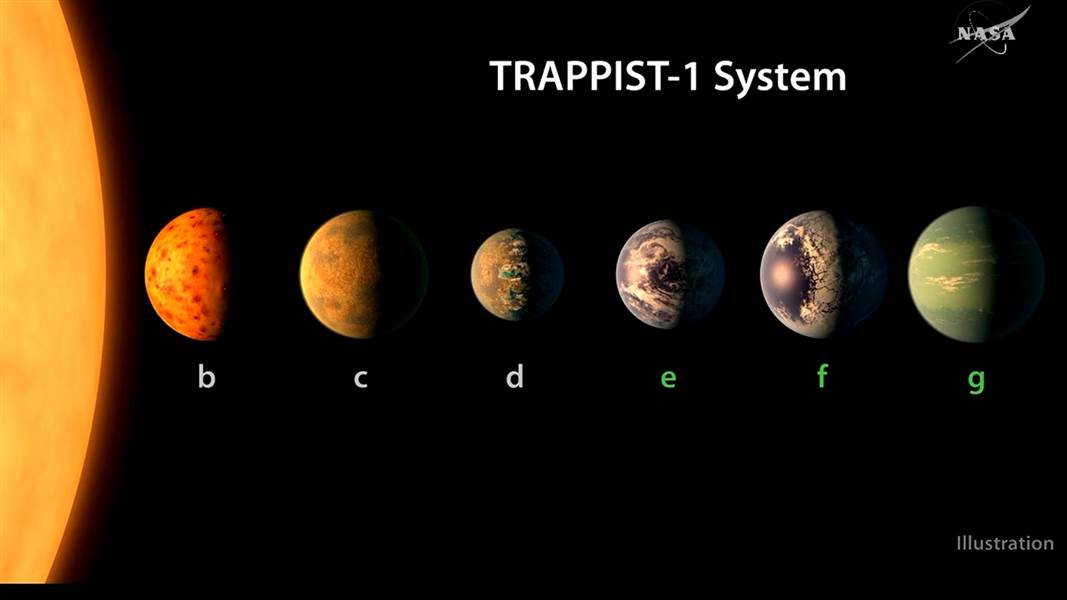
According to NASA, these newly found planets are very similar in size to Earth and are predominantly rocky. All seven orbit around a single, relatively cool and small star in a system called Trappist-1, which is approximately 40 light-years away from our solar system. What makes this system particularly interesting is that its temperature zone is just right—not too hot for water to evaporate instantly, and not so cold that everything would be frozen—making it an ideal region for possible life. Three of the planets are located in what scientists call the “habitable zone,” where conditions may allow liquid water to exist on their surfaces. This significantly increases the chances for these worlds to be habitable. Professor Michael Gillon from Belgium University, who authored the paper on this discovery, explained that the host star is relatively small and cool, raising the possibility of water and, potentially, life on these planets. He emphasized that further research, such as looking for ozone or other biosignatures in their atmospheres, could indicate the presence of life. Astronomer Amaury Triaud from Cambridge University calls this an important milestone in the search for extraterrestrial life: “We have taken a major step in our quest to find life beyond Earth. With this breakthrough, further planet-hunting is less urgent, as we now have a prime target for study.”
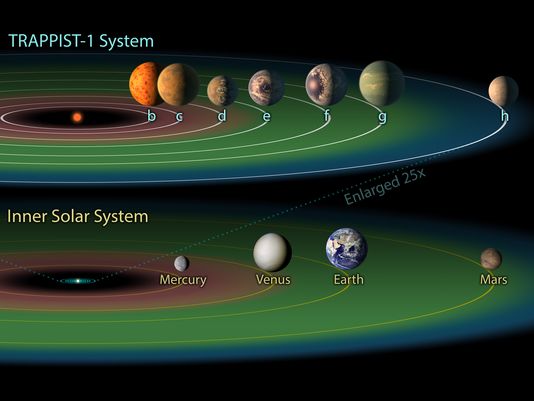
Despite this optimism, scientists caution that if the Trappist-1 planets prove uninhabitable, it would be disappointing to confirm that Earth might be the only life-supporting planet in the universe. The Trappist-1 planets can be observed using advanced telescopes, and scientists hope further analysis will reveal signs of atmospheres and even possible biosignatures.