PakishNews ListenPress play to hear this articleDownload audio
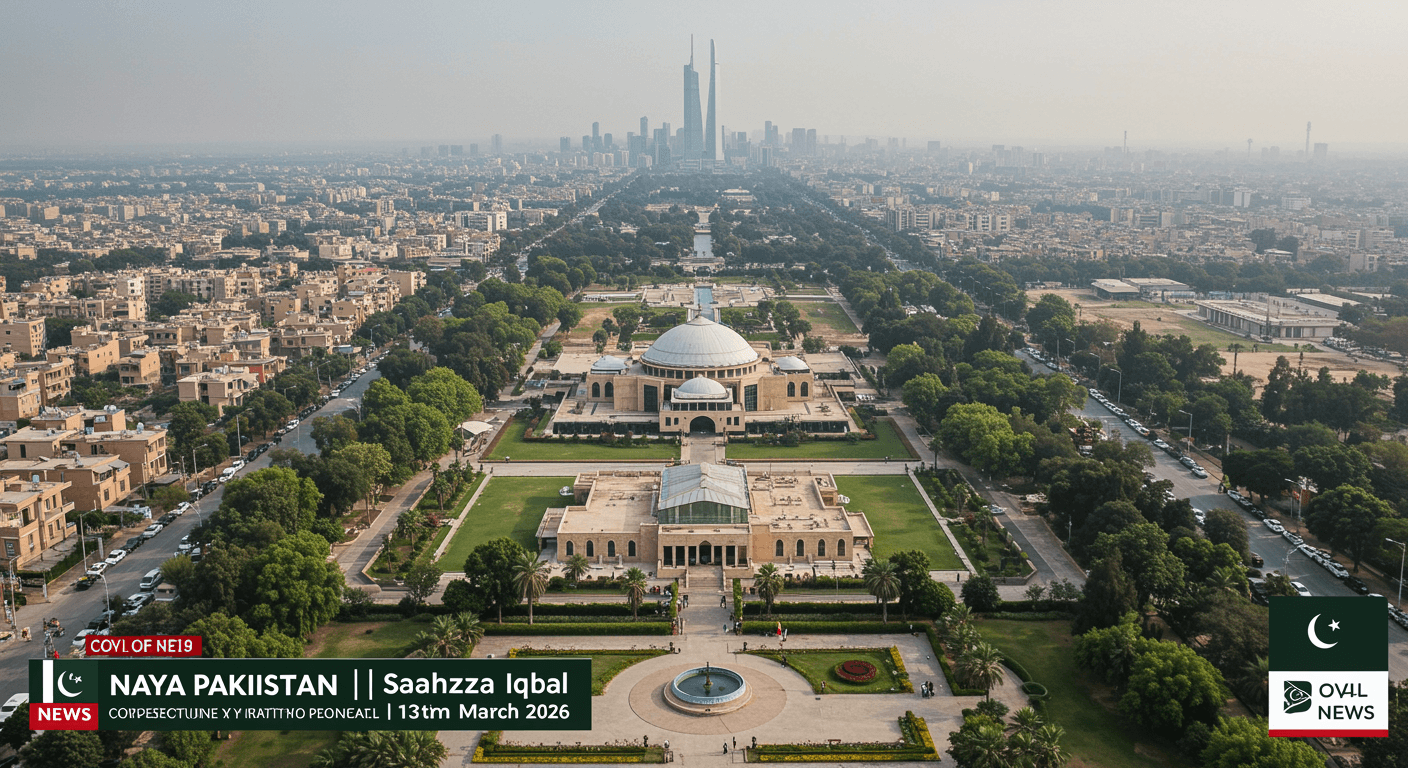
As of March 2026, the concept of 'Naya Pakistan,' once a rallying cry for transformative change, remains a focal point of national discourse, with prominent journalists like Shahzad Iqbal leading discussions on its impact and evolution on platforms like Geo News. This vision, championed during a previous political era, aimed to reshape the nation's governance, economy, and social fabric. The ongoing public and policy debate around 'Naya Pakistan' highlights the complex interplay between political rhetoric, economic realities, and long-term societal aspirations in Pakistan.
- Concept Origin: 'Naya Pakistan' was introduced as a comprehensive reform agenda by the Pakistan Tehreek-e-Insaf (PTI) government (2018-2022).
- Key Pillars: Focused on anti-corruption, social welfare initiatives (e.g., Sehat Sahulat Programme), economic stability, and institutional reforms.
- Current Discourse: Prominent media figures, including Shahzad Iqbal on Geo News, are assessing the long-term legacy and efficacy of these reforms in 2026.
- Economic Indicators: Analysis in 2026 suggests mixed outcomes, with some reforms showing structural changes while others faced implementation hurdles.
- Policy Evolution: Subsequent governments have either continued, modified, or abandoned aspects of the original vision, reflecting shifting national priorities.
What Was the Vision of Naya Pakistan and Why Does it Matter?
The 'Naya Pakistan' (New Pakistan) vision, a cornerstone of the Pakistan Tehreek-e-Insaf's (PTI) political campaign and governance strategy from 2018 to 2022, encapsulated a broad agenda for national transformation. It promised an end to corruption, a robust welfare state akin to the Riasat-e-Madina, economic self-reliance, and strengthening of state institutions. The narrative resonated deeply with a populace yearning for change, particularly among urban youth and a segment of the middle class disillusioned with traditional politics. The PTI government, led by then-Prime Minister Imran Khan, launched several flagship programmes under this banner, including the Sehat Sahulat Programme (universal health insurance), the Ehsaas Programme (poverty alleviation), and a drive against illicit wealth, as reported by the Pakistan Institute of Development Economics (PIDE) in its 2023 review of social sector initiatives.
Why does this matter? The enduring relevance of 'Naya Pakistan' in March 2026 stems from its profound impact on policy discourse and public expectations. Even after the PTI government's tenure, the benchmarks it set, and the challenges it highlighted, continue to shape political manifestos and public demands. Successive governments have found themselves implicitly or explicitly measured against the promises of Naya Pakistan, particularly concerning economic stability, governance reforms, and social justice. The vision fundamentally altered the terms of political engagement, shifting focus towards accountability and welfare, as noted by Dr. Hassan Askari Rizvi, a Lahore-based political analyst, in a recent interview.
As PakishNews previously reported, Pakistan Condemns Continued Closure of Historic IIOJK Mosque on Jumat-ul-Vida.
How Have Economic Reforms Under Naya Pakistan Fared by 2026?
Economically, the 'Naya Pakistan' era (2018-2022) was marked by significant challenges and ambitious reform efforts. The government inherited a substantial current account deficit, triggering an International Monetary Fund (IMF) Extended Fund Facility (EFF) programme in July 2019, amounting to approximately $6 billion. Key economic goals included increasing tax revenue, reducing the fiscal deficit, and boosting exports. According to the State Bank of Pakistan's (SBP) Annual Report 2024-25, the Federal Board of Revenue (FBR) saw a notable increase in tax collection from PKR 3.8 trillion in FY2018 to PKR 6.1 trillion by FY2022, reflecting efforts to broaden the tax base. However, this period also witnessed high inflation, which peaked at nearly 27% in early 2023, largely influenced by global commodity price hikes and currency depreciation, as detailed by the Pakistan Bureau of Statistics (PBS).
By March 2026, the long-term impact of these reforms presents a mixed picture. While the focus on digitisation within the FBR has led to improved tax compliance in certain sectors, the overall tax-to-GDP ratio, currently around 9.5%, remains one of the lowest in the region, according to the Ministry of Finance's Economic Survey 2025-26. Foreign Direct Investment (FDI) saw fluctuations, with a peak of $2.5 billion in FY2020 before moderating to an estimated $1.8 billion in FY2025, as per data from the Board of Investment (BOI). "The Naya Pakistan economic philosophy, while strong on intent for self-reliance and anti-corruption, struggled with consistent implementation amidst external shocks and political transitions," observed Dr. Kaiser Bengali, an economist and former advisor to provincial governments, during a recent seminar in Karachi. He added that while some structural adjustments were initiated, their full benefits are yet to materialise due to policy discontinuities. Read more on Pakistan's Economic Challenges at PakishNews.
What is the Legacy of Naya Pakistan's Social and Governance Reforms?
Beyond economics, 'Naya Pakistan' placed significant emphasis on social welfare and governance reforms. The Sehat Sahulat Programme, providing free health insurance coverage up to PKR 1 million per family, was expanded to nearly all districts of Punjab, Khyber Pakhtunkhwa, Balochistan, and Gilgit-Baltistan, benefiting over 40 million families by late 2022, as per the National Health Services, Regulations & Coordination Ministry. Similarly, the Ehsaas Programme, a multi-faceted poverty alleviation initiative, expanded cash transfer programmes (Kifalat, Nashonuma), and introduced schemes for student scholarships and interest-free loans, reaching millions of deserving households. Data from the Benazir Income Support Programme (BISP) indicates that Ehsaas-related initiatives continue to support over 9 million families as of February 2026.
In governance, the PTI government pledged to streamline bureaucracy, enhance accountability through institutions like the National Accountability Bureau (NAB), and digitise public services. While efforts were made to introduce e-governance solutions, such as online land records and business registration, systemic corruption and bureaucratic inertia remained significant hurdles. A senior official from the Cabinet Division, speaking anonymously to PakishNews, conceded that while intent was high, "the deep-rooted structural issues required more than a single term to dismantle." The effectiveness of anti-corruption drives, particularly those involving NAB, also faced scrutiny, with critics pointing to selective accountability and a high number of cases resulting in acquittals or prolonged trials, as highlighted in a 2024 report by the Human Rights Commission of Pakistan (HRCP). "The Naya Pakistan vision certainly elevated the discourse on social protection and accountability, but its practical implementation was often hampered by political expediency and institutional weaknesses," stated Dr. Huma Baqai, an Associate Professor of Social Sciences at the Institute of Business Administration (IBA), Karachi, in a discussion programme on Geo News on March 12, 2026. This reflects a broader challenge faced by all governments in Pakistan in implementing large-scale reforms. In a related development covered by PakishNews, the Supreme Court of Pakistan recently issued directives on expediting NAB cases, signaling ongoing judicial oversight.
How Has the Political Landscape Evolved Since the Naya Pakistan Era?
The political landscape in Pakistan has undergone significant shifts since the 'Naya Pakistan' government's departure in April 2022 following a vote of no-confidence. The subsequent PDM-led coalition government and the current administration have navigated a complex environment marked by economic austerity, political polarisation, and social unrest. While the explicit rhetoric of 'Naya Pakistan' is less prevalent in current government discourse, many of its underlying themes – such as a focus on social safety nets, institutional reform, and economic stabilisation – continue to feature in policy discussions, albeit under different nomenclature. For instance, the current government's emphasis on fiscal discipline and attracting foreign investment, particularly from GCC countries, aligns with some economic objectives of the previous era, even if the approach differs.
Shahzad Iqbal's programme on Geo News on March 13, 2026, served as a crucial platform for this reflection, featuring a panel of experts discussing whether elements of the 'Naya Pakistan' vision have genuinely been integrated into the national fabric or if they remain largely associated with a specific political party. "The lasting impact of 'Naya Pakistan' is not necessarily in the continuation of specific policies, but in how it has recalibrated public expectations from governance," commented Mr. Zahid Hussain, a veteran journalist and political commentator, during the Geo News broadcast. "Citizens now demand greater transparency, social welfare provisions, and accountability from any government, irrespective of its political affiliation." This indicates a subtle but significant shift in citizen-state relations, where the bar for performance has been raised. The political discourse, as observed across various media outlets including ARY News and Express Tribune, frequently references the promises and perceived failures of the 'Naya Pakistan' era, indicating its continued resonance in the collective political consciousness.
What Happens Next? The Future of Pakistan's Reform Agenda
Looking ahead, the debate surrounding 'Naya Pakistan' will likely continue to inform Pakistan's reform agenda. The nation faces persistent challenges including a growing population (estimated at over 250 million by 2026, according to the United Nations Population Fund), climate change vulnerabilities, and the need for sustainable economic growth. Future governments will need to balance the aspirations for transformative change with the practicalities of governance, resource constraints, and geopolitical realities. The continuity of successful social protection programmes like Ehsaas, irrespective of which party is in power, suggests a potential for bipartisan consensus on certain welfare initiatives. Conversely, the more contentious areas of institutional reform and anti-corruption drives will likely remain subjects of political contention and judicial scrutiny.
Stakeholders, including policymakers, business leaders, and informed citizens, should watch for several key indicators. Firstly, the government's ability to maintain fiscal discipline and attract long-term foreign investment, particularly within the framework of the China-Pakistan Economic Corridor (CPEC) and new regional partnerships, will be critical. Secondly, the evolution of social safety nets and their capacity to adapt to new demographic and economic pressures will determine the state's commitment to inclusive development. Finally, the ongoing efforts to reform the justice system and ensure accountability will be closely monitored as a barometer of institutional strength. The legacy of 'Naya Pakistan', therefore, is not a static concept but a dynamic benchmark against which future progress and challenges will be measured, continuously shaping the narrative of Pakistan's journey towards development and good governance.
Related: More Pakistan Politics News | Governance Reforms
Related Coverage
- Pakistan Condemns Continued Closure of Historic IIOJK Mosque on Jumat-ul-Vida
- Saudi Arabia Pakistan Relations: Enduring Partnership in Testing Times
- Saudi Arabia, Pakistan: Enduring Alliance in Testing Times
Frequently Asked Questions
❓ What were the core promises of the 'Naya Pakistan' vision?
The 'Naya Pakistan' vision, championed by the PTI government (2018-2022), primarily promised an end to corruption, the establishment of a robust welfare state (inspired by the Riasat-e-Madina), economic self-reliance, and significant institutional reforms. Flagship initiatives included the universal Sehat Sahulat Programme and the comprehensive Ehsaas Programme for poverty alleviation, which collectively aimed to uplift millions of vulnerable Pakistanis, as detailed by the Ministry of National Health Services and the Benazir Income Support Programme.
❓ How did the 'Naya Pakistan' era affect Pakistan's economy?
Economically, the 'Naya Pakistan' era saw efforts to stabilise the economy, including an IMF programme initiated in 2019, and a focus on increasing tax revenues. The Federal Board of Revenue (FBR) reported an increase in tax collection from PKR 3.8 trillion in FY2018 to PKR 6.1 trillion by FY2022. However, this period also contended with significant inflation and fluctuating foreign direct investment, reflecting the challenges of structural reforms amidst global economic pressures and currency depreciation, according to the State Bank of Pakistan's analyses.
❓ What is the long-term legacy of 'Naya Pakistan' in Pakistan's political discourse?
By 2026, the 'Naya Pakistan' vision's long-term legacy lies not just in the specific policies that may or may not have continued, but in how it fundamentally reshaped public expectations from governance. It elevated national discourse on social protection, accountability, and institutional reform, setting a higher benchmark for subsequent governments. Political analysts like Mr. Zahid Hussain suggest that citizens now demand greater transparency and welfare provisions, influencing the manifestos and performance assessments of all major political parties, irrespective of their original affiliation with the 'Naya Pakistan' slogan.