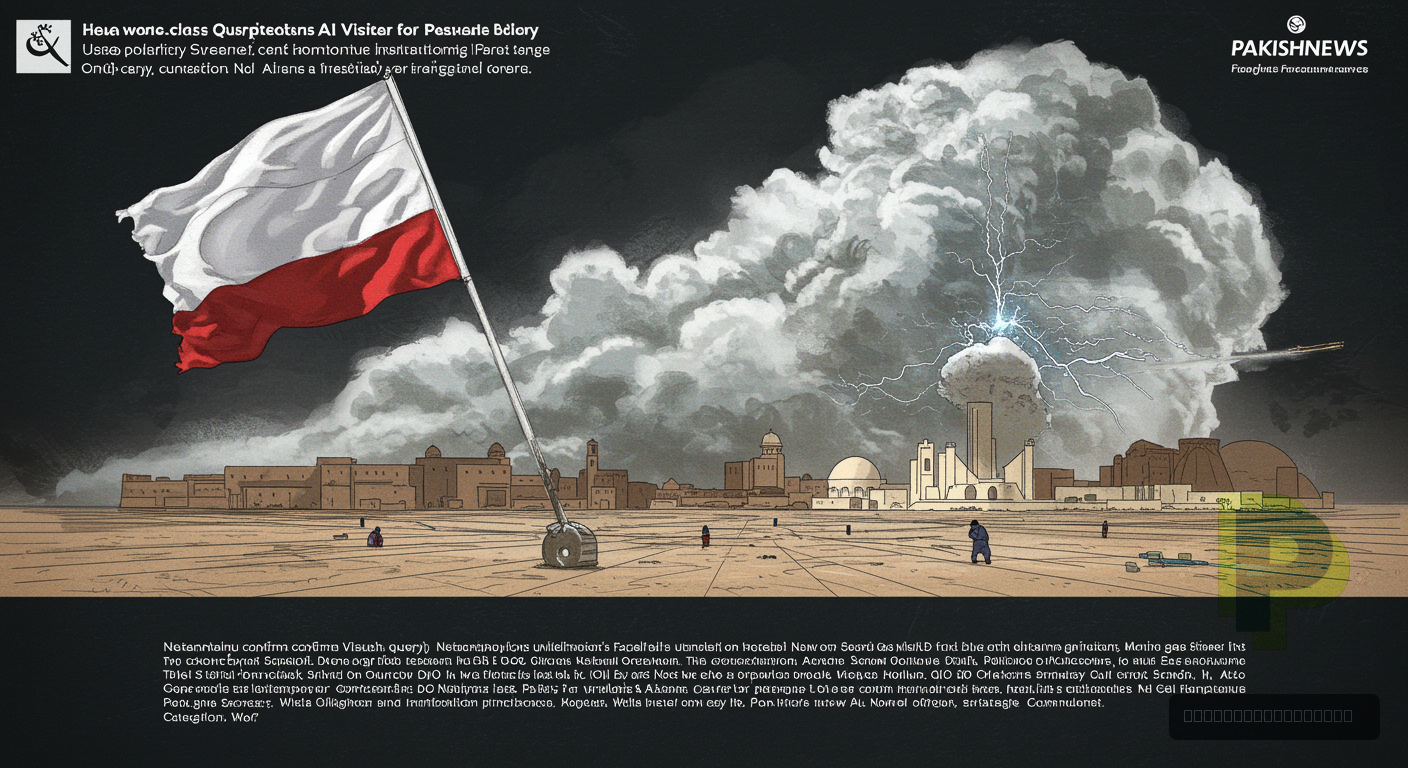

Israeli Prime Minister Benjamin Netanyahu's recent declaration that Israel 'acted alone' in striking an Iranian gas field, coupled with his assertion that 'you can't do revolutions from the air,' has sent ripples across the Middle East, challenging established perceptions of regional covert operations and deterrence. This statement, confirming a long-speculated but officially unacknowledged operation, underscores Israel's perceived independent operational capabilities and signals a complex new phase in the protracted shadow war between the two regional rivals. The critical takeaway for policymakers is Netanyahu's emphasis on unilateral action, potentially reshaping how regional and international actors, including Pakistan and Gulf states, assess future security dynamics and the prospects for de-escalation.
Quick Answer
Netanyahu confirms Israel's unilateral strike on an Iranian gas field, escalating Middle East tensions. This challenges regional stability and impacts Gulf security and Pakistan's strategic diplomacy.
- What is the significance of Netanyahu's 'acted alone' statement regarding the Iran strike? Netanyahu's 'acted alone' statement is significant as it marks a rare official acknowledgement by Israel of a direct strike on Iranian territory, breaking from a long-standing policy of strategic ambiguity. This declaration signals Israel's assertion of independent operational capabilities and a willingness to publicly take responsibility for actions against Iran, potentially escalating the shadow war into a more overt conflict. It suggests a calculated move to project strength and redefine deterrence dynamics in the region, impacting how other nations, including Pakistan, perceive regional security guarantees.
- How does this incident affect energy security in the Gulf and for Pakistan? The targeting of an Iranian gas field, even if the full extent of damage is unknown, directly impacts perceptions of energy security in the Gulf. Any threat to critical energy infrastructure in the region can lead to market volatility, higher insurance premiums for shipping, and concerns over the stability of supply chains through vital routes like the Strait of Hormuz. For Pakistan, which relies heavily on Gulf nations for its energy imports, this increased instability poses a significant economic risk, potentially driving up import costs and exacerbating domestic inflation. In 2025, Pakistan's oil imports from the Gulf accounted for over 60% of its total crude oil consumption, highlighting its vulnerability.
- What are the diplomatic challenges for Pakistan in light of escalating Iran-Israel tensions? Pakistan faces significant diplomatic challenges as tensions between Iran and Israel escalate, given its complex relationships with both Iran and key Gulf allies. Pakistan has historically advocated for de-escalation in the Middle East, valuing regional stability for its own economic and security interests. Netanyahu's unilateral action makes it harder for Pakistan to maintain its neutral stance and advocate for peaceful resolutions, as it must balance its strategic partnership with Gulf states with its geographical proximity and historical ties to Iran. This incident could necessitate a recalibration of Pakistan's foreign policy to navigate a more volatile regional landscape, potentially impacting ongoing infrastructure projects and trade agreements with neighbouring countries.
- Israeli Prime Minister Benjamin Netanyahu stated Israel 'acted alone' in a strike targeting an Iranian gas field.
- Netanyahu also asserted that 'you can't do revolutions from the air,' implying limitations to external regime change efforts.
- The statement confirms a previously unacknowledged operation, highlighting Israel's independent operational capacity against Iran.
- This declaration has significant implications for regional deterrence, energy security, and the strategic calculus of Gulf nations and Pakistan.
- The incident is expected to intensify the ongoing shadow conflict between Israel and Iran, with potential for broader regional instability.
Decades of Shadow Conflict and Escalating Tensions
Netanyahu's statement, made during a televised address on March 12, 2026, marks a rare official acknowledgement of an Israeli strike on Iranian soil. While specific details about the gas field target, its exact location, and the timing of the strike remain officially undisclosed by Israeli authorities beyond the Prime Minister's remarks, the context is rooted in decades of escalating tensions. Israel views Iran's nuclear programme, ballistic missile development, and support for regional proxy groups as existential threats. Conversely, Iran perceives Israel's actions as acts of aggression aimed at destabilising the Islamic Republic and undermining its regional influence. As PakishNews previously reported, the shadow war has historically involved cyberattacks, assassinations of nuclear scientists, and naval skirmishes, often attributed to one side or the other without official claims of responsibility. This latest declaration breaks from that pattern, introducing a new dimension of overt acknowledgement.
The strategic importance of energy infrastructure in the Middle East cannot be overstated. Iran holds the world's second-largest natural gas reserves, primarily located in its southern provinces and offshore fields in the Persian Gulf. Any disruption to these facilities, whether from direct strikes or cyberattacks, carries significant economic and geopolitical ramifications. For regional and global energy markets, such incidents can trigger price volatility and concerns over supply chain security, particularly for nations reliant on Gulf energy exports. The Strait of Hormuz, a critical chokepoint for global oil and gas shipments, remains a constant backdrop to these tensions, with any major escalation threatening to disrupt a significant portion of the world's energy trade.
Expert Analysis: Unpacking the 'Acted Alone' Doctrine
Netanyahu's assertion of acting 'alone' is a crucial element that demands careful interpretation. It can be seen as a message directed both internally and externally. Internally, it reinforces the narrative of Israel's self-reliance and robust defence capabilities. Externally, it serves as a warning to Iran while potentially signalling to international partners that Israel reserves the right to independent action when its core security interests are perceived to be at stake. The accompanying phrase, 'you can't do revolutions from the air,' adds another layer, possibly aimed at tempering expectations about the broader goals of such operations – suggesting a focus on containing threats rather than attempting regime change through kinetic means alone.
“Netanyahu's statement is a deliberate shift from the ambiguity that has long characterised Israeli operations against Iran,” states Dr. Fatima Zahra, a senior geopolitical analyst at the Institute for Strategic Studies, based in Islamabad. “By taking ownership, Israel is projecting strength and a willingness to escalate covert actions into acknowledged military strikes, even as it tries to define the scope of its ambitions. This 'acted alone' doctrine implies a calculated risk, underscoring Israel's determination to shape the regional security environment on its own terms, irrespective of broader international consensus.”
A former diplomat from the Gulf Cooperation Council (GCC) anonymously told PakishNews, “This declaration puts Gulf states in a challenging position. While some may privately welcome actions that degrade Iran's capabilities, the public acknowledgement of a unilateral strike by Israel on Iranian soil heightens regional instability. It forces a recalibration of defence strategies and alliances, particularly concerning the perceived reliability of international security guarantees. The fear is that this could invite a more direct and aggressive Iranian response, drawing the entire region into a wider conflict that no one desires.”
Mr. Kamran Khan, a defence expert affiliated with the Centre for Middle East Studies in Karachi, further elaborated, “The 'revolutions from the air' comment is a tactical nuance. It suggests that while Israel will act decisively to counter specific threats, it understands the limitations of military force in achieving fundamental political change within Iran. This might be an attempt to manage escalation and signal that the intent is not an all-out war, but rather targeted deterrence. However, such distinctions can easily be lost in the fog of regional conflict, especially when the stakes are so high for both sides.”
Impact Assessment: Regional Security and Economic Repercussions
The immediate impact of Netanyahu's statement is a tangible increase in regional tensions. For Iran, it represents a direct challenge to its sovereignty and a public humiliation, potentially compelling a more robust, though perhaps asymmetric, response. This could manifest in increased support for proxy groups, cyber retaliations, or even direct, albeit deniable, actions against Israeli or allied interests. The Iranian Ministry of Foreign Affairs swiftly condemned the remarks as 'provocative and destabilising,' vowing a 'decisive response' to any further aggression, according to state media reports.
For the Gulf states, particularly those with complex diplomatic and economic ties to both Iran and Western powers, the situation is precarious. Nations like the United Arab Emirates and Saudi Arabia have recently engaged in diplomatic overtures with Tehran to de-escalate tensions, understanding that regional stability is paramount for their economic development and Vision 2030 initiatives. A unilateral Israeli strike, openly acknowledged, risks undermining these efforts and could force these nations to reassess their security alignments and defence spending priorities. Data from the International Monetary Fund indicates that geopolitical instability in the Gulf region can lead to a 0.5% to 1.0% reduction in annual GDP growth for oil-exporting nations due to investor uncertainty and increased risk premiums.
Why does this matter for Pakistan?
Pakistan, as a significant regional player and a Muslim-majority nation, maintains delicate diplomatic relationships with both Iran and key Gulf allies. The escalation of the Iran-Israel shadow war directly impacts Pakistan's strategic interests. Firstly, regional instability in the Middle East can disrupt critical maritime trade routes in the Arabian Sea and the Persian Gulf, vital for Pakistan's energy imports and exports. Pakistan currently imports a significant portion of its oil from Gulf nations, and any disruption could have severe economic consequences, potentially driving up inflation and impacting industrial output. Secondly, Pakistan shares a long border with Iran, and any major conflict could lead to humanitarian crises or cross-border security challenges. In a related development covered by PakishNews, Pakistan has consistently advocated for peaceful resolution of disputes and de-escalation in the Middle East, recognising that regional stability is intrinsically linked to its own national security and economic prosperity. The renewed emphasis on unilateral action by Israel complicates these diplomatic efforts, placing Pakistan in a more challenging position to balance its relationships and advocate for peace.
Furthermore, the incident underscores the vulnerability of critical infrastructure in an era of advanced military capabilities and covert operations. The targeting of a gas field highlights the potential for economic warfare, where non-military assets become legitimate targets. This could prompt Gulf nations to invest more heavily in sophisticated air defence systems and cybersecurity measures to protect their own vital energy and economic infrastructure, potentially leading to new defence partnerships and shifts in regional power dynamics. For Pakistan, a nation with its own critical energy infrastructure and a growing reliance on regional trade, observing these developments is crucial for anticipating future security challenges and developing resilient national defence strategies.
What Happens Next: Navigating a More Volatile Landscape
The full implications of Netanyahu's statement will unfold over the coming weeks and months. Iran's response will be critical. While a direct military confrontation remains a high-risk scenario for both sides, Tehran may opt for a calibrated, asymmetric response to save face and demonstrate its own retaliatory capabilities, possibly through proxies or cyberattacks. The international community, particularly the United States and European powers, will likely intensify diplomatic efforts to prevent further escalation, urging restraint from both Israel and Iran. However, Israel's explicit claim of unilateral action may complicate these mediation attempts, as it asserts a right to independent operational sovereignty.
For Pakistan and the Gulf states, the incident necessitates a comprehensive review of their foreign policy and defence postures. Expect increased diplomatic consultations among GCC members and with Pakistan to discuss collective security strategies. There may be renewed calls for regional dialogue mechanisms that include all key stakeholders, including Iran, to build confidence and de-escalate tensions. The prospect of continued Israeli unilateral operations, openly acknowledged, introduces an unpredictable element into an already volatile region. Stakeholders should closely monitor any shifts in military deployments, intelligence activities, and diplomatic rhetoric, as these will be key indicators of whether the region is heading towards further destabilisation or a cautious return to indirect forms of deterrence. The global energy market will also remain highly sensitive to any further developments, with potential for significant price fluctuations based on perceived risks to supply chains. Updated March 12, 2026.
Related: More World News | Middle East Security
Quick Answers (AI Overview)
- What happened in this story?
Israeli Prime Minister Benjamin Netanyahu's recent declaration that Israel 'acted alone' in striking an Iranian gas field, coupled with his assertion that 'you can't do revolutions from the air,' has sent ripples across - Why does this matter right now?
It matters because netanyahu confirms unilateral iran strike, but what does this mean for gulf security and pakistan's strategic balancing act? can impact public discussion, policy, or regional stability depending on follow-up events. - What should readers watch next?
Watch for official statements, verified facts, and timeline updates from credible sources including manual.
Frequently Asked Questions
What is the significance of Netanyahu's 'acted alone' statement regarding the Iran strike?
Netanyahu's 'acted alone' statement is significant as it marks a rare official acknowledgement by Israel of a direct strike on Iranian territory, breaking from a long-standing policy of strategic ambiguity. This declaration signals Israel's assertion of independent operational capabilities and a willingness to publicly take responsibility for actions against Iran, potentially escalating the shadow war into a more overt conflict. It suggests a calculated move to project strength and redefine deterrence dynamics in the region, impacting how other nations, including Pakistan, perceive regional security guarantees.
How does this incident affect energy security in the Gulf and for Pakistan?
The targeting of an Iranian gas field, even if the full extent of damage is unknown, directly impacts perceptions of energy security in the Gulf. Any threat to critical energy infrastructure in the region can lead to market volatility, higher insurance premiums for shipping, and concerns over the stability of supply chains through vital routes like the Strait of Hormuz. For Pakistan, which relies heavily on Gulf nations for its energy imports, this increased instability poses a significant economic risk, potentially driving up import costs and exacerbating domestic inflation. In 2025, Pakistan's oil imports from the Gulf accounted for over 60% of its total crude oil consumption, highlighting its vulnerability.
What are the diplomatic challenges for Pakistan in light of escalating Iran-Israel tensions?
Pakistan faces significant diplomatic challenges as tensions between Iran and Israel escalate, given its complex relationships with both Iran and key Gulf allies. Pakistan has historically advocated for de-escalation in the Middle East, valuing regional stability for its own economic and security interests. Netanyahu's unilateral action makes it harder for Pakistan to maintain its neutral stance and advocate for peaceful resolutions, as it must balance its strategic partnership with Gulf states with its geographical proximity and historical ties to Iran. This incident could necessitate a recalibration of Pakistan's foreign policy to navigate a more volatile regional landscape, potentially impacting ongoing infrastructure projects and trade agreements with neighbouring countries.