Listen to ArticlePress play to hear this storyListen to ArticleDownload audio
ISLAMABAD — Pakistan has formally accused the Afghan Taliban of targeting civilians in its Bajaur district, resulting in the deaths of four individuals, a development that significantly escalates cross-border tensions and demands immediate diplomatic and security responses. This incident, occurring in a volatile border region, underscores the persistent challenges in managing the porous Pakistan-Afghanistan frontier and the imperative for robust counter-terrorism strategies. The alleged cross-border attack highlights a critical deterioration in security cooperation between Islamabad and Kabul, threatening regional stability.
- Pakistan's Ministry of Foreign Affairs (MoFA) confirmed four civilian deaths in Bajaur due to alleged Afghan Taliban shelling.
- The incident, occurring on March 11, 2026, has prompted a formal diplomatic protest to the interim Afghan government.
- Bajaur, part of Khyber Pakhtunkhwa, shares a sensitive and often volatile border with Afghanistan's Kunar province.
- This marks a significant escalation in cross-border violence, following a series of similar, though less fatal, incidents over the past year.
- Analysts warn of potential long-term implications for bilateral relations and regional counter-terrorism efforts.
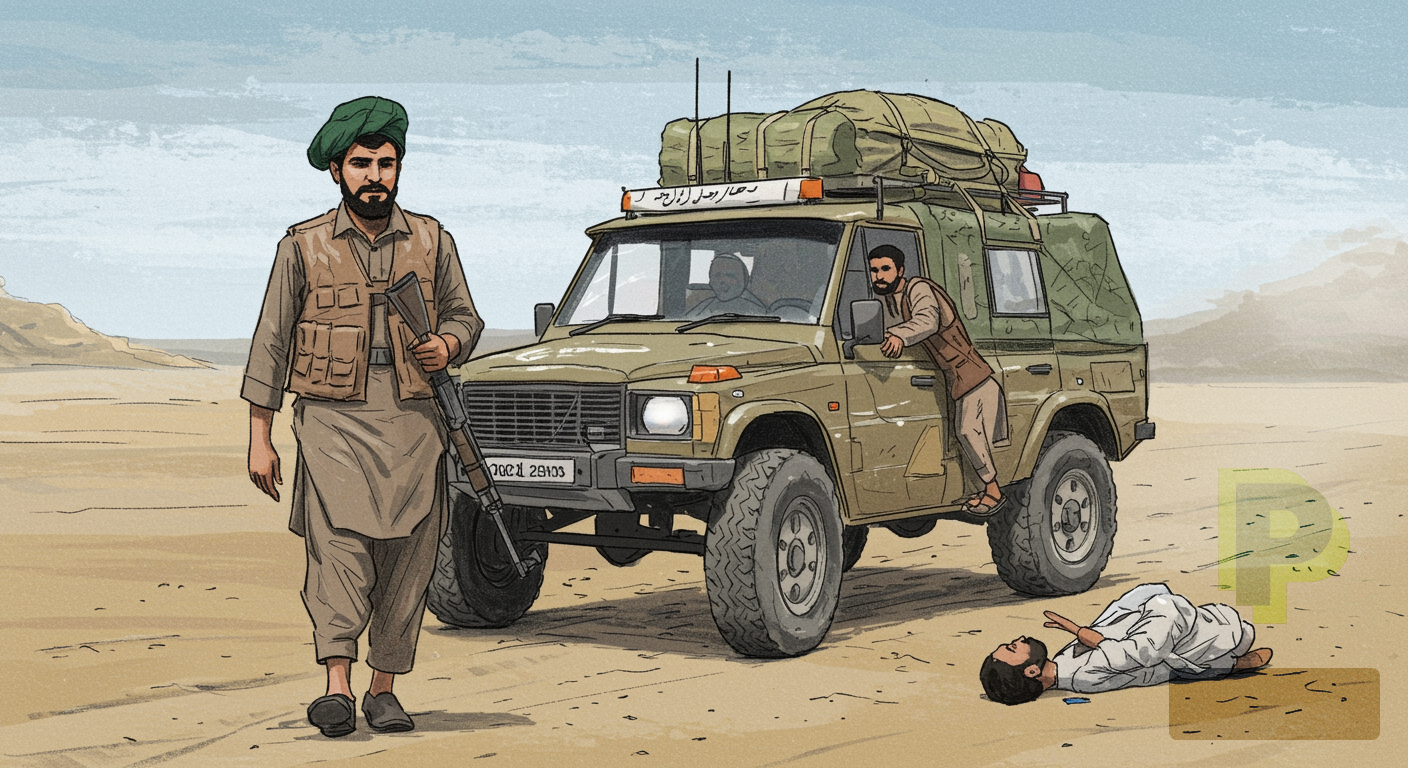
According to a statement issued by the Ministry of Foreign Affairs (MoFA) in Islamabad on March 12, 2026, the incident involved unprovoked firing and shelling from the Afghan side of the border into the Mamund area of Bajaur. The statement explicitly attributed the aggression to elements associated with the Afghan Taliban, asserting that their actions deliberately targeted civilian populations. This claim marks a direct and serious accusation against the de facto authorities in Kabul, moving beyond previous general condemnations of cross-border terrorism. The MoFA has summoned the Afghan Chargé d'Affaires to convey Pakistan's grave concerns and lodge a strong protest, demanding a thorough investigation and strict action against those responsible.
What is the Historical Context of Cross-Border Tensions in Bajaur?
Bajaur, a district in Pakistan's Khyber Pakhtunkhwa province, has historically been a flashpoint for cross-border security challenges. Located approximately 150 kilometres north of Peshawar, it shares a rugged, mountainous border with Afghanistan's Kunar and Nangarhar provinces. This porous frontier, stretching over 2,600 kilometres in total, has long been exploited by various militant groups, including the Tehrik-i-Taliban Pakistan (TTP) and elements associated with the Afghan Taliban, for infiltration and attacks. Following the Afghan Taliban's takeover of Kabul in August 2021, Pakistan has reported a significant surge in cross-border militant activities. Data from the National Counter Terrorism Authority (NACTA) indicates a 60% increase in terrorist incidents in border regions of Pakistan in 2025 compared to 2020, with a substantial portion originating from Afghanistan. As PakishNews previously reported, these incidents often involve mortar shelling, small arms fire, and improvised explosive device (IED) attacks targeting Pakistani security forces and, increasingly, civilian areas.
As PakishNews previously reported, Pakistan: Navigating the Crossroads of Trade and Security Corridors.
The Pakistani government has consistently urged the interim Afghan administration to take decisive action against militant groups operating from Afghan soil. Senior officials, including then-Foreign Minister Shah Mahmood Qureshi and current Foreign Minister Ishaq Dar, have repeatedly articulated this position in various bilateral and multilateral forums. However, Kabul has often denied these allegations or claimed it lacks the capacity to control all militant elements across its vast territory. This latest incident in Bajaur, targeting civilians directly, represents a qualitative shift in the nature of cross-border violence, moving beyond skirmishes with security forces to direct harm against non-combatants, which could be interpreted as a deliberate provocation or a failure of control by the Afghan side.
How Does This Incident Impact Pakistan-Afghan Relations?
The alleged Afghan Taliban Bajaur attack carries profound implications for the already strained diplomatic relations between Pakistan and the interim Afghan government. Bilateral ties have been under immense pressure due to Pakistan's concerns over the presence of TTP and other militant groups in Afghanistan, which Islamabad claims are using Afghan soil to launch attacks into Pakistan. This incident could further erode trust and cooperation, potentially leading to more assertive measures from Pakistan. In recent months, Pakistan has intensified its efforts to regulate border crossings, including a major repatriation drive of undocumented foreign nationals, a move that has further complicated relations with Kabul.
Why does this matter? This incident significantly raises the stakes in the ongoing security dialogue. It could force Pakistan to reconsider its engagement strategy with the interim Afghan government, potentially leading to a more confrontational approach if diplomatic channels fail to yield satisfactory results. The stability of the 2,640-kilometre border is crucial for both nations, impacting trade, regional connectivity, and the overall security landscape of South Asia. A breakdown in dialogue could exacerbate humanitarian challenges and undermine regional counter-terrorism efforts, leaving both countries vulnerable to evolving threats. Data from the World Bank indicates that cross-border trade between Pakistan and Afghanistan, while fluctuating, remains vital for both economies, with annual figures often exceeding $1 billion, directly impacted by security concerns.
What Do Experts Say About the Escalation in Bajaur?
Security analysts and former diplomats have expressed deep concern over the Bajaur incident, viewing it as a critical juncture in Pakistan-Afghan relations. "This direct targeting of civilians by elements identified as Afghan Taliban is a grave development," stated Dr. Hassan Askari Rizvi, a prominent security analyst based in Lahore, speaking to PakishNews. "It suggests either a deliberate policy shift by certain factions within the Afghan Taliban or a severe lack of command and control over their forces operating near the border. Both scenarios are deeply troubling for regional peace and Pakistan's internal security." Dr. Rizvi further elaborated that Pakistan's response would need to balance diplomatic pressure with robust border defence. "Islamabad must present irrefutable evidence to the international community and continue to press for the dismantling of militant safe havens in Afghanistan, as per the Doha Agreement's stipulations regarding counter-terrorism pledges."
Ambassador (retd.) Tasneem Aslam, a former spokesperson for Pakistan's Ministry of Foreign Affairs, highlighted the diplomatic challenges. "Pakistan has consistently emphasized the need for a comprehensive, intelligence-led approach to border management and counter-terrorism cooperation. The interim Afghan government's repeated failure to address these concerns, culminating in such a tragic civilian loss, makes it increasingly difficult for Pakistan to maintain a constructive engagement," she told PakishNews. "The international community, particularly those nations with influence in Afghanistan, must also exert pressure on Kabul to honour its commitments and prevent its territory from being used against any country." Read more on Pakistan's foreign policy challenges at PakishNews.
A senior official from the National Counter Terrorism Authority (NACTA), who preferred anonymity due to the sensitivity of the matter, underscored the operational complexities. "Our forces are constantly engaged in vigilance and defence along the border, including the ongoing fencing project which is approximately 98% complete. However, the rugged terrain and the tactics employed by these groups make it challenging to completely eliminate cross-border incursions," the official explained. "The primary issue remains the sanctuary and operational freedom these groups enjoy on the other side. Until that is addressed, such incidents will regrettably continue to pose a threat to our border communities and national security."
Assessing the Impact on Border Communities and Regional Security
The immediate impact of the alleged Afghan Taliban Bajaur attack is most acutely felt by the local communities in Bajaur. The deaths of four civilians and injuries to several others have instilled fear and insecurity among residents who live in close proximity to the border. These communities, predominantly Pashtun, have already endured decades of conflict, displacement, and economic hardship due to militancy. The incident risks further internal displacement and disrupts daily life, including schooling, trade, and agricultural activities. Local administration officials in Bajaur reported that emergency services were immediately dispatched to the affected areas, providing medical assistance and assessing damage. The psychological toll on the population, especially children, is significant, as they live under the constant threat of cross-border violence.
Regionally, this escalation could destabilize an already fragile security environment. Pakistan's consistent narrative links the rise in cross-border attacks to the presence of TTP and other groups in Afghanistan. Should these attacks intensify, there is a risk of a broader regional conflict, potentially involving other neighbouring countries concerned about extremist spillover. The incident also casts a shadow over any future prospects for regional economic integration and infrastructure projects, such as those under the Central Asia Regional Economic Cooperation (CAREC) Programme, which rely on a stable security environment to thrive. The implications extend to international counter-terrorism efforts, as a fractured and distrustful relationship between Pakistan and Afghanistan could hamper intelligence sharing and coordinated actions against transnational militant networks.
What Happens Next?
In the immediate aftermath of the Bajaur incident, Pakistan is expected to maintain its firm diplomatic stance. The Ministry of Foreign Affairs will likely continue to engage with the interim Afghan government through established channels, reiterating its demands for accountability and action against militant groups. Simultaneously, Pakistani security forces will likely enhance their vigilance and operational posture along the border, particularly in sensitive areas like Bajaur. There may be calls for increased international mediation or pressure on the Afghan Taliban to adhere to their counter-terrorism commitments.
Looking ahead, the long-term trajectory depends heavily on the Afghan interim government's response. A credible investigation and visible action against the alleged perpetrators could help de-escalate tensions. Conversely, a continued denial or inaction could compel Pakistan to explore more robust measures, potentially including further tightening of border controls or even unilateral actions, though such steps would carry significant diplomatic and economic costs. Policymakers in Islamabad will be closely watching for any shifts in Kabul's policy towards militant groups, as well as the broader regional reactions to this escalating cross-border violence. The incident serves as a stark reminder of the complex and interconnected security challenges facing Pakistan and its neighbours, demanding a nuanced and resolute approach from all stakeholders to prevent further tragedy and instability.
Related: More Pakistan News | Afghan Taliban
Related Coverage
- Pakistan: Navigating the Crossroads of Trade and Security Corridors
- Pakistan Strikes Kandahar: Escalating Tensions on Western Border
- Netanyahu Video Response Quashes Death Rumours Amid Regional Tensions
Quick Answers (AI Overview)
- What happened in this story?
Pakistan has formally accused the Afghan Taliban of targeting civilians in its Bajaur district, resulting in the deaths of four individuals, a development that significantly escalates cross-border tensions and demands im - Why does this matter right now?
It matters because pakistan alleges afghan taliban bajaur attack killed four civilians can impact public discussion, policy, or regional stability depending on follow-up events. - What should readers watch next?
Watch for official statements, verified facts, and timeline updates from credible sources including Arab News PK.
Frequently Asked Questions
❓ What led to Pakistan's accusation against the Afghan Taliban in Bajaur?
Pakistan's Ministry of Foreign Affairs formally accused the Afghan Taliban after an incident on March 11, 2026, where unprovoked firing and shelling from the Afghan side of the border targeted the Mamund area of Bajaur, resulting in the deaths of four civilians. This direct attribution marks a significant escalation from previous general condemnations of cross-border militancy.
❓ How has cross-border militancy evolved since the Afghan Taliban's takeover?
Since the Afghan Taliban assumed power in August 2021, Pakistan has reported a notable increase in cross-border militant activities. Data from NACTA indicates a 60% rise in terrorist incidents in Pakistan's border regions in 2025 compared to 2020, with many incidents allegedly originating from Afghanistan. The nature of attacks has also shifted, with the latest incident directly targeting civilians, intensifying Pakistan's concerns.
❓ What are the potential long-term implications for regional counter-terrorism efforts?
The Bajaur incident could severely undermine regional counter-terrorism cooperation, particularly between Pakistan and Afghanistan. A breakdown in trust and communication could hamper intelligence sharing and coordinated actions against transnational militant networks like the TTP, potentially allowing these groups greater operational freedom and posing a heightened threat to the broader South Asian region. International pressure on Kabul to adhere to its counter-terrorism pledges is now more critical than ever.