As Pakistan approaches a pivotal economic juncture in March 2026, the State Bank of Pakistan's (SBP) monetary policy stance is under intense scrutiny. The nation grapples with persistent structural challenges while aiming for sustainable growth, making the SBP's decisions critical for both market stability and citizen welfare. **The central bank's actions in early 2026 are expected to signal its commitment to inflation control amidst a delicate balancing act with economic recovery.**
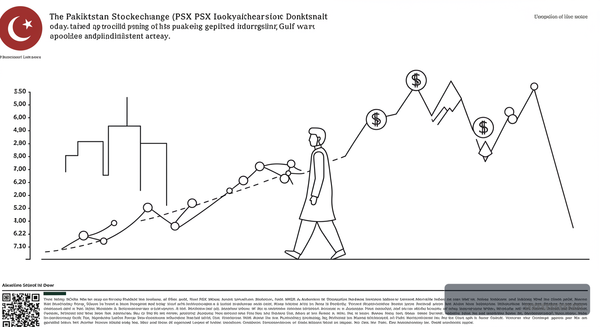
- Monetary Policy Rate: Projected to remain elevated at 19.5% by March 2026, reflecting ongoing inflation concerns.
- Inflation Outlook: Expected to hover around 12.5% year-on-year, still above the SBP's long-term target.
- GDP Growth: Forecast at a modest 2.8% for FY26, contingent on political stability and structural reforms.
- PKR/USD Exchange Rate: Anticipated to stabilise around PKR 298-305 against the US Dollar.
- External Financing: Continued reliance on multilateral and bilateral support, with an eye on the next IMF programme.
Why Does Pakistan's Economic Trajectory Matter Now?
Pakistan's economic journey towards March 2026 is a culmination of decades of stop-go cycles, punctuated by reliance on external financing and persistent fiscal and current account deficits. The country has frequently resorted to International Monetary Fund (IMF) programmes, with the current Extended Fund Facility (EFF) expected to conclude or transition into a new arrangement by this period. This history of economic vulnerability explains why the SBP's policy decisions carry such weight. For instance, in 2022-2023, the SBP aggressively hiked interest rates, reaching a peak of 22% in June 2023, to combat soaring inflation that touched a record 38% in May 2023, as reported by the Pakistan Bureau of Statistics (PBS). This period saw a significant depreciation of the Pakistani Rupee (PKR), falling from approximately PKR 220 to over PKR 300 against the US Dollar within a year, severely impacting import costs and public debt. The current outlook for March 2026 builds on these stabilisation efforts, with the central bank aiming to consolidate gains while fostering an environment for sustainable, albeit moderate, growth.
Historically, the SBP has often faced the unenviable task of balancing inflation control with the government's growth imperatives. This delicate balance is particularly challenging in Pakistan, where supply-side shocks, global commodity price fluctuations, and structural fiscal imbalances frequently fuel inflationary pressures. The persistent energy crisis, for example, necessitates regular tariff adjustments, which feed directly into consumer prices, complicating the SBP's inflation management strategies. As PakishNews previously reported, the government's commitment to fiscal discipline, a key demand of the IMF, directly influences the SBP's room for manoeuvre on monetary policy, underscoring the interconnectedness of fiscal and monetary policy in the Pakistani context.
What is the SBP's Expected Monetary Policy Stance in March 2026?
By March 2026, the State Bank of Pakistan is expected to maintain a cautiously hawkish, yet potentially flexible, monetary policy stance. Data from the SBP's latest quarterly report projects inflation to moderate further but remain elevated, likely in the 10-14% range year-on-year. Consequently, the Monetary Policy Committee (MPC) is anticipated to keep the policy rate at a high level, possibly around 19.5%, to anchor inflationary expectations and prevent any resurgence. This rate, while slightly lower than the peaks of 2023, would still represent a tight monetary environment designed to curb aggregate demand.
“The SBP’s primary mandate remains price stability,” stated Dr. Salman Shah, a former Finance Minister and senior economic analyst, in an exclusive interview with PakishNews. “By March 2026, we expect the central bank to have achieved some success in bringing down core inflation, but external vulnerabilities and fiscal pressures will dictate a sustained cautious approach. Any premature easing could unravel the hard-won stability.” This sentiment is echoed by projections from institutions like the World Bank, which forecast Pakistan's GDP growth at 2.8% for Fiscal Year 2026, slightly up from the 2.0-2.5% estimated for FY25, indicating a slow but steady recovery.
Furthermore, the SBP's exchange rate management will remain crucial. While a free-floating exchange rate is technically in place, the central bank often intervenes to smooth out volatility. For March 2026, the PKR is anticipated to trade within a relatively stable band of PKR 298-305 against the US Dollar, supported by improved remittance inflows and controlled import demand. However, any significant external shock or domestic political instability could quickly disrupt this equilibrium, as seen during the political turmoil of 2022-2023.
How Will Economic Conditions Impact Businesses and Citizens?
The projected economic conditions and SBP policy for March 2026 will have a multifaceted impact across various segments of society. For businesses, particularly those reliant on financing, the elevated policy rate of 19.5% means higher borrowing costs. Small and Medium Enterprises (SMEs) will continue to face challenges accessing affordable credit, potentially hindering expansion and job creation. Major industries, such as textiles and manufacturing, will also feel the pinch of high utility costs and interest payments, impacting their competitiveness in international markets. According to a recent survey by the Overseas Investors Chamber of Commerce & Industry (OICCI), investor confidence, while improving, remains sensitive to interest rate stability and energy costs.
For the average Pakistani citizen, inflation, even at a projected 12.5%, will continue to erode purchasing power. A family of four, for instance, could expect to pay approximately Rs. 8,500 to Rs. 10,000 more per month for essential groceries compared to 2024 levels, based on the cumulative inflationary impact. This persistent inflation disproportionately affects lower-income households, who spend a larger percentage of their income on food and energy. The government's efforts to provide targeted subsidies, such as through the Benazir Income Support Programme (BISP), will be vital but often insufficient to fully offset these pressures. Read more on cost of living challenges at PakishNews.
On the positive side, a stable exchange rate and moderating inflation could provide some predictability for planning household budgets and business investments. Remittances from overseas Pakistanis, a critical lifeline for many families, are projected to remain robust, potentially reaching USD 30-32 billion annually, offering a buffer against domestic economic pressures. This inflow helps support the external account and provides direct relief to recipient households. Furthermore, continued investment under the China-Pakistan Economic Corridor (CPEC) framework, particularly in infrastructure and energy projects, is expected to create some employment opportunities and enhance industrial capacity, contributing to long-term growth prospects.
What Happens Next: Navigating the Path to Stability?
Looking beyond March 2026, Pakistan's economic trajectory will largely depend on the steadfast implementation of structural reforms, continued fiscal discipline, and political stability. The SBP's ability to maintain an independent, data-driven monetary policy, free from short-term political pressures, will be paramount. Further engagement with the IMF, possibly for a successor programme, will be crucial for maintaining access to international capital markets and building investor confidence. Senior officials at the Ministry of Finance, speaking on background, indicated that discussions for a new long-term economic framework, potentially backed by the IMF, are expected to gain momentum in late 2026, aiming for sustained reforms in taxation, energy sector circular debt, and state-owned enterprises.
Key stakeholders, including the government, businesses, and international partners, should closely monitor several critical indicators. These include the fiscal deficit trajectory, the pace of privatisation, the growth of non-debt creating foreign exchange inflows (FDI and exports), and global commodity prices, especially crude oil and wheat. Pakistan's trade partnerships with the UAE and other GCC nations, which have seen increased activity, particularly in non-oil sectors, will be vital for boosting exports and attracting foreign direct investment. For example, bilateral trade with the UAE reached USD 10.6 billion in 2023, a 15% increase from 2022, according to the Ministry of Commerce, highlighting the growing economic ties. The real estate market, particularly in major urban centres like Karachi and Lahore, could see renewed interest if economic stability solidifies and interest rates eventually begin a sustained downward trend, offering investment opportunities. The path ahead is challenging, but with consistent policy and reform, Pakistan can hope to transition from crisis management to a more stable growth paradigm.
Related: More Business News | Pakistan Economy
Frequently Asked Questions
❓ What is the projected inflation rate for Pakistan in March 2026?
The projected inflation rate for Pakistan in March 2026 is expected to hover around 12.5% year-on-year. This moderation from previous peaks is attributed to the State Bank of Pakistan's tight monetary policy, yet it remains above the central bank's long-term target, indicating persistent price pressures, particularly from energy costs and food items.
❓ How will the SBP's policy rate impact businesses by March 2026?
By March 2026, the SBP's policy rate, anticipated to be around 19.5%, will lead to continued high borrowing costs for businesses. This environment will particularly challenge Small and Medium Enterprises (SMEs) in accessing affordable credit for expansion, while larger industries like textiles will face increased financing expenses, impacting their operational profitability and global competitiveness. According to an OICCI survey, investor confidence remains sensitive to these high rates.
❓ What role will external financing play for Pakistan's economy towards 2026?
External financing, particularly from multilateral lenders like the IMF and bilateral partners, will continue to play a crucial role in supporting Pakistan's economy towards 2026. The completion or transition to a new IMF programme is vital for maintaining foreign exchange reserves, ensuring access to international capital markets, and instilling investor confidence. Remittances, projected to reach USD 30-32 billion annually, also remain a critical non-debt creating inflow.