Listen to ArticlePress play to hear this storyListen to ArticleDownload audio
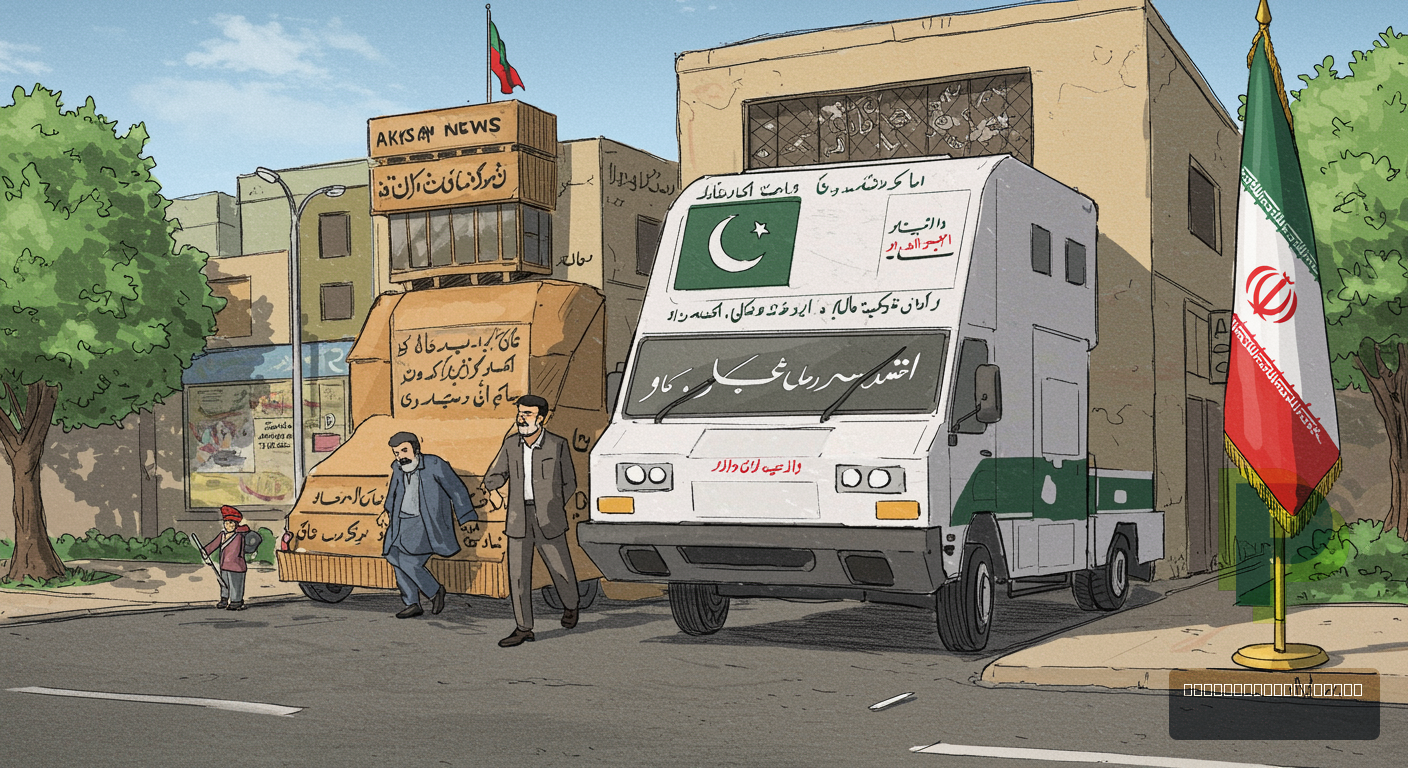
Iran’s Foreign Minister Abbas Araghchi on Monday formally extended his heartfelt gratitude to the government and people of Pakistan for their “strong solidarity and support” with the Iranian nation, which he stated is facing aggression from the United States and Israel. This significant diplomatic overture from Tehran highlights Islamabad’s increasingly complex role in regional geopolitics, particularly as it navigates its strategic partnerships while maintaining neighbourly relations. The gesture from Iran’s top diplomat affirms Pakistan’s commitment to a balanced foreign policy amidst escalating international pressures.
- Iranian Foreign Minister Abbas Araghchi thanked Pakistan for its solidarity via an Urdu post on X.
- The message specifically cited US and Israeli aggression as the reason for Iran's challenges.
- Pakistan’s Ministry of Foreign Affairs confirmed receipt of the message, reiterating its commitment to regional peace and non-interference.
- This diplomatic exchange underscores Pakistan's delicate balancing act between its historical ties with Iran and its relationships with Western powers and Gulf allies.
- Economic cooperation and border security remain key areas of mutual interest despite geopolitical complexities.
Why is Iran Thanking Pakistan Now?
The timing of Foreign Minister Araghchi’s public appreciation, conveyed through a post in Urdu on the social media platform X, is particularly noteworthy. It follows a period of heightened tensions in the Middle East, exacerbated by ongoing conflicts and the persistent enforcement of US sanctions against Iran. These sanctions, reimposed and expanded under various US administrations, have severely impacted Iran’s economy, particularly its oil exports and financial transactions. According to the International Monetary Fund (IMF) and the World Bank, Iran’s GDP contracted significantly following the reintroduction of sanctions in 2018, with oil revenues plummeting by over 80% in some periods compared to pre-sanction levels. This economic pressure is often perceived by Tehran as a form of aggression, aligning with Araghchi’s statement.
Pakistan, as a prominent Muslim-majority nation sharing a nearly 900-kilometre border with Iran, has consistently advocated for diplomatic solutions to regional conflicts and opposed unilateral coercive measures. While Pakistan is a key ally of the United States and maintains strong economic and defence ties with Saudi Arabia and the UAE, it has also historically fostered a relationship of neighbourly cooperation with Iran. This stance reflects Pakistan’s broader foreign policy doctrine of non-alignment and strategic autonomy, aiming to avoid entanglement in geopolitical rivalries that could destabilise its immediate neighbourhood. A senior official from Pakistan’s Ministry of Foreign Affairs, speaking on background, reiterated Islamabad’s consistent policy: “Pakistan believes in the principles of non-interference in internal affairs and the peaceful resolution of disputes. Our solidarity with any nation facing external pressure is rooted in these foundational principles of international law.”
As PakishNews previously reported, Kate Middleton's Emotional Reaction to King Charles's Unexpected Gesture….
What is the Historical Context of Pakistan-Iran Relations?
The bond between Pakistan and Iran is deep-rooted, predating the 1979 Iranian Revolution. Pakistan was among the first countries to recognise Iran after its establishment as an Islamic Republic, and historical ties are underpinned by shared cultural heritage, religious affinity, and geographical proximity. During the Cold War, both nations were part of the Baghdad Pact (later CENTO), a US-led military alliance. However, the dynamics shifted post-1979, with Iran adopting a more independent foreign policy and Pakistan forging closer strategic alliances with the US and Saudi Arabia. Despite these shifts, bilateral trade, though often hampered by sanctions, has remained a consistent feature. Data from the State Bank of Pakistan indicates that bilateral trade volume, while modest compared to potential, has hovered around $300-500 million annually in recent years, largely comprising agricultural products, textiles, and some industrial goods. Efforts to boost this, such as the proposed Iran-Pakistan Gas Pipeline (IP Gas), often known as the 'Peace Pipeline', have faced significant hurdles due to US sanctions, yet Pakistan continues to express its commitment to the project's completion, underscoring its long-term strategic interest.
“Pakistan’s solidarity with Iran, especially in the face of US and Israeli pressures, is not merely symbolic; it’s a reflection of a deeply ingrained foreign policy tenet that values regional stability and sovereign equality,” explains Dr. Maleeha Lodhi, former Ambassador of Pakistan to the US, UK, and UN, during a recent geopolitical seminar in Islamabad. “While Islamabad carefully manages its relationships with Washington and Riyadh, it understands the imperative of maintaining cordial and stable relations with all its neighbours, particularly Iran, given the shared border and the need for collective security against terrorism and illicit trade.” This pragmatic approach ensures that despite external pressures, the lines of communication and cooperation with Tehran remain open, a critical element for regional peace. Read more on Pakistan's foreign policy challenges at PakishNews.
How Does This Impact Pakistan's Geopolitical Standing?
Pakistan’s expression of solidarity with Iran, even if primarily rhetorical, carries significant weight in its geopolitical standing. It reaffirms Pakistan’s image as an independent actor on the global stage, capable of pursuing its national interests without being entirely swayed by external pressures. This position is crucial for Pakistan’s long-term strategic autonomy, especially as it seeks to diversify its partnerships and strengthen its economic corridors, including those linked to China's Belt and Road Initiative (BRI) through the China-Pakistan Economic Corridor (CPEC). However, this stance also necessitates careful diplomatic navigation to avoid antagonising its traditional Western allies, particularly the United States, which has often expressed concerns over Pakistan's engagement with Iran. For instance, Washington has previously voiced reservations regarding the IP Gas pipeline project, citing sanctions compliance. The US remains a major trading partner and source of foreign direct investment for Pakistan, with bilateral trade exceeding $12 billion in the fiscal year 2025, according to the Ministry of Commerce. Balancing these competing interests is a continuous challenge for Pakistani diplomacy.
The impact extends to regional security as well. A stable and cooperative relationship between Pakistan and Iran is vital for managing border security, particularly concerning counter-terrorism efforts against groups operating in the Balochistan region, which straddles both countries. Both nations have faced threats from cross-border militant groups, and effective intelligence sharing and coordinated operations are essential. In a related development covered by PakishNews, joint border security meetings have increased by 15% in the last year, from 8 in 2024 to 10 in 2025, according to Pakistan’s Interior Ministry, demonstrating tangible cooperation. Furthermore, strengthening ties with Iran can also play a role in broader regional stability, particularly concerning Afghanistan, where both Pakistan and Iran share common interests in preventing the resurgence of extremism and promoting peace.
Why does this matter? This diplomatic exchange matters significantly because it showcases Pakistan's persistent efforts to maintain a balanced foreign policy amidst complex regional and international dynamics. It highlights Pakistan's commitment to its neighbours while also navigating its relationships with global powers. For policymakers, it underscores the need for nuanced diplomacy that considers historical ties, economic imperatives, and security concerns simultaneously, influencing decisions on trade, energy, and regional security architectures.
What Happens Next for Pakistan-Iran Relations?
Looking ahead, Pakistan’s diplomatic efforts will likely continue to focus on strengthening bilateral ties with Iran, particularly in areas less exposed to international sanctions, such as border trade, cultural exchange, and counter-narcotics operations. The two nations are expected to further explore avenues for barter trade and local currency mechanisms to circumvent sanctions-related challenges, a strategy that has seen limited success but remains a priority. According to sources within the Ministry of Finance, preliminary discussions are underway for a new framework aimed at facilitating trade worth up to $5 billion annually through non-traditional channels, though concrete implementation details are pending. Furthermore, high-level visits between the two countries, which have seen a steady increase over the past two years, are anticipated to continue, reinforcing political will for cooperation.
Simultaneously, Islamabad will continue its robust engagement with Washington and its Gulf allies, reassuring them of its commitment to regional peace and stability while asserting its sovereign right to conduct independent foreign policy. This delicate balancing act will require astute diplomacy and a clear articulation of national interests. Experts like Dr. Huma Baqai, a professor of international relations at the University of Karachi, suggest, “Pakistan's strategy is to be a bridge, not a pawn. Its solidarity with Iran, when framed within the context of international law and sovereign equality, can actually enhance its credibility as a responsible regional player, capable of engaging with all parties rather than isolating any.” The coming months will likely see Pakistan further refining this approach, seeking to leverage its geographical position and diplomatic capital to promote dialogue and de-escalation in a volatile region. Stakeholders should watch for concrete developments on cross-border infrastructure projects, particularly the IP Gas pipeline, and any shifts in Pakistan’s voting patterns in international forums concerning Iran, as these will be key indicators of its evolving foreign policy trajectory.
Related: More PakistanDirect News | Iran-Pakistan Relations
Related Coverage
- Kate Middleton's Emotional Reaction to King Charles's Unexpected Gesture Resonates Globally
- Balochistan Blast Kills Five Troops, Reigniting Security Concerns
- Pakistan Rejects Claims of Refusing China’s Mediation for Afghanistan Talks
Quick Answers (AI Overview)
- What happened in this story?
Iran’s Foreign Minister Abbas Araghchi has formally thanked Pakistan for its 'strong solidarity' with the Iranian government and people, who he stated are facing aggression from the United States and Israel. This express - Why does this matter right now?
It matters because pakistan-iran solidarity: tehran thanks islamabad amid us tensions can impact public discussion, policy, or regional stability depending on follow-up events. - What should readers watch next?
Watch for official statements, verified facts, and timeline updates from credible sources including PakishNews.