Islamabad has unequivocally stated its intention to maintain its current policy towards Afghanistan, signaling continuity in its strategic engagement with the neighbouring nation. This steadfast approach, reiterated by officials at the Ministry of Foreign Affairs (MoFA) in late February 2026, comes amidst a complex regional security landscape and ongoing international efforts to address the humanitarian situation in Afghanistan. The policy framework, largely established following the Taliban's return to power in August 2021, prioritises Pakistan's national security interests, economic stability, and regional connectivity.
- Policy Continuity: Pakistan reaffirms its existing policy towards Afghanistan, focusing on border security, trade, and humanitarian assistance.
- Key Pillars: Non-interference in internal Afghan affairs, demand for counter-terrorism action, and promotion of regional economic connectivity.
- Security Imperative: Persistent threats from Tehrik-i-Taliban Pakistan (TTP) and other militant groups remain a primary driver for the policy.
- Economic Engagement: Efforts to boost bilateral and transit trade, despite logistical and political hurdles, are central to Islamabad's strategy.
- Humanitarian Focus: Continued facilitation of aid and management of undocumented Afghan nationals are critical components.
Why Does Pakistan Maintain This Consistent Policy Towards Afghanistan?
The decision to maintain the current policy is rooted in a multifaceted assessment of geopolitical realities, historical ties, and immediate national security imperatives. Pakistan shares a 2,670-kilometre-long porous border with Afghanistan, making stability in the latter directly impactful on the former. Historically, Pakistan has been deeply affected by conflicts in Afghanistan, particularly the influx of refugees and the spillover of militancy. The policy, therefore, seeks to mitigate these risks while fostering a stable, if not always cooperative, relationship with the de facto administration in Kabul.
Since August 2021, when the Taliban assumed control, Pakistan adopted a pragmatic approach that balanced engagement with caution. While Islamabad has consistently called for an inclusive government in Kabul and respect for human rights, it has also prioritised dialogue and maintaining open channels of communication. This stance contrasts with many Western nations that have largely isolated the interim Afghan government. According to a senior diplomat at Pakistan's Ministry of Foreign Affairs, speaking on condition of anonymity due to the sensitivity of ongoing diplomatic efforts in early March 2026, “Our policy is not about endorsing the interim government, but about managing a complex neighbourhood reality. We cannot afford an ungoverned space on our western border, nor can we ignore the humanitarian plight of millions.” This perspective underscores the realpolitik guiding Islamabad's decisions, where the absence of formal recognition does not preclude functional engagement.
As PakishNews previously reported, Pakistan PM Heads to Saudi Arabia After Iran Talks.
Background and Context of Pakistan-Afghanistan Relations
The relationship between Pakistan and Afghanistan has been historically complex, marked by periods of cooperation and profound mistrust. Post-9/11, Pakistan became a frontline state in the War on Terror, a role that often put it at odds with elements within Afghanistan and complicated its own internal security situation. The withdrawal of international forces and the subsequent collapse of the Ashraf Ghani government in August 2021 presented Pakistan with a new set of challenges and opportunities.
Initially, there was a period of cautious optimism in some Pakistani quarters regarding the potential for improved border security following the Taliban's takeover, predicated on the expectation that a Pashtun-led government would control militant groups, especially the TTP. However, this optimism quickly waned as cross-border attacks, particularly by the TTP, saw a significant surge. Data from the Pakistan Institute for Peace Studies (PIPS) indicates that militant attacks in Pakistan increased by approximately 58% in 2023 compared to 2022, with a substantial portion emanating from Afghan soil. This rise, particularly in Khyber Pakhtunkhwa (KPK) and Balochistan, has put immense pressure on Pakistan's security apparatus and directly challenged the efficacy of the existing policy. Read more on Pakistan's security challenges at PakishNews.
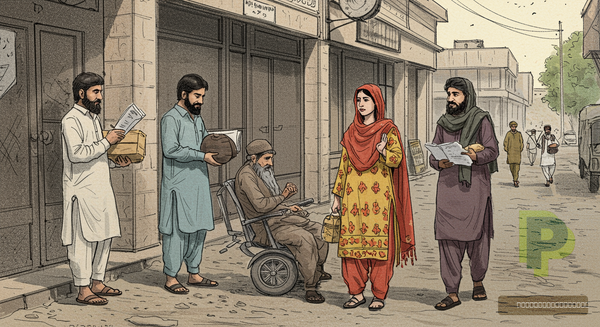
Furthermore, the issue of undocumented Afghan nationals residing in Pakistan has been a persistent point of contention. As of late 2023, Pakistan initiated a phased repatriation plan for over 1.7 million undocumented foreign nationals, predominantly Afghans. This move, while framed as a domestic policy decision for national security and economic reasons, has added another layer of complexity to bilateral relations, drawing criticism from humanitarian organisations and the interim Afghan government. The Ministry of Interior reported that over 500,000 undocumented Afghans had voluntarily returned or been repatriated by February 2024, with the process continuing in a phased manner.
Expert Analysis on Policy Implications
Security analysts and foreign policy experts largely concur that Pakistan's maintained policy is a pragmatic necessity rather than an ideal choice. Dr. Ayesha Siddiqa, a renowned defence analyst based in Islamabad, noted in a recent seminar organised by the Institute of Strategic Studies Islamabad (ISSI) in February 2026, "Pakistan's current policy is a delicate balancing act. It seeks to prevent a complete breakdown of relations, which could lead to greater instability, while simultaneously pressuring Kabul on counter-terrorism. The challenge lies in the limited leverage Pakistan possesses over an ideologically driven regime that prioritises internal consolidation over external concerns."
Echoing this sentiment, Ambassador (Retd.) Abdul Basit, a former Pakistani diplomat, highlighted the economic dimension in an interview with Geo News in mid-February 2026. "Despite the security challenges, cross-border trade and transit trade remain vital for both economies. In the fiscal year 2023-24, bilateral trade, while below its potential, still stood at approximately USD 1.5 billion. Pakistan's policy aims to keep these economic arteries open, not just for its own benefit but also to prevent further economic collapse in Afghanistan, which would exacerbate humanitarian and refugee crises." This demonstrates a nuanced understanding that economic stability in Afghanistan is indirectly linked to Pakistan's own security and economic interests.
Furthermore, the policy is influenced by Pakistan's broader regional connectivity agenda, particularly the China-Pakistan Economic Corridor (CPEC). Connecting Afghanistan to CPEC via initiatives like the Peshawar-Kabul Motorway and the Trans-Afghan Railway project is a long-term strategic goal, which necessitates a degree of stability and working relations with Kabul. The Ministry of Planning, Development & Special Initiatives has continuously highlighted the potential of Afghanistan as a transit hub for trade with Central Asian Republics, projecting an increase in regional trade volume by 25% over the next five years if stability is achieved. In a related development covered by PakishNews, CPEC's expansion into regional connectivity is a key government priority.
Impact Assessment: Who is Affected and How?
The continuity of Pakistan's Afghanistan policy has far-reaching impacts on various stakeholders, both domestically and regionally.
- Pakistan's Security Apparatus: The Pakistan Army and other law enforcement agencies continue to bear the brunt of cross-border terrorism. Despite diplomatic efforts, the TTP threat necessitates sustained counter-terrorism operations along the Durand Line, deploying significant resources. This also impacts local communities in border regions, which face heightened security risks and displacement.
- Afghan Citizens: Millions of Afghans, both those residing in Pakistan and those within Afghanistan, are directly affected. Pakistan's humanitarian assistance, albeit limited, provides a lifeline. However, the repatriation drive for undocumented individuals has created distress for many, raising questions about their future and safety.
- Cross-Border Traders and Businesses: While trade continues, it faces persistent disruptions due to border closures, security concerns, and bureaucratic hurdles. Businesses involved in transit trade, particularly those dealing with Central Asian markets, experience uncertainty, impacting their profitability and growth potential.
- Regional Diplomacy: Pakistan's policy shapes its engagement with other regional players, including Iran, China, and Central Asian states, all of whom share concerns about Afghan stability. Pakistan often serves as a key interlocutor between the international community and the interim Afghan government, leveraging its unique position.
Why is this matter important for Pakistan? Pakistan's national security and economic prosperity are inextricably linked to a stable Afghanistan. An unstable Afghanistan, plagued by conflict or extremist groups, inevitably leads to cross-border terrorism, refugee influxes, and disruptions to regional trade and connectivity initiatives. Therefore, maintaining a coherent, albeit challenging, policy is crucial for safeguarding Pakistan's core interests and contributing to broader regional stability, despite the inherent difficulties in dealing with the current Afghan administration.
What Happens Next?
Looking ahead, Pakistan's policy on Afghanistan is likely to remain under constant review, adapting to evolving realities on the ground. Key areas to watch include:
- Counter-Terrorism Cooperation: The effectiveness of Pakistan's diplomatic pressure on the interim Afghan government to curb TTP activities will be paramount. Any significant shift in TTP's operational capacity or a demonstrable commitment from Kabul to address this issue could influence future policy adjustments.
- Border Management: Pakistan's efforts to complete border fencing along the Durand Line and enhance surveillance capabilities will continue. This physical barrier, currently over 95% complete as reported by the Inter-Services Public Relations (ISPR) in January 2026, is a cornerstone of its security strategy.
- Humanitarian and Refugee Policy: The phased repatriation of undocumented Afghans will continue, but Islamabad will need to navigate international scrutiny and humanitarian concerns. Future policy may involve exploring mechanisms for legal residency or work permits for certain categories of Afghans.
- Regional Connectivity Initiatives: Pakistan will continue to push for the operationalisation of trade routes and infrastructure projects connecting to Central Asia, seeing Afghanistan as a crucial land bridge. The success of these initiatives will depend heavily on the security situation and political willingness in Kabul.
- International Engagement: Pakistan will likely continue to advocate for international engagement with Afghanistan, urging a balanced approach that addresses humanitarian needs without compromising on principles of human rights and inclusive governance. Islamabad will also seek to coordinate its policy more closely with other regional powers, especially China and Iran.
The continuity of Pakistan's Afghanistan policy underscores a strategic patience and a pragmatic recognition of its limited options in shaping its neighbour's internal dynamics. The focus will remain on managing the spillover effects, safeguarding national interests, and leveraging engagement for stability, even as the challenges persist.
Related: More Pakistan News | Afghanistan