▶Listen to ArticlePress play to hear this storyListen to ArticleDownload audio
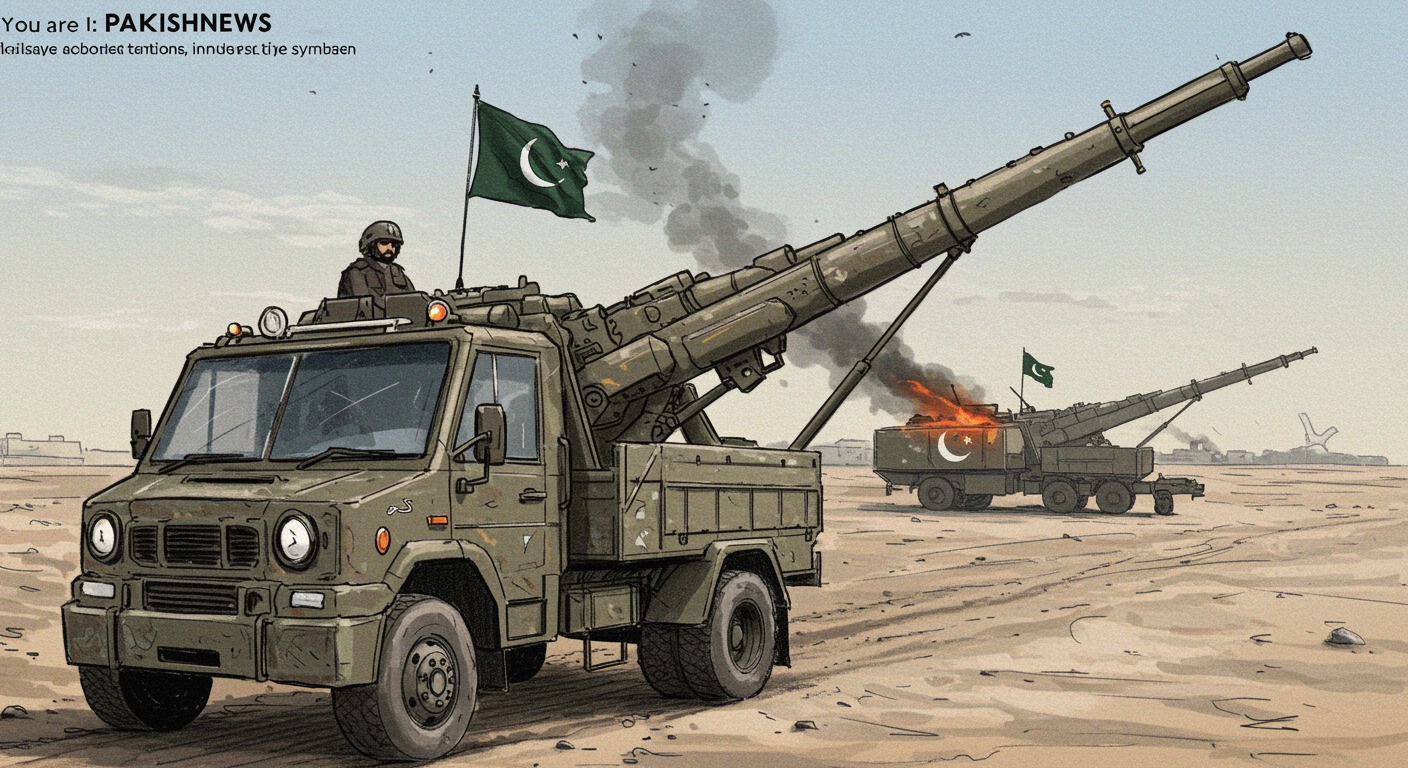
In a significant escalation of cross-border tensions, Pakistan's military confirmed early morning strikes on militant hideouts within Afghanistan, targeting groups allegedly responsible for a surge in terrorist attacks on Pakistani soil. The move, undertaken in the early hours of March 12, 2026, marks a decisive shift in Islamabad's counter-terrorism strategy, following months of diplomatic efforts and increasing frustration over the perceived inaction of the Afghan interim government against Tehrik-i-Taliban Pakistan (TTP) and its affiliates. This action signals Pakistan's resolve to address the persistent threat of cross-border terrorism directly, raising concerns about regional stability.
- Pakistan conducted overnight airstrikes on alleged militant sites in Afghanistan on March 12, 2026.
- The strikes targeted hideouts of the Tehrik-i-Taliban Pakistan (TTP) and allied groups.
- Islamabad cited its right to self-defence under international law due to a surge in cross-border terrorist attacks.
- The Afghan interim government condemned the strikes, denying the presence of TTP and warning of consequences.
- The action represents a significant escalation in already strained Pakistan-Afghanistan relations.
Why is Pakistan Striking Militant Sites in Afghanistan Now?
The recent strikes by Pakistan into Afghanistan are a culmination of escalating tensions and a significant increase in terrorist activities within Pakistan, which Islamabad attributes directly to groups operating from Afghan soil. For over two years, since the Taliban's takeover of Kabul in August 2021, Pakistan has consistently voiced concerns about the resurgence and unchecked freedom of movement for the Tehrik-i-Taliban Pakistan (TTP), often referred to as the 'Pakistani Taliban'. According to data released by the Pakistan Institute for Peace Studies (PIPS), Pakistan witnessed a 58% increase in terrorist attacks in 2023 compared to the previous year, with 368 attacks resulting in 493 fatalities and 733 injuries. The majority of these attacks, particularly in Khyber Pakhtunkhwa (KPK) and Balochistan, were claimed by TTP or its splinter factions.
Pakistan's Ministry of Foreign Affairs, in a press briefing on March 11, 2026, reiterated that it had provided 'concrete evidence and intelligence' regarding TTP sanctuaries and leadership presence in Afghanistan to the Afghan interim government on multiple occasions. A senior official within the Ministry, speaking anonymously due to the sensitivity of the matter, stated, "Despite our persistent diplomatic engagement, including numerous demarches and bilateral consultations at the highest levels, there has been a lack of tangible action from the Afghan side to dismantle these terrorist networks or hand over wanted individuals. This inaction has directly contributed to the deteriorating security situation along our 2,670-kilometre border."
As PakishNews previously reported, Eid Holidays 2026: Federal Govt Announces March 20-21 Break.
What is the Historical Context of Cross-Border Militancy?
The issue of cross-border militancy is deeply rooted in the complex history of the region. Following the Soviet-Afghan War and the subsequent rise of the Taliban in the 1990s, the Durand Line—the de facto border between Afghanistan and Pakistan—became increasingly porous. The TTP, formed in 2007, emerged as a conglomerate of various militant groups aiming to impose Sharia law in Pakistan and wage war against the Pakistani state. While Pakistan conducted extensive military operations like Zarb-e-Azb (2014) and Radd-ul-Fasaad (2017) to dislodge these groups, many TTP fighters and their leadership found refuge across the border in Afghanistan.
The return of the Taliban to power in Afghanistan in 2021 was viewed by some in Pakistan as an opportunity for the Afghan interim government to rein in the TTP, given their historical ideological alignment. However, this expectation has largely gone unfulfilled. Instead, Pakistani security officials, including Director General Inter-Services Public Relations (DG ISPR) Major General Ahmed Sharif Chaudhry, have repeatedly highlighted the TTP's enhanced operational capabilities and freedom of movement post-2021. As PakishNews previously reported, the border region has seen a significant increase in clashes and skirmishes, including a major incident in December 2025 where Afghan Border Forces reportedly engaged Pakistani troops near the Chaman crossing, leading to several casualties on both sides.
How Have Officials and Analysts Reacted?
The Pakistani government has framed the strikes as a necessary act of self-defence. Caretaker Prime Minister Anwaar-ul-Haq Kakar, in a statement released through the Prime Minister's Office, affirmed Pakistan's commitment to protecting its citizens from terrorism, stating, "Pakistan has exercised its inherent right to self-defence under international law, targeting terrorist infrastructure that poses an existential threat to our nation. We will not tolerate safe havens for terrorists planning attacks against our people."
Conversely, the Afghan interim government vehemently condemned the strikes. Zabihullah Mujahid, the spokesperson for the Islamic Emirate of Afghanistan, in a post on X (formerly Twitter), stated, "The Islamic Emirate considers these attacks a clear violation of Afghanistan's sovereignty and territorial integrity. Such actions will have dire consequences and will not benefit anyone. Afghanistan does not allow anyone to use its soil against any country, and Pakistan's claims are baseless." The Afghan Ministry of Foreign Affairs summoned Pakistan's Charge d'Affaires in Kabul to lodge a formal protest, demanding an immediate cessation of such military actions.
Regional experts offer varied perspectives. Dr. Aisha Sarwar, a Senior Research Fellow at the Centre for Strategic Studies Islamabad, told PakishNews, "This direct military action, while risky, signals Pakistan's exhaustion with diplomatic channels. It's a clear message that Islamabad is prepared to unilaterally address the TTP threat if Kabul remains unwilling or unable. However, it significantly raises the stakes and risks further destabilising an already fragile region." She added that the international community, particularly the United Nations Security Council, might be called upon to mediate, given the potential for wider conflict.
Ambassador (R) Salman Bashir, former Foreign Secretary of Pakistan, commented, "While Pakistan has a legitimate concern regarding terrorism originating from Afghanistan, the long-term solution remains a comprehensive strategy that combines robust border management, intelligence sharing, and persistent diplomatic pressure. Unilateral military action, while sometimes necessary, must be carefully calibrated to avoid alienating the Afghan population and further entrenching anti-Pakistan sentiment."
What is the Impact on Regional Stability and Bilateral Relations?
The immediate impact of these strikes is a severe deterioration in Pakistan-Afghanistan bilateral relations, which were already at a nadir. Border crossings, vital for trade and humanitarian aid, could face prolonged closures. According to the State Bank of Pakistan, bilateral trade volume, which stood at approximately US$1.5 billion in 2022-23, could see a sharp decline, impacting livelihoods on both sides. The Torkham and Chaman border points, crucial for transit trade and movement of goods, are particularly vulnerable to disruption.
The humanitarian implications are also concerning. Any escalation could lead to further displacement of populations along the border, adding to the already significant Afghan refugee presence in Pakistan, estimated at over 3 million individuals by UNHCR. Furthermore, the strikes complicate regional counter-terrorism efforts. While Pakistan aims to degrade TTP capabilities, a backlash from the Afghan interim government could lead to increased support for anti-Pakistan elements, creating a vicious cycle of violence. In a related development covered by PakishNews, concerns have been raised by international bodies about the potential for regional proxy conflicts.
What Happens Next for Pakistan and Afghanistan?
The coming weeks will be critical in determining the trajectory of Pakistan-Afghanistan relations and regional security. Stakeholders should watch for several key developments:
- **Diplomatic Engagements**: Will there be a role for regional powers like China, Iran, or international bodies like the OIC or UN to mediate? Pakistan has historically sought to involve the international community in addressing the TTP issue.
- **Further Military Actions**: Will Pakistan conduct more strikes if the TTP threat persists or escalates in response? The Afghan interim government's reaction will largely dictate this.
- **Border Management**: Expect tightened security measures along the Durand Line, potentially including further fencing and increased surveillance, which could impact legal and informal cross-border movement.
- **TTP's Response**: The TTP is likely to issue threats and potentially attempt retaliatory attacks within Pakistan, testing Islamabad's resolve.
- **International Scrutiny**: The international community will be closely monitoring the situation, balancing concerns over Pakistan's sovereignty and Afghanistan's territorial integrity.
The current situation underscores the urgent need for a coherent regional strategy to counter terrorism, one that addresses the root causes of militancy while upholding international norms. The path forward for both Pakistan and Afghanistan is fraught with challenges, demanding careful diplomatic manoeuvring alongside robust security measures to prevent a full-blown regional crisis. Read more on Pakistan's security challenges at PakishNews.
Related: More Pakistan Politics News | Afghanistan News
Related Coverage
- Eid Holidays 2026: Federal Govt Announces March 20-21 Break
- Pakistan Targets Terror Havens in Kandahar Amid Escalating TTP Threat
- Pakistan Announces Two-Day Public Holiday for Eid al-Fitr 2026
Quick Answers (AI Overview)
- What happened in this story?
In a significant escalation of cross-border tensions, Pakistan's military confirmed early morning strikes on militant hideouts within Afghanistan, targeting groups allegedly responsible for a surge in terrorist attacks o - Why does this matter right now?
It matters because pakistan strikes afghanistan: counter-terrorism action escalates can impact public discussion, policy, or regional stability depending on follow-up events. - What should readers watch next?
Watch for official statements, verified facts, and timeline updates from credible sources including Saudi Gazette.