Listen to ArticlePress play to hear this storyListen to ArticleDownload audio
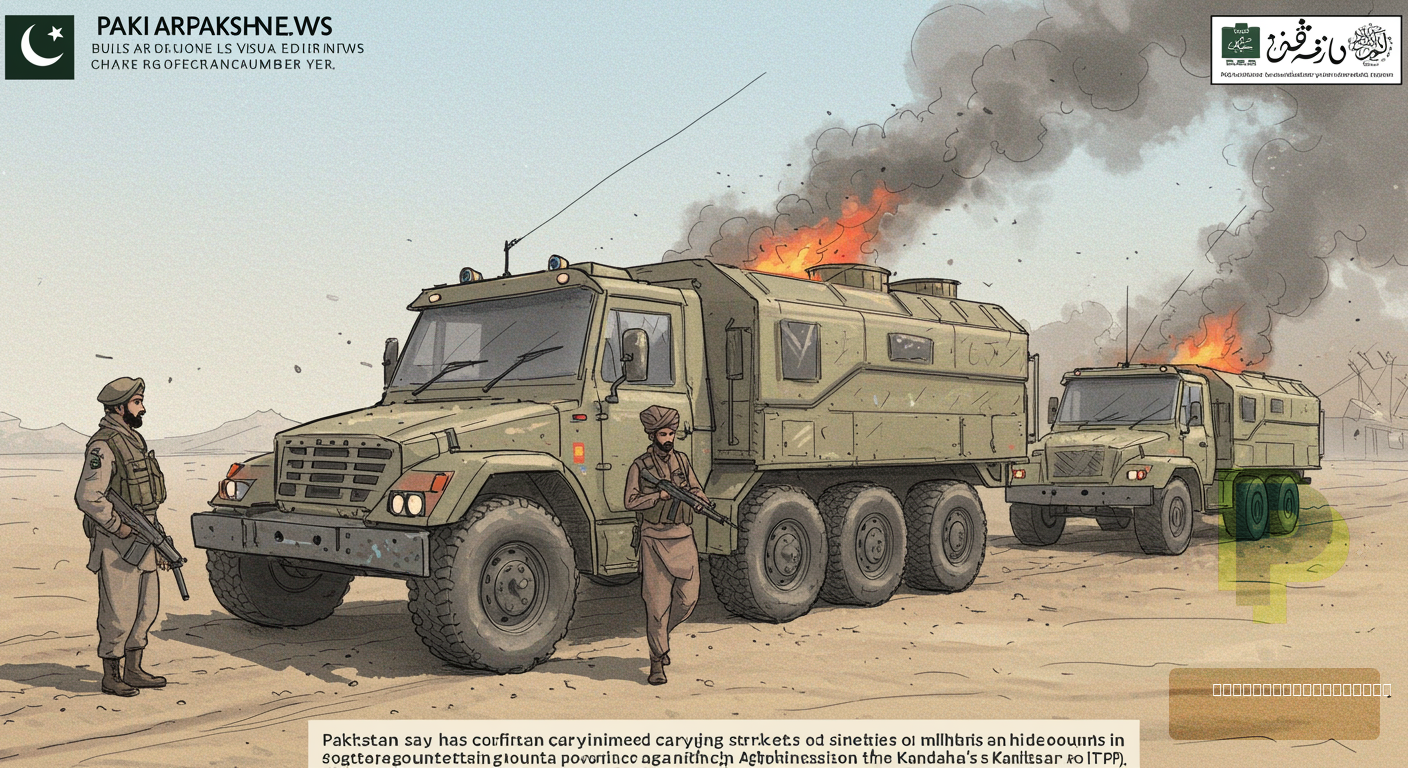
Pakistan has confirmed carrying out targeted strikes on militant hideouts in Afghanistan’s Kandahar province on March 12, 2026, a significant escalation in its counter-terrorism efforts against groups like the Tehrik-i-Taliban Pakistan (TTP). This action follows a persistent surge in cross-border attacks within Pakistan, which authorities attribute to militants operating from Afghan soil. This marks a critical juncture in Pakistan-Afghanistan relations, highlighting Islamabad's growing frustration over the perceived inaction against militant sanctuaries across the shared 2,670-kilometre border.
- Pakistan’s Ministry of Foreign Affairs (MoFA) confirmed targeted strikes in Afghanistan's Kandahar province on March 12, 2026, against TTP militant hideouts.
- The action was framed as a pre-emptive measure under international law, following a 60% increase in militant attacks in Pakistan attributed to cross-border elements in the past year.
- Afghan Taliban authorities have condemned the strikes, asserting that their territory is not used against any nation and warning against future incursions.
- The escalation comes amid deteriorating diplomatic ties and a consistent demand from Islamabad for the Afghan interim government to dismantle TTP sanctuaries.
- The strikes are expected to heighten regional tensions and could impact trade, border management, and the broader security landscape of South Asia.
Why Has Pakistan Taken Direct Military Action in Afghanistan?
The decision by Pakistan to conduct direct military operations on Afghan soil signals a significant shift in its counter-terrorism strategy, driven by what Islamabad perceives as an intolerable and escalating threat from militant groups, primarily the Tehrik-i-Taliban Pakistan (TTP). For months, Pakistan has consistently accused the Afghan interim government of failing to curb the activities of the TTP and its affiliates, which Pakistan alleges are using Afghan territory as a launchpad for attacks within its borders. According to a statement released by the Ministry of Foreign Affairs (MoFA) on March 12, 2026, the strikes were undertaken as a measure of self-defence, citing Article 51 of the UN Charter, which upholds a state's inherent right to individual or collective self-defence against an armed attack.
Data from the Pakistan Institute for Peace Studies (PIPS) indicates a stark 60% increase in militant attacks across Pakistan during 2025 compared to the previous year, with a significant proportion of these incidents, particularly in Khyber Pakhtunkhwa (KP) and Balochistan, being claimed or attributed to the TTP. For instance, the deadly attack on a security post in Gwadar, Balochistan, in late February 2026, which killed seven personnel, was reportedly planned and orchestrated from across the border, as stated by Interior Minister Mohsin Naqvi during a press conference in Islamabad on March 5, 2026. As PakishNews previously reported, Pakistan's civilian and military leadership have repeatedly conveyed their concerns to Kabul, urging decisive action against these militant groups. However, these appeals, according to a senior official at the Ministry of Foreign Affairs speaking on background, have largely gone unheeded, leading to a critical reassessment of Pakistan's approach.
As PakishNews previously reported, Trump Losing Initiative: Iran War Widens, Allies Reluctant on Day 16.
What is the Afghan Taliban's Response to These Strikes?
The Afghan interim government swiftly condemned Pakistan's military action, terming it a violation of Afghanistan's sovereignty and territorial integrity. Zabihullah Mujahid, the spokesperson for the Afghan Taliban, issued a statement hours after the strikes, asserting that Afghanistan's territory is not used against any other country and that the interim government is committed to maintaining regional peace. He warned that such actions could have severe repercussions for bilateral relations and regional stability. This response mirrors previous condemnations whenever Pakistan has voiced concerns or taken limited actions along the border, consistently denying the presence of TTP leadership or operational sanctuaries on Afghan soil.
This diplomatic friction has been a persistent feature of Pakistan-Afghanistan relations since the Taliban's return to power in August 2021. Despite initial hopes for improved border management and counter-terrorism cooperation, the relationship has been marred by mutual suspicion and accusations. Pakistan has often presented dossiers of evidence regarding TTP presence to Afghan authorities, including specific locations and names of commanders, but has found the response insufficient. The current strikes in Kandahar, a strategically significant province bordering Pakistan, indicate Islamabad's belief that these hideouts posed an imminent threat, necessitating direct intervention after diplomatic avenues were exhausted. The Afghan Taliban, however, views any cross-border military action as an unacceptable breach of national sovereignty, complicating any future dialogue on security cooperation.
How Will These Strikes Impact Regional Stability and Pakistan-Afghanistan Relations?
The cross-border strikes are set to significantly heighten tensions between Pakistan and Afghanistan, potentially leading to a further deterioration of an already strained relationship. Dr. Ayesha Siddiqa, a renowned security analyst at the National University of Sciences & Technology (NUST) in Islamabad, stated, "This move by Pakistan signals a clear red line has been crossed. It reflects a strategic shift from diplomatic pressure to active deterrence, indicating that Islamabad will no longer tolerate the perceived safe havens for TTP." She added that while the immediate military impact on TTP might be limited, the political message is profound, challenging the Afghan Taliban's narrative of controlling all its territory.
From a diplomatic perspective, the strikes risk isolating Pakistan further on the Afghan front. Ambassador (Retd.) Riaz Khokhar, a former Foreign Secretary of Pakistan, shared with PakishNews, "This action, while understandable from a national security standpoint, will undoubtedly complicate future engagements. It could lead to a hardening of positions by the Afghan interim government, making it even more challenging to achieve any meaningful cooperation on border security or counter-terrorism." He suggested that international mediation, possibly involving China or Qatar, might become necessary to de-escalate the situation, given the lack of direct high-level contact that yields results. Read more on Afghanistan-Pakistan relations at PakishNews.
Economically, the immediate impact could be felt at crucial border crossings like Torkham and Chaman. Historically, periods of heightened tensions have led to border closures, disrupting bilateral and transit trade, which is vital for both economies. In 2025, bilateral trade between Pakistan and Afghanistan stood at approximately USD 1.5 billion, a figure that could be jeopardized by prolonged instability. Furthermore, security concerns could deter investment and hinder regional connectivity projects, including those under consideration for the broader Central Asian region. The human impact on border communities, which often rely on cross-border movement for livelihoods, also remains a significant concern, with potential disruptions to daily life and increased surveillance.
What Happens Next?
The immediate aftermath of Pakistan's strikes in Kandahar will likely involve a period of heightened vigilance along the Pakistan-Afghanistan border. Security forces on both sides are expected to remain on high alert, with an increased risk of retaliatory actions or skirmishes. Pakistan's Inter-Services Public Relations (ISPR) has indicated that the country's military remains fully prepared to respond to any further threats, underscoring a firm stance on national security.
Diplomatically, the path forward appears complex. Pakistan will likely continue to press the international community to hold the Afghan interim government accountable for its commitments under the Doha Agreement regarding counter-terrorism. However, direct talks between Islamabad and Kabul might become more difficult in the short term. Regional powers, particularly Iran and China, who share borders and security interests with Afghanistan, could play a crucial role in mediating a de-escalation. The United Nations and other international bodies may also be called upon to facilitate dialogue and prevent the situation from spiraling into a broader regional conflict.
For the TTP, these strikes, coupled with Pakistan's increasingly assertive stance, could force a re-evaluation of their operational strategies and sanctuary locations. While a complete eradication of the group through limited strikes is unlikely, the action aims to disrupt their command and control structures and signal Pakistan's resolve. Stakeholders should closely monitor the frequency and nature of cross-border incidents, the rhetoric from both governments, and any diplomatic initiatives aimed at stabilising the volatile Pak-Afghan frontier. The long-term stability of the region hinges on a comprehensive strategy that combines robust counter-terrorism measures with sustained diplomatic engagement, a balance that remains elusive as of March 2026.
Related: More Pakistan Security News | Afghanistan-Pakistan Relations
Related Coverage
- Trump Losing Initiative: Iran War Widens, Allies Reluctant on Day 16
- Pakistan Boosts Food Exports to Gulf Amid Regional Shifts
- India Army Claims Pakistani Militant Killed in Kashmir, Escalating Regional Tensions
Quick Answers (AI Overview)
- What happened in this story?
Pakistan has confirmed carrying out targeted strikes on militant hideouts in Afghanistan’s Kandahar province on March 12, 2026, a significant escalation in its counter-terrorism efforts against groups like the Tehrik-i-T - Why does this matter right now?
It matters because pakistan strikes militant hideouts in kandahar amid escalation can impact public discussion, policy, or regional stability depending on follow-up events. - What should readers watch next?
Watch for official statements, verified facts, and timeline updates from credible sources including The Washington Post.