▶Listen to ArticlePress play to hear this storyListen to ArticleDownload audio
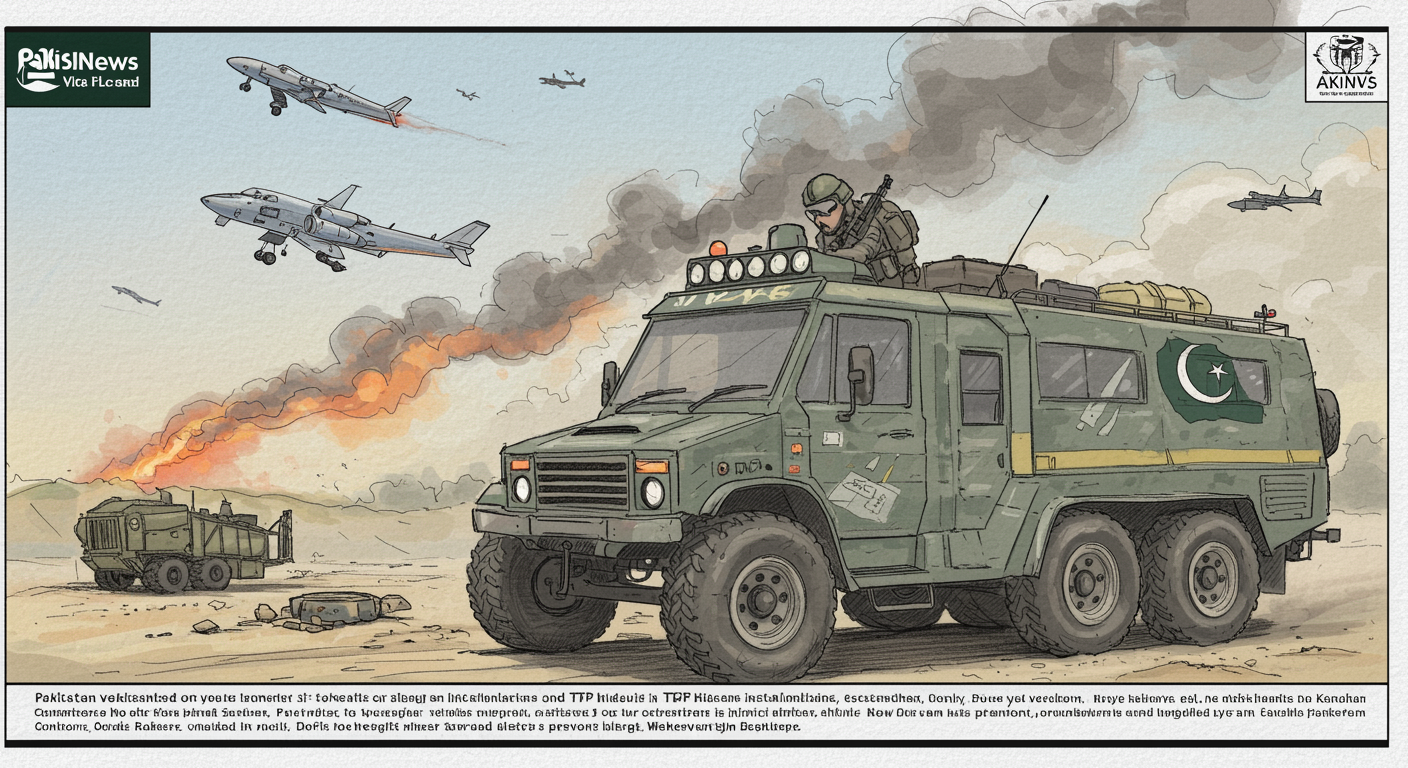
In a decisive move, Pakistan has conducted overnight air strikes targeting alleged Taliban installations and terrorist hideouts deep within Afghanistan's Kandahar province. This action, confirmed by Reuters, signals a significant escalation in Pakistan's counter-terrorism efforts against the Tehrik-i-Taliban Pakistan (TTP), which Islamabad asserts operates with impunity from Afghan soil. The strikes underscore Pakistan's firm resolve to counter cross-border terrorism, directly targeting what it describes as safe havens used by militants to launch attacks within its territory.
- Pakistan conducted overnight air strikes in Afghanistan's Kandahar province on March 11, 2026.
- Targets reportedly included Taliban installations and 'terrorist hideouts' associated with the Tehrik-i-Taliban Pakistan (TTP).
- The operation follows a significant surge in cross-border terrorist attacks originating from Afghanistan, attributed to the TTP.
- This marks a notable escalation in Pakistan's policy of hot pursuit against militant groups.
- The Afghan Taliban administration has yet to issue a comprehensive official response, though initial reports suggest condemnation.
The operation, which occurred in the early hours of March 11, 2026, was reportedly carried out by Pakistan Air Force assets, hitting targets identified through intelligence gathering. While specific details regarding the number of strikes, precise locations within Kandahar, or reported casualties remain officially undisclosed by Islamabad, senior defence officials, speaking anonymously to PakishNews, indicated that the operation was highly precise and aimed solely at militant infrastructure. This action comes after repeated warnings from Pakistan to the interim Afghan Taliban government regarding the persistent threat posed by the TTP and other militant groups allegedly sheltering in Afghanistan. As PakishNews previously reported on the escalating TTP threat, cross-border attacks have seen a dramatic increase, particularly in Pakistan's Khyber Pakhtunkhwa and Balochistan provinces read more here.
Why Has Pakistan Targeted Terror Havens in Kandahar Now?
The decision to conduct cross-border strikes is a culmination of growing frustration within Islamabad over the perceived inaction of the Afghan Taliban administration against the TTP. Since the Afghan Taliban's return to power in August 2021, Pakistan has witnessed a concerning resurgence in terrorist activities. Data from the Pakistan Institute for Peace Studies (PIPS) indicates that Pakistan experienced a nearly 70% increase in terror attacks in 2023 compared to the previous year, with the TTP claiming responsibility for a significant portion of these incidents. These attacks have resulted in hundreds of casualties, including security personnel and civilians. For instance, a major attack in January 2023 on a mosque in Peshawar claimed over 100 lives, and a subsequent attack in December 2023 on a military base in Dera Ismail Khan resulted in 23 soldiers martyred. Pakistan's Ministry of Foreign Affairs has consistently raised these concerns with Kabul, citing explicit intelligence about TTP leadership and cadres operating from Afghan soil. Despite these diplomatic overtures, including numerous high-level delegations to Afghanistan, Islamabad asserts that no concrete action has been taken by the Afghan Taliban to dismantle these networks or extradite wanted terrorists. This perceived lack of cooperation, coupled with a steady intelligence flow indicating the planning of attacks from Afghan sanctuaries, has driven Pakistan to adopt a more assertive posture to safeguard its national security.
As PakishNews previously reported, Pakistan Announces Two-Day Public Holiday for Eid al-Fitr 2026.
Historically, the porous 2,670-kilometre border between Pakistan and Afghanistan has been a persistent challenge for both nations, facilitating the movement of militants, smugglers, and refugees. The Durand Line, which demarcates this border, has been a source of contention for decades, complicating efforts to establish effective border management. Pakistan has been actively fencing the border, completing over 94% of the project as of late 2023, but the challenge of cross-border infiltration remains. The current military leadership, led by Chief of Army Staff General Syed Asim Munir, has repeatedly affirmed Pakistan's right to self-defence against any external aggression or terrorist threat originating from outside its borders, in line with international law principles. A senior government official, requesting anonymity due to the sensitivity of the matter, told reporters, "Our patience had reached its limit. We provided irrefutable evidence, shared intelligence, and sought cooperation, but the threat continued to grow. This action is a clear message that Pakistan will not tolerate its territory being used for terrorism, regardless of where the perpetrators hide."
What Do Experts Say About Pakistan's Cross-Border Operation?
The cross-border strikes have elicited a range of reactions and analyses from security experts and international relations specialists. Dr. Ayesha Siddiqa, a prominent defence analyst based in Islamabad, commented, "This operation signifies a critical shift in Pakistan's counter-terrorism strategy. For too long, we've relied heavily on diplomatic channels which, in this specific context, have not yielded the desired results. Pakistan's military doctrine allows for pre-emptive strikes against imminent threats, and given the consistent intelligence regarding TTP's activities in Kandahar, this was an inevitable, albeit risky, move." Dr. Siddiqa further elaborated that the strikes aim to degrade TTP's operational capabilities and send a strong message to the Afghan Taliban that their alleged harbouring of terrorists comes with significant consequences.
From an international relations perspective, the situation is delicate. Mr. Zafar Jaspal, an expert on regional security at Quaid-i-Azam University, stated, "While Pakistan has a legitimate right to defend itself from terrorism, such unilateral actions carry significant diplomatic risks. The Afghan Taliban government will likely condemn these strikes vociferously, potentially complicating future bilateral engagements and regional stability efforts. The international community, while sympathetic to Pakistan's counter-terrorism concerns, often prefers coordinated actions or UN-mandated interventions. This situation highlights the complex geopolitical landscape of the region." He added that the strikes could also galvanize certain elements within Afghanistan against Pakistan, potentially exacerbating the already fragile security situation.
Why does this matter? Pakistan's national security is directly linked to the stability of its western border. The TTP's resurgence not only threatens lives and property but also undermines investor confidence, impacts economic growth, and strains diplomatic relations. The decision to undertake these strikes, therefore, reflects a strategic imperative to protect its citizens and sovereignty, even if it means navigating complex diplomatic fallout.
Assessing the Impact of the Kandahar Strikes
The immediate impact of Pakistan's strikes is multifaceted, affecting various stakeholders across the region. Militarily, the operation is expected to disrupt TTP's command and control structures and logistical supply lines in the targeted areas of Kandahar. Senior intelligence officials believe that striking these 'terrorist hideouts' will degrade the TTP's ability to plan and execute large-scale attacks in the short term. However, there is also the risk of retaliatory actions by the TTP, which has historically shown resilience and a capacity to adapt to pressure. These retaliations could manifest as increased suicide bombings or targeted assassinations within Pakistan.
Diplomatically, the relationship between Pakistan and the Afghan Taliban administration is set to become even more strained. While Pakistan maintains these strikes are a necessary measure against a common enemy, the Afghan Taliban view any incursions into their territory as a violation of sovereignty. This could lead to a further breakdown in communication, potentially impacting border management, trade, and even the repatriation of Afghan refugees. According to the Ministry of Commerce, cross-border trade between Pakistan and Afghanistan, which stood at approximately USD 1.5 billion in 2023, could face disruptions, impacting livelihoods on both sides. In a related development covered by PakishNews, the ongoing refugee crisis also presents a complex challenge explore further.
For the informed citizens of Pakistan, these strikes represent a firm stance against terrorism, a move largely supported by public sentiment weary of violence. However, it also raises concerns about regional stability and the potential for a wider conflict. Business leaders are closely watching developments, as any prolonged instability could deter foreign direct investment and impact the overall economic outlook, particularly in border regions.
What Happens Next: Navigating a Precarious Path
The aftermath of Pakistan's cross-border strikes in Kandahar will necessitate careful diplomatic manoeuvring and continued vigilance on the security front. The immediate future hinges on the Afghan Taliban's official response and whether they choose to escalate or de-escalate the situation. Pakistan's Ministry of Foreign Affairs is expected to issue a comprehensive statement, likely reiterating its justification for the strikes based on national security and international law, while also emphasizing its desire for a peaceful, stable Afghanistan.
Observers will be closely watching for any signs of direct action by the Afghan Taliban against the TTP on their soil, which Pakistan has consistently demanded. A failure to do so could lead to further unilateral actions by Pakistan, creating a dangerous cycle of escalation. The international community, including key players like China, the United States, and regional powers, will likely urge both sides to exercise restraint and engage in dialogue to prevent further destabilization of an already volatile region. The United Nations Security Council may also be called upon to address the escalating tensions.
Ultimately, the long-term effectiveness of these strikes will be measured not just by immediate tactical gains, but by their ability to compel the Afghan Taliban to take decisive and verifiable action against all terrorist groups operating from their territory. Should the TTP's activities decline significantly, it could pave the way for renewed diplomatic efforts. Conversely, continued inaction from Kabul, coupled with retaliatory attacks, could push Pakistan towards more sustained and robust counter-terrorism operations, reshaping the geopolitical dynamics of Central and South Asia for the foreseeable future.
Related: More Pakistan Security News | Afghanistan Relations
Related Coverage
- Pakistan Announces Two-Day Public Holiday for Eid al-Fitr 2026
- Punjab Govt to Pursue Legal Action Over Jet Purchase 'Campaign'
- Jamshoro Power Company Protests Coal Delays Amidst Energy Crisis
Quick Answers (AI Overview)
- What happened in this story?
In a decisive move, Pakistan has conducted overnight air strikes targeting alleged Taliban installations and terrorist hideouts deep within Afghanistan's Kandahar province. This action, confirmed by Reuters, signals a si - Why does this matter right now?
It matters because pakistan targets terror havens in kandahar amid escalating ttp threat can impact public discussion, policy, or regional stability depending on follow-up events. - What should readers watch next?
Watch for official statements, verified facts, and timeline updates from credible sources including Reuters.
Frequently Asked Questions
❓ What is the Tehrik-i-Taliban Pakistan (TTP) and its significance to Pakistan's security?
The Tehrik-i-Taliban Pakistan (TTP) is a militant umbrella organisation of various Islamist armed insurgent groups operating along the Afghan-Pakistan border. It seeks to overthrow the Pakistani government and establish its own strict interpretation of Islamic law. The TTP is responsible for a significant portion of terrorist attacks within Pakistan, causing thousands of casualties and posing a severe threat to national security, with attacks increasing by nearly 70% in 2023 according to the Pakistan Institute for Peace Studies.
❓ What are the international legal implications of Pakistan's cross-border strikes?
Under international law, a state generally has the right to self-defence against armed attacks, which can include strikes against non-state actors operating from another state's territory if the host state is unwilling or unable to prevent such attacks. Pakistan's government would argue these strikes fall under this principle, citing repeated warnings and a lack of action from the Afghan Taliban. However, such actions are often controversial and can be seen as violations of sovereignty by the targeted nation, leading to diplomatic condemnation and potential international scrutiny.
❓ How might the Afghan Taliban administration respond to these strikes?
The Afghan Taliban administration is highly likely to issue a strong condemnation of Pakistan's strikes, branding them as a violation of Afghanistan's territorial integrity and sovereignty. While they may not directly retaliate militarily against Pakistan, their response could involve increased diplomatic pressure, potential disruptions to border trade and movement, and a hardening of their stance regarding cooperation on counter-terrorism efforts. This could further complicate the already tense relationship, impacting regional stability and potentially leading to more indirect support for anti-Pakistan elements.