PakishNews ListenPress play to hear this articleDownload audio
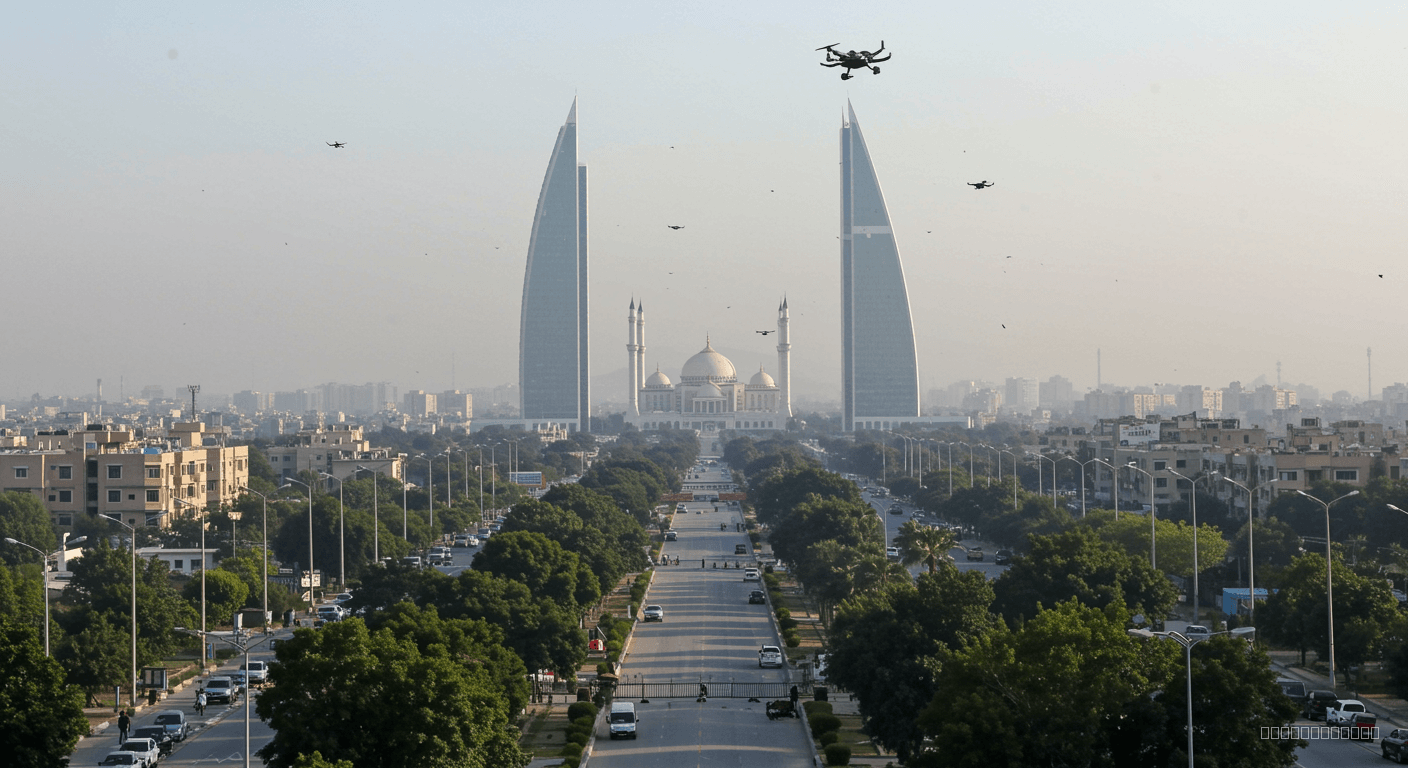
Pakistan's military has successfully thwarted several attempts by elements linked to the Afghan Taliban to conduct drone attacks on its border installations, a significant development underscoring the escalating security challenges along the porous Pakistan-Afghanistan frontier. This marks a critical shift in the nature of cross-border threats, necessitating enhanced defence capabilities and diplomatic engagement. The incidents, which reportedly occurred over the past two months, involved rudimentary unmanned aerial vehicles (UAVs) targeting security checkpoints and forward operating bases in Khyber Pakhtunkhwa (KPK) and Balochistan provinces, according to senior security officials in Islamabad as of March 2026.
- Pakistan confirms thwarting multiple drone attack attempts attributed to Afghan Taliban elements.
- The attacks targeted border posts in Khyber Pakhtunkhwa and Balochistan over the last two months.
- This represents an escalation and a shift towards drone warfare by non-state actors along the 2,670 km border.
- Pakistan is enhancing its counter-UAV capabilities and diplomatic pressure on the interim Afghan government.
- The incidents exacerbate already strained Pakistan-Afghanistan relations and raise regional security concerns.
Why Are Cross-Border Drone Attacks a Growing Concern for Pakistan?
The recent drone incursions underscore a worrying evolution in the tactics employed by militant groups operating from Afghan soil, particularly those affiliated with the Tehrik-i-Taliban Pakistan (TTP) and its alleged patrons within the Afghan Taliban. Since the Afghan Taliban’s return to power in August 2021, Pakistan has witnessed a dramatic surge in cross-border militant activities. Data from the Pakistan Institute for Peace Studies (PIPS) indicates a staggering 58% increase in terror attacks across Pakistan in 2023 compared to the previous year, with a significant portion originating from or having links to Afghanistan. This rising tide of violence, primarily driven by the TTP, has claimed hundreds of lives, including security personnel and civilians, particularly in the border regions. The deployment of drones, even if unsophisticated, represents a new dimension to this conflict, potentially allowing militants to conduct reconnaissance, deliver small payloads, or act as a psychological warfare tool without direct engagement.
The 2,670-kilometre long, largely unfenced, and rugged border, often referred to as the Durand Line, has historically been a flashpoint. Pakistan has repeatedly urged the interim Afghan government to take decisive action against militant groups using Afghan territory to launch attacks against Pakistan. These calls have been met with limited success, leading to strained diplomatic relations and occasional border skirmishes, such as those witnessed at the Torkham and Chaman crossings. The use of drones complicates border management and defence, requiring more advanced and costly counter-measures than traditional ground-based threats. As PakishNews previously reported on increasing border tensions, the inability to effectively secure the border against such evolving threats poses a significant challenge to Pakistan's national security apparatus. Read more on Pakistan-Afghanistan border security at PakishNews.
As PakishNews previously reported, Pakistan Accuses Afghanistan: Drones 'Cross Red Line'.
What is Pakistan's Response to the Evolving Drone Threat?
In response to these emerging threats, the Pakistan Army has reportedly upgraded its aerial surveillance and counter-drone capabilities along critical sections of the border. According to a statement issued by the Inter-Services Public Relations (ISPR) in late February 2026, several hostile UAVs were detected and neutralised before they could reach their intended targets, primarily through a combination of electronic jamming and precision ground fire. A senior official from the Ministry of Defence, speaking on condition of anonymity, confirmed that the thwarted drones were largely commercial quadcopters modified for reconnaissance or carrying small, improvised explosive devices (IEDs).
“This is not about sophisticated military-grade drones, but the ingenuity of non-state actors adapting readily available technology,” stated Dr. Ayesha Siddiqa, a prominent defence analyst based in Islamabad, in an exclusive interview with PakishNews. “The challenge lies in detecting and neutralising these small, low-flying objects in diverse terrains. Pakistan’s investment in anti-drone technology, including radar systems and electronic warfare suites, is now more critical than ever.” She added that while the immediate threat might seem minor, the precedent set by such attempts could encourage more ambitious attacks if left unchecked. In a related development covered by PakishNews, Pakistan has also initiated a comprehensive border fencing project, with over 90% of the border now fenced, a measure aimed at curbing illegal crossings and militant infiltration. More on Pakistan's national security efforts can be found here.
Meanwhile, diplomatic channels remain fraught. Pakistan’s Special Representative for Afghanistan, Ambassador Asif Durrani, has on multiple occasions conveyed Islamabad's serious concerns regarding the use of Afghan soil by terrorist groups. “We have presented irrefutable evidence to the interim Afghan authorities regarding the presence and activities of TTP and other groups. The expectation is clear: Afghanistan must fulfil its international obligations and prevent its territory from being used against any country, especially Pakistan,” a senior Foreign Office official told reporters during a press briefing in early March 2026. The official reiterated Pakistan’s stance that a stable and peaceful Afghanistan is in Pakistan’s interest, but not at the cost of its own security.
How Do These Incidents Impact Regional Stability and Diplomacy?
The thwarted drone attacks have profound implications for regional stability, particularly for the already delicate relationship between Pakistan and the interim Afghan government. The incidents reinforce Pakistan's narrative that the Afghan Taliban has either been unwilling or unable to control militant groups like the TTP, despite repeated assurances. This perception fuels distrust and could lead to more assertive counter-terrorism measures from Pakistan, potentially including cross-border operations, as suggested by some defence experts. Such actions, while aimed at securing Pakistan's borders, risk further destabilising the region and drawing international condemnation.
From an economic perspective, heightened security threats along the border disrupt trade and connectivity, affecting the livelihoods of thousands. Key border crossings like Torkham, which handles a significant volume of bilateral and transit trade, often face closures or slowdowns due to security concerns. According to the Pakistan Bureau of Statistics, bilateral trade with Afghanistan saw fluctuations in 2023, partly due to these security challenges and border management issues. Furthermore, the increased allocation of resources towards border security and counter-drone technology places additional strain on Pakistan's national budget, which is already grappling with economic challenges.
Why does this matter? The persistence of such threats not only compromises Pakistan’s internal security but also undermines regional efforts towards peace and economic cooperation. It complicates the international community's engagement with the interim Afghan government, making it harder to advocate for humanitarian aid or recognition when concerns about terrorism persist. The evolving nature of the threat, from conventional ground incursions to aerial surveillance and attack capabilities, necessitates a coordinated regional and international response that has thus far been elusive.
What Happens Next for Pakistan's Border Security?
Looking ahead, Pakistan is expected to continue strengthening its multi-layered border defence system. This includes further deployment of advanced counter-UAV technologies, such as drone detection radars, electronic countermeasures, and kinetic interception systems. The Pakistan Army's ongoing operational readiness along the western border will remain a top priority, with continuous intelligence gathering and surveillance. There will likely be an increased emphasis on intelligence-based operations (IBOs) to neutralise militant networks within Pakistan that might be facilitating such cross-border activities.
Diplomatically, Pakistan will continue to engage with regional and international partners to press the interim Afghan government to fulfill its counter-terrorism commitments. This may involve seeking support from platforms like the United Nations Security Council or regional forums such as the Shanghai Cooperation Organisation (SCO) to exert collective pressure. However, given the current geopolitical landscape and the Afghan Taliban's isolation, significant breakthroughs on this front remain challenging. The focus will likely remain on enhancing self-reliance in defence capabilities and maintaining a robust posture to deter and counter any future attempts at cross-border aggression. The long-term stability of the region hinges on a more cooperative and effective approach to counter-terrorism from all stakeholders, a prospect that remains uncertain as of March 2026.
Related: More Pakistan Security News | Afghanistan Relations
Related Coverage
- Pakistan Accuses Afghanistan: Drones 'Cross Red Line'
- Pakistan Downs Taliban Drones Near Islamabad, Four Injured
- China Urges Dialogue: Easing Pakistan-Afghanistan Tensions for Regional Stability
Frequently Asked Questions
❓ What kind of drones are being used in these attacks?
The drones reportedly being used by elements linked to the Afghan Taliban are primarily commercial quadcopters that have been modified. These are often repurposed for reconnaissance or to carry small, improvised explosive devices (IEDs), rather than sophisticated military-grade unmanned aerial vehicles. Senior security officials indicated that Pakistan's defence systems detected and neutralised several such modified UAVs over the past two months.
❓ How has the security situation along the Pakistan-Afghanistan border changed recently?
The security situation along the 2,670-kilometre Pakistan-Afghanistan border has significantly deteriorated since August 2021, following the Afghan Taliban's takeover. Pakistan has experienced a marked increase in cross-border militant attacks, with the Pakistan Institute for Peace Studies (PIPS) reporting a 58% surge in terror incidents in 2023. The recent use of drones by non-state actors represents an escalation in tactics, posing new challenges for border defence and surveillance.
❓ What are the diplomatic implications of these drone incidents for Pakistan and Afghanistan?
These drone incidents further strain the already tense diplomatic relations between Pakistan and the interim Afghan government. Pakistan views these attacks as a failure by the Afghan Taliban to curb militant groups like the TTP, despite repeated assurances to prevent the use of Afghan soil against other nations. This situation complicates regional efforts for peace and economic cooperation, potentially prompting Pakistan to explore more assertive counter-terrorism measures and seek international pressure on the Afghan interim authorities.