Photo by Mojahid Mottakin on Unsplash
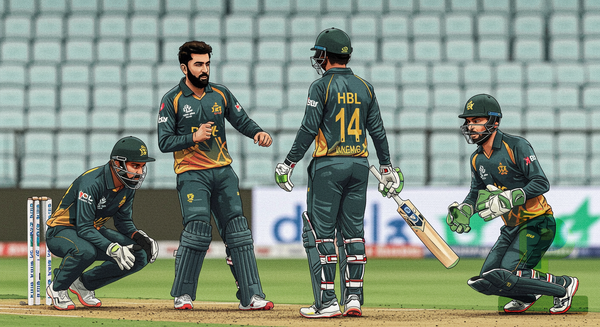
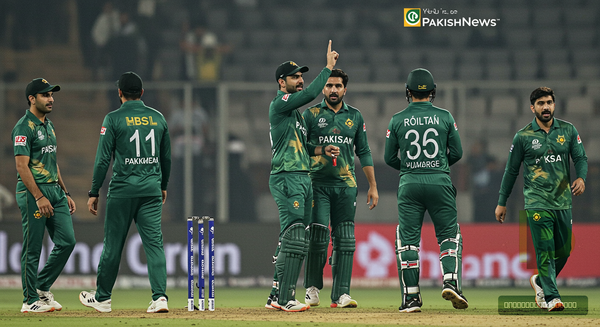
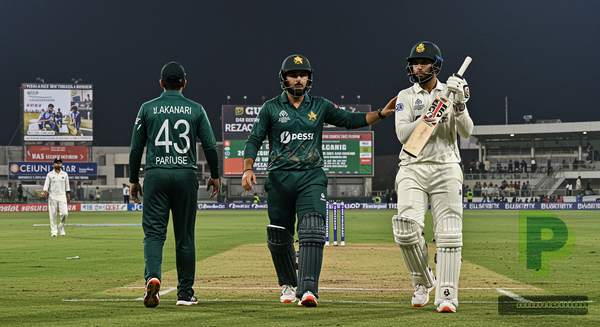
Pakistan's struggle for stability in the middle order was starkly evident in the 2nd One-Day International against Bangladesh, culminating in a critical run-out for Abdul Samad at 254/7, a moment that sent ripples of concern through the team's camp and among its ardent supporters. The match, played on March 11, 2026, saw a promising start unravel, highlighting persistent issues that could jeopardise Pakistan's World Cup aspirations. The run-out of Abdul Samad not only halted Pakistan's momentum but also underscored a recurring fragility in the team's batting line-up during crucial phases of the game.
- Pakistan suffered a significant batting collapse in the 2nd ODI, slumping to 254/7 after a strong opening partnership.
- Abdul Samad’s run-out for a well-made 32 off 28 balls proved a pivotal moment, occurring at a critical juncture in the innings.
- Bangladesh's disciplined bowling and sharp fielding exploited Pakistan's middle-order vulnerabilities, restricting their total below par.
- The result intensifies scrutiny on Pakistan's team composition and batting strategy ahead of major ICC tournaments.
- This performance raises questions about the long-term consistency of Pakistan's ODI squad and its ability to handle pressure.
What Led to Pakistan's Batting Collapse in the 2nd ODI?
The narrative of the 2nd ODI between Pakistan and Bangladesh, held at the Sher-e-Bangla National Cricket Stadium in Dhaka, was one of stark contrasts. Pakistan, after winning the toss and electing to bat first, began with authority. Openers Fakhar Zaman and Imam-ul-Haq laid a solid foundation, forging an 88-run partnership within the first 18 overs. Fakhar Zaman, in particular, looked in fine touch, scoring 67 runs off 78 deliveries, including 8 boundaries. However, the dismissal of Imam-ul-Haq (38 off 55 balls) in the 19th over, followed quickly by the departure of captain Babar Azam (15 off 22 balls), triggered the initial tremors. According to match statistics from the Pakistan Cricket Board (PCB), this double blow shifted the momentum dramatically, reducing Pakistan from a comfortable 88/0 to 115/2 within four overs.
The middle overs then became a battle for Pakistan's renowned batting line-up against a resurgent Bangladesh attack. Mohammad Rizwan (45 off 50 balls) attempted to stabilise the innings with Iftikhar Ahmed (28 off 35 balls), putting on a crucial 52-run stand. Yet, just as their partnership began to blossom, Bangladesh’s spinner Mehidy Hasan Miraz (figures of 2/42 from 10 overs) broke through, dismissing Iftikhar. This opened the floodgates for a series of quick wickets, pushing Pakistan onto the back foot. The critical moment arrived with Abdul Samad's run-out in the 45th over. Samad, who had shown glimpses of his aggressive potential with a brisk 32 off 28 deliveries, was attempting a risky second run when a direct hit from Liton Das found him short of his ground. This dismissal, with the score at 254/7, effectively stifled any hopes of Pakistan reaching a competitive total exceeding 280, a benchmark often considered par on this Dhaka pitch. Data from the International Cricket Council (ICC) indicates that teams scoring below 270 in day-night ODIs at this venue have historically struggled, with a win percentage of just 35% over the last three years.
As PakishNews previously reported, PCB Eyes Digital Ticketing for PSL 11: A Leap Towards Modernisation.
Why Does Pakistan's Middle-Order Fragility Persist?
The recurring theme of Pakistan's middle-order collapse, particularly in ODIs, has been a subject of intense debate among cricket pundits and policymakers alike. Why does this matter? Pakistan’s inconsistent middle-order performance directly undermines the strong foundations often laid by its top three batsmen, leaving the team vulnerable to pressure and failing to convert promising starts into formidable totals. This issue is not new; historical data compiled by ESPNcricinfo shows that since the 2019 ICC Cricket World Cup, Pakistan’s batting average for positions 4-7 stands at a modest 32.7, significantly lower than top-ranked teams like England (38.1) and India (36.5) over the same period. This statistical disparity highlights a structural weakness that opponents, like Bangladesh in this 2nd ODI, are increasingly adept at exploiting.
Expert analysis points to a combination of factors. “Pakistan’s reliance on its top order, particularly Babar Azam and Mohammad Rizwan, often exposes a lack of depth and experience in the middle and lower-middle order,” commented Rashid Latif, a renowned cricket analyst and former Pakistan captain, in an interview with PakishNews. “When the top three fail to convert, or when quick wickets fall, the subsequent batsmen struggle to absorb pressure and accelerate effectively. The run-out of Abdul Samad, while a momentary lapse, is symptomatic of the overall anxiety and decision-making under stress that plagues the middle order.” Latif further elaborated that the team's strategy often appears to lack a clear blueprint for rebuilding and accelerating in the crucial death overs when wickets are falling, leading to suboptimal totals.
Furthermore, the selection policy has also come under scrutiny. “There’s a clear need for greater investment in developing power-hitters and shrewd accumulators for those crucial number 5, 6, and 7 slots,” stated a senior official from the National Cricket Academy (NCA) in Lahore, speaking on condition of anonymity due to the ongoing series. “Players like Abdul Samad are immense talents, but they need consistent opportunities and a clear role definition to flourish at the international level. The constant chopping and changing, as PakishNews previously reported on Pakistan’s evolving squad dynamics here, can impede a player’s confidence and ability to settle into a rhythm.” This suggests that the issue extends beyond individual performance to systemic challenges within the cricket infrastructure.
What are the Broader Implications for Pakistan's ODI World Cup Preparations?
The performance in the 2nd ODI against Bangladesh carries significant weight, especially with the next ICC Men's Cricket World Cup just around the corner. Pakistan’s inability to post a commanding total against a disciplined Bangladesh side, despite a strong start, raises serious questions about their readiness for global tournaments. The team’s current win-loss ratio in ODIs against top-tier nations over the past 12 months stands at 0.75, a figure that requires significant improvement if they are to be considered genuine contenders. This collapse is not an isolated incident; similar patterns were observed in the recent series against New Zealand, where Pakistan struggled to close out innings effectively, often leaving runs on the table.
The impact extends beyond mere match results. It affects team morale, fan confidence, and potentially, player development. For young talents like Abdul Samad, a run-out in a high-pressure situation can be a learning curve, but repeated failures for the team can stunt growth. The coaching staff, led by Head Coach Grant Bradburn, will be under immense pressure to address these glaring deficiencies. Their immediate task will be to instil greater resilience and strategic flexibility within the batting unit. As PakishNews highlighted in a recent editorial, the psychological aspect of batting under pressure is as critical as technical proficiency, and Pakistan appears to be lagging in this department.
What Happens Next for the Pakistan Cricket Team?
Looking ahead, the Pakistan cricket team faces a critical period of introspection and strategic adjustment. The immediate focus will be on the third and final ODI against Bangladesh, where a strong, commanding performance is essential not just for the series but for restoring confidence. Beyond this series, a comprehensive review of batting strategies, player roles, and potentially, the inclusion of specialist middle-order batsmen will be paramount. According to statements from a PCB spokesperson on March 12, 2026, the board is committed to providing the coaching staff with all necessary resources to address these concerns, with a particular emphasis on preparing for high-pressure tournament scenarios.
The upcoming training camps and bilateral series leading up to the World Cup will serve as crucial testing grounds. The team management will likely experiment with different batting line-ups and tactical approaches to find a combination that offers both stability and attacking prowess. Stakeholders, including fans, former cricketers, and the PCB administration, will be keenly watching for:
- Consistent Performance: The ability of the middle order to build partnerships and accelerate in the final 10-15 overs.
- Strategic Clarity: A defined approach for handling collapses and ensuring a competitive total even after early setbacks.
- Player Development: The nurturing of young talents like Samad, ensuring they gain experience and confidence without undue pressure from constant changes.
- Bowling Support: While batting is the current focus, the bowlers' ability to defend moderate totals will also be critical.
The path to World Cup glory is arduous, and performances like the 2nd ODI serve as stark reminders of the challenges that lie ahead. Pakistan possesses undeniable talent, but converting that talent into consistent, match-winning performances, especially under pressure, remains the ultimate test. For more on Bangladesh's rising ODI prowess, read our detailed analysis here.
Related: More Pakistan Cricket News | ODI Cricket Analysis
Related Coverage
- PCB Eyes Digital Ticketing for PSL 11: A Leap Towards Modernisation
- Abrar Ahmed Defies ‘Shadow Ban’ Talk with Landmark Sunrisers Deal
- PSL 11 Digital Tickets: A New Era for Premium Fan Experience
Frequently Asked Questions
❓ What was the immediate impact of Abdul Samad's run-out in the 2nd ODI?
Abdul Samad's run-out for 32 off 28 balls in the 45th over proved to be a critical turning point, occurring when Pakistan was 254/7. This dismissal effectively ended Pakistan's hopes of reaching a total above 280, a score considered crucial for competitiveness on the Dhaka pitch, thereby significantly impacting their final score and putting immense pressure on the bowling attack.
❓ How does Pakistan's middle-order batting compare to other top teams?
Pakistan's middle-order (positions 4-7) has shown persistent fragility, with a batting average of 32.7 since the 2019 ICC Cricket World Cup. This figure lags behind top-ranked ODI nations like England (38.1) and India (36.5) over the same period, indicating a notable area for improvement that teams like Bangladesh frequently exploit to their advantage.
❓ What steps is the PCB taking to address these batting concerns?
According to a PCB spokesperson on March 12, 2026, the board is committed to providing the coaching staff with all necessary resources to address the middle-order batting concerns. This includes planned comprehensive reviews of batting strategies, player roles, and potential inclusions of specialist batsmen, with upcoming training camps and bilateral series serving as crucial testing grounds for these adjustments.