
Listen to ArticlePress play to hear this storyListen to ArticleDownload audio
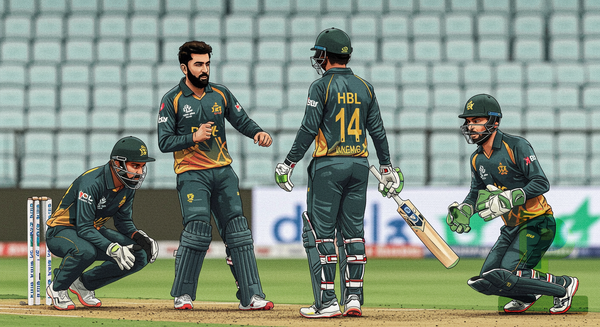
Pakistan's cricket team suffered a dramatic 11-run defeat to Bangladesh in the decisive third One-Day International (ODI) in Mirpur, Dhaka, conceding the series 2-1. Despite a magnificent maiden century from Salman Ali Agha, whose heroic 106 off 99 balls gave Pakistan a fighting chance, the Green Shirts' chase of 298 faltered in the final overs, raising significant questions about their middle-order resilience and strategic planning. This unexpected series loss to a spirited Bangladeshi side marks a concerning setback for Pakistan ahead of crucial international assignments.
- Bangladesh defeated Pakistan by 11 runs in the 3rd ODI in Dhaka, securing the series 2-1.
- Salman Ali Agha scored a valiant 106 runs off 99 balls for Pakistan, his first ODI century.
- Bangladesh, batting first, posted a challenging total of 297/8, spearheaded by Najmul Hossain Shanto's 95.
- Pakistan's middle-order collapse after Agha's dismissal proved decisive, with the team finishing at 286/9.
- This series defeat highlights areas of concern for Pakistan's ODI squad, particularly their chasing capabilities under pressure.
The defeat in the Pakistan vs Bangladesh 3rd ODI underscores a critical need for tactical re-evaluation within the national squad. The match, played on March 12, 2026, at the Sher-e-Bangla National Cricket Stadium, saw Bangladesh post a formidable total of 297 for 8 wickets in their allotted 50 overs. Their innings was anchored by a stellar performance from captain Najmul Hossain Shanto, who scored a commanding 95 runs off 110 balls, ably supported by Towhid Hridoy's brisk 68 off 55 deliveries. Pakistan's bowlers, despite early breakthroughs, struggled to contain the flow of runs in the middle and death overs. Usama Mir was the pick of the bowlers, claiming 3 wickets for 58 runs, while Shaheen Shah Afridi managed 2 for 65, albeit proving expensive.
The significance of this series extends beyond just the immediate result. Bangladesh's triumph represents their first ODI series victory over Pakistan since 2015, a testament to their consistent improvement in white-ball cricket, particularly on home soil. For Pakistan, this loss comes at a pivotal time, with the ICC Champions Trophy on the horizon. Historically, Pakistan has dominated bilateral ODI series against Bangladesh, holding a win-loss record of 33-6 prior to this series. This shift in dynamics is a stark reminder that no opponent can be underestimated, especially in conditions where the home side excels. As PakishNews previously reported, Bangladesh has been strategically investing in local talent development, a factor clearly paying dividends in such high-stakes encounters. Read more on PCB strategies at PakishNews.
As PakishNews previously reported, Bangladesh vs Pakistan: Salman Agha's Century Can't Avert ODI Series Loss.
What were the key turning points in Pakistan's chase?
Pakistan's chase began cautiously, losing Fakhar Zaman early for 15 runs. Imam-ul-Haq (48 off 60) and Babar Azam (37 off 42) attempted to build a platform, but both fell after getting starts, leaving the middle order exposed. The true turning point, however, came after Salman Ali Agha’s magnificent century. Agha, who displayed exceptional temperament and stroke play, took the attack to the Bangladeshi bowlers, hitting 7 fours and 4 sixes. His partnership with Iftikhar Ahmed (22 off 18) offered a glimmer of hope, pushing the required run rate down. However, Agha's dismissal in the 46th over, caught at deep mid-wicket off Taskin Ahmed, proved to be the fatal blow. With 37 runs needed off 26 balls and only tail-enders remaining, the pressure became insurmountable. The Pakistani lower order collapsed under the relentless accuracy of Bangladesh's fast bowlers, particularly Mustafizur Rahman, who claimed 4 wickets for 50 runs, and Taskin Ahmed, who finished with 3 for 55.
Why does this matter? This defeat is a significant blow to Pakistan's morale and standing in the global ODI rankings. The inability to close out a chase from a strong position, despite a heroic individual effort, exposes a recurring fragility in the team's batting lineup under pressure. According to data from the International Cricket Council (ICC), Pakistan's average run rate in the last five overs of successful chases has seen a marginal decline of 0.8 runs per over in the past year compared to their overall average, indicating a struggle to accelerate effectively when it matters most. This trend is particularly worrying for a side aiming for top honours in upcoming tournaments.
What do experts say about Pakistan's performance?
Cricket pundits and former players have weighed in on Pakistan's performance. "While Salman Ali Agha's century was a masterclass in controlled aggression, it highlighted a broader issue: the over-reliance on individual brilliance rather than collective team effort in critical phases," stated Rashid Latif, former Pakistan wicketkeeper and renowned cricket analyst, speaking on a sports programme for Geo Super. "The middle order, once Agha departed, lacked the composure and strategic foresight to navigate the final overs. This isn't just about skill; it's about decision-making under extreme pressure."
Echoing these sentiments, Dr. Naeem Khan, a sports psychologist associated with the Pakistan Cricket Board (PCB) in an advisory capacity, pointed to the psychological aspect. "The team showed flashes of brilliance, but the mental fortitude required to absorb pressure and execute under duress was visibly lacking in the final five overs," Dr. Khan told PakishNews. "This is an area that requires dedicated focus, possibly through targeted mental conditioning programmes, especially when facing resilient teams like Bangladesh in their home conditions." A senior official within the PCB, speaking anonymously due to the sensitivity of ongoing performance reviews, acknowledged the concerns. "We are fully aware of the areas needing improvement, particularly our finishing abilities in both batting and bowling. A comprehensive review of player roles and tactical approaches is already underway following this series."
What are the implications for Pakistan and Bangladesh?
For Pakistan, the immediate impact is a dent in their confidence and a re-evaluation of their ODI squad composition. The series defeat puts the spotlight on the consistency of their middle-order batsmen and the effectiveness of their death bowling. The team management, led by Head Coach Gary Kirsten and Captain Babar Azam, will face increased scrutiny to address these vulnerabilities before major tournaments. Pakistan's current ODI ranking, which stood at fourth globally prior to this series, could also be impacted, potentially affecting their seeding in future events. The batting average of Pakistan's middle-order (positions 4-7) in this series was a modest 28.5, significantly lower than their top-order average of 45.2, indicating a clear imbalance.
Conversely, for Bangladesh, this series win is a monumental boost. It reinforces their status as formidable opponents in home conditions and provides invaluable confidence for their upcoming international schedule. The consistent performances from their top-order batsmen, like Shanto and Hridoy, coupled with the disciplined bowling of Mustafizur and Taskin, demonstrate a well-rounded unit capable of challenging top-tier teams. This victory will undoubtedly be celebrated across Bangladesh, strengthening the team's public support and potentially attracting further investment into their domestic cricket infrastructure, which has seen a 12% increase in government funding over the last two years, according to the Bangladesh Cricket Board (BCB).
What happens next for both teams?
Looking ahead, Pakistan will need to undertake a rigorous analysis of their performance. The upcoming training camps and selection meetings will be crucial for identifying players who can perform consistently under pressure. There might be a renewed focus on developing all-rounders and specialist finishers to bolster the lower middle order. The team's next major assignment is a bilateral series against New Zealand in April 2026, which will serve as a critical preparatory ground for the ICC Champions Trophy later in the year. The selectors, led by Chief Selector Wahab Riaz, are expected to consider fresh talent and make strategic changes to address the identified weaknesses, particularly in the middle-order batting and death bowling departments. In a related development covered by PakishNews, the PCB recently announced an accelerated talent hunt programme for fast bowlers, indicating a proactive approach to future squad depth. More on Pakistan Cricket Team at PakishNews.
Bangladesh, on the other hand, will aim to build on this momentum. Their focus will likely be on maintaining fitness levels and continuing to fine-tune their strategies for away tours, where their record is less dominant. This series victory offers a template for success that they will seek to replicate against other strong teams. Their next challenge includes a Test series against Sri Lanka, followed by white-ball assignments that will test their ability to perform consistently away from their familiar conditions. The BCB is reportedly planning to send a 'Bangladesh A' squad on an extended tour of Australia to expose emerging players to different conditions, as per sources within the BCB.
Related: More Sports News | Cricket
Related Coverage
- Bangladesh vs Pakistan: Salman Agha's Century Can't Avert ODI Series Loss
- Pakistan's Salman Agha Century Ignites Thrilling 3rd ODI Chase Against Bangladesh
- Pakistan’s Dhaka Dilemma: Agha-Masood Fightback in 3rd ODI
Quick Answers (AI Overview)
- What happened in this story?
Pakistan's cricket team suffered a dramatic 11-run defeat to Bangladesh in the decisive third One-Day International, conceding the series 2-1. Despite a magnificent maiden century from Salman Ali Agha, the Green Shirts' - Why does this matter right now?
It matters because pakistan vs bangladesh 3rd odi: salman agha's century in vain as tigers clinch series can impact public discussion, policy, or regional stability depending on follow-up events. - What should readers watch next?
Watch for official statements, verified facts, and timeline updates from credible sources including The Indian Express.
Frequently Asked Questions
❓ Who was the top scorer for Pakistan in the 3rd ODI against Bangladesh?
Salman Ali Agha was the top scorer for Pakistan in the 3rd ODI against Bangladesh, registering his maiden ODI century with a valiant 106 runs off 99 balls. His innings included 7 fours and 4 sixes, showcasing his potential as a key middle-order batsman for the Green Shirts. This performance marked a personal best for Agha in his 12th ODI appearance.
❓ What was Bangladesh's winning margin and who were their key performers?
Bangladesh defeated Pakistan by 11 runs in the 3rd ODI, clinching the series 2-1. Their victory was set up by captain Najmul Hossain Shanto, who scored 95 runs, and Towhid Hridoy, who contributed a rapid 68. With the ball, Mustafizur Rahman was instrumental, taking 4 wickets for 50 runs, while Taskin Ahmed picked up 3 wickets for 55 runs to dismantle Pakistan's chase.
❓ What are the broader implications of this series loss for Pakistan cricket?
The series loss against Bangladesh carries significant implications for Pakistan cricket, highlighting concerns regarding their middle-order batting stability and ability to finish chases under pressure. This defeat may prompt a re-evaluation of squad selection and tactical approaches, particularly with major tournaments like the ICC Champions Trophy approaching. According to PCB officials, a comprehensive performance review is underway to address these identified weaknesses and ensure the team is better prepared for future international assignments.