?Listen to ArticlePress play to hear this storyListen to ArticleDownload audio
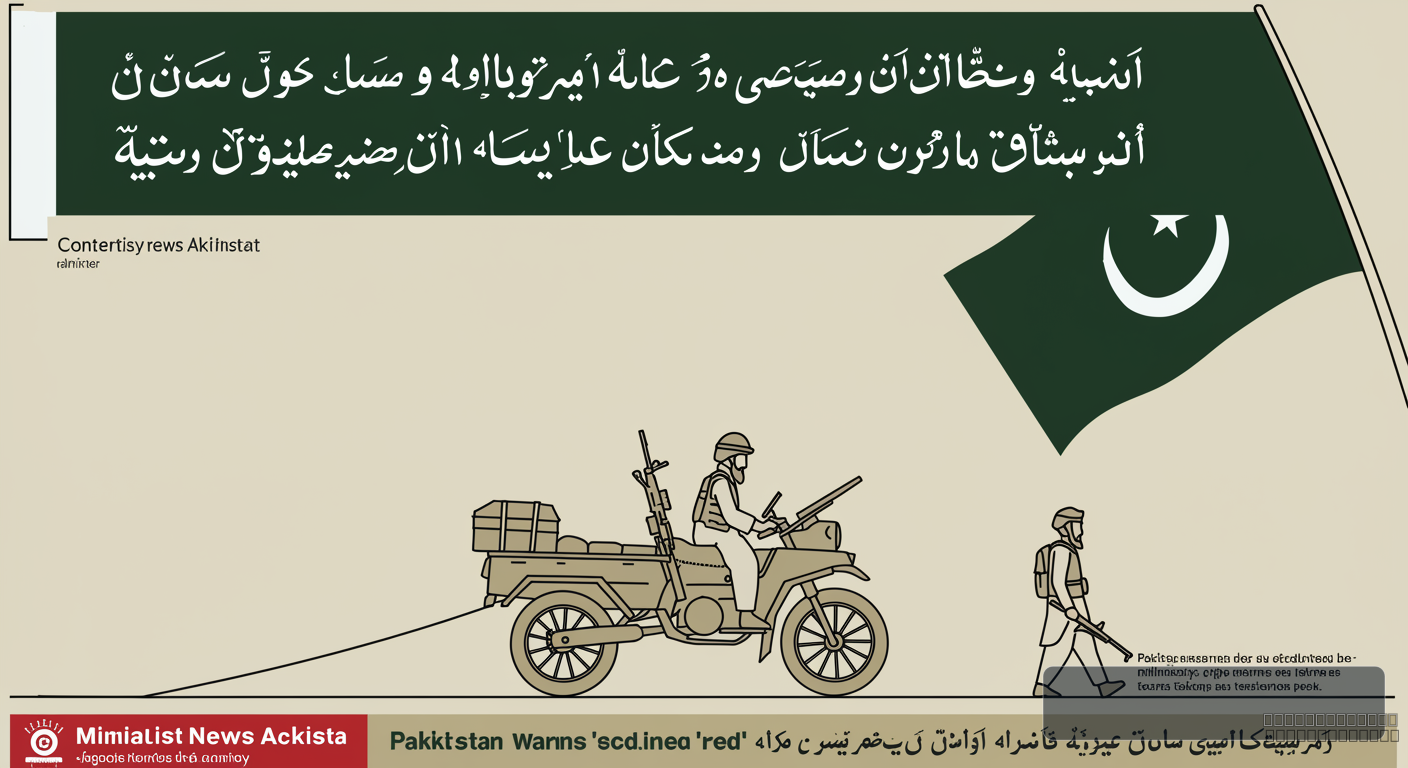
Islamabad has issued its strongest warning yet to the interim Afghan government, stating that a 'red line' has been crossed due to persistent cross-border militant activities originating from Afghan soil. This declaration, made public on March 12, 2026, by Pakistan’s Ministry of Foreign Affairs, signals a critical juncture in the already strained bilateral relations, with implications for regional security and stability. The core issue revolves around the perceived inaction of the Afghan authorities against Tehrik-i-Taliban Pakistan (TTP) and its affiliates, which Pakistan holds responsible for a surge in terrorist attacks.
- Pakistan officially warns Afghanistan that a 'red line' has been crossed due to escalating cross-border militancy.
- The warning comes amid a significant increase in terrorist attacks within Pakistan, primarily attributed to the Tehrik-i-Taliban Pakistan (TTP).
- Islamabad demands concrete action from the interim Afghan government to dismantle militant sanctuaries and prevent their use of Afghan territory.
- Security analysts suggest this rhetoric indicates a potential shift towards more robust, non-diplomatic responses if demands are not met.
- The ongoing tensions threaten regional stability, bilateral trade, and humanitarian efforts along the 2,670-kilometre border.
Background and Context: A History of Volatility on the Durand Line
The relationship between Pakistan and Afghanistan has historically been complex, marked by shared cultural ties, extensive trade, and persistent border disputes, most notably over the 2,670-kilometre Durand Line. This long, porous border has frequently served as a transit point for both legitimate commerce and illicit activities, including the movement of militant groups. Following the Taliban's takeover of Afghanistan in August 2021, Pakistan initially hoped for a more secure western border and an end to the sanctuary provided to anti-Pakistan elements, particularly the Tehrik-i-Taliban Pakistan (TTP), often referred to as the 'Pakistani Taliban'.
However, these hopes have largely been dashed. Data from Pakistan's Ministry of Interior indicates a nearly 60% increase in terrorist incidents in the Khyber Pakhtunkhwa and Balochistan provinces since 2022, with a significant portion attributed to the TTP. According to a report by the Pakistan Institute for Peace Studies (PIPS) released in late 2025, over 300 security personnel have been martyred in these attacks over the past two years, marking the highest casualty rate since 2017. Islamabad consistently maintains that these attacks are planned and launched from safe havens within Afghanistan, a claim that the Afghan interim government routinely denies, citing its own counter-terrorism efforts. This divergence in narrative and action has progressively eroded trust, leading to the current, unequivocal warning from Pakistan.
As PakishNews previously reported, Lebanon Healthcare Strike: WHO Confirms 12 Dead in Bourj Qalaouiyeh.
Why Does This Matter? Escalating Militancy and Regional Stability
This escalating rhetoric matters immensely because it directly impacts Pakistan's national security, regional stability, and the lives of millions residing along the border. The 'red line' declaration signifies that Pakistan perceives the current situation as an existential threat, demanding an immediate and effective response from its western neighbour. The unchecked activities of groups like the TTP, which have openly declared allegiance to the Afghan Taliban's ideology, not only destabilise Pakistan but also risk drawing other regional actors into a broader conflict. Furthermore, the economic implications are substantial; cross-border trade, which reached approximately USD 1.5 billion in 2023, is highly vulnerable to security disruptions, affecting livelihoods on both sides. As PakishNews previously reported, security concerns have already led to stricter border controls, impacting the flow of goods and people.
Escalating Cross-Border Militancy and Pakistan's Response
Pakistan's warning comes after months of diplomatic overtures and repeated requests to the interim Afghan government to address the TTP threat. A senior official at Pakistan's Ministry of Foreign Affairs, speaking on condition of anonymity, told reporters in Islamabad on March 12, 2026, that "Islamabad has provided irrefutable evidence, including specific locations and intelligence dossiers, regarding TTP sanctuaries and their operational commanders inside Afghanistan on at least five separate occasions since late 2024. Despite these efforts, cross-border attacks have not only continued but intensified, culminating in the recent tragic incident where six Pakistani Army soldiers were martyred in a North Waziristan ambush last week."
The Inter-Services Public Relations (ISPR), the media wing of the Pakistan Armed Forces, has also issued several statements over the past year, highlighting the military's resolve to defend Pakistan's borders. In a press briefing in February 2026, the Director-General of ISPR stated, "We have exercised extreme restraint and prioritised diplomatic channels, but the patience of the nation is wearing thin. The onus is now entirely on the interim Afghan government to honour its commitments under international law and the Doha Agreement, which explicitly prohibits the use of Afghan soil for terrorism against any country." This shift from diplomatic appeals to a public 'red line' warning indicates a significant hardening of Pakistan's stance.
Expert Analysis: Regional Stability at Stake
Security analysts in Pakistan are largely in agreement that the situation has reached a critical point. Dr. Hassan Askari Rizvi, a prominent defence analyst and former professor of political science at Punjab University, commented, "Pakistan's 'red line' declaration is not merely rhetorical; it signals a preparedness for more assertive measures. The Afghan Taliban's inability or unwillingness to control the TTP is a fundamental challenge. From Pakistan's perspective, this is a direct threat to its sovereignty and internal security, especially given the TTP's stated goal of establishing an Islamic Emirate in Pakistan's tribal areas."
Echoing this sentiment, Ms. Ayesha Siddiqa, an independent security researcher based in Islamabad, noted, "The international community, particularly the United States and China, has a role to play in pressuring the Afghan interim government. While Pakistan has been repatriating undocumented Afghan nationals – over 1.7 million since October 2023 – this move, while aimed at internal security, also serves as a strong signal of Pakistan's frustration. The current impasse could lead to unilateral actions if Kabul continues its perceived non-cooperation, potentially destabilising the broader Central and South Asian regions."
Furthermore, an analyst at the Islamabad Policy Research Institute (IPRI), requesting anonymity due to the sensitivity of the subject, highlighted the strategic implications. "The 'red line' could imply targeted counter-terrorism operations, enhanced border fencing, or even economic sanctions. The key challenge for Pakistan is to ensure that any action taken does not inadvertently strengthen other militant factions or further destabilise Afghanistan, which could have spillover effects on Pakistan's own security and the ongoing refugee crisis. Diplomatic channels, while strained, must remain open for de-escalation, even as more robust measures are considered."
Impact Assessment: Humanitarian and Economic Repercussions
The heightened tensions directly affect the millions of people living along the Pakistan-Afghanistan border. Communities in Khyber Pakhtunkhwa and Balochistan frequently face security lockdowns, disruptions to daily life, and the constant threat of militant attacks. According to the United Nations High Commissioner for Refugees (UNHCR), approximately 1.3 million registered Afghan refugees still reside in Pakistan, alongside a fluctuating number of undocumented individuals. The recent repatriation drive, while a sovereign decision by Pakistan, has created significant humanitarian challenges, with concerns raised by international aid agencies about the conditions faced by returnees. Read more on the repatriation efforts at PakishNews.com.
Economically, the instability is a major deterrent to investment and development in border regions. Bilateral trade, which had seen a modest recovery post-2021, is now at risk of decline. The land routes through Torkham and Chaman are vital for Afghanistan's access to international markets and for Pakistan's trade with Central Asia. Any prolonged closure or increased security measures will inevitably lead to higher costs for goods, reduced trade volumes, and further economic hardship for both nations. The prospect of regional connectivity projects, such as the CASA-1000 power transmission line or the Turkmenistan-Afghanistan-Pakistan-India (TAPI) gas pipeline, also dims under such volatile security conditions.
What Happens Next: Diplomatic Deadlock or Decisive Action?
The immediate future hinges on the response of the interim Afghan government. Will it heed Pakistan's warning and take verifiable steps against the TTP, or will it continue its current trajectory, potentially inviting a more robust response from Islamabad? Observers suggest a few scenarios:
- Limited De-escalation: Afghanistan might undertake symbolic actions against some TTP elements, aiming to de-escalate tensions without fundamentally altering its policy. This would likely be insufficient for Pakistan.
- Continued Stalemate: The current diplomatic deadlock persists, with Pakistan potentially increasing border security, intensifying intelligence-based operations within its territory, and lobbying international partners for pressure on Kabul.
- Direct Action: In a worst-case scenario, if cross-border attacks continue unabated and intelligence confirms Afghan complicity or deliberate inaction, Pakistan could consider more direct, unilateral actions, such as targeted strikes against militant hideouts in Afghan territory. This would, however, carry significant risks of regional destabilisation and international condemnation.
Policymakers, business leaders, and informed citizens will be closely watching for any official statements from Kabul, the nature of cross-border incidents in the coming weeks, and the level of engagement from international bodies like the United Nations. The 'red line' declaration has undeniably raised the stakes, demanding a clear and decisive path forward from all parties involved to prevent further erosion of regional peace and security.
Related: More Pakistan-Afghanistan Border News | Regional Security
Related Coverage
- Lebanon Healthcare Strike: WHO Confirms 12 Dead in Bourj Qalaouiyeh
- Lahore News Highlights: March 15, 2026 – Economic Shifts, Urban Challenges
- Pakistan Selector Aaquib Javed Defends T20 World Cup Showing
Quick Answers (AI Overview)
- What happened in this story?
Islamabad has issued its strongest warning yet to the interim Afghan government, stating that a 'red line' has been crossed due to persistent cross-border militant activities originating from Afghan soil. This declaratio - Why does this matter right now?
It matters because pakistan warns afghanistan: 'red line' crossed amid escalating border tensions can impact public discussion, policy, or regional stability depending on follow-up events. - What should readers watch next?
Watch for official statements, verified facts, and timeline updates from credible sources including Vietnam.vn.
Frequently Asked Questions
❓ What specifically constitutes Pakistan's 'red line' in its relations with Afghanistan?
Pakistan's 'red line' primarily refers to the continued use of Afghan territory by militant groups, particularly the Tehrik-i-Taliban Pakistan (TTP), to plan and launch attacks within Pakistan. Islamabad has consistently demanded that the interim Afghan government take concrete action to dismantle TTP sanctuaries and prevent cross-border terrorism, providing extensive intelligence dossiers to support its claims. The declaration signifies that Pakistan views the current level of inaction and escalating attacks as an unacceptable breach of its national security interests.
❓ How has the interim Afghan government responded to Pakistan's allegations regarding TTP sanctuaries?
The interim Afghan government has consistently denied Pakistan's allegations of providing sanctuary to the TTP. While acknowledging the presence of various groups, officials in Kabul often state that they are committed to not allowing Afghan soil to be used against any other country, as per their commitments under the 2020 Doha Agreement. However, Pakistan argues that these assurances have not translated into effective action, citing the significant increase in cross-border militant attacks since August 2021, with over 300 Pakistani security personnel martyred in the last two years alone.
❓ What are the potential consequences if the 'red line' is not respected by Afghanistan?
If the 'red line' is not respected, Pakistan has indicated it is prepared to consider more robust measures beyond diplomatic appeals. These could include intensifying border security operations, increasing unilateral intelligence-based counter-terrorism actions within its own territory, or potentially initiating targeted operations against militant hideouts in Afghanistan. Such actions, while aimed at securing Pakistan's borders, carry significant risks of further regional destabilisation, humanitarian crises, and a severe impact on the already fragile bilateral trade relations, which were approximately USD 1.5 billion in 2023.