
Listen to ArticlePress play to hear this storyListen to ArticleDownload audio
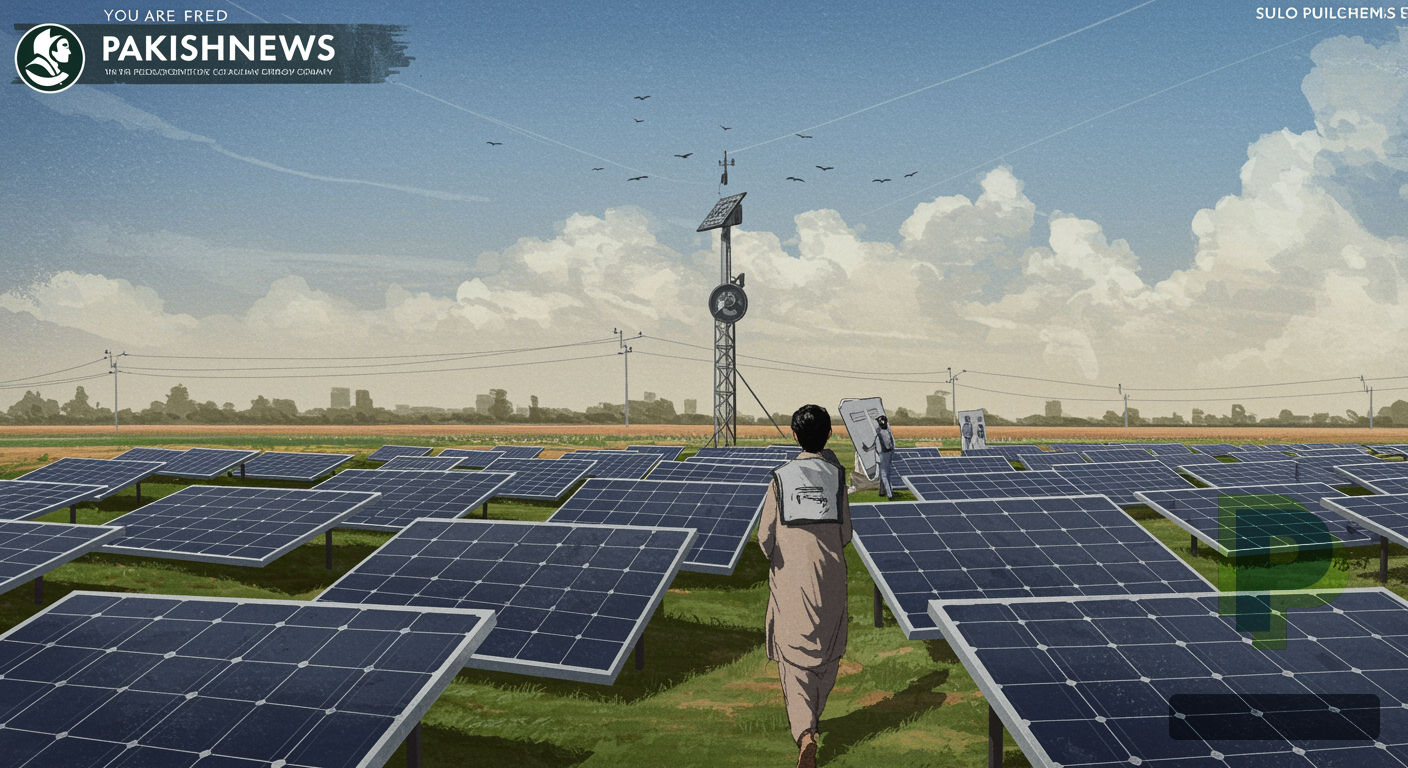
A burgeoning, people-led solar energy revolution across Pakistan is fundamentally reshaping the nation's energy landscape, providing a critical buffer against the volatility of international oil and gas markets, particularly those influenced by Middle Eastern geopolitical dynamics. This shift is not merely about green energy; it represents a strategic pivot towards energy independence with profound economic implications. The widespread adoption of rooftop solar panels by households and businesses, coupled with supportive government policies, is demonstrably easing the pressure on Pakistan's energy import bill, which has historically been a major drain on foreign exchange reserves and a source of economic instability. As of March 2026, this grassroots movement is increasingly insulating the nation from external energy shocks, offering a pathway to sustainable growth.
- Pakistan has witnessed a significant surge in decentralised solar power adoption, with over 500,000 net-metering connections installed nationwide by early 2026.
- This domestic solar boom is projected to reduce Pakistan's annual fossil fuel import bill by an estimated $2.5 billion to $3 billion within the next three years, according to the Ministry of Energy.
- The shift mitigates the impact of global energy price volatility, often exacerbated by geopolitical tensions in the Middle East, by decreasing reliance on imported oil and liquefied natural gas (LNG).
- Government initiatives, including favourable net-metering policies and zero-rated import duties on solar equipment, have spurred rapid consumer and commercial adoption.
- However, challenges remain, particularly concerning grid stability, infrastructure upgrades, and equitable access to solar financing across all socioeconomic strata.
This widespread transition to solar power is not just a technological upgrade; it is a strategic national imperative that directly addresses Pakistan's long-standing energy security vulnerabilities.
Background: Pakistan's Chronic Energy Dilemma and Global Shocks
For decades, Pakistan has grappled with a persistent energy crisis characterised by chronic power outages, high electricity tariffs, and a crippling circular debt in the power sector. A major contributing factor has been the nation's heavy reliance on imported fossil fuels, particularly oil and LNG, to meet its energy demands. According to data from the Pakistan Bureau of Statistics (PBS), Pakistan's energy import bill accounted for approximately 25-30% of its total import expenditure in recent years, reaching a peak of $27 billion in the fiscal year 2021-22 amidst soaring international commodity prices. This dependence makes the national economy highly susceptible to global energy price fluctuations and geopolitical instability, particularly in the Middle East, which is a primary source of these imports. Any disruption in supply or sharp increase in prices in the Gulf region directly translates into increased inflation, pressure on the Pakistani Rupee, and exacerbated load-shedding.
As PakishNews previously reported, BISP Denies Direct Cash Disbursement Role After Rahim Yar Khan Deaths, But Who….
The recent intensification of the Middle East energy crisis, driven by regional conflicts and global supply chain disruptions, has underscored the urgency for Pakistan to diversify its energy mix. The volatility has led to unpredictable price hikes for crude oil and natural gas, impacting everything from industrial production costs to consumer electricity bills. Historically, Pakistan has often found itself in a precarious position, forced to allocate significant foreign exchange to procure energy, sometimes at spot market prices, further straining its already fragile economy. This vulnerability has been a key driver behind the government's renewed focus on indigenous and renewable energy sources, with solar emerging as a frontrunner due to its cost-effectiveness and scalability.
The Mechanics of Pakistan's Solar Revolution
Pakistan's solar boom is primarily 'people-led' because it has been significantly driven by individual households and small to medium-sized enterprises (SMEs) investing in rooftop solar solutions. The advent of net-metering regulations, first introduced in 2015 by the National Electric Power Regulatory Authority (NEPRA) and subsequently streamlined, has been a game-changer. These regulations allow consumers to sell surplus electricity generated from their solar panels back to the national grid, effectively reducing their electricity bills and offering a return on investment. NEPRA's Annual Report for 2024-25 highlighted a 40% year-on-year increase in net-metering applications, with the total installed capacity under this mechanism exceeding 2,500 MW across all distribution companies (DISCOs) as of February 2026.
The affordability of solar technology has also played a crucial role. Prices of solar panels have plummeted globally by over 80% in the last decade, making solar power an increasingly attractive alternative to conventional electricity. Furthermore, the Government of Pakistan has supported this transition through various fiscal incentives, including zero-rated customs duty and sales tax on the import of solar panels and related equipment, as confirmed by a circular from the Federal Board of Revenue (FBR) in January 2025. This has made the initial investment more manageable for a wider segment of the population. Financial institutions, including the State Bank of Pakistan (SBP), have also introduced schemes offering concessional financing for renewable energy projects, further accelerating adoption among residential and commercial consumers. As PakishNews previously reported, these financing options have been critical for scaling up renewable energy infrastructure.
Expert Analysis: A Strategic Shift Towards Energy Sovereignty
The transition towards solar energy is viewed by experts as a fundamental reorientation of Pakistan's energy strategy. Dr. Amjad Hussain, an energy economist at the Sustainable Development Policy Institute (SDPI), told PakishNews, "The shift to decentralised solar is not just about reducing electricity bills for consumers; it's about building national energy resilience. Every kilowatt generated domestically, particularly through solar, lessens our reliance on volatile international markets and the geopolitical uncertainties of the Middle East. It's a direct hedge against imported inflation and currency depreciation."
Similarly, a senior official from the Alternative Energy Development Board (AEDB), speaking on condition of anonymity due to protocol, stated, "Our goal is to increase the share of renewable energy, primarily solar and wind, to 30% of the total energy mix by 2030. The current pace of people-led solar adoption is surpassing initial projections, proving that citizens are actively participating in solving Pakistan's energy challenges. This collective effort is significantly reducing the national demand for imported fossil fuels, directly impacting our trade balance."
Mr. Asim Ali, CEO of a prominent solar solutions provider in Lahore, further elaborated, "The commercial and industrial sectors are increasingly adopting solar, not just for cost savings but for operational stability. With frequent grid fluctuations and rising industrial tariffs, self-generation offers predictable energy costs and reduces downtime. This directly contributes to the competitiveness of Pakistani exports, which is vital for our economy."
Why is this shift to solar particularly critical for Pakistan now?
This shift to solar is particularly critical for Pakistan now due to a confluence of factors: persistent geopolitical instability in the Middle East impacting global oil and gas prices, the continuous depreciation of the Pakistani Rupee against the US Dollar making imports prohibitively expensive, and the nation's chronic circular debt in the power sector. By reducing reliance on imported fossil fuels, solar power directly addresses these vulnerabilities, safeguarding foreign exchange reserves, stabilising energy costs, and providing a more predictable energy landscape for economic planning and investment. It offers a tangible pathway out of a cycle of energy dependence and economic fragility.
Impact Assessment: Stabilizing the Economy, Empowering Consumers
The most immediate and tangible impact of Pakistan's solar boom is the visible reduction in the country's energy import bill. According to projections by the Ministry of Finance, if the current trajectory of solar adoption continues, Pakistan could see an annual reduction of $2.5 billion to $3 billion in its fossil fuel import expenditure within the next three years. This saving is critical for managing the national trade deficit and bolstering foreign exchange reserves, which have been under severe pressure. For instance, the State Bank of Pakistan's quarterly report for Q2 FY2025-26 noted a marginal but discernible decrease in the import of furnace oil and LNG, attributing part of this trend to increasing domestic solar generation capacity.
For the average Pakistani consumer, the impact is direct and profound. Households with net-metered solar systems report significant reductions in their monthly electricity bills, often by 50-70%, and in many cases, even receiving credit for surplus energy fed back into the grid. This financial relief is particularly impactful in urban centres like Lahore and Faisalabad, where electricity tariffs have soared. Beyond individual savings, the decentralised nature of solar power is also contributing to a more stable national grid by reducing peak load demand on conventional power plants, thereby easing the frequency and duration of load-shedding, especially in areas with high solar penetration. However, the benefits are not uniform; challenges remain in ensuring equitable access to solar technology and financing for lower-income households and in rural areas where grid infrastructure is less developed. The industrial sector in Karachi, a major economic hub, stands to benefit immensely from this energy transition. With industries transitioning to solar, they gain predictability in energy costs, reducing operational expenses and enhancing their competitive edge in international markets. This stability is crucial for long-term investment and job creation in a city that is the backbone of Pakistan's economy.
What Happens Next: Scaling Up and Addressing Challenges
Looking ahead, the trajectory of Pakistan's solar boom is set to continue, with ambitious targets outlined in the National Energy Policy 2023. The government aims to add 10,000 MW of solar capacity by 2030, a significant portion of which is expected to come from decentralised, private sector-led installations. To achieve this, several key areas require urgent attention. Firstly, grid infrastructure needs substantial upgrades to effectively integrate a growing number of intermittent solar sources. NEPRA has already initiated studies into smart grid technologies and battery storage solutions to enhance grid stability and reliability, especially in major urban centres and industrial zones. Secondly, financing mechanisms for solar adoption, particularly for SMEs and residential consumers, need to be further expanded and simplified. The SBP is exploring new Shariah-compliant financing models and microfinance options to broaden access.
Furthermore, standardisation of solar equipment quality and installation practices is crucial to ensure long-term performance and consumer confidence. The Pakistan Standards and Quality Control Authority (PSQCA) is working with industry stakeholders to develop and enforce stricter quality benchmarks. The development of a local manufacturing base for solar panels and components, rather than relying solely on imports, is another strategic imperative that could create jobs and further reduce costs, strengthening the 'Made in Pakistan' initiative. Stakeholders, including policymakers, financial institutions, and power distribution companies, must collaborate closely to navigate these challenges and fully harness the potential of solar energy to achieve national energy security and economic stability. The success of this transition will not only define Pakistan's energy future but also its resilience against global energy crises.
Related: More Pakistan Energy News | Renewable Energy Solutions
Related Coverage
- BISP Denies Direct Cash Disbursement Role After Rahim Yar Khan Deaths, But Who Assures Beneficiary…
- Afghanistan Claims 400 Killed in Pakistan Strike, What Does This Mean for Border Stability in…
- Pakistan's KSE-100 Index Faces Volatility Amid Global Oil Surges, But How Are Karachi's Small…
Quick Answers (AI Overview)
- What happened in this story?
A burgeoning, people-led solar energy revolution across Pakistan is fundamentally reshaping the nation's energy landscape, providing a critical buffer against the volatility of international oil and gas markets, particul - Why does this matter right now?
It matters because pakistan's domestic solar surge mitigates energy import volatility, but what does this mean for karachi's industrial sector? can impact public discussion, policy, or regional stability depending on follow-up events. - What should readers watch next?
Watch for official statements, verified facts, and timeline updates from credible sources including The Guardian.
Frequently Asked Questions
What is the core update in this story?
A burgeoning, people-led solar energy revolution across Pakistan is fundamentally reshaping the nation's energy landscape, providing a critical buffer against the volatility of international oil and gas markets, particularly those influenced by Middle Eastern geopolitical dynamics. This shift is not merely about green
Why does this matter right now?
This matters because the development can influence public debate, policy direction, and the wider regional situation.
What should readers monitor next?
Follow official statements, verified facts, and timeline updates from reliable sources.