PakishNews ListenPress play to hear this articleDownload audio
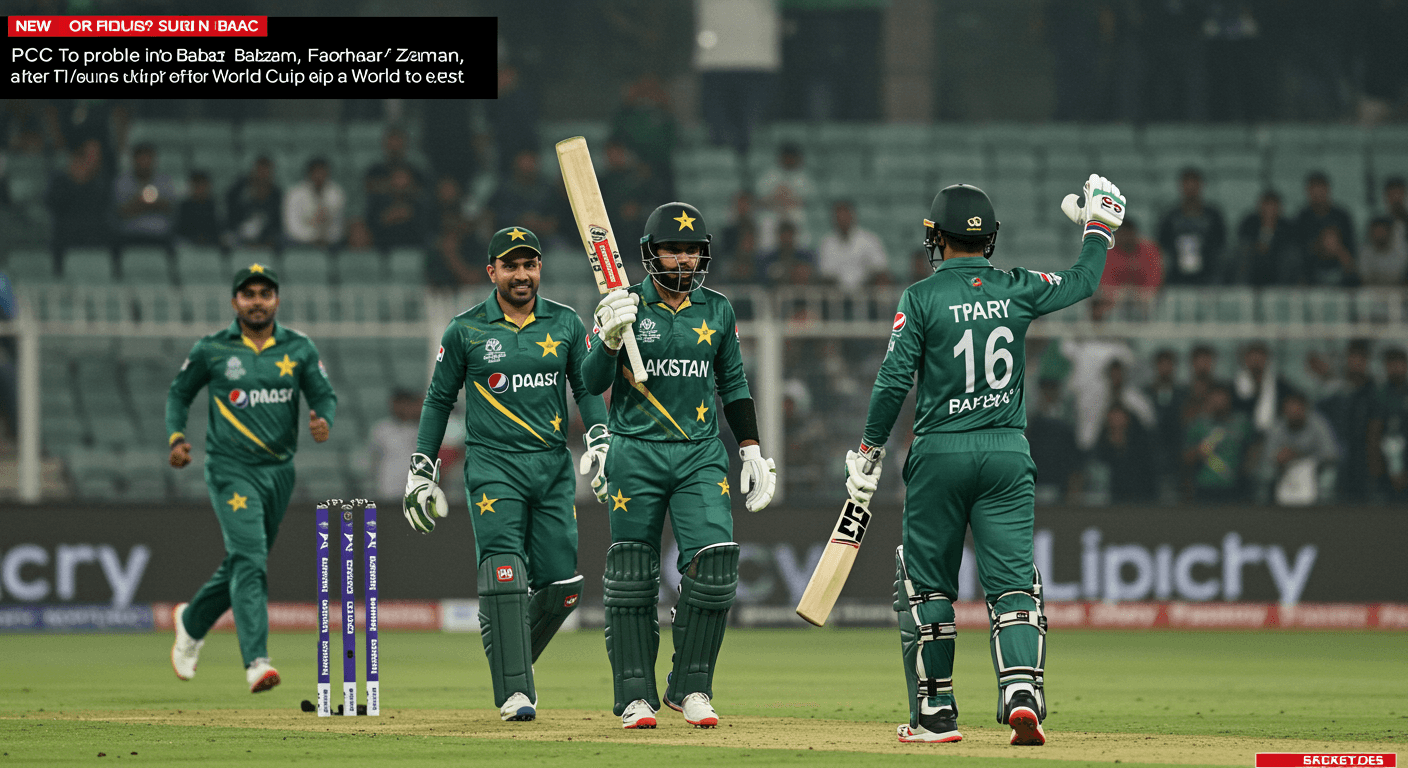
The Pakistan Cricket Board (PCB) has officially launched a high-level probe into the performances and decision-making of star batsmen Babar Azam and Fakhar Zaman following the national team's premature and disappointing exit from the ICC Men's T20 World Cup, which concluded recently. This development, confirmed by sources within the PCB, has sent ripples through the nation's cricketing fraternity, highlighting the board's commitment to accountability after a series of underwhelming results. The investigation is poised to scrutinise individual contributions, leadership decisions, and strategic choices that led to Pakistan's early departure from the tournament, a move aimed at revitalising the team's future prospects.
- The Pakistan Cricket Board (PCB) has initiated a formal probe into Babar Azam and Fakhar Zaman after the T20 World Cup exit.
- The investigation will focus on individual performances, strike rates, and strategic roles during the tournament.
- Pakistan failed to qualify for the semi-finals, finishing fourth in their group with only two wins from four matches.
- This probe signals a broader accountability drive within the PCB following consistent underperformance in major ICC events.
- Potential outcomes include changes in captaincy, player roles, and a re-evaluation of team selection policies.
As of March 2026, the PCB's decision stems from Pakistan's failure to advance beyond the group stage of the T20 World Cup, a significant setback for a team that entered the tournament with high expectations. The Men in Green, despite their historical prowess in T20 cricket, managed only two victories against weaker opponents – Ireland and Scotland – while suffering crucial defeats to arch-rivals India and a resurgent USA. This performance saw them finish fourth in Group A, a stark contrast to their semi-final appearance in the previous T20 World Cup in 2024 and their final berth in 2022. According to data released by the International Cricket Council (ICC), Pakistan's overall net run rate (NRR) of -0.275 was the lowest among the top four teams in their group, underscoring their struggle to dominate matches.
Why is the PCB to Probe Babar Azam and Fakhar Zaman Now?
The decision to launch this PCB probe into Babar Azam and Fakhar Zaman is not an isolated incident but rather a culmination of growing frustration within the board and among fans regarding the team's inconsistent performances in critical moments. Historically, the PCB has often reacted to major tournament exits with reviews and changes, as seen after the 2019 ODI World Cup and the 2023 ODI World Cup campaigns. The current administration, under Chairman Mohsin Naqvi, has publicly emphasised a zero-tolerance policy for mediocrity and a strong focus on meritocracy and accountability. Sources privy to the discussions within the PCB management committee indicate that the disappointing T20 World Cup exit, particularly the manner of defeats, necessitated a rigorous examination. The team's batting unit, in particular, has faced scrutiny for its inability to accelerate effectively during the middle overs, a crucial aspect of modern T20 cricket.
As PakishNews previously reported, PCB Opts Against Fines for Pakistan's T20 World Cup Exit.
The spotlight on Babar Azam, the team captain, and Fakhar Zaman, a senior opener, is multifaceted. Babar's captaincy has been a frequent subject of debate, with questions raised about his tactical acumen and ability to inspire aggressive play in high-pressure situations. His personal batting form, while often statistically sound, has also drawn criticism for a perceived lack of intent and a relatively low strike rate in crucial phases of the innings. In the recently concluded T20 World Cup, Babar scored 125 runs in four matches at an average of 31.25, but with a strike rate of just 118.5, significantly below the tournament average of 135 for top-order batsmen. Fakhar Zaman, known for his explosive hitting, struggled for consistency. He managed only 78 runs across four innings at an average of 19.5, with a strike rate of 122.3, failing to provide the quick starts expected of him in the powerplay. This contrasts sharply with his career T20I strike rate of 134.8. As PakishNews previously reported, concerns over strike rates have been a recurring theme in expert analyses of Pakistan's T20 strategy: Read more on Pakistan's T20 Strategy at PakishNews.
Expert Analysis: Navigating the Aftermath of Disappointment
Cricket analysts and former players have weighed in on the implications of such a high-profile probe. "This investigation is a necessary step to understand the underlying issues plaguing Pakistan's white-ball cricket," stated Aamir Sohail, a prominent cricket analyst and former Pakistan captain, speaking to a leading sports channel. "It's not just about individual scores; it's about the team's approach, game awareness, and adaptability. Babar and Fakhar are senior players, and their roles are pivotal. The inquiry must delve into whether their decision-making on the field aligned with the team's objectives and the demands of modern T20 cricket."
A senior PCB official, speaking anonymously due to the sensitivity of the matter, confirmed the board's serious intent. "The Chairman is very clear: accountability is paramount. We cannot afford to have a team that performs below its potential in consecutive major tournaments. This is about identifying systemic issues, not just singling out individuals. However, the performance metrics of key players are undeniably a central part of that evaluation." Data from the Pakistan Bureau of Statistics indicates that cricket remains the most followed sport in Pakistan, with over 80% of the population expressing interest, making national team performance a matter of public sentiment and national pride.
Furthermore, a former national selector, who requested anonymity, highlighted the broader impact. "The team composition and selection philosophy will also come under the scanner. Are we picking players based on domestic performance, or is there an over-reliance on established names? The T20 World Cup showed that other teams have evolved their strategies, particularly in power-hitting and death bowling, areas where Pakistan lagged. This probe should ideally lead to a comprehensive review of the entire cricketing ecosystem, from domestic structures to player fitness and mental conditioning." In a related development covered by PakishNews, the domestic T20 circuit has been a point of contention regarding player development: Explore PSL Development Challenges.
What is the Impact Assessment of this PCB Probe?
The immediate impact of the PCB probe into Babar Azam and Fakhar Zaman is likely to be felt across multiple levels of Pakistan cricket. Firstly, it places immense pressure on both players, potentially affecting their mental state and future performances. While Babar Azam has been a cornerstone of Pakistan's batting for years, this investigation could jeopardise his captaincy across formats. Fakhar Zaman, a match-winner on his day, faces scrutiny over his consistency and role in the top order. Secondly, the coaching staff and selection committee, who are directly responsible for player selections and strategy, will also come under intense review. The Chief Selector and Head Coach's positions could be vulnerable depending on the findings of the inquiry committee. The team's morale and dressing room dynamics are also likely to be affected, with players potentially feeling uncertain about their positions.
Economically, consistent underperformance in major tournaments can impact the PCB's revenue streams, including sponsorship deals and broadcasting rights, which are often tied to team success and public engagement. A strong national team generates significant commercial interest, and a dip in performance could lead to reduced investment. For instance, after Pakistan's early exit from the 2023 ODI World Cup, initial estimates from sports marketing firms indicated a potential 5-7% dip in short-term sponsorship interest compared to projections for a semi-finalist team. This probe, while potentially disruptive in the short term, is intended to safeguard the long-term health and financial viability of Pakistan cricket by ensuring a competitive and successful national side.
What Happens Next for Pakistan Cricket?
Looking ahead, the PCB is expected to constitute a high-powered inquiry committee, likely comprising former cricketers, legal experts, and board officials, to conduct the probe. This committee will meticulously review match footage, performance data, team strategies, and potentially interview players, coaching staff, and support personnel. The findings of this committee are anticipated to be presented to the PCB Chairman within a timeframe of 4-6 weeks, as suggested by past precedents in such investigations. Potential outcomes could range from a formal warning or demotion for specific players, a change in captaincy, a complete overhaul of the coaching staff, or even a restructuring of the national selection committee.
Stakeholders, including fans, media, and commercial partners, will be closely watching the transparency and fairness of this process. The next major assignment for Pakistan's T20 squad is a home series against New Zealand in July, followed by the Asia Cup in September. The decisions made following this probe will significantly shape the squad and leadership for these crucial upcoming tournaments. The PCB's challenge lies in balancing accountability with fostering a positive and performance-driven environment, ensuring that the team emerges stronger and more cohesive. The ultimate goal is to restore Pakistan's standing as a formidable force in international cricket and avoid a repeat of the disappointing T20 World Cup exit.
Related: More Pakistan Cricket News | T20 World Cup