▶Listen to ArticlePress play to hear this storyListen to ArticleDownload audio
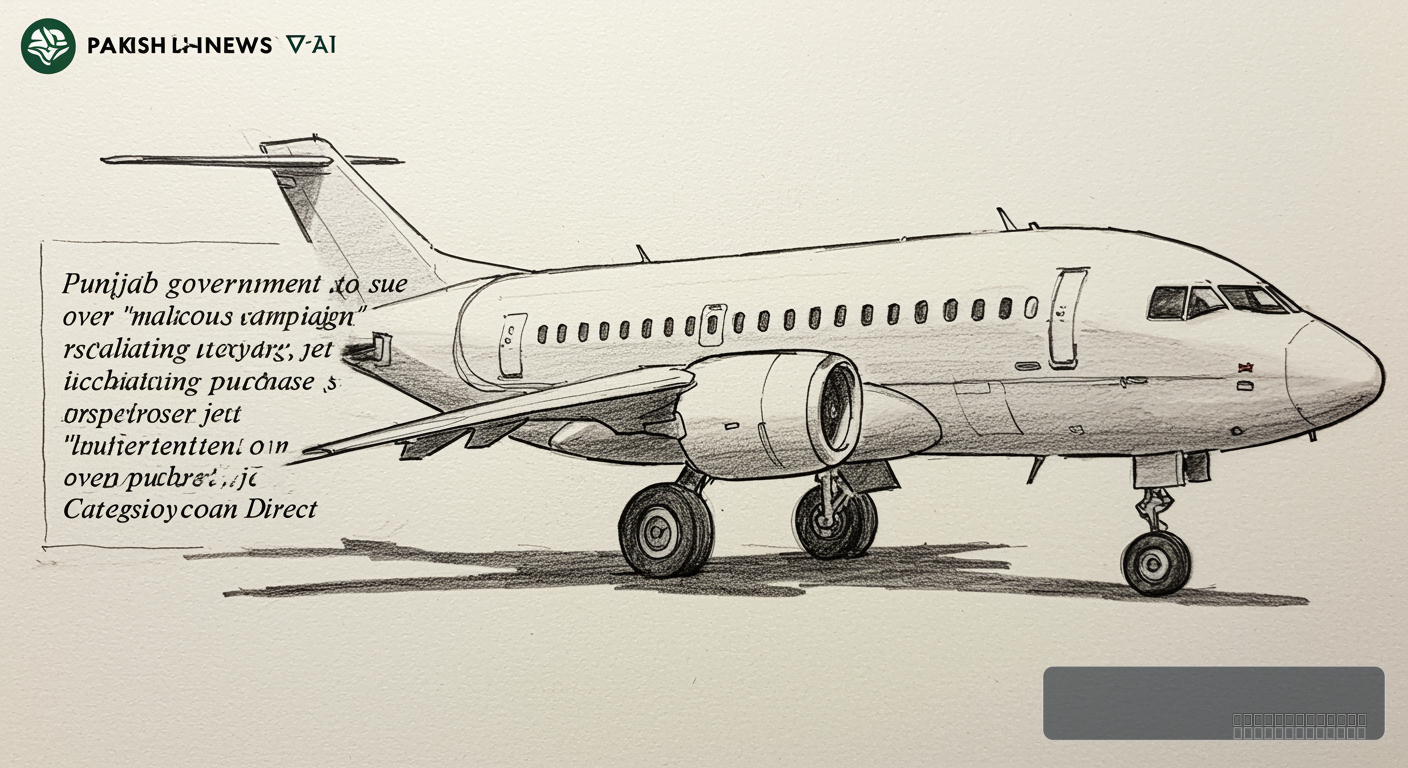
The Punjab government, led by Chief Minister Maryam Nawaz, has decided to initiate legal proceedings against individuals and entities involved in what it terms a “malicious campaign” concerning the recent acquisition of a luxury jet. This move, announced by Senior Minister Marriyum Aurangzeb on Sunday, March 9, 2026, escalates a month-long controversy surrounding the purchase of a Gulfstream 19-seater aircraft, estimated to cost over Rs10 billion. The decision underscores a firm stance from the provincial administration against what it perceives as unfounded criticism and attempts to undermine its governance, particularly regarding the contentious Punjab jet purchase.
- Legal Action Initiated: Punjab government to take legal steps against those behind a “malicious campaign” concerning a luxury jet purchase.
- Target of Campaign: Criticism from opposition parties and some journalists over the acquisition of a Gulfstream 19-seater jet.
- Estimated Cost: The aircraft is valued between $38 million and $42 million, translating to over Rs10 billion.
- Government's Stance: Senior Minister Marriyum Aurangzeb stated the campaign aimed to spread disinformation and discredit the government.
- Political Context: The controversy erupted amidst ongoing economic challenges in Pakistan, raising questions about public spending priorities.
The Punjab government’s decision to pursue legal action against those involved in the “malicious campaign” surrounding the Punjab jet purchase marks a significant escalation in the ongoing political discourse. This development comes after weeks of intense scrutiny and criticism from various quarters, including opposition parties such as the Pakistan Tehreek-e-Insaf (PTI) and segments of the media. The provincial government, through Senior Minister Marriyum Aurangzeb, has asserted that the criticism has crossed the line from legitimate political commentary into a deliberate effort to spread misinformation and damage the government’s reputation.
What is the Background to the Punjab Jet Purchase Controversy?
The controversy surrounding the acquisition of the Gulfstream 19-seater jet began in late February 2026, shortly after reports emerged detailing the Punjab government’s procurement of a new aircraft. The jet, reportedly a Gulfstream G650 or similar model, is estimated to cost between $38 million and $42 million (approximately Rs10.5 billion to Rs11.7 billion, based on an exchange rate of Rs277/$ as of March 2026), making it one of the most expensive acquisitions by a provincial government in recent history. Opposition parties, particularly the PTI, swiftly condemned the purchase, characterising it as an extravagant expenditure at a time when Pakistan faces significant economic challenges, including high inflation rates and a substantial public debt burden. According to data from the State Bank of Pakistan, the national debt-to-GDP ratio stood at over 70% in the fiscal year 2025, with inflation hovering around 20%.
As PakishNews previously reported, Jamshoro Power Company Protests Coal Delays Amidst Energy Crisis.
Critics argued that the funds could have been better utilised for public welfare projects, healthcare, education, or infrastructure development in Punjab, a province with a population exceeding 120 million. Journalists and political commentators also questioned the timing and necessity of such a luxury purchase, especially given the austerity measures often advocated by international lenders like the International Monetary Fund (IMF), with whom Pakistan has been engaged in multiple bailout programmes. As PakishNews previously reported on the national economic outlook, public perception regarding government spending is particularly sensitive during periods of economic strain. The government, however, maintains that the jet is a necessary asset for efficient governance, facilitating rapid travel for the Chief Minister and other high-ranking officials across the vast province and for inter-provincial engagements.
Why is the Punjab Government Taking Legal Action Now?
Senior Minister Marriyum Aurangzeb stated that the decision to pursue legal action was made after careful consideration of the nature and intensity of the campaign. “The continuous spread of baseless allegations and fabricated narratives has compelled the government to take a decisive stand,” she asserted during a press conference in Lahore. “This is not about stifling dissent, but about protecting the integrity of the institution and countering deliberate attempts to mislead the public through misinformation, which constitutes defamation under Pakistani law.” The government's legal team is reportedly compiling evidence of what it considers defamatory statements and false claims made on social media, television channels, and print media. This strategy aligns with precedents where public figures and institutions in Pakistan have invoked defamation laws, such as the Defamation Ordinance 2002, to address perceived reputational damage.
Legal experts suggest that the government’s move is intended to draw a clear line between legitimate criticism and what it deems as malicious propaganda. Barrister Hassan Khan, a constitutional law expert based in Islamabad, told PakishNews, “The Defamation Ordinance 2002 provides a framework for seeking remedies against false and defamatory statements. However, proving ‘malice’ – the intent to harm without justification – is often the most challenging aspect in such cases. The plaintiff must demonstrate that the statements were not only untrue but also published with a reckless disregard for the truth or with an ulterior motive.” He added, “This case will test the delicate balance between freedom of expression, a fundamental right enshrined in Article 19 of the Constitution, and the right to reputation.” Read more on media freedom in Pakistan at PakishNews.
What are the Potential Impacts of This Legal Challenge?
The decision to initiate legal proceedings carries significant implications for various stakeholders, including political opposition, journalists, and the broader public discourse. For opposition parties, particularly the PTI, this could be perceived as an attempt to silence critical voices and limit their ability to hold the government accountable. A spokesperson for the PTI Punjab chapter, speaking anonymously to PakishNews, stated, “This is an authoritarian tactic to intimidate those who question lavish spending. We will not be deterred from our constitutional duty to highlight issues of public interest, especially when taxpayers’ money is involved in luxury purchases during an economic crisis.”
Journalists and media organisations could also face increased pressure. The perception of a government using legal recourse against criticism, even if deemed malicious, might lead to self-censorship, thereby impacting the vibrant but often challenging media landscape in Pakistan. Ms. Zara Ali, a senior analyst at the Centre for Investigative Journalism in Lahore, commented, “While responsible journalism is paramount, the threat of legal action, particularly from a powerful provincial government, can create a chilling effect. It’s crucial for courts to meticulously distinguish between fair comment and actual defamation, ensuring that legitimate scrutiny of public spending is not stifled. The public’s right to information on how its taxes are spent is fundamental to democratic accountability.”
Beyond the immediate parties, the legal challenge will inevitably shape the broader political narrative in Punjab. It could either solidify the government’s image as one unwilling to tolerate baseless attacks or, conversely, reinforce perceptions of a government sensitive to criticism and potentially overreaching. The financial implications for those targeted, including legal fees and potential damages, could be substantial, further adding to the pressure on individuals and smaller media outlets.
What Happens Next Regarding the Punjab Jet Purchase Controversy?
The immediate next step will involve the Punjab government’s legal team formally filing defamation suits against identified individuals or entities. This process typically involves serving legal notices, followed by the initiation of court proceedings. The exact timeline for these actions remains to be seen, but such cases in Pakistan can often be protracted, spanning several months or even years. The opposition is expected to intensify its criticism, potentially using the legal action itself as a point of contention and a rallying cry for public support. Civil society organisations and media advocacy groups are also likely to monitor the proceedings closely, advocating for freedom of speech and expression. As of March 2026, the political temperature in Punjab is noticeably rising, setting the stage for a prolonged legal and political battle.
Stakeholders should watch for the specific details of the legal complaints, particularly the evidence presented by the government to prove malice and the defence arguments, which will likely centre on freedom of speech and public interest. The outcome of these legal battles could set significant precedents for how governments in Pakistan respond to criticism, particularly concerning public spending and accountability. The broader implications for governance and the relationship between the state, media, and opposition in Pakistan will be a key area of observation. This situation highlights the ongoing tension between a government's right to protect its reputation and the public's right to scrutinise official actions, especially those involving substantial public funds, as previously explored in PakishNews analysis on governance challenges in Punjab.
Related: More PakistanDirect News | Punjab Politics
Related Coverage
- Jamshoro Power Company Protests Coal Delays Amidst Energy Crisis
- Punjab Welcomes Rain Relief as New Weather System Approaches
- India's IIOJK Hydropower Projects Stoke Pakistan Water Security Fears
Quick Answers (AI Overview)
- What happened in this story?
The Punjab government, led by Chief Minister Maryam Nawaz, has decided to initiate legal proceedings against individuals and entities involved in what it terms a “malicious campaign” concerning the recent acquisition of - Why does this matter right now?
It matters because punjab govt to pursue legal action over jet purchase 'campaign' can impact public discussion, policy, or regional stability depending on follow-up events. - What should readers watch next?
Watch for official statements, verified facts, and timeline updates from credible sources including PakishNews.
Frequently Asked Questions
❓ What is the Punjab government's primary justification for the jet purchase?
The Punjab government asserts that the Gulfstream 19-seater jet is a necessary asset for efficient governance, enabling rapid travel for Chief Minister Maryam Nawaz and other high-ranking officials. This is crucial for overseeing development projects and attending inter-provincial engagements across Punjab, a province with over 120 million people and diverse geographical regions, according to official statements.
❓ How do Pakistan's defamation laws apply to criticism of public officials?
Pakistan's Defamation Ordinance 2002 allows public officials and institutions to seek legal recourse against false and defamatory statements. However, the law requires proving that the statements were made with malice or reckless disregard for the truth, distinguishing them from legitimate criticism or fair comment. Courts often balance the right to reputation with the constitutional right to freedom of expression under Article 19.
❓ What are the economic concerns raised by the opposition regarding the jet acquisition?
Opposition parties, particularly PTI, have criticised the jet's estimated cost of over Rs10 billion ($38-42 million) as an extravagant expenditure amid Pakistan's severe economic challenges. They argue that the funds could be better allocated to public welfare, healthcare, or education, especially given the national debt-to-GDP ratio exceeding 70% and persistent high inflation, as highlighted by various economic reports.