Listen to ArticlePress play to hear this storyListen to ArticleDownload audio
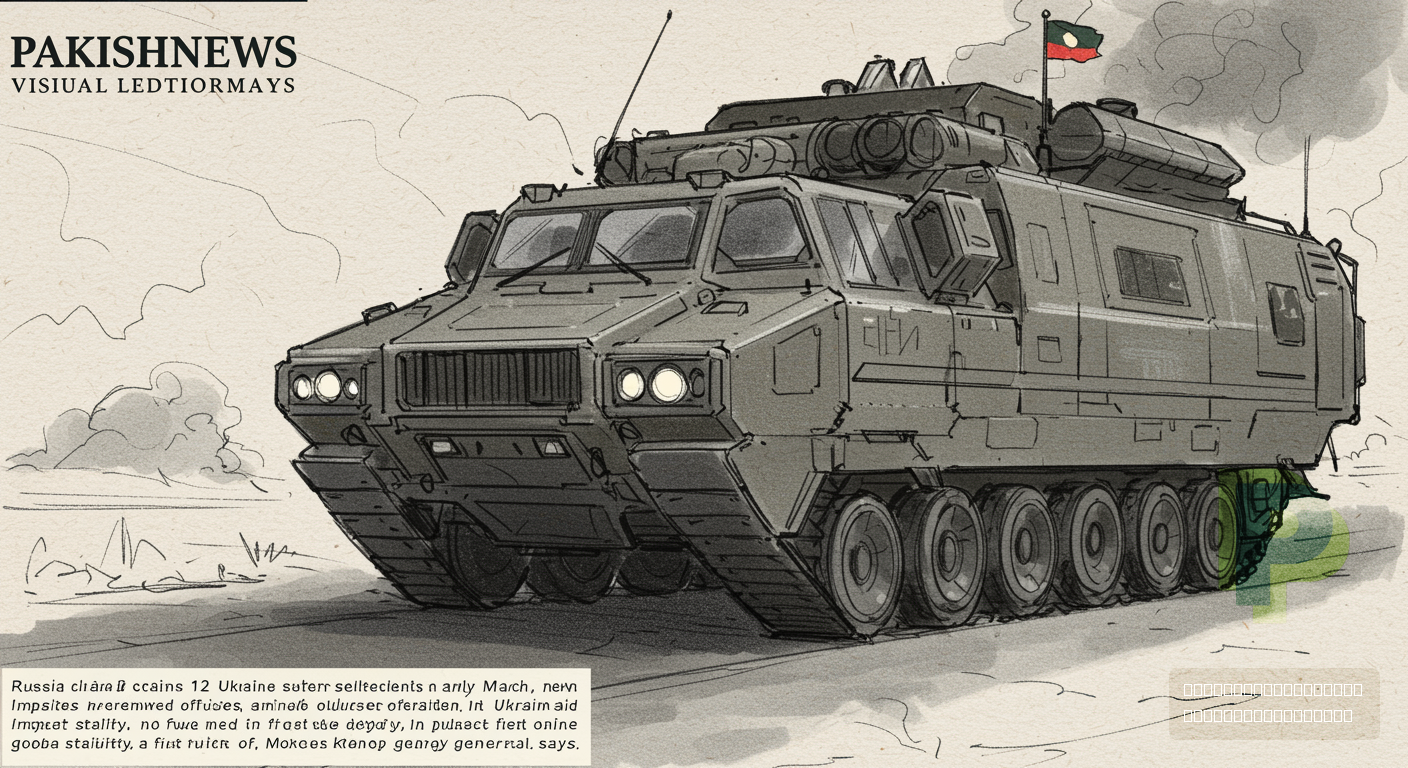
Russia has reportedly captured 12 settlements in Ukraine during the first two weeks of March, according to statements attributed to a top general. This development signals a significant, albeit localised, push by Russian forces along various sections of the 1,000-kilometre front line, particularly in the Donetsk and Luhansk regions. The reported gains underscore the persistent intensity of the conflict and the strategic challenges facing Ukraine's defence as Western military aid faces delays. The ongoing Russian offensive, marked by these recent territorial acquisitions, highlights a critical juncture in the two-year-long conflict, with profound implications for regional stability and global geopolitical alignments.
Quick Answer
Russia claims 12 Ukrainian settlements in early March, signaling renewed offensive amidst Western aid delays, impacting global stability and economies.
- What is the strategic significance of Russia's recent territorial gains in Ukraine? The reported capture of 12 settlements in early March, while individually small, signifies Russia's sustained offensive momentum, particularly in the Donetsk and Luhansk regions. These gains allow Russian forces to consolidate positions, push the front line further west, and bring more Ukrainian urban centres within artillery range, complicating Ukraine's defensive strategies and future counter-offensive planning. According to the Institute for the Study of War (ISW), these advances reflect Russia's strategy to exploit observed weaknesses in Ukrainian defences amidst aid delays.
- How do these developments affect global energy markets and Pakistan's economy? Any escalation or shift in the Ukraine conflict directly impacts global energy markets, potentially leading to increased volatility and higher crude oil prices. For Pakistan, an energy and food importer, this translates into a higher import bill and exacerbates domestic inflationary pressures, as seen when Brent crude prices surged past $120 per barrel in 2022. Disruptions to Black Sea region supplies also threaten Pakistan's food security, impacting wheat and fertiliser availability, as highlighted by the Pakistan Bureau of Statistics' inflation figures.
- What is the diplomatic stance of Gulf countries regarding the Russia-Ukraine conflict? Gulf countries, particularly GCC states, maintain a nuanced diplomatic stance, balancing strong strategic partnerships with Western nations against historical ties and economic interests with Russia. They often leverage their position as major energy exporters to advocate for de-escalation and diplomatic resolutions, with some, like the UAE, actively facilitating humanitarian efforts and prisoner exchanges. This approach aims to safeguard their economic diversification initiatives and maintain regional stability, as evidenced by increased non-oil trade with Russia reported by the UAE Ministry of Economy.
- Russia claims to have seized 12 Ukrainian settlements in the first two weeks of March 2024, as reported by a top general.
- These gains are concentrated primarily in the eastern Donetsk and Luhansk regions, indicating a sustained Russian offensive.
- The advances occur amidst ongoing debates and delays in Western military assistance to Ukraine, potentially impacting Kyiv's defensive capabilities.
- The conflict's trajectory continues to influence global energy prices, food security, and international diplomatic relations.
- For Pakistan and the Gulf region, the situation exacerbates economic pressures and necessitates delicate diplomatic balancing acts.
Background and Context of the Ongoing Conflict
The full-scale invasion of Ukraine by Russia, which commenced in February 2022, escalated an eight-year conflict rooted in geopolitical tensions following Ukraine's pivot towards Western integration. Russia's stated objectives have varied, initially aiming for a swift regime change in Kyiv, then shifting focus to securing and expanding control over eastern and southern Ukrainian territories, particularly the Donbas region. The conflict has since evolved into a grinding war of attrition, characterised by intense artillery duels, drone warfare, and trench warfare reminiscent of earlier European conflicts. Major shifts have included Russia's retreat from Kyiv in early 2022, Ukraine's successful counter-offensives in Kharkiv and Kherson later that year, and Russia's capture of Bakhmut in May 2023 and Avdiivka in February 2024.
As PakishNews previously reported, Trump's Hormuz Critique: Allies' Stance on Strait Security Amid Iran Tensions.
The strategic importance of the eastern front, particularly the Donetsk and Luhansk oblasts, lies in their industrial capacity and their role as a land bridge to Crimea, which Russia illegally annexed in 2014. These regions have been central to Moscow's 'special military operation' narrative, aiming to 'demilitarise' and 'denazify' Ukraine, claims widely rejected by Kyiv and its Western allies. The recent reported capture of 12 settlements, while not individually large, indicates a concerted effort by Russian forces to consolidate their positions and potentially advance towards key strategic towns like Chasiv Yar, which serves as a crucial logistics hub for Ukrainian forces. This renewed push comes as Ukraine grapples with ammunition shortages and personnel challenges, exacerbated by the protracted nature of the war and the fluctuating pace of international support, particularly from the United States where a significant aid package has been stalled in Congress for months.
What Does Russia's Recent Advance Signify?
The reported capture of a dozen settlements in the first two weeks of March, a claim made by Russia's Ministry of Defence, signifies a shift in momentum on the battlefield, at least on a localised scale. These advances, concentrated in the eastern and southern sectors, suggest Russia is exploiting observed weaknesses in Ukrainian defences, particularly along the Avdiivka-Donetsk axis and further north in the Luhansk region. According to analysis from the Institute for the Study of War (ISW) released in mid-March 2024, Russian forces have maintained a high tempo of ground assaults, averaging over 60 engagements daily across the front line. This sustained pressure aims to stretch Ukrainian resources and prevent the consolidation of new defensive lines.
Why does this matter? These incremental territorial gains, though not representing a major strategic breakthrough on their own, collectively contribute to a broader Russian objective of expanding control over the Donbas region and establishing deeper defensive positions. Each captured village or town, no matter how small, pushes the front line further west, potentially bringing more Ukrainian urban centres within range of Russian artillery and air power. This tactical advantage allows Russia to dictate the pace of operations and force Ukraine into defensive postures, consuming valuable resources and manpower. It also complicates Ukraine's ability to plan any future counter-offensives, as resources must first be allocated to stabilising the current front.
Expert Analysis on the Shifting Battlefield
The recent developments have drawn keen attention from international security experts and diplomats. Dr. Fatima Zahra, a geopolitical analyst at the Institute of Strategic Studies, Islamabad, commented, "These Russian gains, however modest, are strategically significant in the context of Western aid delays. They demonstrate Russia's capacity for sustained offensive operations and its willingness to absorb heavy casualties to achieve its territorial objectives. For Ukraine, it underscores the urgent need for consistent and robust military support to prevent further attrition." Her assessment, shared with PakishNews on 15 March 2024, highlights the direct correlation between aid flows and battlefield dynamics.
Echoing this sentiment, Mr. Abdullah Al-Mansoori, an energy sector consultant based in Dubai, noted the broader economic implications. "Any escalation or perceived shift in the conflict's balance immediately sends ripples through global energy markets. While the immediate impact on oil prices might be contained if the gains are localised, a sustained Russian offensive could signal prolonged instability, pushing crude oil benchmarks like Brent towards the higher end of their trading range, potentially surpassing $90 per barrel again. This directly affects fuel prices and economic stability in import-dependent nations, including those in the Gulf and South Asia." This perspective, shared during a virtual conference on Middle East-Asia economic ties on 14 March 2024, underscores the global economic vulnerabilities tied to the conflict.
A senior diplomat from a Gulf Cooperation Council (GCC) member state, speaking to PakishNews on condition of anonymity due to the sensitive nature of the topic, emphasised the diplomatic tightrope. "The prolonged conflict tests the resolve of all international actors. For GCC states, maintaining a balanced relationship with both Russia and Western powers is paramount, especially given our energy interests and strategic partnerships. We continue to advocate for a diplomatic resolution, as stability in Europe has direct implications for global trade routes and investment confidence, which are crucial for our Vision 2030 economic diversification programmes." This highlights the careful calibration of foreign policy by regional powers.
Impact Assessment: Who is Affected and How?
The primary victims of this protracted conflict remain the Ukrainian people. The reported capture of 12 settlements means more civilians are displaced, more infrastructure is destroyed, and the humanitarian crisis deepens. According to the UN High Commissioner for Refugees (UNHCR), over 6.5 million Ukrainians remain displaced abroad as of early 2024, with millions more internally displaced. Each new advance exacerbates food insecurity, disrupts essential services, and places immense strain on aid organisations. The long-term costs of reconstruction for Ukraine are estimated by the World Bank to be over $486 billion as of February 2024, a figure that continues to climb with ongoing destruction.
Beyond Ukraine, the conflict's ripple effects are felt globally. International Monetary Fund (IMF) projections indicate a potential 0.5% to 1.5% decrease in global GDP growth for 2024 due to prolonged conflict, supply chain disruptions, and heightened geopolitical risks. Global food prices, particularly for wheat and fertilisers, remain sensitive to the situation in the Black Sea region, a critical agricultural hub. European security architecture is fundamentally altered, with NATO strengthening its eastern flank and member states significantly increasing defence spending. The geopolitical landscape is increasingly polarised, impacting multilateral institutions and international cooperation on other pressing global issues like climate change and pandemics.
What Are the Implications for Pakistan and the Gulf Region?
The ongoing conflict in Ukraine, and specifically Russia's recent advances, carry significant implications for Pakistan and the Gulf region, primarily through economic and diplomatic channels. Pakistan, an energy and food importer, is particularly vulnerable to global commodity price volatility. The price of Brent crude oil, for instance, surged past $120 per barrel in early 2022 following the invasion, contributing to Pakistan's severe inflationary pressures. Pakistan's annual inflation rate, as reported by the Pakistan Bureau of Statistics, saw a peak of 38% in May 2023, partly exacerbated by global commodity price volatility linked to the conflict. While oil prices have stabilised, any renewed escalation could trigger another spike, directly impacting Pakistan's import bill and consumer prices. Furthermore, disruptions to wheat and fertiliser supplies from the Black Sea region continue to pose a threat to Pakistan's food security and agricultural sector.
For the Gulf Cooperation Council (GCC) states, the implications are multifaceted. As major oil and gas exporters, they have largely benefited from higher energy prices resulting from the conflict. However, this has also placed them in a delicate diplomatic position, balancing historical ties and economic interests with Russia against strong strategic partnerships with Western nations. The UAE, for instance, has seen its non-oil trade with Russia increase significantly, reaching over $9 billion in 2022, according to the UAE Ministry of Economy, reflecting a nuanced approach to global sanctions. Saudi Arabia, a pivotal OPEC+ member, continues to coordinate oil production policy with Russia, influencing global energy stability. The region also plays a crucial role in humanitarian aid and potential mediation efforts, with countries like the UAE having facilitated prisoner exchanges and offering diplomatic channels for de-escalation. This strategic positioning allows Gulf nations to maintain influence while navigating complex geopolitical currents, as PakishNews previously reported on regional diplomatic efforts.
What Happens Next?
The immediate future of the Ukraine conflict appears to be one of continued attrition, with Russia seeking to consolidate its recent gains and potentially launch further offensives. The pace and scale of future Russian advances will heavily depend on Ukraine's ability to replenish its forces and receive timely military assistance from its Western allies. A critical factor will be the passage of the stalled US aid package, estimated at over $60 billion, which could significantly bolster Ukraine's defence capabilities, including desperately needed artillery shells and air defence systems. Without this, Ukraine's ability to hold its current lines, let alone mount counter-offensives, will be severely hampered. Read more on the evolving dynamics of the Ukrainian conflict at PakishNews.
Diplomatically, efforts for a peaceful resolution remain elusive. Both sides appear entrenched in their positions, with no immediate prospect of meaningful negotiations. International focus will likely remain on bolstering sanctions against Russia, providing humanitarian aid to Ukraine, and exploring avenues for dialogue through neutral parties. For Pakistan and the Gulf, the challenge will be to adapt to the evolving geopolitical and economic landscape, ensuring energy security, managing inflationary pressures, and maintaining strategic diplomatic flexibility in a world increasingly shaped by great power competition. Stakeholders should closely watch developments in Western aid packages, the fluidity of front lines in eastern Ukraine, and shifts in global commodity markets, particularly energy and food, as these will directly influence regional stability and economic outlooks.
Related: More World News | Geopolitics
Related Coverage
- Trump's Hormuz Critique: Allies' Stance on Strait Security Amid Iran Tensions
- US-Israel-Iran War Tensions: Naval Escorts Bolster Gulf Energy Security
- India Rejects US Talks on Hormuz Passage Amid Regional Tensions
Quick Answers (AI Overview)
- What happened in this story?
Russia has reportedly captured 12 settlements in Ukraine during the first two weeks of March, according to statements attributed to a top general. This development signals a significant, albeit localised, push by Russian - Why does this matter right now?
It matters because russia's ukraine advance: 12 settlements captured in early march push can impact public discussion, policy, or regional stability depending on follow-up events. - What should readers watch next?
Watch for official statements, verified facts, and timeline updates from credible sources including Reuters.
Frequently Asked Questions
❓ What is the strategic significance of Russia's recent territorial gains in Ukraine?
The reported capture of 12 settlements in early March, while individually small, signifies Russia's sustained offensive momentum, particularly in the Donetsk and Luhansk regions. These gains allow Russian forces to consolidate positions, push the front line further west, and bring more Ukrainian urban centres within artillery range, complicating Ukraine's defensive strategies and future counter-offensive planning. According to the Institute for the Study of War (ISW), these advances reflect Russia's strategy to exploit observed weaknesses in Ukrainian defences amidst aid delays.
❓ How do these developments affect global energy markets and Pakistan's economy?
Any escalation or shift in the Ukraine conflict directly impacts global energy markets, potentially leading to increased volatility and higher crude oil prices. For Pakistan, an energy and food importer, this translates into a higher import bill and exacerbates domestic inflationary pressures, as seen when Brent crude prices surged past $120 per barrel in 2022. Disruptions to Black Sea region supplies also threaten Pakistan's food security, impacting wheat and fertiliser availability, as highlighted by the Pakistan Bureau of Statistics' inflation figures.
❓ What is the diplomatic stance of Gulf countries regarding the Russia-Ukraine conflict?
Gulf countries, particularly GCC states, maintain a nuanced diplomatic stance, balancing strong strategic partnerships with Western nations against historical ties and economic interests with Russia. They often leverage their position as major energy exporters to advocate for de-escalation and diplomatic resolutions, with some, like the UAE, actively facilitating humanitarian efforts and prisoner exchanges. This approach aims to safeguard their economic diversification initiatives and maintain regional stability, as evidenced by increased non-oil trade with Russia reported by the UAE Ministry of Economy.