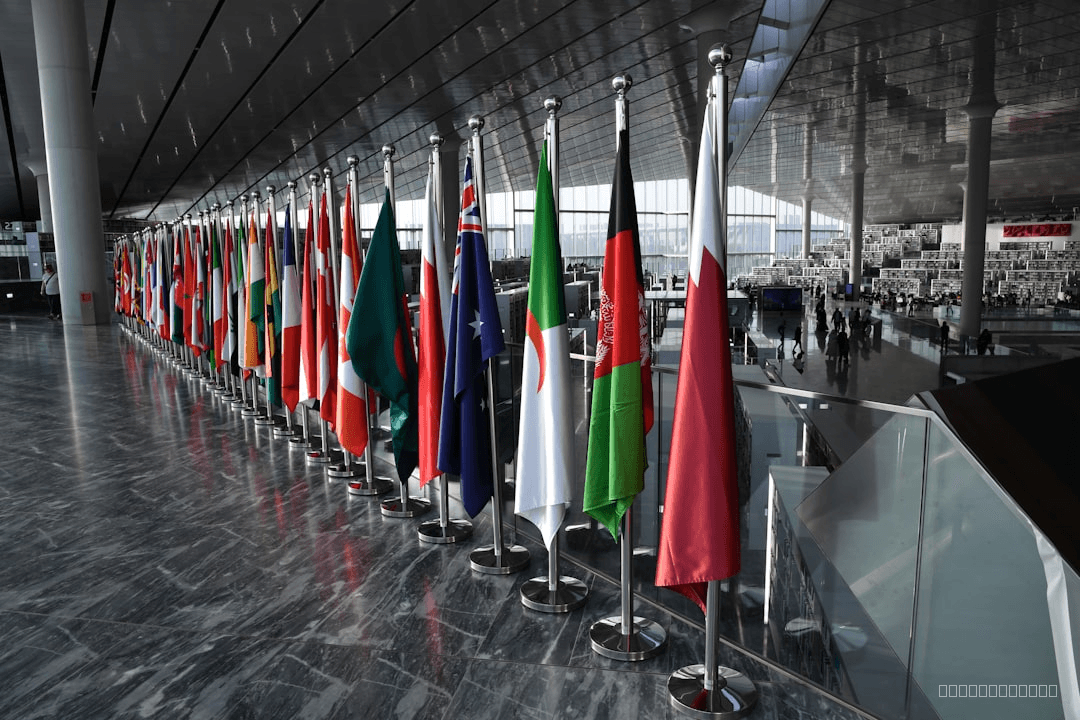
Photo by Thomas Lohmann on Unsplash
Updated March 12, 2026
In a period marked by significant global and regional shifts, Saudi Arabia and Pakistan have reinforced their enduring partnership, demonstrating a shared commitment to economic stability and strategic alignment. This collaboration, spanning decades, is now more critical than ever, addressing mutual challenges and leveraging collective strengths. The steadfast alliance between Riyadh and Islamabad is a cornerstone of regional stability, with both nations actively pursuing enhanced economic and defence cooperation to navigate complex geopolitical landscapes.
- Saudi Arabia has pledged significant financial support and investment, including a reported $5 billion package in late 2025, to bolster Pakistan's economic stability.
- Bilateral trade volume is projected to exceed $5 billion annually by 2028, driven by increased investment in Pakistan's mining, agriculture, and IT sectors.
- Strategic defence cooperation continues, with joint military exercises and intelligence sharing enhancing regional security.
- Both nations are committed to multilateral diplomacy, advocating for Islamic world solidarity and addressing global challenges like climate change and food security.
- The partnership is evolving beyond traditional aid, focusing on sustainable development projects and technology transfer initiatives.
Why is Saudi-Pakistani Economic Cooperation Crucial?
The economic dimensions of the Saudi-Pakistani relationship are profoundly significant, particularly for Pakistan, which has consistently faced balance-of-payments challenges and sought foreign direct investment (FDI). Saudi Arabia, under its Vision 2030, is diversifying its economy and seeking new investment avenues, finding a natural partner in Pakistan due to its strategic location, large consumer market, and skilled workforce. As PakishNews previously reported, Pakistan's economic recovery has been a paramount concern for successive governments, making Saudi support invaluable. For instance, in late 2025, the Kingdom of Saudi Arabia reaffirmed its commitment to Pakistan by reportedly finalising a substantial financial package amounting to approximately $5 billion. This package, as confirmed by a senior official at Pakistan's Ministry of Finance to local media on 15 December 2025, included a mix of deferred oil payments, direct budgetary support, and investment pledges across critical sectors. This assistance is a lifeline, helping Islamabad manage its external debt obligations and maintain foreign exchange reserves, which had dipped to a perilous $7.5 billion in early 2025, according to data from the State Bank of Pakistan.
As PakishNews previously reported, Pakistan Thrash Bangladesh by 128 Runs in Rain-Hit ODI.
Beyond immediate financial aid, the focus has shifted towards long-term investment. Data from the Board of Investment (BOI) Pakistan indicates that Saudi investment in Pakistan saw a 25% increase in 2025, reaching nearly $1.2 billion, up from $960 million in 2024. Key areas of interest include the Reko Diq copper-gold project in Balochistan, where Saudi entities are exploring potential stakes, and the agricultural sector, particularly corporate farming initiatives in Punjab and Sindh. Furthermore, the information technology sector has witnessed a surge in Saudi venture capital interest, aiming to leverage Pakistan's burgeoning tech talent. Addressing a joint press conference in Islamabad on 2 February 2026, Pakistan's Minister for Planning, Development, and Special Initiatives stated, “The Saudi commitment is not merely about financial injections; it's about building a sustainable economic partnership that creates jobs, transfers technology, and fosters mutual growth.” This sentiment underscores a strategic shift from transactional aid to a more integrated, development-oriented collaboration.
How Does Strategic Alignment Benefit Both Nations?
The strategic alignment between Saudi Arabia and Pakistan transcends economic ties, encompassing robust defence cooperation, shared regional security interests, and a common stance on various international issues. Both nations are significant players in the Islamic world, and their partnership is often seen as a bulwark against regional instability. Pakistan, possessing a formidable military and nuclear capability, offers a strategic depth that is highly valued by Riyadh, particularly in light of evolving geopolitical dynamics in the Middle East. According to Dr. Hassan Askari Rizvi, a prominent defence analyst based in Lahore, “Pakistan's defence capabilities and its disciplined armed forces have historically provided a crucial security dimension to Saudi Arabia, manifest through training programmes, military exercises, and intelligence cooperation.” He added, during an interview with PakishNews on 8 March 2026, that this cooperation is vital for maintaining a balance of power in a volatile region.
The two countries regularly conduct joint military exercises, such as the 'Al-Samsam' series, designed to enhance interoperability and counter-terrorism capabilities. In early 2026, a high-level Saudi defence delegation visited Pakistan to discuss further collaboration in military technology and defence production, as confirmed by statements from Pakistan's Inter-Services Public Relations (ISPR) on 18 January 2026. This visit highlighted a mutual desire to upgrade defence ties beyond personnel training to joint ventures in manufacturing. Moreover, both Riyadh and Islamabad have consistently advocated for peaceful resolutions to conflicts and supported the Palestinian cause on international forums, including the Organisation of Islamic Cooperation (OIC) and the United Nations. This diplomatic synergy reinforces their stature as influential voices within the Muslim world and contributes to UAE and Gulf Region relations. Saudi Arabia's Crown Prince Mohammed bin Salman, during his address at the Future Investment Initiative in Riyadh on 29 October 2025, emphasised the importance of “strategic partnerships with key Islamic nations like Pakistan to ensure regional security and foster collective prosperity.”
Why does this matter? The enduring strategic partnership between Saudi Arabia and Pakistan is critical because it provides a stabilising force in an increasingly complex global environment. It ensures a robust network of security cooperation that can address shared threats, from terrorism to regional power imbalances, while simultaneously promoting economic resilience through investment and trade. This bilateral strength contributes to broader Islamic solidarity and offers a unified voice on critical international issues, enhancing the collective influence of both nations.
Assessing the Impact on Citizens and Regional Dynamics
The renewed vigour in Saudi-Pakistani relations has tangible impacts on citizens in both countries and significantly influences regional dynamics. For Pakistanis, the immediate economic relief provided by Saudi financial assistance helps stabilise the national currency, control inflation, and support critical development projects, indirectly benefiting millions. The influx of Saudi investment is expected to create thousands of direct and indirect jobs, particularly in the agricultural and mining sectors, offering crucial employment opportunities in a country grappling with high unemployment rates, officially reported at 6.3% by the Pakistan Bureau of Statistics in Q4 2025. Furthermore, the historical bond means that Saudi Arabia remains a preferred destination for Pakistani expatriate workers, with over 2.6 million Pakistanis currently residing in the Kingdom, sending home remittances exceeding $4.5 billion annually, according to the Ministry of Overseas Pakistanis and Human Resource Development.
Conversely, for Saudi Arabia, the partnership with Pakistan provides a reliable source of skilled labour, access to a strategic partner in South Asia, and enhanced security cooperation for its ambitious Vision 2030 projects. The collaboration also strengthens Saudi Arabia's diplomatic outreach and influence within the broader Islamic world. Dr. Fatima Khan, a geopolitical analyst at the Centre for Strategic Studies in Islamabad, highlighted the broader implications: “This partnership is not merely transactional; it is deeply rooted in shared cultural, religious, and strategic interests. It sends a clear message of solidarity, particularly in an era of shifting alliances and regional realignments, and provides both nations with a stronger hand in multilateral negotiations.” She noted in a research paper published on 1 March 2026 that the enhanced defence cooperation also contributes to collective security against non-state actors and addresses conventional threats.
What Happens Next for the Saudi-Pakistani Alliance?
Looking ahead, the Saudi-Pakistani alliance is poised for further deepening and diversification. The immediate future will likely see the materialisation of pledged Saudi investments, particularly in large-scale infrastructure and industrial projects. The Special Investment Facilitation Council (SIFC) in Pakistan is actively streamlining regulatory processes to attract and facilitate these investments, with a dedicated Saudi desk established in January 2026 to ensure efficient project execution. Analysts anticipate a significant increase in bilateral trade, potentially reaching the ambitious target of $5 billion annually by 2028, up from approximately $3.5 billion in 2025, as both nations seek to reduce reliance on traditional markets and foster intra-Islamic economic ties.
Diplomatically, both countries are expected to continue their close coordination on regional and international issues, including efforts to de-escalate tensions in the Middle East and advocate for Muslim causes on global platforms. The upcoming OIC Foreign Ministers' meeting in Riyadh in late 2026 will likely serve as another important forum for Saudi and Pakistani leaders to reaffirm their shared vision for Islamic unity and prosperity. Stakeholders, including international financial institutions, regional powers, and business communities, should closely watch the implementation pace of agreed-upon projects and the evolution of defence and security dialogues. The resilience and adaptability of this enduring partnership will be crucial in shaping the future trajectory of both nations and contributing to stability across the broader region. Read more on Pakistan-Saudi relations at PakishNews.
Related: More Pakistan News | Saudi Arabia
Related Coverage
- Pakistan Thrash Bangladesh by 128 Runs in Rain-Hit ODI
- Maaz Sadaqat's Heroics Propel Pakistan to Dominant ODI Win, Leveling Series 1-1
- Pakistan-Afghanistan Border Strikes Undermine China's Peace Push
Frequently Asked Questions
❓ What is the primary focus of Saudi Arabia's economic support to Pakistan?
Saudi Arabia's economic support to Pakistan primarily focuses on a blend of immediate financial assistance and long-term strategic investments. In late 2025, a reported $5 billion package was finalised, encompassing deferred oil payments, budgetary support, and significant investment pledges, particularly in Pakistan's mining, agriculture, and IT sectors. This multi-pronged approach aims to stabilise Pakistan's economy while fostering sustainable growth and job creation, with Saudi investment in 2025 increasing by 25% to nearly $1.2 billion, according to the Board of Investment.
❓ How does defence cooperation strengthen the Saudi-Pakistani alliance?
Defence cooperation strengthens the Saudi-Pakistani alliance by enhancing regional security and strategic depth for both nations. Pakistan, with its robust military capabilities, provides valuable training, joint exercises like 'Al-Samsam', and intelligence sharing, which are crucial for Saudi Arabia's security interests in a volatile Middle East. This collaboration, as noted by defence analyst Dr. Hassan Askari Rizvi, extends to discussions on military technology and defence production, aiming for joint ventures that bolster collective security against shared threats and maintain regional stability.
❓ What are the long-term projections for bilateral trade between Saudi Arabia and Pakistan?
Long-term projections indicate a significant increase in bilateral trade between Saudi Arabia and Pakistan, with an ambitious target of exceeding $5 billion annually by 2028. This growth is expected to be driven by increased Saudi investments in Pakistan's key economic sectors, including agriculture, mining, and information technology. The Special Investment Facilitation Council (SIFC) in Pakistan has established a dedicated Saudi desk to streamline investment processes, reflecting a mutual commitment to deepen economic integration beyond traditional aid, which stood at approximately $3.5 billion in 2025.