Listen to ArticlePress play to hear this storyListen to ArticleDownload audio
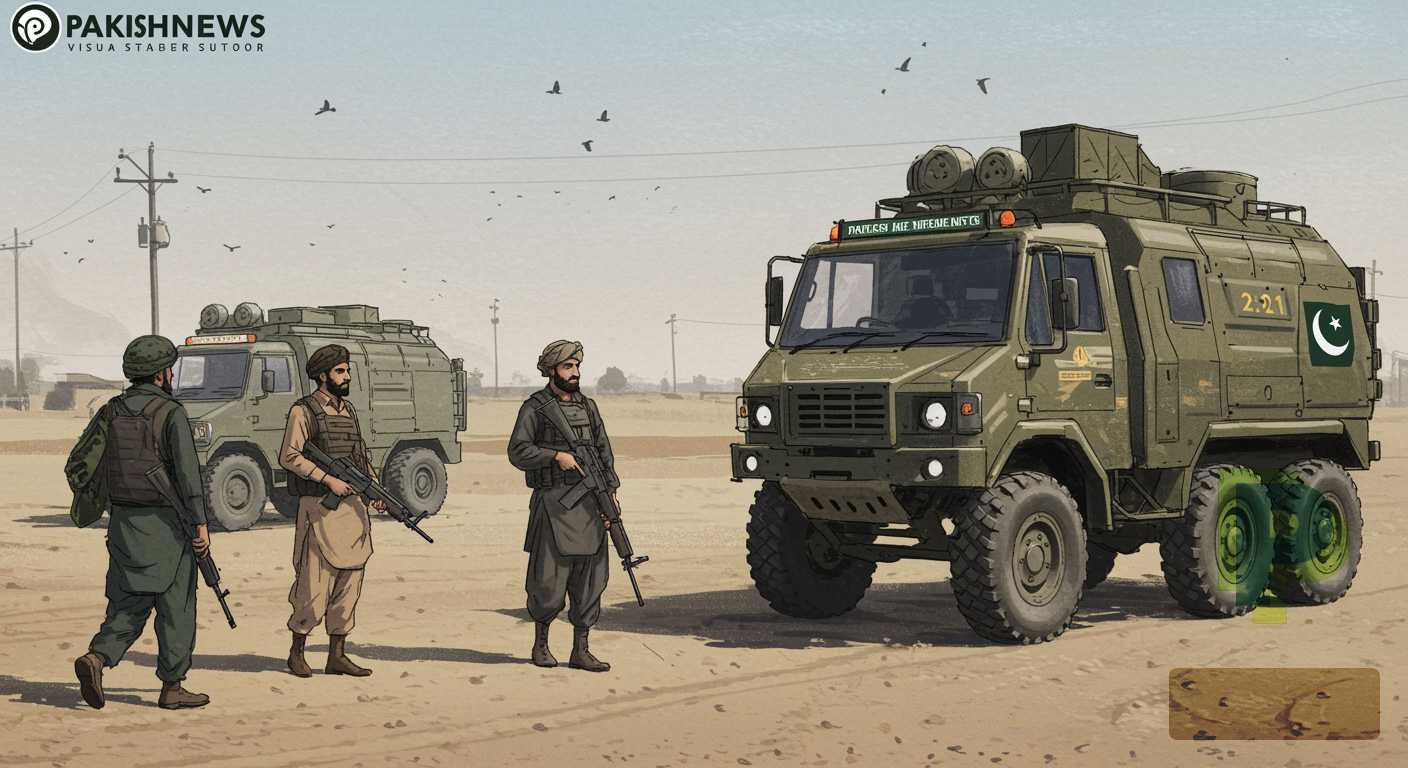
Pakistan's security forces have conducted a significant intelligence-based operation in the volatile northwest, resulting in the elimination of five militants. This action underscores the military's ongoing commitment to counter-terrorism efforts in a region grappling with a resurgence of extremist activity. The operation, which took place in the Khyber Pakhtunkhwa (KPK) province, was announced by the Inter-Services Public Relations (ISPR) on March 12, 2026, and is part of a broader strategy to dismantle militant networks threatening national stability. This successful operation highlights the persistent challenges posed by militant groups and the unwavering resolve of Pakistan's armed forces to secure its borders and citizenry.
- Five militants were killed in an intelligence-based operation by security forces in Khyber Pakhtunkhwa on March 12, 2026.
- The operation is part of Pakistan's ongoing counter-terrorism campaign, targeting groups operating in the volatile northwest.
- This region has seen a significant increase in militant activities, particularly since August 2021, impacting regional security.
- The military's statement from ISPR did not specify the group affiliation of the killed militants but noted their involvement in terrorist activities.
- The incident reaffirms the government's commitment to eradicating militancy through sustained military and law enforcement actions.
Understanding the Resurgence of Militancy in Northwest Pakistan
The recent operation in Khyber Pakhtunkhwa is set against a backdrop of a worrying resurgence in militant activities across Pakistan, particularly in the bordering regions with Afghanistan. The northwest, historically a stronghold for various extremist groups, has witnessed a sharp increase in terror incidents since the Taliban's return to power in Afghanistan in August 2021. According to the Pakistan Institute for Peace Studies (PIPS), Pakistan experienced a 73% increase in terror incidents in 2023 compared to 2022, with a significant majority of these occurring in KPK and Balochistan. This escalating violence is largely attributed to the Tehrik-i-Taliban Pakistan (TTP) and its various splinter factions, which reportedly leverage safe havens across the border.
Why does this matter? The stability of Pakistan's northwest is crucial for national security and economic development. The region's proximity to Afghanistan makes it susceptible to cross-border infiltration and the flow of extremist ideologies. The current wave of militancy has not only claimed the lives of security personnel and civilians but has also disrupted local economies and hindered development projects, including those under the China-Pakistan Economic Corridor (CPEC) in adjacent areas. For instance, the Ministry of Interior reported over 1,000 security-related fatalities in 2023, marking the highest toll in six years, with security forces bearing a significant brunt of these attacks.
As PakishNews previously reported, Iraq Oil Pipeline Dispute: Baghdad Accuses KRG of Blocking Exports.
Expert Analysis: Strategic Implications of Counter-Terrorism Operations
Security analysts and former military officials consistently highlight the complex challenges faced by Pakistan in combating militancy. Dr. Hassan Askari Rizvi, a prominent defence analyst, told PakishNews, "These intelligence-based operations are critical, but they are only one part of a multi-faceted counter-terrorism strategy. The challenge lies in dismantling the support structures and ideological narratives that sustain these groups, especially those operating from across the border." He emphasised the need for sustained pressure and effective border management.
A senior official from the Ministry of Foreign Affairs, speaking on condition of anonymity due to the sensitivity of ongoing diplomatic efforts, stated, "Pakistan has repeatedly urged the interim Afghan government to take concrete action against TTP and other terror outfits operating from its soil. Our operations are a defensive measure to protect our citizens, but a lasting solution requires collaborative efforts and adherence to international commitments." This sentiment reflects Pakistan's consistent stance on the issue, which has been reiterated at various bilateral and multilateral forums, including recent discussions with United Nations officials regarding regional stability.
Furthermore, General (R) Talat Masood, a retired lieutenant-general and defence analyst, provided a comparative context. "While the number of militants killed in a single operation might seem small, the intelligence-led nature of these strikes is vital. They aim to decapitate leadership, disrupt communication, and degrade operational capabilities. This is different from the large-scale conventional operations of a decade ago, such as Zarb-e-Azb, which cleared vast territories but required a different operational environment." Operation Zarb-e-Azb, launched in 2014, successfully cleared militant strongholds in North Waziristan, significantly reducing terror incidents for several years, demonstrating the efficacy of concerted military action.
Assessing the Impact on Regional Security and Civilian Life
The ongoing counter-terrorism operations, like the one on March 12, have a tangible impact on both regional security and the daily lives of citizens in Khyber Pakhtunkhwa. For communities living in districts such as North Waziristan, South Waziristan, and Lakki Marwat, which have been particularly affected by recent attacks, these operations offer a glimmer of hope for improved security. However, they also underscore the persistent threat. Data from the National Counter Terrorism Authority (NACTA) indicates that 2023 saw a 60% increase in civilian casualties in KPK compared to the previous year, highlighting the direct human cost of this renewed wave of militancy.
Economically, the instability in the northwest deters investment and development. Local businesses, particularly those reliant on trade and tourism, suffer significantly. For instance, the trade volume through the Torkham border crossing, a vital artery for Afghanistan-Pakistan trade, faces disruptions due to security concerns, impacting livelihoods on both sides. The provincial government of Khyber Pakhtunkhwa has allocated approximately 15% of its annual budget to law and order and rehabilitation efforts in the merged districts, a substantial portion that could otherwise be used for education or healthcare, according to the Provincial Finance Department's 2024-25 budget document. Read more on Pakistan's economic challenges at PakishNews.
Moreover, the continuous deployment of security forces and the frequent operations strain national resources. The Pakistan Army, with over 600,000 active personnel, dedicates substantial resources to internal security duties, a commitment that has been unwavering despite the evolving threat landscape. The psychological impact on residents, living under constant threat of violence, is also profound, leading to displacement and hindering social cohesion programmes.
What Happens Next? Pakistan's Evolving Counter-Terrorism Strategy
Looking ahead, the successful operation on March 12 is indicative of Pakistan's resolve to continue its kinetic operations against militant groups. However, the strategy is evolving beyond purely military action. The government of Pakistan, led by Prime Minister Shehbaz Sharif, has recently initiated 'Operation Azm-e-Istehkam' (Resolve for Stability), a renewed and comprehensive national counter-terrorism campaign. This operation aims to integrate and energise various strands of national power, including military, law enforcement, political, economic, and social efforts, to address the root causes and manifestations of militancy.
The 'What Happens Next' involves several key areas:
- Sustained Intelligence-Based Operations: Security forces will likely intensify targeted operations based on actionable intelligence to degrade militant capabilities and eliminate leadership.
- Enhanced Border Management: Efforts to strengthen border security with Afghanistan, including fencing and surveillance, will continue to curtail cross-border movement of militants. Data from the Ministry of Defence indicates that over 90% of the 2,611 km Pak-Afghan border has been fenced as of early 2025.
- Diplomatic Engagement: Pakistan will maintain diplomatic pressure on the interim Afghan government to fulfil its commitments under the Doha Agreement, which includes preventing its territory from being used by terror groups against other nations. In a related development covered by PakishNews, recent high-level talks focused on regional security.
- Socio-Economic Development: Alongside security operations, there will be a continued focus on socio-economic development in the merged districts of KPK to counter extremist narratives by providing economic opportunities and improving public services. The government's 10-year development plan for these areas, initiated in 2019, aims to invest over PKR 1 trillion (approximately USD 3.5 billion) in various sectors.
- Legal and Legislative Reforms: Further strengthening of anti-terrorism laws and judicial processes to ensure swift prosecution of terror suspects and their facilitators.
Stakeholders, including international partners, will be closely watching the implementation of 'Operation Azm-e-Istehkam' and its effectiveness in stemming the tide of militancy. The long-term stability of Pakistan, and by extension, the broader South Asian region, hinges on a comprehensive and sustained approach to counter-terrorism that combines robust security measures with inclusive governance and economic uplift. The incident on March 12, 2026, serves as a stark reminder of the enduring fight against extremism.
Related: More Pakistan Security News | Counter-Terrorism
Related Coverage
- Iraq Oil Pipeline Dispute: Baghdad Accuses KRG of Blocking Exports
- Bangladesh vs Pakistan: Agha Salman's Gritty Fifty Ignites Tense Chase
- Pakistan Strikes Militant Hideouts in Kandahar Amid Escalation
Quick Answers (AI Overview)
- What happened in this story?
Pakistan's security forces have conducted a significant intelligence-based operation in the volatile northwest, resulting in the elimination of five militants. This action underscores the military's ongoing commitment to - Why does this matter right now?
It matters because security forces neutralise five militants in volatile northwest pakistan can impact public discussion, policy, or regional stability depending on follow-up events. - What should readers watch next?
Watch for official statements, verified facts, and timeline updates from credible sources including Arab News PK.
Frequently Asked Questions
❓ What is the significance of the recent security operation in Khyber Pakhtunkhwa?
The recent operation, resulting in the killing of five militants on March 12, 2026, signifies Pakistan's proactive stance against the resurgence of extremist groups in its volatile northwest. It underscores the military's intelligence-driven approach to degrade militant capabilities and secure regions like Khyber Pakhtunkhwa, which has experienced a significant increase in terror incidents, with over 73% rise in 2023 compared to the previous year, according to PIPS data.
❓ How has the security situation in Pakistan's northwest evolved since 2021?
Since the Taliban's takeover in Afghanistan in August 2021, Pakistan's northwest, particularly Khyber Pakhtunkhwa and Balochistan, has witnessed a marked deterioration in security. Militant groups, primarily the Tehrik-i-Taliban Pakistan (TTP), have escalated attacks, reportedly leveraging safe havens across the border. This has led to a substantial increase in casualties, with over 1,000 security-related fatalities reported by the Ministry of Interior in 2023, the highest in six years.
❓ What is 'Operation Azm-e-Istehkam' and its objectives?
'Operation Azm-e-Istehkam' (Resolve for Stability) is Pakistan's recently initiated comprehensive national counter-terrorism campaign. Its primary objective is to integrate and energise all elements of national power – military, law enforcement, political, economic, and social – to effectively address the multifaceted challenge of militancy. This operation aims to not only eliminate terror networks but also tackle the root causes of extremism through socio-economic development, especially in the merged districts of Khyber Pakhtunkhwa, where a 10-year development plan with over PKR 1 trillion investment is underway.