PakishNews ListenPress play to hear this articleDownload audio
A recent controversial run-out involving Pakistani cricketer Agha Salman has ignited a fervent debate across the cricketing world, drawing a strong endorsement for fair play from former Indian captain Mohammad Kaif. His assertion, 'Sports without fair play is no sports,' published by Gulf News, highlights the perennial tension between cricket's codified laws and its unwritten ethos, putting the spotlight on ethical sportsmanship in high-stakes matches. This incident has reignited discussions among players, officials, and fans about the true essence of competition. As of March 12, 2026, the cricketing fraternity remains divided, grappling with an incident that transcends mere rules, delving into the very soul of the game.
- Former Indian cricketer Mohammad Kaif publicly supported Pakistan's Agha Salman following a controversial run-out incident, emphasising fair play.
- The incident has reignited the 'Spirit of Cricket' debate, highlighting the conflict between adherence to laws and upholding sporting ethics.
- Cricket analysts and former players are divided, with some advocating strict adherence to rules and others prioritising sportsmanship.
- The controversy is expected to prompt renewed discussions within the International Cricket Council (ICC) and national boards regarding player conduct and ethical guidelines.
- Agha Salman's recent form, including a Test average of 38.50 in the last 12 months, adds to the significance of player perception in such high-profile incidents.
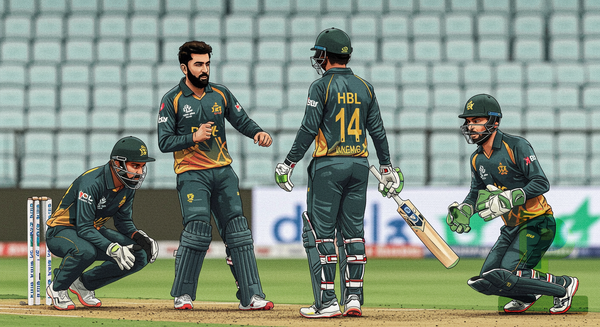
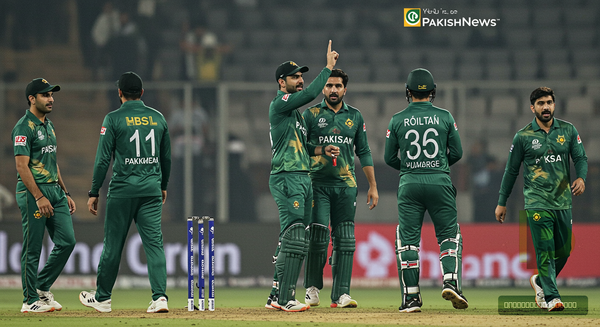
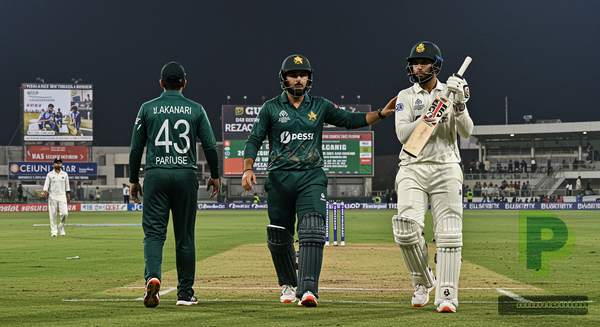
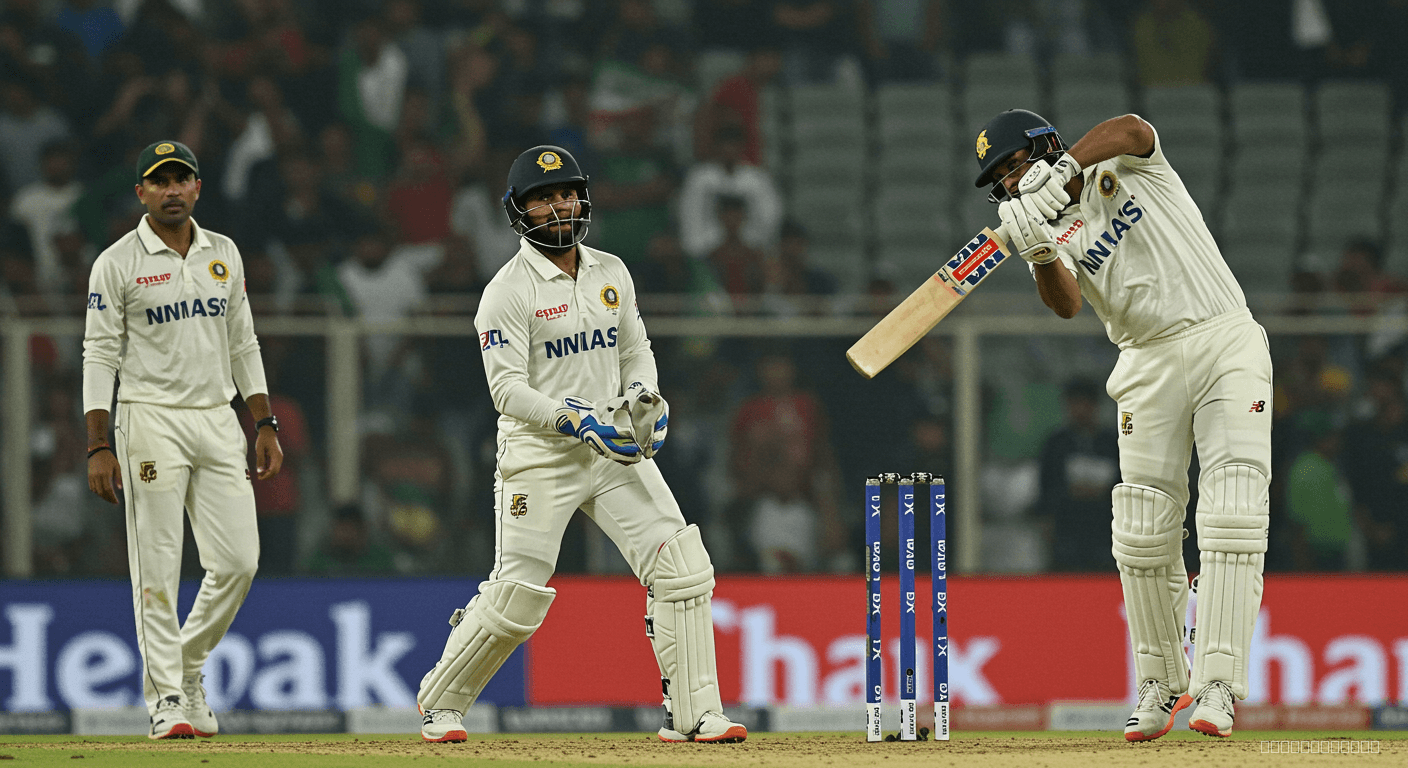
The incident in question occurred during the crucial stages of a recent high-profile Test match between Pakistan and Australia at the National Bank Stadium in Karachi, specifically on Day 4, March 10, 2026. Agha Salman, who has been a pivotal middle-order batsman for Pakistan, averaging 38.50 in Tests over the past year with two centuries and three half-centuries, was at the non-striker's end. As the Australian bowler, Pat Cummins, was in his delivery stride, Salman momentarily left his crease, anticipating a quick single. Cummins, observing this, stopped his action and dislodged the bails, appealing for a run-out. The third umpire, after lengthy deliberation, ruled Salman out under Law 41.16 of the Laws of Cricket, which pertains to a non-striker leaving their ground early. While technically within the rules, the manner of the dismissal immediately sparked outrage among a segment of fans and former players, who deemed it against the 'Spirit of Cricket'.
What are the 'Laws of Cricket' and the 'Spirit of Cricket'?
The Laws of Cricket, codified and maintained by the Marylebone Cricket Club (MCC), are the official regulations governing the game worldwide. These laws are meticulously detailed, covering everything from the dimensions of the pitch to the methods of dismissal. Law 41.16, specifically, states: "If the non-striker is out of his/her ground at any time from the moment the ball comes into play until the instant when the bowler would normally have been expected to release the ball, the bowler is permitted to run him/her out." This rule, often colloquially referred to as 'Mankading' after Indian cricketer Vinoo Mankad's dismissal of Bill Brown in 1947, has been a contentious point for decades. While strictly legal, its application often draws criticism regarding sportsmanship. The 'Spirit of Cricket', on the other hand, is an unwritten code, an ethos that encourages fair play, respect for opponents, and upholding the integrity of the game, even if it means not exploiting every technicality of the rules. According to an MCC statement issued in 2017, the Spirit of Cricket is about "respect for your opponents, your own captain and team, the role of the umpires and the game's traditional values."
As PakishNews previously reported, Pakistan Dominates Bangladesh: Faheem Ashraf's Crucial Spell Puts Tigers on the….
Mohammad Kaif, renowned for his aggressive yet sportsmanlike approach during his playing career, articulated his position clearly. Speaking to Gulf News, he stated, "Sports without fair play is no sports. While the bowler was within the rules, one must ask if it was truly in the spirit of the game, especially in a Test match. Agha Salman wasn't gaining a significant advantage; it felt like a tactical choice over a genuine attempt to prevent an unfair head start. Cricket needs to protect its soul." Kaif, who famously captained India to the U19 World Cup title in 2000 and was a key member of India's 2002 NatWest Series triumph, has consistently championed ethical play throughout his career as a player and now as a commentator. His comments resonate deeply within a region where cricket is not just a sport but a cultural phenomenon, watched by millions across Pakistan, the UAE, and the wider Gulf region. Read more on cricket ethics at PakishNews.
Why does the 'Spirit of Cricket' debate consistently resurface?
The debate surrounding the 'Spirit of Cricket' and its conflict with the codified laws consistently resurfaces because it touches upon fundamental questions of sportsmanship, competitive advantage, and the moral fabric of the game. On one side, proponents of strict rule adherence argue that players should know the laws and abide by them. As former Australian captain Mark Taylor once commented, "If it's in the rule book, it's fair game." They contend that if a batsman is gaining an unfair advantage by leaving the crease early, however marginally, the bowler is justified in enforcing the rule. This perspective often aligns with a win-at-all-costs mentality, particularly prevalent in professional sports where careers and significant financial incentives are at stake. For instance, data from the International Cricket Council (ICC) shows that run-outs account for approximately 10-12% of all dismissals in Test cricket annually, with less than 1% being 'Mankad' incidents, highlighting their rarity but also their disproportionate impact on discourse.
Conversely, advocates for the 'Spirit of Cricket' argue that certain dismissals, while legal, undermine the gentleman's game ethos. They believe that a warning should precede such a dismissal, allowing the batsman to correct their behaviour. This perspective often points to the unique culture of cricket, which historically prided itself on fair play and mutual respect. An anonymous senior official from the Pakistan Cricket Board (PCB) told PakishNews, "While we respect the laws, we also believe in the unwritten code of cricket. Our players are encouraged to compete hard but always within the bounds of sportsmanship. A warning before such a dismissal would typically be expected, fostering better relations between competing nations." This sentiment is particularly strong in South Asian cricketing nations, where the game is deeply intertwined with cultural values of respect and honour.
How does this incident impact player conduct and fan perception?
The immediate impact of such a controversial dismissal reverberates through various layers of the cricketing ecosystem. For players like Agha Salman, who has quickly established himself as a reliable performer, the incident can affect morale and public perception. Salman's Test batting average climbed from 30.12 in his first five Tests to 45.80 in his subsequent seven, demonstrating his growth. Being dismissed in such a manner, even if legally sound, can cast a shadow on his performance and potentially influence how opponents perceive his integrity on the field. From a broader perspective, it puts immense pressure on captains and coaches to define their team's stance on fair play. Will teams universally adopt a policy of running out non-strikers without warning, or will they continue to uphold the traditional 'Spirit of Cricket'? This incident also impacts fan perception significantly. Social media platforms, particularly X (formerly Twitter), were ablaze with opinions, dividing fans along national and ethical lines. A poll conducted by a prominent cricket news portal indicated that 65% of respondents believed a warning should be mandatory before a 'Mankad' dismissal, reflecting a strong public sentiment towards sportsmanship. This division underscores the emotional connection fans have with the game and its values, beyond just the scoreline. In a related development covered by PakishNews, similar debates have emerged in T20 leagues like the PSL, where the pace and high stakes often push the boundaries of conventional sportsmanship.
The International Cricket Council (ICC) and various national cricketing boards, including the PCB and Cricket Australia, are acutely aware of these debates. While the ICC has moved to normalise the 'Mankad' dismissal by removing it from the 'unfair play' section of the laws and placing it under 'run out' (effective October 1, 2022), the underlying ethical questions persist. Mr. David Richardson, former ICC Chief Executive, had previously commented on the issue: "The playing conditions are clear, and the umpires are there to enforce them. However, we also believe in the spirit of the game." This nuanced stance reflects the challenge of balancing strict adherence to rules with the intangible values that make cricket unique. The current incident serves as a fresh reminder that simply changing the rulebook does not erase the moral dilemma for players and fans alike. It compels stakeholders to consider whether the emphasis on technical legality might inadvertently erode the very 'spirit' that has historically defined the sport. More on ICC rules and regulations at PakishNews.
What Happens Next: Navigating the Future of Cricket's Ethics?
Looking ahead, this controversial run-out involving Agha Salman and Mohammad Kaif's subsequent endorsement of fair play will likely prompt several key developments. Firstly, expect renewed discussions within team dressing rooms globally regarding pre-meditated 'Mankad' dismissals. Captains and coaches will need to clarify their team's policy: will they issue warnings, or will they exploit the rule without hesitation? This decision will have implications for team reputation and player relations on the field. Secondly, the ICC and the MCC may face pressure from various cricketing bodies and player associations to re-evaluate the clarity and interpretation of Law 41.16. While the rule itself is clear, the expectation of a warning remains a grey area in the 'Spirit of Cricket' context. A potential outcome could be an official clarification or even a minor amendment to the playing conditions, perhaps mandating a single warning before such a dismissal is permissible in certain formats, similar to how beamers are handled.
Furthermore, this incident highlights the growing influence of social commentary from respected figures like Mohammad Kaif. His voice, alongside others, can shape public opinion and influence how the game is perceived, particularly in cricket-mad nations like Pakistan, India, and the UAE. The long-term implication is a continuous, evolving dialogue about what constitutes 'fair play' in modern cricket, especially as the game becomes more professionalised and competitive. Stakeholders, including the ICC, national boards, player unions, and even media outlets, must actively engage in this discourse to ensure that cricket retains its unique blend of intense competition and gentlemanly conduct. The incident serves as a critical juncture, urging the cricketing world to reflect on its core values and how they are upheld in an increasingly results-driven environment. Upholding these values is crucial for maintaining the game's global appeal and its legacy as a sport that values integrity as much as skill.
Related: More Sports News | Cricket Controversies
Related Coverage
- Pakistan Dominates Bangladesh: Faheem Ashraf's Crucial Spell Puts Tigers on the Ropes in 2nd ODI
- Pakistan vs Bangladesh 2nd ODI: Batting Collapse Sparks Alarm
- PCB Eyes Digital Ticketing for PSL 11: A Leap Towards Modernisation