PakishNews ListenPress play to hear this articleDownload audio
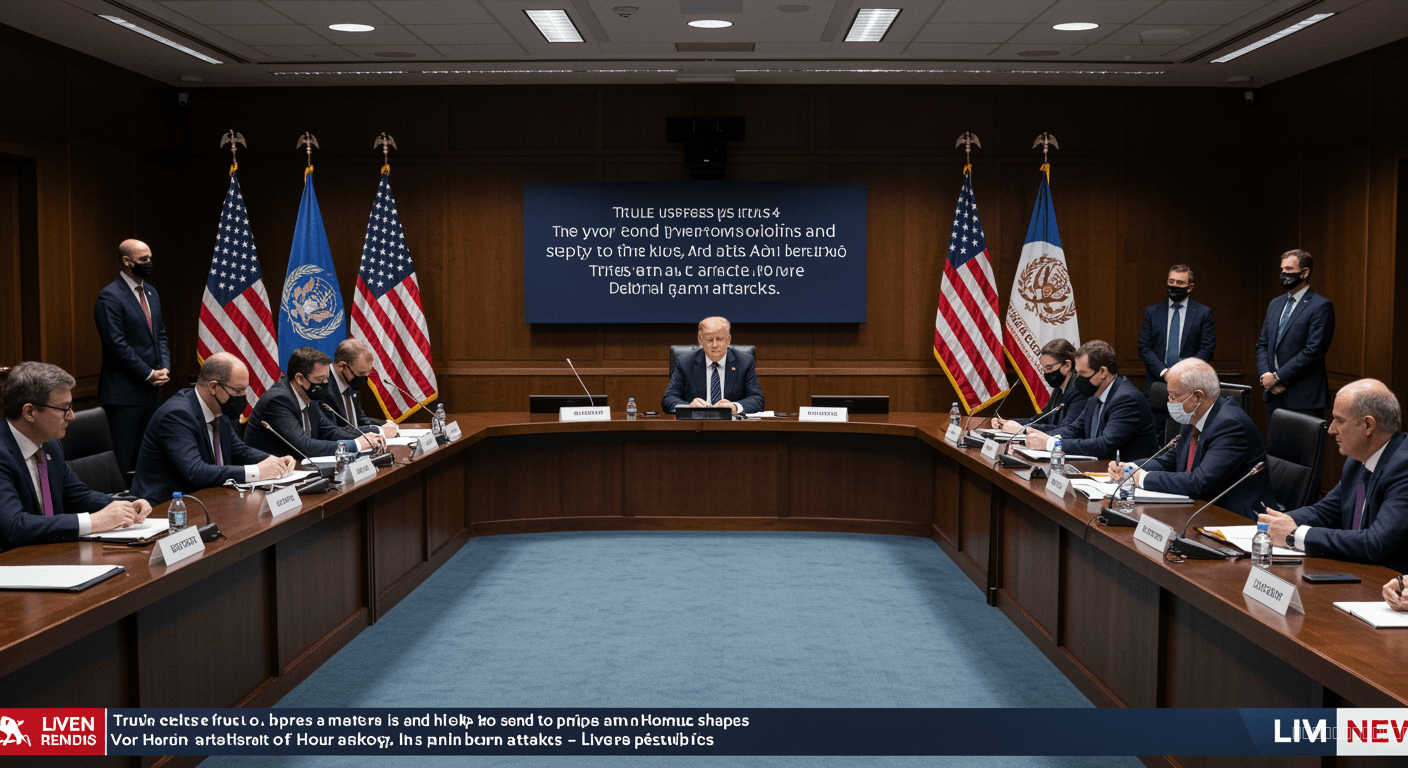
Former US President Donald Trump’s call for the United Kingdom and other international allies to bolster naval presence in the Strait of Hormuz, following alleged Iranian attacks on commercial shipping, underscores the volatile security landscape of this vital maritime artery. The pronouncement, delivered amidst escalating tensions in the Gulf region, highlights a persistent challenge to global energy security and regional stability. **This diplomatic pressure seeks to re-establish a robust international coalition capable of deterring further aggression and safeguarding commercial shipping through the world's most critical oil chokepoint.**
- Former US President Trump urged the UK and other nations to dispatch naval assets to secure the Strait of Hormuz.
- The call came in response to a series of alleged Iranian attacks on oil tankers and commercial vessels in and around the Strait.
- The Strait of Hormuz is a critical chokepoint, through which approximately 20% of the world's total petroleum liquids and a significant portion of global LNG transit daily.
- The US, UK, and other allies have historically maintained a naval presence in the region, but Trump's statement signals a demand for increased burden-sharing.
- Regional stability and global energy prices are directly impacted by security dynamics in the Strait, affecting economies like Pakistan and the UAE.
Why is the Strait of Hormuz So Crucial to Global Trade?
As PakishNews previously reported, IRGC’s Rezaei Vows 'Definite Outcome' in West Asia: No Ceasefire Without Victory.
To understand the gravity of Trump's appeal, one must first grasp the unparalleled strategic importance of the Strait of Hormuz. This narrow waterway, connecting the Persian Gulf with the Arabian Sea and the broader Indian Ocean, is indispensable for global energy markets. According to data from the U.S. Energy Information Administration (EIA), an average of 21 million barrels per day (b/d) of petroleum liquids, or approximately 20% of the world's daily consumption, flowed through the Strait in 2018. This figure included crude oil, condensate, and petroleum products from major producers such as Saudi Arabia, Iran, UAE, Kuwait, and Iraq. Furthermore, a substantial volume of liquefied natural gas (LNG) from Qatar, a leading global exporter, also transits this route, making it a linchpoint for global energy supply chains.
The historical context of the Strait's vulnerability is equally critical. Tensions have simmered for decades, often flaring into direct confrontations. During the Iran-Iraq War (1980-1988), the "Tanker War" saw both sides target each other's oil shipments and those of their allies, prompting a significant international naval response, including the reflagging of Kuwaiti tankers by the United States. More recently, in May and June 2019, a series of limpet mine attacks on oil tankers, including the Norwegian-owned *Front Altair* and the Japanese-owned *Kokuka Courageous*, near the Strait of Hormuz, were attributed by the US and its allies to Iran, though Tehran vehemently denied involvement. These incidents, alongside the Iranian seizure of the British-flagged oil tanker *Stena Impero* in July 2019, underscored the immediate and tangible threats to maritime commerce and the urgent need for enhanced security measures.
What are the Geopolitical Implications of a Naval Buildup?
The call for an increased naval presence by the UK and other nations carries significant geopolitical weight. The United States has long maintained a substantial military footprint in the Gulf, spearheaded by the U.S. Fifth Fleet based in Bahrain. However, former President Trump's administration, particularly in its later years, advocated for a greater burden-sharing among allies, frequently questioning the financial contributions of NATO members and other partners. This latest urging reflects a continuity of that policy, pushing traditional allies like the UK, France, and possibly others such as Australia or Canada, to commit more resources to regional security operations.
"The US has consistently sought to internationalise the security burden in the Gulf, especially as its own strategic focus began to pivot towards the Indo-Pacific," stated Dr. Fatima Al-Ghazali, a senior research fellow at the Emirates Policy Centre in Abu Dhabi, in an interview with PakishNews. "Trump's specific appeal to the UK is noteworthy, given their historical maritime prowess and existing operational capabilities in the region, such as the UK Naval Support Facility in Bahrain." She added that any significant allied deployment would not only augment deterrent capabilities but also signal a united front against perceived Iranian aggression, potentially influencing Tehran's calculus regarding its regional activities.
Conversely, Iran views any foreign military buildup in the Gulf as a provocative act that undermines its national security and regional sovereignty. Officials within the Islamic Revolutionary Guard Corps (IRGC) have repeatedly asserted Iran's right to secure its own waters and have warned against what they term "extra-regional interference." According to state-affiliated Press TV reports, Iranian military commanders have stated that the presence of foreign forces only exacerbates instability, advocating for regional cooperation without external actors. This divergence in perspectives creates a dangerous potential for miscalculation and accidental escalation, particularly given the proximity of naval vessels from various nations in a confined waterway.
How Does Strait of Hormuz Instability Affect Pakistan and the Gulf?
The security of the Strait of Hormuz is not merely a global concern; it is a direct and existential interest for Pakistan and the Gulf Cooperation Council (GCC) states. For Pakistan, a country heavily reliant on imported oil and gas, any disruption in the Strait immediately translates into increased energy costs, inflationary pressures, and potential supply chain bottlenecks. Data from the State Bank of Pakistan indicates that Pakistan's oil import bill constituted approximately 15% of its total import expenditure in the fiscal year 2023-2024, a significant portion of which transits the Strait. As PakishNews previously reported, even minor fluctuations in global oil prices, often triggered by Gulf tensions, can severely impact Pakistan's balance of payments and foreign exchange reserves.
For the GCC states – Saudi Arabia, UAE, Qatar, Kuwait, Bahrain, and Oman – the Strait is their economic lifeline. Saudi Arabia, the world's largest oil exporter, and the UAE, a major energy hub, depend on the Strait for the vast majority of their maritime oil exports. While some GCC members have invested in alternative export routes, such as Saudi Arabia's East-West Pipeline (Petroline) and the UAE's Habshan-Fujairah oil pipeline, these routes offer only partial bypass capabilities. For instance, the Habshan-Fujairah pipeline, with a capacity of approximately 1.5 million b/d, can only handle a fraction of the UAE's total oil exports. This makes the security of the Strait paramount for their economic stability and continued development.
"The Gulf states, particularly the UAE and Saudi Arabia, have consistently advocated for de-escalation and diplomatic solutions, even while investing heavily in their own defence capabilities," remarked Dr. Abdullah Al-Hashimi, a former diplomat and now a geopolitical consultant based in Dubai. "Their strategic interest lies in ensuring uninterrupted trade and maintaining regional stability, which is often jeopardised by external power struggles. Any new naval deployments must be carefully coordinated to avoid unintended escalations." This sentiment reflects a broader regional desire for a secure maritime environment that supports economic growth, as outlined in strategic visions like UAE Vision 2021 and Saudi Vision 2030, which both heavily rely on global trade connectivity.
What Happens Next in Securing the Vital Chokepoint?
The immediate aftermath of Trump's statement will likely involve diplomatic consultations among key allies. The UK, having previously deployed HMS *Montrose* and other Royal Navy assets to the Gulf in response to past incidents, possesses the logistical framework and experience for such operations. However, any increased commitment would require careful consideration of resource allocation and strategic priorities, particularly given the UK's other global defence commitments. Other European naval powers, such as France, which maintains a significant naval presence in the Indian Ocean, might also be approached for contributions. The European-led maritime surveillance mission in the Strait of Hormuz (EMASOH), launched in early 2020 by France, Denmark, Greece, and other nations, provides an existing multilateral framework that could potentially be expanded or integrated. In a related development covered by PakishNews, discussions within the UN Security Council regarding maritime security in critical waterways have intensified, reflecting global concern.
From Pakistan's perspective, maintaining neutrality while safeguarding its economic interests will be a delicate balancing act. Pakistan has historically good relations with both Iran and the GCC states, making it wary of any actions that could be perceived as taking sides in a regional dispute. The country will likely advocate for diplomatic resolutions and multilateral security arrangements that do not exacerbate tensions. The ongoing development of the China-Pakistan Economic Corridor (CPEC) and the Gwadar Port further underscore Pakistan's interest in a stable and secure regional maritime environment, as disruptions in the Strait could impact trade flows to and from these strategic assets.
The coming months will see intense diplomatic activity as nations weigh their responses to Trump's call. The core challenge remains finding a mechanism that effectively deters aggression, ensures freedom of navigation, and prevents a wider regional conflict, all while respecting national sovereal interests. Stakeholders should closely monitor naval deployments, diplomatic exchanges, and any shifts in Iran's maritime posture, as these will dictate the trajectory of security in the world's most critical oil chokepoint. The delicate balance of power in the Gulf, crucial for global energy stability, hangs in the balance. Read more on Iran-US relations at PakishNews.
Related: More World News | Strait of Hormuz
Related Coverage
- IRGC’s Rezaei Vows 'Definite Outcome' in West Asia: No Ceasefire Without Victory
- Iran Escalates Tensions: Oil Facilities Threatened After US Strikes on Kharg Island
- Iran Steps Up Strikes: Regional Tensions Rise After Dubai Blasts, Baghdad Embassy Attack
Frequently Asked Questions
❓ What percentage of global oil passes through the Strait of Hormuz?
Approximately 20% of the world's total petroleum liquids, averaging 21 million barrels per day, transited the Strait of Hormuz in 2018, according to the U.S. Energy Information Administration (EIA). This includes crude oil, condensate, and various petroleum products from Gulf producers, highlighting its unmatched role in global energy supply.
❓ Why is the Strait of Hormuz crucial for Pakistan's economy?
The Strait of Hormuz is crucial for Pakistan's economy because a significant portion of its imported oil and gas, vital for its energy needs, transits this waterway. The State Bank of Pakistan reported that oil imports constituted about 15% of Pakistan's total import expenditure in FY 2023-2024, making the country highly vulnerable to any disruptions or price hikes originating from security issues in the Strait.
❓ What is EMASOH and its role in Gulf security?
EMASOH, the European-led maritime surveillance mission in the Strait of Hormuz, was launched in early 2020 by France, Denmark, Greece, and other European nations. Its primary role is to enhance maritime security and freedom of navigation in the Gulf region through surveillance and coordination, providing a multilateral framework for addressing threats to commercial shipping independent of US-led operations.