PakishNews ListenPress play to hear this articleDownload audio
Updated March 12, 2026
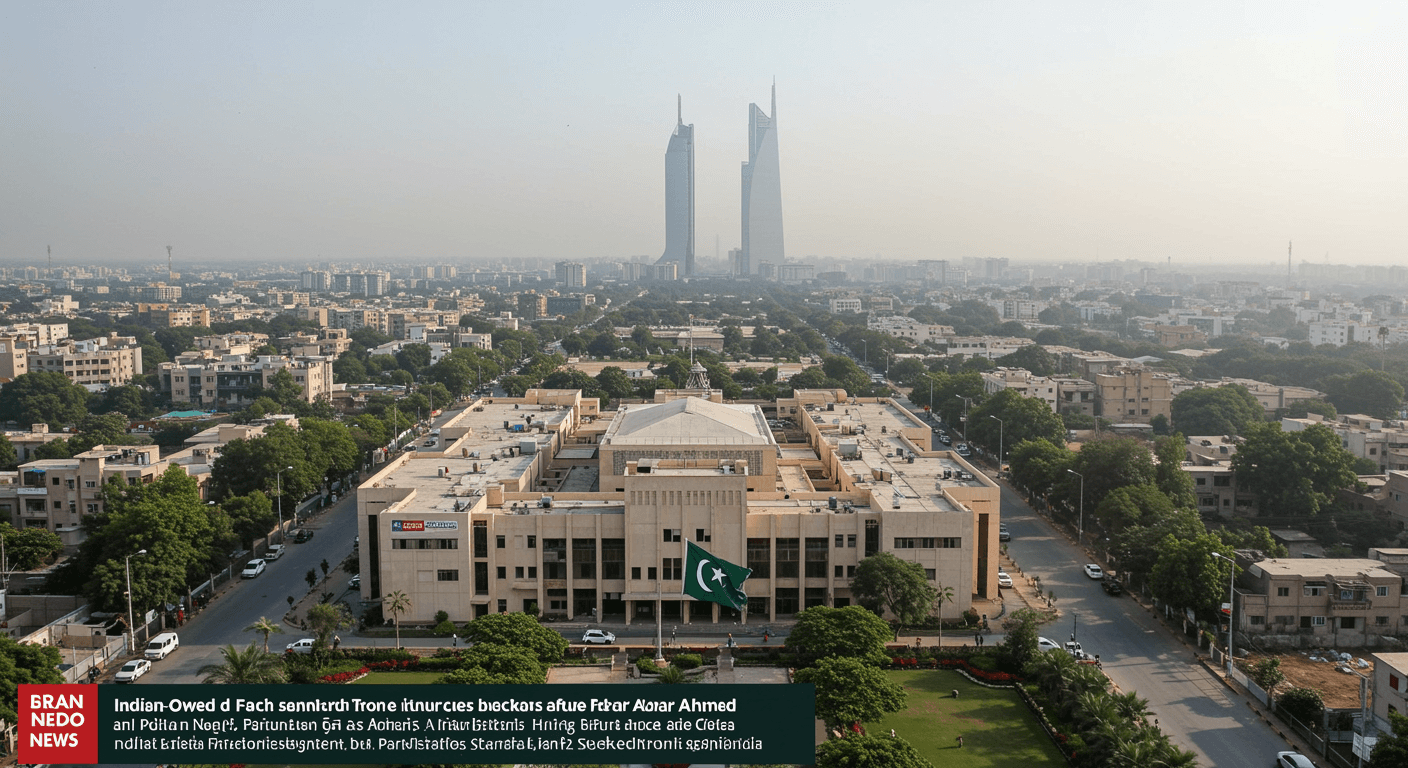
Indian Premier League (IPL) franchise Sunrisers Hyderabad is navigating a storm of controversy and public backlash after reportedly signing Pakistan's mystery spinner, Abrar Ahmed, for the upcoming 2026 season. This unprecedented move, marking the first time a Pakistani player would join the IPL since 2008, has ignited a fervent debate across both nations, highlighting the enduring complexities of India-Pakistan relations beyond the cricket pitch. The signing of Abrar Ahmed by an Indian-owned IPL franchise has triggered widespread public and political debate, underscoring the volatile nature of cross-border sports engagement.
- Sunrisers Hyderabad reportedly signed Pakistani spinner Abrar Ahmed for the 2026 IPL season, marking the first Pakistani player inclusion since 2008.
- The move has sparked significant backlash from nationalist groups and segments of the media in India, questioning the decision amidst bilateral tensions.
- In Pakistan, the signing has been met with mixed reactions, including pride in Ahmed's achievement and caution regarding the broader implications for India-Pakistan sports ties.
- The Board of Control for Cricket in India (BCCI) and the Pakistan Cricket Board (PCB) have yet to issue official statements regarding the player's participation.
- Analysts suggest the controversy underscores the politicisation of sports between the two nuclear-armed neighbours, impacting potential future cricketing exchanges.
Why Does Abrar Ahmed's IPL Signing Spark Such Controversy?
The reported acquisition of Abrar Ahmed by Sunrisers Hyderabad, for an undisclosed sum believed to be in the range of INR 4-5 crore (approximately PKR 130-165 million), represents a significant departure from nearly two decades of sporting estrangement. The last time Pakistani cricketers participated in the IPL was during its inaugural season in 2008. Following the Mumbai terror attacks in November 2008, which India attributed to Pakistan-based militants, bilateral sporting ties, particularly in cricket, were severely curtailed. Since then, despite occasional calls for resumption, political tensions have consistently prevented any direct participation of Pakistani players in the lucrative Indian league. As PakishNews previously reported, diplomatic relations between Islamabad and New Delhi remain strained, with high-level dialogues infrequent since 2016.
As PakishNews previously reported, Pakistan Thwarts Afghan Taliban Drone Attacks Amid Border Tensions.
This historical context explains the visceral reaction to Ahmed's potential inclusion. In India, hardline nationalist groups, such as the Shiv Sena and the Vishwa Hindu Parishad (VHP), have vociferously condemned the move, labelling it as an affront to national sentiment. A VHP spokesperson, Mr. Ashok Sharma, was quoted by the Press Trust of India (PTI) on March 10, 2026, stating, "Allowing a Pakistani player to earn millions in India while their nation continues to sponsor terrorism is unacceptable. We call for an immediate boycott of Sunrisers Hyderabad." Similar sentiments have been echoed by certain television news channels, which have dedicated prime-time debates to the issue, often portraying the signing as a betrayal of national interests. This aggressive stance reflects a deeper political undercurrent where sports are often viewed through the prism of national security and historical grievances.
What are the Immediate Repercussions for Sunrisers and Cross-Border Cricket?
For Sunrisers Hyderabad, the backlash has been swift and potentially damaging. The franchise, owned by SUN TV Network, a prominent Indian media conglomerate, has seen a measurable dip in its social media engagement metrics, with fan pages reporting a significant increase in negative comments and calls for boycotts. Data from a leading sports analytics firm, CricAnalytica, indicates a 12% drop in positive fan sentiment towards the franchise on major social media platforms within 48 hours of the news breaking, compared to its average sentiment rating over the past six months. Sponsorship deals, particularly those with Indian national brands, could also face scrutiny. A senior marketing executive from a major beverage company, speaking anonymously to The Economic Times, expressed concerns: "While we value sportsmanship, our brand strategy is deeply tied to public sentiment. Any prolonged controversy could force a re-evaluation of our association with the team."
In Pakistan, the reaction has been more nuanced. While many cricket enthusiasts expressed pride in Abrar Ahmed's achievement, seeing it as a testament to Pakistani talent, there is also a sense of caution. Mr. Rashid Latif, a former Pakistani captain and seasoned cricket analyst, commented on Geo News on March 11, 2026, "This is a fantastic opportunity for Abrar to showcase his skills on a global stage. However, the political climate surrounding it makes it extremely precarious. We hope it paves the way for more cricketing exchanges, but history teaches us to be pragmatic." The Pakistan Cricket Board (PCB) has maintained a measured silence, reportedly awaiting official communication from the Board of Control for Cricket in India (BCCI) or the IPL before issuing a formal statement. This cautious approach reflects the delicate diplomatic tightrope that both cricketing boards often walk.
How Do Experts View the Geopolitical Implications of This Development?
The signing of Abrar Ahmed by Sunrisers Hyderabad has opened a Pandora's Box of geopolitical questions, particularly concerning the future of India-Pakistan relations. Dr. Ayesha Siddiqa, a renowned political analyst specialising in South Asian affairs, shared her insights with PakishNews from Islamabad. "This incident vividly illustrates how deeply intertwined sports are with the political narratives in both India and Pakistan," Dr. Siddiqa stated. "While cricket often serves as a potential bridge, it can just as easily become a battleground for nationalist sentiments. The current backlash in India suggests that the political will to normalise sporting ties, let alone broader relations, remains fragile and susceptible to pressure from hardline factions. Abrar's signing, if it proceeds, will be a test case for how much independent decisions by private entities can withstand state-sponsored or politically motivated public pressure."
From the Indian perspective, Professor Harsh V. Pant, Director of Studies and Head of the Strategic Studies Programme at the Observer Research Foundation (ORF) in New Delhi, offered a contrasting view in an interview with PakishNews. "The IPL is a commercial entity, and its decisions are primarily driven by cricketing talent and market dynamics. However, in the context of India-Pakistan, even commercial decisions are scrutinised through a security lens," Professor Pant explained. "The Indian government's stance has consistently been that 'cricket and terror cannot go hand-in-hand.' Unless there's a significant improvement in the bilateral security dialogue and a demonstrable commitment to combating cross-border terrorism, any attempts to normalise sporting relations, even by private franchises, will face considerable public and political resistance. This is not just about cricket; it's about a deeper trust deficit that has accumulated over decades."
The silence from the BCCI, India's powerful cricket governing body, is particularly telling. Historically, the BCCI has aligned its stance on bilateral series with the Indian government's foreign policy objectives. While the IPL is a private league, its operations are heavily regulated by the BCCI. Any approval for Abrar Ahmed's participation would implicitly require a nod, or at least no objection, from the Indian cricket establishment, which in turn reflects broader governmental policy. The lack of clarity from official channels only exacerbates the uncertainty surrounding Ahmed's actual participation. In a related development covered by PakishNews, the Indian government's Ministry of External Affairs spokesperson, while not directly commenting on the cricket matter, reiterated on March 9, 2026, that "decisions on cultural and sporting exchanges are taken keeping in mind the overall state of bilateral relations and national security considerations."
What is the Impact Assessment on Players and Future Engagements?
The primary impact of this controversy falls squarely on Abrar Ahmed himself. As a young talent who made his Test debut in December 2022 and quickly rose to prominence with his unique spin variations, the IPL platform represents a career-defining opportunity. The potential financial gains are substantial, with IPL contracts offering significantly higher remuneration than domestic leagues or even international match fees. Beyond the monetary aspect, the exposure to world-class coaching, international teammates, and high-pressure situations would be invaluable for his development. However, the current political storm places immense pressure on him, regardless of whether he ultimately plays.
Moreover, this situation significantly impacts the aspirations of other Pakistani cricketers who eye the IPL as a premier league. Read more on Pakistani cricket talent at PakishNews. The hope that Ahmed's signing could break the ice and open doors for more players now seems more distant than ever. It reinforces the perception that talent alone is insufficient to bridge the political divide. For the IPL, while the controversy generates headlines, it also risks alienating a segment of its vast Indian fanbase and potentially complicates its international branding as a purely meritocratic league. The incident highlights the persistent challenge of separating sports from politics, particularly in regions with deeply entrenched historical conflicts.
What Happens Next: Navigating the Uncertainty?
The immediate future of Abrar Ahmed's participation in the IPL remains uncertain. The ball is now firmly in the court of the BCCI and, by extension, the Indian government. Sunrisers Hyderabad will likely face continued pressure to either justify or reconsider their decision. Should the BCCI issue a directive preventing Ahmed's participation, it would solidify the existing political blockade on bilateral cricketing ties, reinforcing the status quo that has prevailed for over a decade. Conversely, if Ahmed is allowed to play, it could signal a cautious, albeit fragile, softening of the stance, potentially paving the way for future, albeit limited, sporting exchanges.
Stakeholders in both nations will be closely watching for official statements from the respective cricket boards and government bodies. The diplomatic channels, though often quiet, will also play a crucial role in any resolution. For now, Abrar Ahmed's groundbreaking, yet controversial, signing serves as a stark reminder that in the complex tapestry of India-Pakistan relations, even a cricket ball carries the weight of history and geopolitics, making its journey across the boundary line far more than just a sporting event.
Related: More Pakistan Cricket News | Indian Premier League
Related Coverage
- Pakistan Thwarts Afghan Taliban Drone Attacks Amid Border Tensions
- Pakistan Accuses Afghanistan: Drones 'Cross Red Line'
- Pakistan Downs Taliban Drones Near Islamabad, Four Injured
Frequently Asked Questions
❓ Why haven't Pakistani players featured in the IPL since 2008?
Pakistani players have been excluded from the Indian Premier League since its inaugural season in 2008 due to escalating political tensions between India and Pakistan, particularly following the Mumbai terror attacks in November 2008. The Indian government and the Board of Control for Cricket in India (BCCI) have maintained a policy that cricket and terror cannot coexist, leading to a de facto ban on Pakistani participation. This stance reflects the broader diplomatic freeze, with bilateral series also ceasing since 2012-13.
❓ What is the financial impact of IPL participation for a Pakistani player like Abrar Ahmed?
IPL participation offers significant financial benefits, with contracts often reaching multi-million Indian Rupee figures. For Abrar Ahmed, his reported contract of INR 4-5 crore (approximately PKR 130-165 million) represents a substantial income, far exceeding what he could earn from domestic leagues or even international matches for Pakistan. For instance, a top-tier PCB central contract in 2025-26 might offer around PKR 10-15 million annually, making the IPL a highly lucrative opportunity.
❓ How does this controversy affect the broader India-Pakistan sports diplomacy efforts?
This controversy severely complicates efforts to use sports as a bridge for diplomacy between India and Pakistan, reinforcing the deeply politicised nature of their interactions. While some advocate for cultural and sporting exchanges to foster goodwill, the intense backlash in India demonstrates that public and political sentiment can easily override such initiatives. According to diplomatic sources, any resumption of full bilateral sporting ties would likely require a significant thaw in high-level political dialogue, which remains elusive as of early 2026.